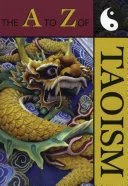
The A to Z of Taoism
 82
82

The A to Z of Taoism
Julian F. Pas's "The A to Z of Taoism" presents a commendable effort to demystify a profound spiritual and philosophical tradition. Its strength lies in its structured, encyclopedic approach, particularly the chronological section that effectively contextualizes Taoism within Chinese history. The work is factually dense, offering clear definitions for complex terms. However, the sheer volume of information, while comprehensive, can sometimes feel overwhelming, lacking a certain narrative flow that might engage readers less accustomed to academic lexicons. A notable passage is its detailed explanation of Wu Wei, which moves beyond simple translation to explore its active, yielding nature. While thorough, the book could benefit from more interpretive depth on the practical application of these concepts in daily life. It serves as an excellent reference tool, though perhaps less as an immersive spiritual guide.
📝 Description
82
Julian F. Pas's 2006 lexicon maps the philosophy and religion of Taoism from its origins.
Published in 2006, Julian F. Pas's "The A to Z of Taoism" functions as a lexicon and historical overview of Taoism. The book begins with a chronology that places Taoism within its Chinese historical context and traces its development alongside other intellectual traditions. It aims to clarify the core concepts, important figures, and the historical progression of "The Way."
This text is intended for students of Eastern philosophies, scholars of comparative religion, and anyone seeking a structured introduction to Taoism. It suits readers who prefer an organized, encyclopedic approach, offering definitions and historical background for key terms and events. It serves as a useful reference for academic study or personal inquiry.
Central to Taoism is the concept of the Tao, or "The Way," an ineffable principle that underlies existence. The book likely examines related ideas like Wu Wei (effortless action), Yin and Yang (complementary forces), and the pursuit of harmony with nature. Grasping these tenets is important for understanding the Taoist worldview and its practical aspects.
Taoism, originating with figures like Laozi in the 6th Century BCE, represents a significant stream within East Asian mysticism. Its focus on the Tao, an ineffable cosmic principle, and practices such as Wu Wei encourage a way of living attuned to natural rhythms. This tradition has profoundly influenced Chinese art, medicine, and philosophy, forming a contemplative path distinct from, though often intertwined with, Confucianism and Buddhism. Pas's work provides a modern scholarly lens on this ancient system of thought and practice.
💡 Why Read This Book?
• Understand the concept of Wu Wei, learning how to approach tasks with a principle of "effortless action" as detailed in the book's sections on Taoist practice. • Gain historical context by exploring the chronology of Taoism's development, noting its relationship with Chinese culture and other philosophical schools, as presented in the early chapters. • Define and differentiate key terms like Tao and Yin/Yang, providing a solid foundation for further study of Laozi's teachings and the Tao Te Ching.
⭐ Reader Reviews
Honest opinions from readers who have explored this book.
❓ Frequently Asked Questions
When was "The A to Z of Taoism" first published?
Julian F. Pas's "The A to Z of Taoism" was first published on January 13, 2006, offering a modern scholarly perspective on this ancient tradition.
Who is considered the founder of Taoism and what is their key text?
Taoism is traditionally attributed to the Chinese philosopher Laozi, who is credited with writing the seminal text, the Tao Te Ching, in the 6th Century BCE.
What is the central concept of Taoism?
The central concept is the Tao, often translated as "The Way," representing the ineffable, fundamental principle that underlies all existence and governs the natural order.
Does the book cover the concept of Yin and Yang?
Yes, "The A to Z of Taoism" explores key concepts, which would include Yin and Yang, representing the complementary and opposing forces that shape the universe according to Taoist philosophy.
Is this book suitable for beginners in Eastern philosophy?
The book's encyclopedic nature and detailed explanations of terms and history make it a suitable reference for beginners seeking a structured introduction to Taoism.
What is Wu Wei in Taoism?
Wu Wei translates to "non-action" or "effortless action." It signifies acting in accordance with the natural flow of the Tao, without forced effort or resistance.
🔮 Key Themes & Symbolism
The Ineffable Tao
The work meticulously unpacks the concept of the Tao, "The Way," a foundational principle that is famously difficult to define but is understood as the source and guiding force of all existence. Pas likely explores how this concept, originating from figures like Laozi, influences the Taoist understanding of reality, ethics, and the cosmos. The book aims to clarify this central tenet, moving beyond simplistic translations to reveal its deeper philosophical implications for living in harmony with the natural order.
Wu Wei and Naturalness
A significant theme is Wu Wei, often translated as "non-action" or "effortless action." Pas's exploration likely details how this principle is not about passivity but about acting in alignment with the natural flow of things, minimizing resistance and unnecessary effort. This concept is intrinsically linked to living a life of naturalness (Ziran), embracing spontaneity and avoiding artificiality, a core pursuit within Taoist practice and philosophy.
Yin and Yang Dynamics
The book addresses the pervasive concept of Yin and Yang, the complementary and interconnected dualistic forces that shape the universe. Pas would explain how these seemingly opposing elements (e.g., dark/light, passive/active, female/male) are interdependent and constantly interacting, creating balance and change. Understanding this dynamic is crucial for comprehending the Taoist view of the cosmos, human relationships, and the pursuit of equilibrium.
Historical and Philosophical Roots
Pas grounds the esoteric teachings within a firm historical framework, tracing Taoism's origins to figures like Laozi and its development through ancient Chinese dynasties. The work likely details its relationship with Confucianism and other schools of thought, providing context for its unique philosophical contributions. This historical perspective illuminates how Taoism evolved and adapted, influencing culture, governance, and individual spiritual paths over centuries.
💬 Memorable Quotes
Direct passages from the work, attributed to the author.
“The Tao Te Ching laid the philosophical foundation for the religion's beliefs.”
— This statement highlights the seminal importance of Laozi's text, identifying it as the bedrock upon which Taoist theology and philosophy were built, shaping subsequent interpretations and practices.
“Taoism, the set of philosophical teachings and religious practices rooted in the understanding of the Chinese character Tao, or "The Way."”
— This definition anchors Taoism in its literal meaning, "The Way," emphasizing that it encompasses both theoretical understanding and practical application in life and spiritual pursuits.
“The introduction inserts it further i”
— This fragment suggests the book's introductory sections are designed to place Taoism within broader intellectual and cultural contexts, likely exploring its connections to Chinese society and other philosophical systems.
“This volume starts, as it should, with a detailed chronology of Taoism and its relationship both to China and other teachings.”
— This emphasizes the author's methodical approach, prioritizing historical context and interdisciplinary connections before exploring specific doctrines, providing a structured entry point for the reader.
💡 Key Ideas
Editorial paraphrase of the work's core concepts — not direct quotes.
The Chinese character Tao, or "The Way."
This quote directly links the abstract concept of Tao to its tangible written form and common English translation, serving as a primary definitional anchor for the reader.
🌙 Esoteric Significance
Tradition
While not strictly aligned with Western esoteric lineages like Hermeticism or Kabbalah, Taoism represents a distinct Eastern spiritual tradition with profound metaphysical underpinnings. Its focus on the ineffable Tao, the concept of vital energy (Qi), and practices aimed at achieving harmony and longevity place it within a broader global esoteric landscape. Pas's work serves as a bridge, translating these concepts for an audience potentially more familiar with Western metaphysical frameworks.
Symbolism
Key symbols likely explored include the Yin Yang symbol, representing cosmic balance and duality; the empty circle (often associated with the Tao itself), signifying potentiality and void; and the character 'Tao' (道), embodying the fundamental 'Way' of the universe. These symbols are not mere decoration but are integral to understanding the Taoist worldview, guiding practitioners toward alignment with natural principles and cosmic harmony.
Modern Relevance
Contemporary thinkers and practitioners in fields like transpersonal psychology, mindfulness, and even some branches of ecological philosophy draw upon Taoist principles. Concepts like Wu Wei and living in accordance with nature continue to offer alternative perspectives to Western models of productivity and control. Modern schools of Qigong and Tai Chi Chuan also directly stem from and perpetuate Taoist practices for health and spiritual development.
👥 Who Should Read This Book
• Students of Eastern philosophy and comparative religion seeking a structured overview of Taoist history, concepts, and terminology. • Individuals interested in spiritual traditions that emphasize naturalness, harmony, and the ineffable, looking for a clear reference guide. • Researchers and scholars requiring precise definitions and historical context for key Taoist figures, texts, and philosophical movements.
📜 Historical Context
Published in 2006, Julian F. Pas's "The A to Z of Taoism" enters a field of scholarship that has long engaged with the philosophical and religious traditions of China. Taoism, traditionally attributed to Laozi in the 6th Century BCE, developed alongside Confucianism, often presenting a contrasting emphasis on naturalness and spontaneity versus social order and ritual. While Confucianism became deeply embedded in the imperial bureaucracy, Taoism offered a more mystical and individualistic path. By 2006, scholars had decades of dedicated study of Taoist texts like the Tao Te Ching and Zhuangzi, with figures like Fung Yu-lan having significantly shaped the academic understanding of Chinese philosophy in the mid-20th century. Pas's work contributes to this ongoing scholarly discourse, providing a structured reference point for contemporary students of Eastern thought.
📔 Journal Prompts
The fundamental concept of Tao: How does "The Way" manifest in daily decisions beyond philosophical study?
Wu Wei as effortless action: Identify a situation where applying Wu Wei could yield better results than forceful intervention.
The balance of Yin and Yang: Reflect on a personal experience where two opposing forces created a necessary equilibrium.
Laozi's philosophical foundation: Consider the impact of the Tao Te Ching on your understanding of virtue and existence.
Chronology of Taoism: How has the historical development of Taoism shaped its core tenets over time?
🗂️ Glossary
Tao (Dao)
The fundamental principle of the universe in Taoism, often translated as "The Way." It is considered the ineffable source and guiding force of all existence, beyond human comprehension.
Wu Wei
A core Taoist concept meaning "non-action" or "effortless action." It signifies acting in harmony with the natural flow of the Tao, without striving or resistance.
Yin and Yang
Two complementary and opposing forces or principles that shape the universe. Yin represents passive, dark, and feminine qualities, while Yang represents active, light, and masculine qualities.
Laozi (Lao Tzu)
The ancient Chinese philosopher traditionally credited with founding Taoism and authoring the Tao Te Ching in the 6th Century BCE. His teachings form the basis of Taoist philosophy.
Tao Te Ching
The foundational text of Taoism, attributed to Laozi. Its title translates to "The Book of the Way and its Virtue," containing aphorisms and teachings on the Tao and virtuous living.
Qi (Chi)
The vital life force or energy that flows through all things in the universe, according to Taoist cosmology and traditional Chinese medicine. Practices like Qigong cultivate Qi.
Ziran
A Taoist concept meaning "naturalness" or "spontaneity." It emphasizes living in accordance with one's true nature and the natural order of the universe, free from artificiality.