Tantra
 78
78

Tantra
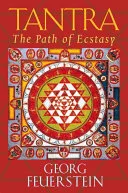
Georg Feuerstein's *Tantra* admirably confronts the pervasive Western misunderstanding of this complex spiritual path. His approach is commendably scholarly, meticulously separating historical practice from the eroticized caricatures that have proliferated. The strength of the book lies in its detailed historical contextualization, tracing Tantra’s development within Hinduism and its philosophical underpinnings. Feuerstein’s explanation of *shakti* and *kundalini* as fundamental cosmic and individual forces, rather than mere physiological phenomena, is particularly illuminating. A limitation, however, is that the sheer density of historical and philosophical detail might prove somewhat dry for readers solely seeking practical application without a strong academic inclination. The passage detailing the esoteric interpretations of the *Panchamakara* ritual, for instance, provides crucial corrective information but requires careful study. Ultimately, Feuerstein delivers a vital corrective, re-establishing Tantra as a serious spiritual discipline.
📝 Description
78
Georg Feuerstein's *Tantra* (2000) clarifies a spiritual tradition often misunderstood.
Georg Feuerstein's *Tantra* addresses common Western misconceptions about this Hindu spiritual tradition. He presents it as a sophisticated philosophical and practical system, detailing its core ideas and differentiating authentic practices from popular distortions. Feuerstein emphasizes that Tantra's goal is the conscious realization of divine potential within each person.
This book suits students of yoga, comparative religion, and esoteric philosophy who want a clear understanding of Tantra. It is helpful for those familiar with Kundalini Yoga seeking its historical and philosophical background. Readers confused by New Age interpretations of Tantric practices will find accurate information. Academics and serious practitioners looking for a dependable introduction to the subject will also find value here.
Feuerstein places Tantra within Indian religious thought, tracking its origins and growth through history. The work notes Tantra's rise as an important force by the medieval period, influencing both Hindu and Buddhist traditions. It acknowledges difficulties in understanding Tantra, especially how its practices were often kept secret or passed down through specific lineages, leading to later misinterpretations.
This book examines Tantra, a complex spiritual path within Hinduism that has often been misrepresented in the West. Feuerstein situates it within a broader history of Indian religious thought, noting its emergence by the medieval period and its interaction with other traditions. He highlights how Tantric practices, often transmitted through esoteric lineages, led to later misunderstandings. The work aims to clarify concepts like shakti, kundalini, mantra, and yantra, presenting them as tools for spiritual transformation rather than mere ritual.
💡 Why Read This Book?
• Understand the historical lineage of Tantra, moving beyond superficial Western interpretations, by examining its development within Hinduism since its medieval emergence. • Grasp the core concepts of *shakti* and *kundalini*, learning their philosophical significance as divine energy and spiritual power as explained by Feuerstein. • Differentiate authentic Tantric practices from common misrepresentations, appreciating their role in spiritual liberation as detailed in the historical context provided.
⭐ Reader Reviews
Honest opinions from readers who have explored this book.
❓ Frequently Asked Questions
What is the primary misconception about Tantra that Georg Feuerstein addresses?
Feuerstein's book directly confronts the widespread Western misconception that Tantra is primarily about eroticism or licentious practices. He clarifies its true nature as a sophisticated spiritual tradition within Hinduism focused on cultivating divine energy (shakti) for liberation.
When was Georg Feuerstein's book 'Tantra' first published?
Georg Feuerstein's influential work 'Tantra' was first published on July 28, 1998. This publication date is significant for understanding its place in the discourse on Eastern spirituality in the late 20th century.
What is the concept of 'shakti' as explained in Feuerstein's 'Tantra'?
In Feuerstein's 'Tantra,' shakti is explained as the fundamental divine power or cosmic energy that underlies all creation. It is the active, dynamic principle often associated with the feminine aspect of the divine, essential for spiritual realization.
How does Feuerstein's 'Tantra' relate to Kundalini Yoga?
Feuerstein's book positions Tantra as a fundamental dimension of Hinduism that significantly informs practices like Kundalini Yoga. He explains how Tantric principles, particularly the cultivation of kundalini energy, are integral to this yoga system.
What historical periods does Feuerstein's 'Tantra' cover?
Feuerstein's 'Tantra' provides a historical overview, tracing the tradition from its potential roots to its significant development during the medieval period in India. It contextualizes Tantra within the broader landscape of Hindu religious thought.
Is Feuerstein's 'Tantra' suitable for beginners?
Yes, Feuerstein's 'Tantra' is designed as a clear and lively introduction, making it suitable for beginners seeking an accurate understanding of the tradition. It provides historical context and explains key concepts without excessive jargon.
🔮 Key Themes & Symbolism
Shakti and Kundalini
Feuerstein meticulously unpacks the concepts of *shakti* and *kundalini*, defining them not merely as physiological phenomena but as fundamental cosmic and individual energies. *Shakti* represents the divine, active power inherent in existence, while *kundalini* is the dormant, coiled spiritual force within the human body, poised for awakening. The book elucidates how Tantric practices aim to consciously harness and redirect these energies toward spiritual transformation and liberation, moving beyond simplistic or sensationalized notions often prevalent in Western discourse.
Historical Development
The work provides a crucial historical grounding for Tantra, tracing its evolution within the complex milieu of Indian religious traditions. Feuerstein situates Tantra's emergence and flourishing, particularly from the medieval period onwards, highlighting its interactions with and influence upon both Hindu and Buddhist philosophies. This historical perspective is vital for understanding how Tantra developed distinct schools and practices, and how its esoteric nature contributed to later misunderstandings when transmitted across cultural boundaries.
Dispelling Misconceptions
A central aim of Feuerstein's book is to correct prevalent Western misinterpretations of Tantra, which often reduce it to mere sexual practices or licentious behavior. He contrasts these distorted views with the authentic philosophy and spiritual goals of the tradition, emphasizing its focus on the cultivation of divine power (*shakti*) as a path to ultimate bliss and non-dual realization. The book serves as a vital corrective, offering clarity and historical accuracy against a backdrop of sensationalism.
Tantric Practices and Philosophy
Feuerstein systematically introduces key Tantric concepts and practices, including mantra, yantra, and the role of the guru. He explains their function within the broader Tantric worldview, which seeks to see the divine in all aspects of existence and utilize all experiences, including the physical, as pathways to spiritual realization. The emphasis is on the sublimation of energy and the integrated approach to spiritual growth, aiming for wholeness rather than ascetic denial.
💬 Memorable Quotes
Direct passages from the work, attributed to the author.
“Tantra is a fundamental dimension of Hinduism, emphasizing the cultivation of ‘divine power’ (shakti) as a path to infinite bliss.”
— This core statement establishes the book's central thesis: Tantra's true nature lies in harnessing spiritual energy (*shakti*) for ultimate spiritual attainment, reframing it as a legitimate and profound Hindu path to ecstasy.
“Tantra has been widely misunderstood in the West, however, where its practices are often confused with eroticism and licentious morality.”
— This highlights the book's critical mission to dismantle popular, often sensationalized, Western perceptions of Tantra. Feuerstein aims to provide an accurate scholarly counterpoint to these widespread misrepresentations.
“The cultivation of divine power (shakti) is central to Tantric practice.”
— This emphasizes the active, energetic aspect of Tantra. It suggests that the tradition is less about passive contemplation and more about the dynamic engagement with and transformation of spiritual forces within the practitioner.
“Authentic Tantra is a sophisticated spiritual system, not merely a collection of rituals.”
— This interpretation underscores Feuerstein's scholarly approach, positioning Tantra as a coherent philosophical and practical framework. It elevates the tradition beyond superficial interpretations of its techniques or symbolism.
💡 Key Ideas
Editorial paraphrase of the work's core concepts — not direct quotes.
The Path of Ecstasy dispels many common misconceptions.
This paraphrase from the blurb indicates the book's direct intention to educate and correct. It promises a clear, factual approach to clearing away the fog of misunderstanding surrounding the Tantric tradition.
🌙 Esoteric Significance
Tradition
Feuerstein's work engages deeply with the Tantric tradition, which is a significant, albeit complex, branch of Indic religions, particularly Hinduism and Buddhism. While not fitting neatly into Western esoteric frameworks like Hermeticism or Kabbalah, Tantra shares with them an emphasis on esoteric knowledge, ritual efficacy, and the realization of hidden potentials within the human microcosm. Feuerstein positions Tantra as a distinct path focused on the cultivation and sublimation of divine energy (*shakti*) for liberation, departing from purely ascetic or devotional paths by integrating the material world as a vehicle for transcendence.
Symbolism
Central symbols in Tantra, as explored by Feuerstein, include *Shiva* and *Shakti*, representing consciousness and energy, the divine masculine and feminine principles, whose union is often depicted as the cosmic creation. The *Kundalini* serpent, coiled at the base of the spine, symbolizes dormant spiritual energy awaiting awakening. Geometric diagrams like *yantras* serve as visual aids for concentration and as representations of divine energies or cosmic principles, acting as focal points for meditation and ritual. These symbols are not mere decorations but potent tools for spiritual transformation.
Modern Relevance
Feuerstein's rigorous scholarship on Tantra provides a vital resource for contemporary thinkers and practitioners seeking to understand the tradition beyond popular distortion. Modern yoga lineages, especially those focusing on energetic practices like Kundalini Yoga, often draw implicitly or explicitly from the historical and philosophical foundations Feuerstein elucidates. Furthermore, scholars of religion and comparative mysticism find his work essential for accurate contextualization, helping to bridge the gap between ancient wisdom and modern spiritual inquiry.
👥 Who Should Read This Book
• Students of comparative religion and Indology seeking an accurate, historically grounded overview of the Tantric tradition, moving beyond sensationalized accounts. • Practitioners of yoga, particularly Kundalini Yoga, who wish to understand the philosophical and historical underpinnings of their practice beyond mere technique. • Esotericists and spiritual seekers interested in non-dualistic paths and the exploration of divine energy (*shakti*) as a means of transformation, wanting a scholarly yet accessible introduction.
📜 Historical Context
Published in 1998, Georg Feuerstein's *Tantra* arrived at a time when interest in Eastern spirituality was high, yet often filtered through New Age interpretations. The book sought to provide a scholarly counterpoint to the rampant Western sensationalism surrounding Tantra, particularly its association with eroticism. Feuerstein situates Tantra within the vast history of Indian religious thought, acknowledging its development from the medieval period onwards and its complex relationship with both Hindu traditions (like Shaivism and Vaishnavism) and Buddhism. While many contemporary popularizers focused on isolated practices, Feuerstein emphasized Tantra as a comprehensive philosophical system. His work aimed to correct the record against a backdrop where figures like Osho had significantly shaped Western perceptions, often controversially. The book's meticulous research offered a much-needed corrective, grounding the discussion in historical and textual evidence, distinguishing it from purely experiential or speculative accounts.
📔 Journal Prompts
The concept of *shakti* as divine power: how does this differ from typical Western notions of 'power'?
Reflecting on the *Kundalini* serpent symbol: what does its coiled state suggest about dormant potential?
The historical development of Tantra: how might its esoteric nature have led to misunderstandings?
Feuerstein's critique of Western misinterpretations: what specific examples come to mind?
Considering the role of *mantra* and *yantra*: how can sound and form facilitate spiritual focus?
🗂️ Glossary
Shakti
The primordial cosmic energy, the dynamic, active principle of the universe, often personified as the divine feminine. In Tantra, it is the power that animates creation and is essential for spiritual realization.
Kundalini
Literally 'the coiled one,' referring to the dormant spiritual energy believed to reside at the base of the spine. Its awakening and ascent through the chakras are central to many Tantric and yogic practices.
Mantra
A sacred sound, syllable, word, or phrase used in meditation and ritual for spiritual transformation. Mantras are believed to possess vibrational power capable of influencing consciousness.
Yantra
A mystical geometric diagram used as a tool for concentration, meditation, and ritual in Tantra. Yantras are often seen as visual representations of cosmic principles or deities.
Guru
A spiritual teacher or master who guides disciples on the path to enlightenment. In Tantra, the guru holds a central role in transmitting knowledge and initiating students.
Non-duality (Advaita)
The philosophical concept that reality is ultimately a single, indivisible whole, without fundamental distinctions. Many Tantric traditions aim for the realization of this non-dual state.
Panchamakara
The 'five Ms,' a set of five ritual elements used in some Tantric practices: madya (wine), mamsa (meat), matsya (fish), mudra (grain/symbolic gesture), and maithuna (sexual union). Feuerstein clarifies their esoteric interpretations.