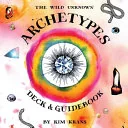
The Wild Unknown Archetypes Deck and Guidebook
 84
84

The Wild Unknown Archetypes Deck and Guidebook
Kim Krans' "The Wild Unknown Archetypes Deck and Guidebook" is more than just another divinatory tool; it's an invitation into a meticulously crafted symbolic universe. The artwork itself, a signature of Krans' style, possesses a raw, almost primal energy that draws you into contemplation. The strength of this deck lies in its conceptual depth, moving beyond predictive readings to explore the core dynamics of the psyche. However, the sheer volume of archetypes presented, while comprehensive, can feel overwhelming for a novice, demanding significant commitment to fully grasp. A particularly striking element is the "Shadow" archetype, which Krans handles with nuanced darkness, avoiding simplistic good-vs-evil dichotomies. While the guidebook offers extensive interpretations, it sometimes assumes a familiarity with Jungian terminology that might not be present in all users. Ultimately, this is a potent system for introspection, best suited for those prepared for dedicated study.
📝 Description
84
Kim Krans' 2017 Archetypes Deck maps 78 illustrated cards to Jungian archetypes.
This collection from Kim Krans builds upon her previous work with "The Wild Unknown Tarot." It introduces a system for divination and self-reflection using 78 illustrated cards and a companion guidebook. The deck moves beyond simple fortune-telling, aiming to shed light on the fundamental archetypes that shape how we perceive and act.
The Archetypes Deck is intended for individuals seeking a deeper connection to their inner selves and the universal symbols that influence human awareness. Those interested in Jungian psychology, mythology, and visual introspection will find this deck particularly useful. Artists, writers, and anyone pursuing creative or personal growth may also find its imagery and concepts meaningful.
Krans' work arrives during a period where esoteric practices are increasingly integrated into wellness and self-help culture. While divination tools like tarot have a long history, Krans' modern style and focus on archetypal psychology connect with a renewed interest in Jungian concepts. This resurgence is particularly notable among younger generations looking for meaning outside established structures. The deck presents these archetypes not just as static figures but as active forces influencing our lives.
💡 Why Read This Book?
• Gain a visual language for understanding deep psychological patterns, informed by the specific "Archetypes" presented in the deck's 78 cards, moving beyond generic self-help. • Connect with the legacy of Carl Jung's theories on the collective unconscious, exploring how these universal symbols manifest in your life, as detailed in the guidebook. • Develop a unique divinatory practice rooted in ancient symbolic representation, utilizing the 2019-published deck to foster personal insight beyond conventional tarot meanings.
⭐ Reader Reviews
Honest opinions from readers who have explored this book.
❓ Frequently Asked Questions
What is the primary difference between The Wild Unknown Archetypes Deck and traditional tarot decks?
While traditional tarot decks follow a structured system like the Rider-Waite-Smith, the Archetypes Deck focuses on universal symbolic figures and concepts from the collective unconscious, as theorized by Carl Jung, offering a distinct approach to self-discovery beyond standard archetypes like the Fool or the Magician.
Who is Kim Krans and what is her background?
Kim Krans is the New York Times bestselling author and artist behind "The Wild Unknown" series. Her work is celebrated for its distinctive, hand-drawn style and its ability to connect with contemporary audiences on esoteric and psychological themes, building on the success of her 2012 tarot deck.
How many cards are in The Wild Unknown Archetypes Deck?
The deck comprises 78 cards, each illustrated by Kim Krans to represent a specific archetype. This number is consistent with traditional tarot decks, but the thematic focus on archetypes offers a different interpretive framework.
What kind of guidance does the accompanying guidebook offer?
The guidebook provides detailed interpretations for each of the 78 archetypes, exploring their meanings, symbolism, and how they manifest in personal lives. It serves as a companion for understanding the complex layers of the collective unconscious presented in the deck.
Is this deck suitable for beginners in divination or esoteric studies?
While accessible due to its striking art, the deck's depth and reliance on archetypal concepts, influenced by Jungian psychology, may require dedicated study. Beginners might find it beneficial to start with introductory concepts of archetypes before fully engaging with the deck's intricate system.
When was The Wild Unknown Archetypes Deck and Guidebook first published?
The Wild Unknown Archetypes Deck and Guidebook was first published on October 15, 2019, making it a relatively recent addition to the field of modern esoteric tools and artistic divination.
🔮 Key Themes & Symbolism
The Collective Unconscious
This deck posits that a universal reservoir of symbols and instincts, as theorized by Carl Jung, profoundly influences human behavior and perception. Krans' illustrations aim to make these abstract concepts tangible. The deck encourages users to recognize these shared patterns within themselves, bridging the gap between personal experience and the broader human psyche. It's an exploration of the inherited, archetypal blueprint that shapes our dreams, myths, and daily lives.
Archetypal Figures
Central to the work are the archetypes themselves – the primal figures and patterns that exist across cultures and time. The deck translates these into visual representations, such as the "Great Mother," "The Rebel," or "The Hermit." Each card is designed to embody the essence of these universal characters, offering a framework for understanding recurring themes in mythology, literature, and individual life stories. The guidebook provides extensive detail on each figure's significance.
Inner Alchemy and Transformation
Beyond mere identification, the deck serves as a tool for personal transformation. By engaging with the archetypes, particularly their shadow aspects, users are guided toward integrating fragmented parts of themselves. The process involves confronting internal patterns, understanding their origins, and harnessing their energy for growth. This practice encourages a form of inner alchemy, turning raw psychological material into self-awareness and empowerment.
Mythic Resonance
The Archetypes Deck taps into the power of myth and storytelling, which have been fundamental to human understanding for millennia. Krans draws parallels between the archetypal figures and characters found in global mythologies, suggesting a common source for human narrative. By connecting with these ancient stories through the cards, users can gain perspective on their own life narratives and the universal human quest for meaning.
💬 Memorable Quotes
Direct passages from the work, attributed to the author.
“Archetypes are the primal patterns of the psyche.”
— This statement captures the deck's core premise: that universal, inherited symbolic figures and themes form the bedrock of human consciousness and drive our motivations and behaviors.
“The shadow holds both our greatest fears and our untapped potential.”
— This highlights the dual nature of the shadow archetype, suggesting that confronting and integrating our darker, repressed aspects is crucial for unlocking hidden strengths and achieving wholeness.
“We are all part of the same great story.”
— This interpretation emphasizes the interconnectedness of human experience, suggesting that individual lives and struggles are reflections of larger, universal narratives found in myth and the collective unconscious.
“The cards illuminate the unseen forces at play in our lives.”
— This speaks to the divinatory and introspective function of the deck, positioning it as a guide to understanding the subtle, often subconscious, influences that shape our reality and decisions.
“Embrace the archetypes to understand yourself more fully.”
— This serves as a call to action, encouraging the user to actively engage with the deck's system as a method for deeper self-knowledge and personal development.
🌙 Esoteric Significance
Tradition
While not strictly adhering to a single historical esoteric lineage, this work draws heavily on Jungian analytical psychology, which itself is deeply informed by Gnosticism, Hermeticism, and comparative mythology. Krans' approach can be seen as a modern, art-centric manifestation of the perennial philosophy, translating archetypal concepts into a format accessible to contemporary seekers outside formal occult orders.
Symbolism
Key symbols include the "Great Mother," representing nurturing, creation, and the primordial feminine, echoing ancient earth goddesses. The "Shadow" archetype is depicted with potent, often unsettling imagery, reflecting its role as the repository of repressed desires and fears, a concept central to alchemical individuation. The "Trickster" archetype embodies chaos, change, and the subversion of norms, vital for breaking rigid patterns.
Modern Relevance
The deck is highly relevant to contemporary practices in somatic experiencing, mindfulness-based therapies, and transpersonal psychology. Therapists and coaches utilize such visual tools to facilitate dialogue about unconscious material. Thinkers exploring the intersection of art, psychology, and spirituality, such as those influenced by Jungian analysts like James Hillman, find resonance in Krans' symbolic language.
👥 Who Should Read This Book
['• Individuals interested in Jungian psychology and archetypal symbolism: They will find a visually engaging and practical application of concepts like the collective unconscious and the shadow, presented through 78 distinct archetypes.', "• Artists, writers, and creatives seeking inspiration: They can utilize the deck's rich imagery and thematic depth to unlock new ideas, explore character archetypes, and deepen their understanding of narrative symbolism.", "• Seekers of self-knowledge and personal growth: Those looking for tools beyond traditional tarot or self-help books will appreciate the deck's focus on identifying and integrating core psychological patterns for greater self-awareness."]
📜 Historical Context
Kim Krans' "The Wild Unknown Archetypes Deck and Guidebook," published in 2019, arrived during a significant resurgence of interest in esoteric practices and Jungian psychology, particularly among millennials and Gen Z. This era saw a mainstreaming of mindfulness, tarot, and astrological readings, often integrated into wellness culture. Krans' previous success with "The Wild Unknown Tarot" in 2012 had already established her as a prominent voice in contemporary esoteric art. Her work tapped into a desire for meaning and self-exploration that traditional structures often failed to provide. Unlike the more academic explorations of Jung by scholars such as Marie-Louise von Franz, Krans offered an accessible, visually driven entry point. While movements like Theosophy in the late 19th and early 20th centuries also explored universal symbols, Krans’ approach is distinctly modern, blending artistic expression with psychological depth, and finding a receptive audience in a digitally saturated world seeking tangible connection and introspection.
📔 Journal Prompts
The "Archetype of the Child" card's potential for renewal.
The "Great Mother" archetype's influence on your nurturing instincts.
Reflecting on the "Shadow" archetype's integration into your daily life.
Exploring the "Trickster" archetype's role in challenging your routines.
How the "Wise Old Man" archetype offers guidance in decision-making.
🗂️ Glossary
Archetype
Universal, inherited patterns of thought or imagery derived from the collective unconscious, influencing human behavior and perception. Examples include the Hero, the Mother, and the Trickster.
Collective Unconscious
A concept introduced by Carl Jung, referring to a shared reservoir of instincts, symbols, and memories inherited by all humanity, distinct from the personal unconscious.
Shadow
In Jungian psychology, the unconscious aspect of the personality that the conscious ego does not identify in itself. It contains repressed desires, weaknesses, and instincts.
Individuation
The psychological process by which an individual becomes a whole, integrated self, incorporating conscious and unconscious elements, as described by Carl Jung.
Mythology
The body of myths of a particular cultural tradition, often dealing with supernatural beings, historical legends, or the explanation of natural phenomena.
Symbolism
The use of symbols to represent ideas and qualities, especially in art and literature. In this context, it refers to the visual language of the archetypes.
Divination
The practice of seeking knowledge of the future or the unknown by supernatural means. This deck offers a symbolic system for introspection and insight.
This book appears in 1 collection
🔮 Readers Also Liked
Browse all →








From the “Archetypes” Collection
View all →

![Archetypal principles and hierarcheis [sic]](/img/thumb/archetypal-principles-and-hierarcheis-sic-john-peter-anton.webp)

More Free Occult Philosophy Books
View all →