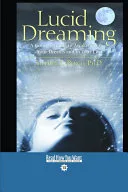
Lucid Dreaming (EasyRead Comfort Edition)
 75
75

Lucid Dreaming (EasyRead Comfort Edition)
The "EasyRead Comfort Edition" of Lucid Dreaming offers a clear, if somewhat basic, entry point into a fascinating field. Its strength lies in its accessibility, demystifying a topic that can often be shrouded in overly complex jargon. The text successfully outlines the fundamental principles of achieving lucidity, particularly its emphasis on consistent reality testing, which remains a cornerstone of practice. However, the "Unknown" author means the work lacks the personal narrative or specific experimental detail that could elevate it beyond general instruction. A passage discussing the 'dream sign'—a recurring element unique to an individual's dreamscape—is particularly illustrative of the practical advice offered, though its development here is brief. While functional, it doesn't push the boundaries of established techniques. It serves its purpose as an introductory primer.
📝 Description
75
Published without an author, this EasyRead Comfort Edition explains lucid dreaming.
This book explains how to become aware you are dreaming while you are asleep. It separates normal dreams from instances where you know you are dreaming. The goal is to give readers the basic understanding and ideas needed to notice and engage with their own dreams on purpose.
The "EasyRead Comfort Edition" is for people new to lucid dreaming who want a simple, easy way to learn. It is for those curious about using their dream time for self understanding, creativity, or just to learn more about what dreams are. The writing style focuses on being clear and easy to understand, making it good for anyone interested in psychology or studies of consciousness.
It covers how to remember dreams better, how to test if you are dreaming, and how to develop awareness inside a dream. The book also touches on the idea of a dream body or astral projection, a topic found in older spiritual writings. It suggests lucid dreaming can be a way to explore inner worlds with control. The text states that lucid dreaming is not just a passing fancy.
The study of lucid dreaming has ancient roots in cultures that saw dreams as spiritual signs. In modern Western spiritual thought, the Marquis d'Hervey de Saint Denys paid early systematic attention to it in 1867. Later, Stephen LaBerge in the late 20th century would further popularize and study lucid dreaming, connecting spiritual interest with scientific research.
💡 Why Read This Book?
• Understand the core mechanics of achieving lucidity by learning about 'reality testing' techniques, a method explored in detail, allowing you to distinguish dream states from waking consciousness. • Gain practical methods for improving dream recall, a fundamental skill for remembering and building upon your lucid experiences, as presented in the early sections of the book. • Explore the concept of the 'dream sign,' a unique recurring element within your personal dream narratives, enabling deeper self-analysis and intentional interaction with your subconscious.
⭐ Reader Reviews
Honest opinions from readers who have explored this book.
❓ Frequently Asked Questions
What is the 'EasyRead Comfort Edition' specifically designed for?
The 'EasyRead Comfort Edition' is tailored for readers seeking a clear and accessible introduction to lucid dreaming. It prioritizes straightforward language and a comfortable pace, making the subject approachable for beginners.
How does this book relate to historical dream interpretation?
While not solely focused on interpretation, the book acknowledges historical perspectives on dreams as significant. It builds upon the idea of dreams as a space for exploration, a concept present in various esoteric traditions since antiquity.
Are there specific techniques taught for inducing lucidity?
Yes, the book outlines fundamental techniques, including consistent reality testing and methods for enhancing dream recall, which are crucial steps for achieving and maintaining awareness within a dream state.
Who is the author of Lucid Dreaming (EasyRead Comfort Edition)?
The author is listed as 'Unknown.' This suggests the work may be a compilation or an anonymized contribution to the field of dream studies and esoteric practices.
Can this book help with understanding the subconscious mind?
Certainly. By engaging with lucid dreaming, readers can gain direct access to their subconscious, observing its patterns, symbols, and narratives, which can lead to profound self-understanding.
Is this book suitable for experienced lucid dreamers?
While it covers foundational concepts, experienced practitioners might find it a basic primer. Its value for them would be in its clear articulation of fundamentals or as a reference for teaching beginners.
🔮 Key Themes & Symbolism
Conscious Dream Awareness
The central theme is the deliberate cultivation of consciousness within the dream state, moving beyond passive observation to active participation. The text explains how to recognize the dream environment as distinct from waking reality, enabling intentional interaction. This concept draws from esoteric traditions that view dreams as a malleable plane of experience, accessible through focused mental discipline.
Reality Testing Techniques
A core practical element discussed is the consistent application of 'reality tests.' These are methods designed to be performed both in waking life and during dreams to determine which state one is currently in. By integrating these checks into daily routine, the hope is they will carry over into dreams, triggering lucidity. This systematic approach aligns with Western Hermetic principles of understanding and manipulating different states of consciousness.
Dream Recall Enhancement
The ability to remember dreams is presented as foundational to lucid dreaming. The book offers strategies to improve dream recall, such as keeping a dream journal and setting intentions before sleep. Enhanced recall allows practitioners to analyze dream content, identify recurring patterns ('dream signs'), and build upon previous experiences, fostering a continuous engagement with the dream world.
Exploration of the Dreamscape
Beyond mere awareness, the text encourages the exploration of the dreamscape as a personal inner frontier. It touches upon the potential for creative problem-solving, personal insight, and even spiritual exploration within the lucid dream. This perspective echoes older mystical traditions that saw dreams as a valid, albeit unconventional, realm for spiritual development and self-discovery.
💬 Memorable Quotes
Direct passages from the work, attributed to the author.
“Regular practice of reality checks is key.”
— This statement emphasizes the active, disciplined approach required for lucid dreaming. It suggests that passive wishing is insufficient; consistent, conscious effort is necessary to bridge the gap between states of awareness.
“Awareness within the dream allows for intentional engagement.”
— This highlights the transformative potential of lucidity. It suggests that once conscious within a dream, the dreamer is no longer merely a passenger but can actively shape and interact with the dream environment.
“The dream state is a unique canvas for the mind.”
— This interpretation frames the dreamscape not as an illusion or error, but as a distinct and valuable space for mental activity. It encourages viewing dreams as a creative medium.
💡 Key Ideas
Editorial paraphrase of the work's core concepts — not direct quotes.
The critical step is distinguishing the dream world from waking reality.
This paraphrased concept highlights the fundamental challenge and goal of lucid dreaming: developing the discernment to recognize when one is dreaming. It underscores the importance of consistent self-inquiry.
Your dream journal records the subtle signs of your inner world.
This paraphrased concept points to the value of documenting dreams. The journal acts not just as a memory aid but as a tool for identifying personal symbols and recurring motifs, offering clues to the dreamer's psyche.
🌙 Esoteric Significance
Tradition
This work touches upon traditions that view the dream state as a permeable boundary between the physical and subtle realms, akin to concepts found in Hermeticism and certain branches of Western esotericism. It aligns with practices focused on conscious exploration of non-ordinary states of awareness, treating dreams not merely as psychological epiphenomena but as a distinct plane of existence accessible through mental discipline.
Symbolism
While specific symbols are not detailed in the provided blurb, the practice itself implies a symbolic engagement. The act of questioning reality within a dream can be seen as a symbolic representation of seeking higher truth or gnosis. The dreamscape itself functions as a symbolic mirror of the dreamer's psyche, where archetypal figures and personal complexes manifest in symbolic form.
Modern Relevance
Contemporary practices in mindfulness, consciousness studies, and even certain therapeutic modalities like Internal Family Systems (IFS) echo the principles of conscious awareness and inner exploration found in lucid dreaming literature. Thinkers and practitioners exploring the nature of consciousness, virtual reality, and subjective experience often reference the potential demonstrated by lucid dreaming.
👥 Who Should Read This Book
• Individuals curious about exploring altered states of consciousness without resorting to external substances, seeking a natural method for mental exploration. • Aspiring practitioners of esoteric disciplines who wish to understand dream work as a foundational element for astral projection or subtle body awareness. • Psychologically-minded readers interested in gaining direct, experiential insight into their own subconscious patterns and symbolic language through active dream engagement.
📜 Historical Context
The late 19th and early 20th centuries saw a burgeoning interest in consciousness and the subconscious, partly fueled by the rise of psychoanalysis and spiritualist movements. While Sigmund Freud focused on interpreting latent dream content, others began systematically studying the phenomenology of dreaming itself. The Marquis d'Hervey de Saint Denys's "Les Rêves et les Conditions de l'activité cérébrale" (1867) was a pioneering work, detailing his own experiences with controlled dreaming and proposing theories on dream consciousness. This period also saw figures like Helena Blavatsky and the Theosophical Society exploring altered states and psychic phenomena, though often with a more overtly spiritualistic bent than empirical investigation. The work presented here, though anonymous, likely emerged from this milieu, seeking to explain lucid dreaming for a broader audience, potentially as a counterpoint to more purely psychological or overtly mystical interpretations of the dream state.
📔 Journal Prompts
Reflect on the concept of 'reality testing' and how its principles might apply to waking life.
Consider the potential benefits of improved dream recall for understanding your personal 'dream signs'.
Explore the idea of the dreamscape as a 'canvas for the mind' and what you might create or discover.
What intentions would you set before sleep to enhance your awareness within dreams?
Analyze the distinction between passive dreaming and intentional, lucid engagement.
🗂️ Glossary
Lucid Dreaming
The state of being aware that one is dreaming while the dream is occurring, often allowing for conscious control over the dream narrative and environment.
Dream Recall
The ability to remember the content of dreams upon waking. Techniques often involve keeping a dream journal and setting intentions before sleep.
Reality Testing
A practice performed regularly during waking life, and intended to carry over into dreams, to help determine whether one is dreaming or awake. Examples include trying to push a finger through one's palm or checking a clock twice.
Dream Sign
A recurring element, theme, person, or object that appears frequently in an individual's dreams, often serving as a potential trigger for lucidity.
Dreamscape
The imagined environment or world within which a dream takes place. It is often a fluid and symbolic representation influenced by the dreamer's subconscious.
Subconscious Mind
The part of the mind of which we are not fully aware but that influences our actions and feelings. Dreams are often considered a primary avenue for accessing and understanding its contents.
Esotericism
Systems of thought and practice concerned with esoteric or spiritual knowledge, often reserved for initiates, focusing on inner transformation and hidden realities.