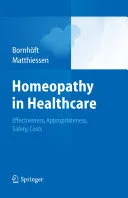
Homeopathy in Healthcare
 81
81

Homeopathy in Healthcare
The strength of Gudrun Bornhöft and Peter Matthiessen's "Homeopathy in Healthcare" lies in its unflinching presentation of the Health Technology Assessment (HTA) commissioned by Swiss authorities. It eschews speculative interpretation for empirical data, directly confronting questions of effectiveness and cost. The report's systematic approach, examining safety and appropriateness alongside efficacy, is commendable. However, its clinical focus, while thorough, can feel dense for readers seeking a broader philosophical or historical understanding of homeopathy's place in alternative medicine. A specific passage detailing the statistical analysis of patient outcomes, while crucial for the HTA's integrity, might prove challenging for those unfamiliar with epidemiological methods. This work offers a crucial, albeit technical, snapshot of one nation's evaluation of a controversial therapy.
📝 Description
81
In 2011, Swiss health authorities commissioned a full Health Technology Assessment of homeopathy.
This volume contains the complete Health Technology Assessment (HTA) report on homeopathy, which was commissioned by Swiss health authorities. The report systematically examines the effectiveness, appropriateness, safety, and costs associated with homeopathic treatments. Its findings were intended to inform critical decisions about including homeopathy in Switzerland's statutory health insurance coverage. The research was part of the larger Swiss Complementary Medicine Evaluation Programme (PEK), an initiative that evaluated various complementary therapies. This program's structured approach and its conclusions on homeopathy sparked considerable discussion in medical and public circles. The HTA report uses rigorous scientific methods to analyze existing evidence on homeopathy, synthesizing data from numerous studies and assessing them against established medical intervention criteria. The scope includes therapeutic outcomes, economic implications, and patient safety, offering a broad perspective. This book is a detailed resource for policymakers, healthcare providers, and researchers interested in the evidence for homeopathy, presenting the assessment process and its conclusions transparently. It contributes to a more informed discussion about integrating complementary medicine into conventional healthcare systems.
While this book presents a formal health technology assessment, its subject, homeopathy, originates from a tradition of vitalistic medicine that emerged in the late 18th century. Homeopathy posits that substances causing symptoms in healthy people can, in highly diluted form, treat similar symptoms in the sick. This principle, known as 'like cures like,' and the practice of serial dilution and succussion (vigorous shaking) are central to its unique approach, differentiating it from conventional pharmacology and placing it within a lineage of naturalistic healing philosophies.
💡 Why Read This Book?
• Gain a concrete understanding of the effectiveness, safety, and cost analysis for homeopathy as presented in the Swiss Health Technology Assessment (HTA) report, providing specific data points not found in general overviews. • Understand the methodological rigor applied to evaluating complementary medicine, as exemplified by the Swiss Complementary Medicine Evaluation Programme (PEK), offering insights into evidence-based assessment. • Discover the policy implications of such assessments, learning how the findings informed decisions on statutory health insurance coverage in Switzerland, a practical case study for healthcare integration debates.
⭐ Reader Reviews
Honest opinions from readers who have explored this book.
❓ Frequently Asked Questions
What was the primary purpose of the Health Technology Assessment (HTA) report on homeopathy?
The primary purpose was to provide Swiss health authorities with a comprehensive evaluation of homeopathy's effectiveness, appropriateness, safety, and costs to inform decisions about its inclusion in statutory health insurance.
When was the book "Homeopathy in Healthcare" first published?
The book, featuring the HTA report, was first published on August 31, 2011.
Who commissioned the HTA report on homeopathy?
The Health Technology Assessment report on homeopathy was commissioned by the Swiss health authorities.
What other initiatives were part of the Swiss Complementary Medicine Evaluation Programme (PEK)?
The PEK programme involved various studies evaluating complementary medicine, including homeopathy, and its systematic approach caused considerable discussion due to its structured methodology.
Does this book present arguments for or against homeopathy?
This book presents the findings of a Health Technology Assessment, focusing on empirical data regarding effectiveness, safety, and cost, rather than advocating for or against homeopathy.
What specific areas does the HTA report evaluate regarding homeopathy?
The HTA report specifically evaluates the effectiveness, appropriateness, safety, and costs of homeopathy in healthcare settings.
🔮 Key Themes & Symbolism
Evidence-Based Evaluation
This work is centered on the rigorous application of evidence-based medicine principles to assess homeopathic treatments. It details the methodologies employed in the Health Technology Assessment (HTA) commissioned by Swiss authorities, focusing on quantifiable metrics of effectiveness, safety, and economic viability. The book underscores the importance of systematic reviews and data synthesis in informing healthcare policy, moving beyond anecdotal evidence to empirical scrutiny.
Healthcare Policy and Integration
The core concern of this volume is how evidence informs healthcare policy, specifically regarding the integration of complementary therapies into statutory health insurance. The HTA report was designed to guide decision-making for the Swiss health authorities, illustrating the complex interplay between scientific evaluation, public health systems, and patient access to diverse treatment modalities.
Safety and Appropriateness Assessment
Beyond mere efficacy, the book emphasizes the critical evaluation of safety and appropriateness in healthcare. The HTA rigorously examines potential risks and contraindications associated with homeopathic interventions, alongside their suitability within various clinical contexts. This multi-faceted approach aims to provide a balanced perspective on the overall value and risk profile of homeopathy.
Economic Considerations in Medicine
The financial dimension of healthcare interventions is a significant focus. This volume includes an analysis of the costs associated with homeopathic treatments, comparing them against conventional options and considering their impact on the healthcare budget. The economic assessment is integral to the HTA's mandate of informing decisions on insurance coverage and resource allocation.
💬 Memorable Quotes
Direct passages from the work, attributed to the author.
“The report was commissioned by the Swiss health authorities to inform decision-making on the further inclusion of homoeopathy in the list of services covered by statutory health insurance.”
— This foundational statement highlights the book's practical, policy-oriented purpose, positioning it as a critical document for understanding how scientific assessments influence national healthcare frameworks and insurance coverage.
“Other studies carried out as part of the Swiss Complementary Medicine Evaluation Programme (PEK) caused a massive stir due to their schematic and exclusively...”
— This phrase points to the controversial nature and significant impact of the PEK program's findings, suggesting that the systematic, structured approach taken in evaluating complementary medicine, including homeopathy, generated substantial public and professional debate.
“This volume includes the full Health Technology Assessment (HTA) report on effectiveness, appropriateness, safety and costs of homoeopathy in health care.”
— This direct declaration establishes the book's primary content: a comprehensive, multi-dimensional evaluation of homeopathy based on established health technology assessment criteria, setting expectations for detailed, evidence-based analysis.
“The report was commissioned by the Swiss health authorities...”
— This fact anchors the study within a specific governmental and geographical context, emphasizing its role as an official inquiry intended to guide public health policy and resource allocation within Switzerland.
“...effectiveness, appropriateness, safety and costs of homoeopathy in health care.”
— This enumeration clearly defines the four pillars of evaluation used in the HTA, signaling that the book will address homeopathy from multiple critical angles, not solely focusing on its therapeutic outcomes but also its practical and ethical dimensions.
🌙 Esoteric Significance
Tradition
While primarily an HTA report, homeopathy itself has roots in vitalistic philosophies that resonate with certain esoteric traditions, particularly those emphasizing subtle energies and individual vital force. Its origins in the work of Samuel Hahnemann in the late 18th century align with a period of increased interest in natural healing and vitalism, which often intersects with Hermetic principles of like-cures-like and the belief in unseen forces governing health.
Symbolism
The core homeopathic principle of 'like cures like' (similia similibus curentur) can be viewed through an esoteric lens as a symbolic representation of energetic resonance. The idea that a substance causing symptoms in a healthy person can, in highly diluted form, cure similar symptoms in a sick person, suggests a symbolic correspondence or energetic mirroring. The extensive use of dilution and potentization in homeopathy can also be interpreted symbolically, representing the refinement of essence or the extraction of energetic potency.
Modern Relevance
In contemporary discussions, this HTA report remains relevant for its rigorous methodology, serving as a benchmark for how evidence-based evaluation can be applied to CAM. Thinkers and practitioners interested in the intersection of conventional science and alternative healing modalities, particularly those focusing on systems like naturopathy, traditional Chinese medicine, or energy healing, often refer to such detailed assessments to understand the challenges and frameworks for integrating these practices into mainstream healthcare.
👥 Who Should Read This Book
• Healthcare policymakers and administrators tasked with evaluating and integrating complementary medicine into national health services, offering a concrete case study from Switzerland. • Researchers and academics in health technology assessment and evidence-based medicine, seeking detailed methodologies for evaluating non-conventional therapies. • Clinicians and practitioners of homeopathy, desiring a comprehensive understanding of the scientific and economic assessments that shape its place in healthcare systems.
📜 Historical Context
Published in 2011, "Homeopathy in Healthcare" emerged during a period of increasing scrutiny and debate surrounding complementary and alternative medicine (CAM) within established healthcare systems. The Swiss Complementary Medicine Evaluation Programme (PEK), under which this Health Technology Assessment (HTA) was conducted, represented a significant national effort to apply rigorous scientific evaluation to therapies often based on different paradigms. This was in contrast to the more qualitative or philosophical defenses of CAM prevalent in earlier decades. The work's context is the growing demand for evidence-based practice, pushing even non-conventional modalities to justify their place within publicly funded healthcare. The Swiss authorities' initiative was particularly noteworthy, as it directly engaged with the question of insurance coverage, a contentious issue debated internationally. While specific contemporary authors directly engaging with this particular HTA are not detailed in the provided blurb, the work itself became a key reference point in discussions about CAM efficacy and regulation, influencing policy debates in countries grappling with similar questions.
📔 Journal Prompts
The Health Technology Assessment (HTA) report's findings on effectiveness.
The Swiss Complementary Medicine Evaluation Programme (PEK) and its impact.
The cost-benefit analysis of homeopathy presented in the report.
The concept of appropriateness as applied to homeopathic treatments.
The role of the Swiss health authorities in commissioning this research.
🗂️ Glossary
Health Technology Assessment (HTA)
A systematic process used to evaluate the properties, safety, efficacy, and cost-effectiveness of health technologies, including drugs, medical devices, and procedures, to inform healthcare policy and decision-making.
Homeopathy
A system of alternative medicine based on the principle of 'like cures like' (similia similibus curentur), using highly diluted substances that are believed to stimulate the body's healing response.
Statutory Health Insurance
Mandatory health insurance schemes regulated and often provided or overseen by the state, covering essential medical services for the population.
Effectiveness
The extent to which a therapy achieves its intended results in real-world clinical practice, considering various patient populations and settings.
Appropriateness
The suitability of a medical intervention for a particular patient or clinical condition, considering factors like diagnosis, patient characteristics, and available alternatives.
Potentization (Homeopathy)
The process in homeopathy of diluting a substance and vigorously shaking it (succussion) to increase its therapeutic potency, according to homeopathic principles.
Swiss Complementary Medicine Evaluation Programme (PEK)
A research program initiated by Swiss health authorities to systematically evaluate the effectiveness and safety of various complementary medicine therapies.