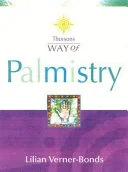
Way of Palmistry
 78
78

Way of Palmistry
Lilian Verner Bonds' 'Way of Palmistry' presents a refreshingly grounded perspective on a practice often relegated to parlor tricks. Its strength lies in its systematic breakdown of hand anatomy and line interpretation, moving toward psychological insight rather than simple prediction. The section on developing healing hands, for instance, offers practical exercises that feel less like divination and more like subtle energy work, a compelling aspect absent in many introductory texts. However, the book occasionally leans toward a somewhat generalized approach, particularly when discussing the more complex interplays between lines. A clearer delineation of how to synthesize multiple readings, rather than interpreting lines in isolation, would have enhanced its utility. The 2002 publication date means it lacks engagement with later developments in esoteric psychology, but its clear instruction makes it a solid, if somewhat conventional, guide to the art of palmistry.
📝 Description
78
Lilian Verner Bonds' 'Way of Palmistry' (2002) presents palm reading as a tool for self-awareness, not just fortune-telling.
Published in 2002, 'Way of Palmistry' by Lilian Verner Bonds offers a structured method for understanding chiromancy. The book moves beyond simple prediction, framing palm reading as a practice that fosters self-awareness and personal growth. Bonds details the physical characteristics of the hand, from its mounts and fingers to the various lines, establishing a system for interpretation. The aim is to clarify palmistry's principles and make them accessible for those interested in its practical uses. This volume is suitable for individuals curious about esoteric practices, especially those drawn to divination and self-knowledge. It serves as a clear starting point for beginners in palmistry. Those with existing knowledge can use it to deepen their understanding or refine their interpretive abilities. Readers seeking practical exercises to enhance intuition or a method to understand others more subtly will find this text valuable. It aims to demystify a practice often associated with the occult, presenting it as a system for personal insight.
Published in 2002, 'Way of Palmistry' arrived during a period of increased interest in esoteric subjects, following the New Age movements. While palmistry has ancient origins in India and Greece, Bonds' work contributes to its modern resurgence. It connects to a lineage of Western occult traditions, offering a contemporary perspective on a practice that has seen varied scholarly and popular reception.
💡 Why Read This Book?
• Gain practical techniques for reading palms that extend beyond simple fortune-telling, as detailed in the chapter on 'Reading the Hand of Another'. • Discover methods for developing intuitive and healing capacities through specific exercises designed for the hands, as outlined in the book's practical sections. • Understand the symbolic language of the hand, including the specific meanings of the mounts and lines, to gain a deeper insight into personal psychology and potential, as explained throughout the interpretive guides.
⭐ Reader Reviews
Honest opinions from readers who have explored this book.
❓ Frequently Asked Questions
When was 'Way of Palmistry' first published?
'Way of Palmistry' by Lilian Verner Bonds was first published in 2002, placing it within the late wave of renewed interest in esoteric studies at the turn of the millennium.
Does the book focus only on predicting the future?
No, the book emphasizes palmistry as a tool for self-understanding and personal development, explaining how to read palms for oneself and others to gain deeper insights into character and potential.
Are there exercises to develop one's palmistry skills?
Yes, the book includes simple exercises aimed at developing sensitivity and intuitive abilities, particularly focusing on exercises for developing 'healing hands'.
What are the main parts of the hand discussed in the book?
The book covers the anatomy of the hand, including the meaning of the mounts (like Venus and Jupiter), the major lines (Life, Head, Heart), and finger shapes, relating them to personality and life paths.
Is 'Way of Palmistry' suitable for complete beginners?
Absolutely. The book is designed to be comprehensive and accessible, providing a clear explanation of palmistry's principles and techniques for those new to the subject.
What is the historical origin of palmistry as discussed in the book?
While the book is a modern guide from 2002, it acknowledges the ancient roots of palmistry, which have been traced back to cultures in India and ancient Greece.
🔮 Key Themes & Symbolism
Hand Anatomy as Psyche Map
Bonds presents the hand not merely as a physical appendage but as a living cartography of the individual's inner landscape and destiny. The mounts, each associated with a planetary influence and a specific psychological drive (e.g., Mount of Venus for love and vitality, Mount of Mercury for communication and intellect), are explained as fundamental energetic centers. The lines are interpreted as pathways of experience and consciousness. This approach grounds chiromancy in a symbolic psychology, suggesting that the hand’s features offer tangible clues to one’s inherent nature and life trajectory.
Chiromancy for Self-Awareness
A central theme is using palmistry as a tool for profound self-knowledge. Rather than solely focusing on predictive outcomes, the book guides readers to interpret their own palms to understand their strengths, challenges, and innate potentials. By examining the unique configurations of lines and mounts, individuals can gain clarity on their personality traits, emotional patterns, and areas ripe for personal growth. This introspective application positions palmistry as a method for conscious self-exploration and psychological integration.
Developing Intuitive and Healing Hands
Beyond interpretation, Bonds includes practical exercises designed to cultivate the reader's intuitive faculties and even their capacity for subtle healing. This aspect elevates the practice from passive observation to active engagement. The exercises focus on developing sensitivity within the hands, encouraging a more direct connection with energetic fields. This suggests that the hands can become conduits for both understanding and subtle energetic influence, integrating a therapeutic dimension into the study of chiromancy.
The Art of Reading for Others
The book provides guidance on how to apply palmistry techniques when reading for other individuals. This involves not just interpreting the physical signs on the palm but also developing the discernment and empathy necessary for effective communication. Bonds outlines approaches for conveying insights constructively, framing palmistry as a means of offering supportive understanding and guidance to others, fostering connection through shared exploration of life's patterns.
💬 Memorable Quotes
Direct passages from the work, attributed to the author.
“The lines on our palms are not fixed predictions, but rather the energetic pathways of our lives.”
— This statement reframes palmistry from a deterministic art to a dynamic exploration of potential and influence, emphasizing the energetic and mutable nature of life experiences.
“Each mount on the hand corresponds to a planet and influences our character and destiny.”
— This highlights the astrological connection inherent in palmistry, suggesting that the hand's geography reflects the celestial influences that shape our personality and life path.
“Developing sensitivity in the hands allows for a deeper connection to subtle energies.”
— This points to the practical, almost tactile, aspect of esoteric practice, suggesting that focused physical awareness can unlock intuitive perception and energetic awareness.
“The Head Line reveals the nature of the mind and how we approach thought and learning.”
— This offers a specific interpretive key, illustrating how a particular palm feature directly correlates to a significant aspect of an individual's cognitive style and intellectual processes.
“Palmistry offers a mirror to the soul, reflecting both our inherent gifts and areas for growth.”
— This captures the essence of the book's approach: using the hand as a symbolic reflection for introspection and the pursuit of personal betterment.
🌙 Esoteric Significance
Tradition
This work aligns with the Western Esoteric tradition, particularly its branches focused on divination and physiognomy. It draws implicitly from Hermetic principles of correspondence ('As above, so below'), linking the macrocosm (planetary influences) to the microcosm (the hand). While not explicitly Kabbalistic or Theosophical, it shares with these traditions a symbolic language and an interest in mapping the human psyche and its potential for spiritual development through specific, observable signs.
Symbolism
Key symbols include the planetary mounts (Venus for love, Jupiter for ambition, Saturn for wisdom) and the primary lines (Life Line for vitality, Head Line for intellect, Heart Line for emotion). Each mount and line functions as a distinct symbol representing core human drives, potentials, and life trajectories. The overall shape of the hand and fingers also carries symbolic weight, often relating to elemental affinities (Earth, Air, Fire, Water) and core personality archetypes.
Modern Relevance
Contemporary practitioners of psychological astrology, somatic experiencing, and even certain forms of mindfulness draw upon the underlying principles of embodied symbolism found in works like Bonds'. The emphasis on the hand as a map of potential and the inclusion of exercises for developing intuitive sensitivity resonate with modern therapeutic modalities that explore mind-body connection and somatic awareness.
👥 Who Should Read This Book
• Aspiring palmists and diviners seeking a clear, structured introduction to the art of chiromancy, including foundational knowledge of hand anatomy and interpretive techniques. • Individuals interested in self-exploration and personal growth who wish to use their own palms as a tool for understanding their character, strengths, and life path. • Practitioners of complementary esoteric arts, such as astrology or tarot, looking to integrate hand analysis into their existing knowledge base for a more comprehensive approach to insight.
📜 Historical Context
Lilian Verner Bonds' 'Way of Palmistry,' first published in 2002, arrived during a period of significant resurgence in esoteric and occult studies, particularly following the cultural shifts of the 1990s. This era saw a broader public engagement with topics previously confined to niche circles, fueled by increased internet access and a growing interest in alternative spiritualities. Palmistry, an ancient practice with roots stretching back millennia to Indic and Hellenistic traditions, found a place within this contemporary revival. Bonds' work contributed to a lineage of modern chiromancy that sought to legitimize the practice beyond simple fortune-telling, often linking it to psychological interpretation, much like the earlier work of figures such as Count Louis Hamon (Cheiro) in the late 19th and early 20th centuries. Unlike purely predictive systems, Bonds' approach aligns with a more Hermetic emphasis on understanding underlying principles and personal potential. The book emerged in a landscape where comparative religion and alternative psychology were gaining academic traction, offering a practical manual for those exploring embodied esoteric knowledge.
📔 Journal Prompts
The Mount of Venus and its relation to personal vitality.
Interpreting the clarity and breaks in your Head Line.
Reflecting on the symbolism of your dominant hand's Heart Line.
Noting the characteristics of your fingers and their elemental associations.
Exercises for developing sensitivity in the palm, as described in the text.
🗂️ Glossary
Mounts
The fleshy, raised pads on the palm, located at the base of the fingers and along the sides of the hand. Each mount is associated with a planet and represents specific personality traits and energies.
Life Line
The arc of skin running from the thumb-side of the palm towards the wrist. It is traditionally interpreted as indicating vitality, physical health, and major life events, rather than the duration of life itself.
Head Line
A horizontal line across the palm, typically below the Heart Line. It is read to understand a person's intellectual abilities, mental processes, communication style, and approach to learning.
Heart Line
The uppermost horizontal line on the palm, running across the hand below the fingers. It is primarily interpreted in relation to emotional life, relationships, and romantic inclinations.
Chiromancy
The practice of palm reading or palmistry, an ancient form of divination and character analysis based on the study of the hand's shape, lines, mounts, and other features.
Elemental Hand Types
A classification of hands based on their shape, often associated with the four classical elements (Earth, Air, Fire, Water), each type indicating fundamental personality characteristics.
Apollo Line
A vertical line running up the palm towards the Mount of Apollo (under the ring finger). It is associated with success, fame, artistic talent, and good fortune.
This book appears in 1 collection
🔮 Readers Also Liked
Browse all →









From the “Palmistry” Collection
View all →






More Free Occult Philosophy Books
View all →