Aesop's Fables
 73
73

Aesop's Fables
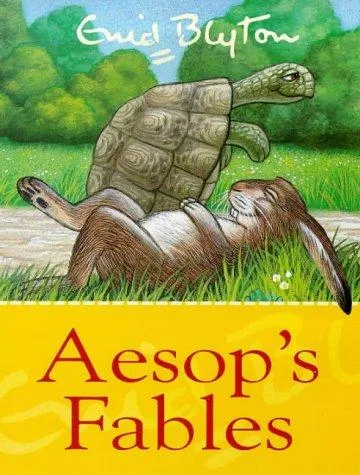
Aesop's Fables, in its 1921 iteration, offers a stark reminder of narrative economy. The sheer brevity of tales like 'The Tortoise and the Hare' is their strength; they bypass elaborate plot for immediate moral impact. It’s refreshing to encounter narratives where the lesson is the primary artifact, not merely a byproduct. However, the collection’s unvarnished presentation, while historically significant, can feel didactic to a contemporary reader accustomed to more nuanced explorations of morality. The lack of explicit authorial commentary beyond the fable's conclusion means the reader must actively engage to unpack the layers. The fable of 'The Lion and the Mouse' exemplifies this; the core message of unexpected kindness and reciprocity is powerful, yet its starkness leaves little room for ambiguity. It’s a foundational text, certainly, but one that demands intellectual participation to truly yield its wisdom.
📝 Description
73
Aesop's Fables, compiled over centuries, uses animal characters to teach moral lessons.
Aesop's Fables is a collection of short, allegorical stories. These narratives use animal characters and simple human situations to impart moral lessons. The tales were compiled over many centuries and offer concise parables. They have become a bedrock for Western storytelling and ethical discussions. The work is not a single story but an anthology, with each tale focusing on specific problems and their solutions.
This compilation is for readers interested in the origins of Western narrative and moral philosophy. It suits educators looking for texts on character development, students of comparative mythology, and anyone appreciating how simple stories convey complex truths. Its straightforward style makes it accessible to younger readers and adults engaging with classic literature.
While not typically classified as esoteric in the modern sense, Aesop's Fables has long been recognized for its allegorical depth. The stories employ a symbolic language, where animal behaviors represent human vices and virtues, a common characteristic in various esoteric traditions that seek to convey hidden meanings through accessible narratives. This method of teaching through veiled truths and archetypal figures has resonated with thinkers across many spiritual and philosophical schools.
💡 Why Read This Book?
• Understand the archetypal structure of Western moral narratives, exemplified by the stark contrast in 'The Tortoise and the Hare,' offering a foundational understanding of storytelling. • Grasp the enduring power of animal allegory to convey complex social dynamics and ethical principles, as seen in the interactions within 'The Lion and the Mouse.' • Appreciate the historical development of ethical discourse, tracing concepts back to ancient Greek traditions through the concise, memorable lessons presented in this 1921 compilation.
⭐ Reader Reviews
Honest opinions from readers who have explored this book.
❓ Frequently Asked Questions
When was the original Aesop's Fables first published?
While the fables themselves are ancient, originating from oral traditions attributed to Aesop around the 6th century BCE, the specific 1921 edition marks a particular publication date for this version of the collection.
Are all the fables attributed to Aesop himself?
No, the collection is a compilation. While Aesop is the traditional author, many fables likely evolved from various oral traditions and were later written down by others, with significant contributions from figures like Babrius and Phaedrus.
What is the main purpose of Aesop's Fables?
The primary purpose is to impart moral lessons and ethical guidance through short, allegorical stories, often featuring animals acting out human behaviors and their consequences.
How do the fables relate to esoteric traditions?
The fables use allegorical symbolism common in esoteric thought. Characters and their predicaments can be interpreted as representing archetypes, moral choices, and the consequences of actions, aligning with principles found in Hermeticism and Gnosticism.
Is Aesop's Fables suitable for children?
Yes, the simple language and clear moral lessons make many of the fables accessible and beneficial for children, though some themes might require adult explanation.
Where can I find a free online version of Aesop's Fables?
As a classic work in the public domain, numerous free online versions of Aesop's Fables are available through digital libraries and archives, including Project Gutenberg.
🔮 Key Themes & Symbolism
Moral Instruction Through Allegory
The fables function as potent allegories, using animal characters to embody human virtues and vices. For instance, the industrious ant in 'The Ant and the Grasshopper' contrasts with the improvident grasshopper, directly illustrating the consequences of foresight versus idleness. This method of teaching through narrative mirrors esoteric traditions that employ symbolic stories to convey spiritual truths, making abstract ethical concepts tangible and memorable.
The Nature of Justice and Consequences
Many fables explore themes of justice, retribution, and the natural consequences of actions. 'The Lion and the Mouse' demonstrates that even the seemingly weak can offer aid to the strong, and that kindness is rarely wasted, suggesting a form of cosmic or natural justice. This aligns with esoteric principles concerning karma and the interconnectedness of all beings, where deeds inevitably return to the doer.
Social Hierarchy and Power Dynamics
The interactions between different animal species often reflect human social structures and power dynamics. The fable 'The Wolf and the Lamb' highlights how the powerful often fabricate justifications to oppress the weak, illustrating a critique of unjust authority. This speaks to esoteric philosophies that examine the corrupting influence of power and the importance of integrity regardless of one's position.
Wisdom vs. Folly
A recurring theme is the contrast between wisdom and folly, often personified by different characters. The hare's overconfidence versus the tortoise's persistence in 'The Tortoise and the Hare' is a prime example. This didactic approach teaches readers to value prudence, diligence, and humility over arrogance and haste, principles central to the development of inner wisdom in many esoteric paths.
💬 Memorable Quotes
Direct passages from the work, attributed to the author.
“Kindness is not lost on the grateful.”
— This aphorism, derived from 'The Lion and the Mouse,' suggests that acts of compassion, even towards those perceived as lesser, can yield unexpected rewards and affirms a universal law of reciprocity.
“The strong are always just, and it is for the benefit of the weak that they are so.”
— This is a cynical observation from 'The Wolf and the Lamb,' highlighting how power structures often rationalize their dominance by claiming to act for the good of those they control.
“If you always give in to your anger, you will never be able to make friends.”
— This interpretation from 'The Dog and Its Reflection' emphasizes the destructive nature of unchecked ego and possessiveness, showing how they alienate others and lead to self-loss.
“Beware of flatterers. They are not friends, but enemies in disguise.”
— This cautionary advice, found in various forms throughout the fables, warns against insincere praise and highlights the importance of discerning true intentions behind words.
💡 Key Ideas
Editorial paraphrase of the work's core concepts — not direct quotes.
The ant works hard in the burning heat all summer laying up food for the winter. The grasshopper sings and plays all summer. When winter comes the ant has food and the grasshopper has none.
This passage succinctly illustrates the principle of deferred gratification and the consequences of neglecting future needs for present pleasure, a core ethical lesson.
🌙 Esoteric Significance
Tradition
Aesop's Fables, while not explicitly esoteric, operates on principles common to many Western esoteric traditions, particularly Hermeticism and Gnosticism. Its use of allegory and symbolism to convey moral and spiritual truths aligns with the Hermetic maxim 'As Above, So Below,' where earthly events mirror celestial or inner principles. The focus on practical wisdom and the consequences of actions also reflects the Gnostic emphasis on gnosis (knowledge) leading to liberation from material illusions.
Symbolism
Key symbols include animals, each representing specific human traits: the ant embodies diligence and foresight, the fox cunning, the lion power, and the mouse humility or unexpected aid. Water often symbolizes the subconscious or the flow of life, as seen in the reflection fable. The contrast between predator and prey highlights themes of power dynamics and the often-unjust nature of social order, inviting contemplation on karmic balance.
Modern Relevance
Contemporary thinkers and practitioners in fields like Jungian psychology draw heavily on the archetypal figures within the fables. Self-help and personal development movements continue to utilize these narratives for their concise lessons on behavior and consequences. Furthermore, educators and storytellers worldwide still employ Aesop's Fables to teach ethical reasoning and narrative structure, demonstrating their persistent relevance in understanding human nature and social interaction.
👥 Who Should Read This Book
• Students of comparative literature and mythology seeking the origins of Western narrative archetypes and moral frameworks. • Educators and parents looking for accessible, allegorical tools to teach ethical concepts and critical thinking to younger audiences. • Individuals interested in the historical development of ethical philosophy and the foundational texts that shaped Western thought.
📜 Historical Context
The fables attributed to Aesop emerged from ancient Greek oral traditions, with early written compilations appearing during the Hellenistic period. Figures like Babrius and Phaedrus in the 1st and 2nd centuries CE were instrumental in preserving these stories in verse, making them accessible beyond scholarly circles. These narratives offered moral instruction distinct from the grander philosophical systems of Plato or Aristotle, focusing instead on practical wisdom derived from everyday observations, often through animal allegory. They circulated widely throughout the Roman Empire and later the medieval period, influencing countless writers. The 1921 publication represents a specific modern edition, bringing these enduring tales to a new generation, likely influenced by the burgeoning interest in classic literature and educational texts during the early 20th century. This era saw a continued engagement with classical thought, alongside the rise of psychology and comparative mythology, providing a rich intellectual backdrop for the reception of such foundational works.
📔 Journal Prompts
The Fox's cunning in 'The Fox and the Grapes'—what hidden desires does it mask?
Reflect on the contrast between the Ant's labor and the Grasshopper's song. How does this mirror your own approach to future planning?
Consider the Lion's unexpected gratitude towards the Mouse. What does this suggest about the nature of power and interdependence?
Analyze the Wolf's fabricated accusation in 'The Wolf and the Lamb.' How are similar justifications used today to legitimize unfair actions?
The moral 'slow and steady wins the race' from 'The Tortoise and the Hare.' In what area of your life could this principle be applied?
🗂️ Glossary
Allegory
A story, poem, or picture that can be interpreted to reveal a hidden meaning, typically a moral or political one. Aesop's Fables use animal characters to represent human traits and situations.
Fable
A short story, typically with animals as characters, conveying a moral. Aesop is credited with popularizing this genre.
Moral
A lesson, especially one concerning what is right or prudent, that can be derived from a story or experience. In fables, the moral is often explicitly stated at the end.
Archetype
A very typical example of a certain person or thing. In the fables, animals often serve as archetypes for human behaviors (e.g., the fox for cunning).
Didactic
Intended to teach, particularly in having moral instruction as an ulterior motive. The fables are primarily didactic in nature.
Parable
A simple story used to illustrate a moral or spiritual lesson. Fables are a specific type of parable.
Hellenistic Period
The period of Mediterranean and Near Eastern history between the death of Alexander the Great in 323 BC and the emergence of the Roman Empire.
🔮 Readers Also Liked
Browse all →






More by Aesop
All books →
More Free Occult Philosophy Books
View all →