Art Journal Your Archetypes
 82
82

Art Journal Your Archetypes
Gabrielle Javier-Cerulli’s *Art Journal Your Archetypes* offers a pragmatic pathway into understanding the self through the lens of archetypal psychology. The book’s strength lies in its direct, actionable approach, translating complex psychological concepts into tangible journaling prompts. It avoids overly academic jargon, making archetypal exploration accessible. A notable passage is the description of the 'Seeker' archetype, which captures the restless drive for knowledge and experience with admirable precision. However, the book sometimes leans towards a simplified categorization of archetypes, potentially overlooking the fluid and multifaceted nature of individual personalities. While the journaling format is effective, a deeper engagement with the theoretical underpinnings of archetypes, perhaps referencing figures beyond Jung without extensive exposition, could have added further scholarly weight. Nevertheless, it provides a solid foundation for self-inquiry.
📝 Description
82
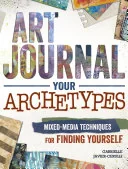
Gabrielle Javier-Cerulli's 2016 book, Art Journal Your Archetypes, guides readers to map their inner psychological patterns.
This book functions as a creative manual for understanding innate psychological patterns. It proposes that identifying these archetypal forces, which are recurring behavioral motifs shaping personality, is important for self-awareness and personal growth. Through journaling exercises, the author prompts readers to recognize and interact with their dominant archetypes. This process aims to foster a stronger connection to one's true self.
The work is suited for anyone looking to deepen self-knowledge and improve personal expression. It will appeal to artists, writers, and other creatives who seek structured prompts to inspire their work. It also speaks to individuals interested in Jungian psychology, self-help, and personal development. These readers can apply archetypal theory to their daily lives to better grasp the driving forces behind their actions and desires.
Published in 2016, Art Journal Your Archetypes taps into a contemporary interest in Jungian psychology and its practical applications. While not directly connected to earlier waves of archetype studies, it builds on Carl Jung's theories of the collective unconscious. The book reflects a modern inclination to blend psychological concepts with accessible, hands-on methods, common in popular psychology and self-development literature of the 2010s. It positions archetypal understanding as a tool for navigating personal development and creative endeavors.
💡 Why Read This Book?
• Gain practical tools for self-discovery by directly engaging with the "Rebel" and "Seeker" archetypes through guided journaling, moving beyond abstract concepts to personal application. • Develop a richer understanding of your own motivations and behaviors by identifying which of the book's discussed archetypes, like the "Visionary" or "Student," most strongly influence your life. • Learn a unique method for personal growth that blends psychological theory with artistic expression, offering a creative outlet for processing self-awareness gained since the book's 2016 publication.
⭐ Reader Reviews
Honest opinions from readers who have explored this book.
❓ Frequently Asked Questions
What is an archetype according to Gabrielle Javier-Cerulli's Art Journal Your Archetypes?
An archetype, as defined in the book, is a symbolic representation of recurring patterns of behavior that constitute an individual's core identity. These are seen as driving forces originating from the collective unconscious, shaping personality and actions.
What is the purpose of art journaling in relation to archetypes?
Art journaling serves as the primary method in the book for exploring archetypes. It allows individuals to visually and textually express their understanding of these patterns, facilitating deeper self-awareness and personal integration of archetypal energies.
When was Art Journal Your Archetypes first published?
Art Journal Your Archetypes was first published on August 25, 2016, by Gabrielle Javier-Cerulli.
Can this book help someone who doesn't consider themselves an 'artist'?
Yes, the book is designed for anyone interested in self-discovery. While it uses 'art journaling,' the emphasis is on personal expression and exploration, not artistic skill. Prompts are accessible to all levels of creative confidence.
What kind of archetypes are discussed in the book?
The book discusses various archetypes, including examples like the Rebel, Seeker, Visionary, and Student, illustrating the diverse patterns of behavior and motivation that shape personality.
How does knowing your archetypes help you?
Knowing your archetypes helps you understand the fundamental patterns driving your behavior. This self-awareness can lead to greater confidence, personal resonance, and a more authentic expression of your true self.
🔮 Key Themes & Symbolism
Archetypal Identity
The core of this work lies in understanding archetypes as fundamental patterns that define who we are. Javier-Cerulli presents archetypes not as rigid boxes, but as dynamic forces like the 'Rebel' or 'Seeker' that shape behavior and perception. The book guides readers to identify their dominant archetypes, suggesting that this recognition is key to unlocking a stronger, more authentic self. It moves beyond superficial personality traits to explore the deeper, often unconscious, drivers of human action and motivation.
Art as Self-Exploration
This book champions art journaling as a primary vehicle for psychological exploration. It posits that the creative act of drawing, writing, or collaging allows for a more direct and intuitive engagement with one's inner landscape than purely intellectual analysis. By translating archetypal concepts into visual and written expression, readers can uncover hidden aspects of themselves and gain insights that might remain inaccessible through conventional introspection.
Authentic Self-Expression
The ultimate aim of exploring archetypes through art journaling is to foster authentic self-expression. The book suggests that by understanding the 'driving forces behind your being,' individuals can move towards greater confidence and happiness. Recognizing patterns like the 'Visionary' or 'Student' enables one to live more intentionally, aligning actions with one's true nature rather than societal expectations or unexamined habits.
Personal Growth Through Patterns
Javier-Cerulli frames personal growth as a process of understanding and working with recurring behavioral patterns, or archetypes. The book provides a framework, including specific archetypes like the 'Rebel,' for readers to map their own psychological terrain. This structured approach to self-inquiry, facilitated by journaling prompts, aims to equip individuals with the self-knowledge needed to navigate life's challenges and opportunities more effectively.
💬 Memorable Quotes
Direct passages from the work, attributed to the author.
“An archetype is a symbolic representation of the repeated patterns of behavior that make you who you are, the driving forces behind your being.”
— This defines the central concept: archetypes are not mere labels but fundamental, recurring behavioral blueprints that constitute our core identity and drive our actions.
“Maybe you're a Rebel or a Seeker? Maybe you are both. Or are you a Visionary? How about a Student?”
— This highlights the book's approach of presenting archetypes as distinct but potentially overlapping forces, encouraging readers to identify their personal constellation rather than a single, fixed identity.
“The better you know yourself, the stronger, more resonant and more authentic you become.”
— This captures the book's core promise: self-knowledge, particularly through understanding archetypes, leads to increased personal strength, genuine expression, and a more confident existence.
“You have a burning desire to express yourself.”
— This opening statement taps into a common human impulse, framing the book's purpose as fulfilling this desire through the exploration of one's inner self.
“To be successful, confident and happy, you need to know yourself, your true self.”
— This establishes a direct link between self-knowledge, particularly of one's 'true self' via archetypes, and the achievement of personal fulfillment and well-being.
🌙 Esoteric Significance
Tradition
This work draws heavily from Jungian psychology, which itself has deep roots in esoteric traditions, particularly Hermeticism and Gnosticism, through its exploration of the collective unconscious and archetypes. While not explicitly a Hermetic text, it employs Jung's framework, which can be seen as a modern, psychological interpretation of universal symbolic patterns found in ancient mystery schools and alchemical symbolism. It bridges psychological self-inquiry with a symbolic understanding of the psyche, aligning with the Hermetic principle of 'As Above, So Below' applied to the inner world.
Symbolism
The book utilizes archetypes like the 'Rebel,' 'Seeker,' 'Visionary,' and 'Student' as primary symbolic motifs. These represent fundamental patterns of human behavior and consciousness. The 'Rebel' can symbolize defiance against limiting structures, the 'Seeker' the quest for knowledge, the 'Visionary' intuitive insight and foresight, and the 'Student' the receptivity to learning. These archetypes function as symbolic keys to understanding the dynamics of the individual psyche within a broader, universal framework.
Modern Relevance
Contemporary practitioners of Jungian analysis, art therapy, and personal development often utilize art journaling as a tool for self-discovery. Javier-Cerulli's book provides a specific, accessible method for applying archetypal theory in these fields. It speaks to modern spiritual and psychological movements that emphasize self-awareness, creative expression, and the integration of psychological insights into daily life, making archetypal exploration relevant for individuals seeking meaning in the 21st century.
👥 Who Should Read This Book
• Aspiring creatives and artists: Those seeking structured prompts to unlock their imagination and explore personal themes through art journaling, leveraging archetypes like the 'Visionary' for inspiration. • Individuals interested in Jungian psychology: Readers looking for a practical, non-academic introduction to archetypes and their application in understanding personality and behavior. • Self-help and personal development enthusiasts: Anyone aiming to deepen self-awareness and foster authentic self-expression by identifying and integrating personal archetypal patterns.
📜 Historical Context
Published in 2016, *Art Journal Your Archetypes* by Gabrielle Javier-Cerulli arrived during a period marked by a resurgence of interest in Jungian psychology, particularly its application in self-help and creative fields. While Carl Jung's original theories on archetypes gained significant traction in the mid-20th century, the early 21st century saw a diffusion of these concepts into more accessible, practice-oriented formats. Javier-Cerulli's work aligns with this trend, offering a contemporary, art-based approach to exploring the collective unconscious. It emerged in an intellectual landscape where figures like James Hillman were reinterpreting Jungian ideas through an "archetypal psychology" lens, emphasizing the soul and imagination. Unlike the more academic or therapeutic circles focused on Jung in the 1960s and 70s, Javier-Cerulli's book targets a broader audience seeking personal development through creative engagement, reflecting a wider cultural embrace of psychological exploration beyond traditional clinical settings.
📔 Journal Prompts
Your dominant 'Seeker' archetype: What questions drive your current exploration?
Illustrate the 'Rebel' within you; what outdated beliefs do you challenge?
Map the 'Visionary' insights you've received; how can you manifest them?
The 'Student's' journey: What new knowledge are you integrating into your practice?
Reflect on the interplay between two archetypes you identify.
🗂️ Glossary
Archetype
A universal, inherited pattern of thought or imagery derived from the collective unconscious, representing fundamental human motivations and behaviors.
Collective Unconscious
A concept proposed by Carl Jung, referring to a layer of the unconscious mind shared by all humans, containing archetypes and universal symbols.
Art Journaling
A practice combining visual art and writing to explore thoughts, feelings, and experiences, used here as a tool for psychological self-discovery.
Rebel Archetype
A pattern characterized by defiance against established norms, authority, or convention; often drives change and challenges the status quo.
Seeker Archetype
Represents the drive for knowledge, truth, and experience; often involves exploration, questioning, and a quest for deeper understanding.
Visionary Archetype
Associated with foresight, intuition, imagination, and the ability to conceptualize future possibilities or create new realities.
Student Archetype
Embodies the principle of learning, receptivity, curiosity, and the process of acquiring knowledge and skills.
This book appears in 1 collection
🔮 Readers Also Liked
Browse all →








From the “Archetypes” Collection
View all →









More Free Occult Philosophy Books
View all →