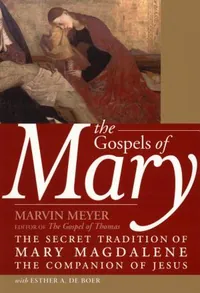
Archetypes of Wisdom
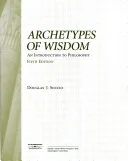
 76
76

Archetypes of Wisdom
Douglas J. Soccio’s Archetypes of Wisdom attempts a synthesis of philosophical history through the lens of recurring conceptual frameworks. The strength of the book lies in its thematic organization, which allows readers to trace persistent questions and approaches across centuries, rather than just following a linear timeline. Soccio's identification of "archetypes of wisdom" provides a useful heuristic for understanding how foundational ideas, such as the Socratic method or the Cartesian cogito, continue to inform philosophical debate. However, the book sometimes simplifies the nuances of complex philosophical systems in its pursuit of broad thematic connections. For instance, the treatment of existentialism, while touching on key figures like Sartre, might feel reductive to those deeply familiar with the movement's internal debates. Despite this, the work offers a compelling argument for the enduring relevance of classical philosophical patterns in contemporary thought. It serves as an accessible, if occasionally generalized, guide to the architecture of Western philosophical inquiry.
📝 Description
76
Douglas J. Soccio's 2004 book traces the recurring patterns of human inquiry across Western philosophy.
Published in 2004, Archetypes of Wisdom surveys Western philosophical thought by focusing on enduring patterns of inquiry. Soccio moves beyond a simple chronological listing of philosophers and ideas to identify core questions and structures that have shaped intellectual traditions. The book examines how these recurring archetypes of thought have appeared in different eras, providing a framework for understanding the development of philosophical discourse. It aims to connect historical ideas to contemporary thought by highlighting foundational concepts.
This volume is suitable for students and general readers who prefer a thematic introduction to philosophy's history over a strictly chronological account. It will appeal to those interested in the intellectual underpinnings of Western civilization and the persistent archetypes of wisdom. Soccio's work acts as a resource for grasping fundamental philosophical ideas that continue to hold influence.
While not explicitly esoteric, Archetypes of Wisdom engages with perennial philosophical questions that resonate within esoteric traditions. By identifying universal patterns of thought and wisdom that transcend specific historical periods, Soccio touches upon themes common in esoteric studies, such as the search for underlying truths and the nature of consciousness. The book's focus on archetypes, enduring structures of human understanding, aligns with esoteric interests in universal principles and the deeper currents of human experience that shape civilizations.
💡 Why Read This Book?
• Understand the persistent "archetypes of wisdom" that form the bedrock of Western philosophical inquiry, enabling a deeper grasp of recurring intellectual patterns since antiquity. • Gain insight into the evolution of key philosophical concepts, such as the Platonic Forms, first articulated by Plato in Ancient Greece, and how they have been reinterpreted over millennia. • Develop a framework for analyzing contemporary philosophical debates by recognizing the historical lineage of ideas, connecting current thought to thinkers like Descartes and his seminal "cogito" argument.
⭐ Reader Reviews
Honest opinions from readers who have explored this book.
❓ Frequently Asked Questions
What is the primary focus of Douglas J. Soccio's Archetypes of Wisdom?
The book focuses on identifying and exploring recurring conceptual patterns, or "archetypes of wisdom," that have shaped the history of Western philosophy from antiquity to the modern era.
When was Archetypes of Wisdom first published?
Archetypes of Wisdom by Douglas J. Soccio was first published in 2004.
Does the book follow a strict chronological order of philosophers?
No, while it covers historical figures, the book primarily organizes its content around thematic "archetypes" and recurring philosophical problems, rather than a purely chronological progression.
Who would benefit most from reading Archetypes of Wisdom?
Students of philosophy, general readers interested in the history of ideas, and anyone seeking to understand the foundational concepts and enduring questions within Western thought would find this book beneficial.
What is an example of an "archetype of wisdom" discussed in the book?
The book discusses concepts like the Platonic Forms or the Cartesian doubt as examples of archetypes, representing fundamental ways of understanding reality and knowledge that reappear throughout philosophical history.
Is Archetypes of Wisdom suitable for beginners in philosophy?
Yes, the book is designed to be accessible to a broad audience, including beginners, by synthesizing complex philosophical ideas into understandable patterns and recurring themes.
🔮 Key Themes & Symbolism
Recurring Philosophical Patterns
The central theme is the identification of "archetypes of wisdom" – persistent structures of thought and inquiry that transcend specific historical periods. Soccio argues that understanding these archetypes, such as the Socratic method of questioning or the Kantian synthesis of rationalism and empiricism, provides a deeper comprehension of philosophy's evolution. This perspective moves beyond a simple historical survey to reveal the underlying architecture of Western intellectual traditions, highlighting how certain questions and approaches are continually revisited and reinterpreted across millennia. It allows readers to see the continuity of human intellectual struggle and aspiration.
The Nature of Knowledge and Reality
This theme looks at how different archetypes shape our understanding of epistemology and metaphysics. Soccio examines how figures like Plato, with his theory of Forms, and later empiricists like Locke, proposed distinct frameworks for what can be known and the nature of existence itself. The book explores the tension between rationalist and empiricist approaches, the role of doubt as initiated by Descartes, and the attempts to reconcile subjective experience with objective reality. These explorations reveal the fundamental debates that have characterized philosophical discourse for centuries.
Ethical and Existential Frameworks
Archetypes of Wisdom also addresses the enduring philosophical quests for meaning, value, and purpose. Soccio investigates how archetypal approaches to ethics, from virtue ethics in Aristotle to deontological and utilitarian frameworks, have provided different lenses through which to understand moral action. The book touches upon existential concerns, exploring how thinkers have grappled with freedom, responsibility, and the human condition. By examining these recurring ethical and existential patterns, the work offers insight into the perennial human search for a meaningful life and a just society.
The Evolution of Philosophical Inquiry
This theme focuses on the dynamic nature of philosophical thought itself. Soccio illustrates how philosophical progress often involves a dialogue with, or a reaction against, established archetypes. The development from ancient Greek philosophy through medieval scholasticism, the Enlightenment, and into modern thought is presented not as a series of disconnected events but as a continuous process of engagement with foundational questions. The book emphasizes how new ideas emerge from the reinterpretation and adaptation of older conceptual structures, demonstrating the living, evolving character of philosophy.
💬 Memorable Quotes
Direct passages from the work, attributed to the author.
“The "cogito" of Descartes”
— This refers to René Descartes' famous assertion 'I think, therefore I am,' which became a foundational principle for modern philosophy by grounding certainty in subjective consciousness.
“The Forms of Plato”
— This highlights Plato's theory that the physical world is an imperfect reflection of a higher, eternal area of perfect 'Forms' or Ideas, which represent true reality and knowledge.
“Aristotle's categories”
— This points to Aristotle's systematic classification of concepts used to describe reality, such as substance, quantity, quality, and relation, which formed a central to Western logic and metaphysics for centuries.
“The Socratic method”
— This refers to the dialectical method of inquiry and discussion, attributed to Socrates, that involves asking and answering questions to stimulate critical thinking and illuminate ideas.
“Kant's synthesis”
— This alludes to Immanuel Kant's philosophical project of integrating rationalism and empiricism, suggesting that knowledge arises from the interaction of innate mental structures and sensory experience.
🌙 Esoteric Significance
Tradition
While Archetypes of Wisdom is primarily a work of Western philosophy history, its focus on recurring conceptual patterns and underlying structures aligns with certain esoteric traditions that seek universal principles beyond superficial differences. It can be viewed through a Hermetic lens, which emphasizes the principle of correspondence and the idea that "as above, so below," suggesting that macrocosmic patterns are reflected in microcosmic thought. The book's identification of archetypes can be seen as mapping the conceptual architecture of consciousness, a common pursuit in mystical and Gnostic traditions seeking to understand the divine mind or the structure of reality.
Symbolism
The "archetypes" themselves function as conceptual symbols. For instance, Plato's Forms can be interpreted as symbolic representations of perfect, eternal truths sought in Neoplatonism and various mystical paths. Descartes' "cogito" symbolizes the inward turn and the search for a foundational, self-evident truth, a concept resonant in subjective mystical experiences. The Socratic method, as an archetype, symbolizes the process of purification of the mind through questioning, a practice found in many contemplative traditions aimed at uncovering deeper understanding.
Modern Relevance
Contemporary thinkers exploring comparative mythology, Jungian psychology (which heavily relies on archetypes), and integral philosophy often find Soccio's thematic approach valuable. Schools of thought that seek to synthesize diverse philosophical traditions or find universal patterns in human thought can draw upon his framework. Practices in consciousness studies and transpersonal psychology that investigate the structure of human experience and the commonalities across different belief systems may also find resonance with the book's emphasis on enduring archetypes of wisdom.
👥 Who Should Read This Book
• Students of comparative philosophy seeking to identify overarching themes and conceptual lineages across diverse thinkers and eras. • Aspiring philosophers and critical thinkers interested in understanding the foundational "archetypes" that shape Western intellectual discourse since antiquity. • Individuals exploring esoteric traditions who wish to contextualize their studies by recognizing recurring patterns of thought in metaphysics, epistemology, and ethics.
📜 Historical Context
Douglas J. Soccio’s Archetypes of Wisdom, published in 2004, entered a field of philosophical scholarship that had moved past the grand, unifying narratives often favored in earlier 20th-century histories. The intellectual currents of the time, influenced by post-structuralism and analytic philosophy, often emphasized fragmentation and critique. Soccio's work, however, implicitly argues for the enduring power of foundational philosophical structures, offering a thematic approach that identifies recurring patterns of thought rather than merely cataloging thinkers or movements. It can be seen as a contemporary response to the tradition of comprehensive philosophical histories, akin to those by Frederick Copleston, but with a distinct focus on archetypes. While not engaging directly with a specific contemporary author in a polemical way, Soccio's thematic organization allows for a comparative understanding that implicitly challenges overly specialized or deconstructionist approaches by showing the continuity of core philosophical problems and solutions.
📔 Journal Prompts
The Platonic Forms as an archetype: how do idealized concepts influence your understanding of reality?
Reflect on the Cartesian doubt: in what areas of your life do you seek absolute certainty?
The Socratic method's application: identify a belief you hold and question its underlying assumptions.
Consider Aristotle's categories: how do you classify and understand the world around you?
Analyze Kant's synthesis: how do your innate mental frameworks and sensory experiences interact to form your knowledge?
🗂️ Glossary
Archetype of Wisdom
A recurring, fundamental pattern or structure of thought, inquiry, or understanding that appears across different philosophical traditions and historical periods, shaping how fundamental questions about existence, knowledge, and value are addressed.
Platonic Forms
In Plato's philosophy, the eternal, perfect, and unchanging essences or ideas that exist in a transcendent realm, of which the physical world is merely an imperfect imitation.
Cartesian Doubt
The systematic process of doubting all beliefs that can be doubted, employed by René Descartes as a method to establish indubitable knowledge, famously leading to his "cogito" argument.
Socratic Method
A form of cooperative argumentative dialogue between individuals, based on asking and answering questions to stimulate critical thinking and draw out ideas and underlying presuppositions.
Categories (Aristotle)
Aristotle's fundamental classifications of concepts used to describe reality, such as substance, quantity, quality, relation, time, and place, forming a basis for logic and metaphysics.
Synthesis (Kant)
In Immanuel Kant's philosophy, the process by which the mind combines innate conceptual structures (categories) with sensory data to form coherent experience and knowledge.
Epistemology
The branch of philosophy concerned with the theory of knowledge, investigating its nature, scope, and justification.
This book appears in 1 collection
🔮 Readers Also Liked
Browse all →









From the “Archetypes” Collection
View all →





More Free Occult Philosophy Books
View all →