The Sound of Bells
 78
78

The Sound of Bells
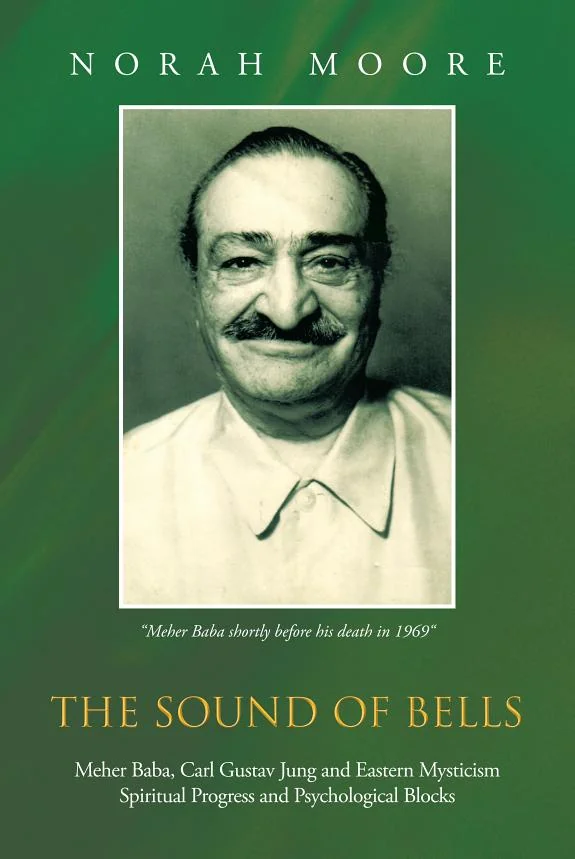
Norah Moore's 'The Sound of Bells' attempts a bold synthesis, bringing together the esoteric pronouncements of Meher Baba with the psychological architecture of Carl Jung. The initial premise, exploring Baba's 'God Speaks' through a Jungian lens, is intellectually stimulating, particularly in its attempt to map mystical states onto psychological phenomena. Moore's strength lies in presenting these complex ideas accessibly, a feat considering the dense nature of both Baba's cosmology and Jung's theories. However, the execution occasionally feels more like an outline than a fully developed argument. The book's limitation is its brevity; it introduces fascinating juxtapositions but rarely has the space to explore them with the depth they deserve. A particularly compelling section examines the potential archetypal significance of Baba's avatars within the Jungian framework, offering a novel perspective. Ultimately, 'The Sound of Bells' serves as a promising, albeit brief, introduction to a potentially rich field of comparative study.
📝 Description
78
Norah Moore's 2013 book examines Meher Baba's teachings through the lens of Jungian psychology.
Published in 2013, 'The Sound of Bells' connects the spiritual philosophy of Meher Baba with the analytical psychology of Carl Gustav Jung. The book begins by interpreting Jung's core concepts, such as archetypes and the collective unconscious, using Meher Baba's seminal work, 'God Speaks,' as a reference. Moore aims to show how Baba's goal of unifying religious understandings can align with Jung's framework for the human psyche.
This text is suited for readers interested in comparative spirituality and esoteric thought, especially those who see connections between Eastern mysticism and depth psychology. It is designed as a starting point for students and practitioners looking to integrate spiritual experiences with psychological growth. Those familiar with either Meher Baba or Jungian psychology but not their synthesis will find this book useful for understanding potential parallels and differences.
Emerging in 2013, 'The Sound of Bells' reflects a growing interest in interdisciplinary studies of consciousness. It bridges the 20th-century spiritual movement around Meher Baba with the lasting impact of Carl Jung's psychoanalytic theories. While Jung had an interest in Eastern thought, this book specifically synthesizes his ideas with Baba's teachings, offering a distinct viewpoint. The early 21st century saw increased demand for literature that could reconcile ancient wisdom with contemporary psychological frameworks, a niche this book addresses.
💡 Why Read This Book?
• Gain a unique perspective on integrating spiritual experience with psychological development, specifically by examining the concepts presented in Meher Baba's 'God Speaks' alongside Carl Jung's analytical psychology. • Understand how Eastern mystical philosophy, as articulated by Meher Baba, can offer frameworks for interpreting Western psychological theories, a connection explored from the book's 2013 publication. • Discover potential parallels between the spiritual cosmology of Meher Baba and the archetypal theories of C.G. Jung, offering new avenues for personal insight and self-exploration.
⭐ Reader Reviews
Honest opinions from readers who have explored this book.
❓ Frequently Asked Questions
What is the primary goal of 'The Sound of Bells' by Norah Moore?
The book aims to synthesize the spiritual teachings of Meher Baba with the psychological theories of Carl Jung, showing how Eastern mysticism and Western psychology can inform each other for personal development.
When was 'The Sound of Bells' first published?
The book was first published in 2013, positioning it as a more contemporary attempt to bridge these two significant intellectual and spiritual traditions.
Which of Meher Baba's works is central to the analysis in 'The Sound of Bells'?
The book specifically focuses on Meher Baba's seminal work, 'God Speaks,' using it as a primary text to interpret through the lens of Jungian psychology.
Does 'The Sound of Bells' offer a new religion or spiritual path?
No, the book emphasizes Meher Baba's philosophy, which, according to the text, brought together existing religions rather than establishing a new one.
Who is Carl Gustav Jung and why is he relevant to this book?
Carl Gustav Jung was a Swiss psychiatrist and psychoanalyst whose work introduced concepts like archetypes and the collective unconscious. His analytical psychology is used in the book to explore spiritual experiences.
What is the relationship between the two books mentioned in the blurb?
The original blurb suggests 'The Sound of Bells' is the first book in a series, with a second book planned to continue the exploration of Eastern Mysticism and C.G. Jung's work.
🔮 Key Themes & Symbolism
Baba-Jung Synthesis
This theme explores the novel integration of Meher Baba's spiritual philosophy, particularly his cosmological explanations in 'God Speaks,' with Carl Jung's analytical psychology. The work examines how Baba's concepts of the Avatar and divine will might be understood through Jungian archetypes and the collective unconscious. It posits that by applying Jungian frameworks, readers can gain new perspectives on the profound spiritual truths presented by Baba, fostering a more holistic understanding of consciousness and the human psyche's journey.
Spirituality and Psychological Development
The core of 'The Sound of Bells' lies in its exploration of how inner spiritual experience and psychological growth can be harmonized. It addresses the desire of many individuals to reconcile their mystical inclinations with the insights derived from modern psychology. By drawing parallels between Baba's universalist spiritual message and Jung's theories on individuation and the psyche, the book offers a pathway for readers seeking integrated personal evolution.
Unification of Religions
A central tenet of Meher Baba's message, as presented in the book, is his role not as the founder of a new religion, but as a unifier of existing spiritual traditions. 'The Sound of Bells' investigates this aspect by demonstrating how Baba's philosophy, when viewed through the analytical lens of Jung, can highlight common threads and universal principles underlying diverse religious and spiritual expressions worldwide.
Analytical Psychology as a Lens
This theme focuses on the specific application of Carl Gustav Jung's theories to interpret Eastern mystical thought. The book utilizes concepts such as archetypes, the shadow, and the process of individuation as tools to dissect and understand the layers of meaning within Meher Baba's teachings. It showcases how Western psychological frameworks can illuminate, rather than contradict, profound spiritual insights from the East.
💬 Memorable Quotes
Direct passages from the work, attributed to the author.
“Meher Baba did not come to bring a new religion but a philosophy that brought all religions together.”
— This statement frames Meher Baba's mission as one of universal synthesis, emphasizing his role as a unifier of spiritual paths rather than a sectarian founder. It highlights the philosophical underpinnings of his message, suggesting a framework that transcends specific doctrines.
“In this first book The Sound of Bells, and Eastern Mysticism I looked at C.G. Jung's Analytical Psychology in the light of Meher Baba's book God Speaks.”
— This excerpt clearly outlines the book's core methodology: using Jung's psychological theories as a prism through which to examine and understand the spiritual cosmology presented in Meher Baba's 'God Speaks'.
“Many people would wish to bring together their inner experience of spirituality and psychological development.”
— This highlights the book's target audience and primary motivation: individuals seeking a holistic approach to self-understanding that bridges the areas of the spiritual and the psychological.
“The Sound of Bells brings together the teachings of Meher Baba and the teachings of Carl Gustav Jung for the first time.”
— This assertion points to the book's unique contribution – an explicit and novel attempt to create a dialogue between these two influential figures and their respective bodies of work.
“Eastern Mysticism I looked at C.G. Jung's Analytical Psychology in the light of Meher Baba's book God Speaks.”
— This emphasizes the directionality of the analysis, where Jungian psychology is illuminated by, and understood in relation to, the specific content and framework of Meher Baba's 'God Speaks'.
🌙 Esoteric Significance
Tradition
The work aligns with the modern esoteric synthesis movement, which seeks to bridge disparate spiritual and psychological traditions. While Meher Baba's teachings are rooted in Indian spirituality and mysticism, and Carl Jung's work in Western analytical psychology, 'The Sound of Bells' attempts to create a dialogue between these seemingly distinct lineages. It fits within a broader trend of integrating Eastern concepts of consciousness and liberation with Western psychological models of the psyche and self-realization.
Symbolism
While specific symbols are not extensively detailed in the provided blurb, the core of the book's esoteric significance lies in the conceptual symbolism of Meher Baba's cosmology and Jung's archetypes. Baba's 'God Speaks' itself is a symbolic map of creation and consciousness. Jung's archetypes, such as the Self, the Anima/Animus, and the Shadow, function as symbolic representations of universal psychic structures. The book implicitly explores how these symbolic languages can be seen as pointing towards similar ultimate realities or psychic states.
Modern Relevance
Contemporary thinkers and practitioners in fields like transpersonal psychology, depth psychology, and comparative mysticism continue to explore the intersection of spiritual traditions and psychological theory. 'The Sound of Bells' contributes to this ongoing discourse by providing an early, accessible framework for understanding the potential synergy between Meher Baba's unique spiritual philosophy and the enduring psychological insights of Carl Jung.
👥 Who Should Read This Book
• Students of Meher Baba seeking a psychological framework to understand his teachings: This book offers a Jungian lens through which to explore Baba's cosmology, potentially revealing new layers of meaning. • Practitioners of Jungian psychology interested in Eastern thought: Readers familiar with Jung's concepts of archetypes and the unconscious can explore how these manifest or find parallels in Eastern mystical traditions. • Individuals interested in comparative spirituality and the integration of mind and spirit: Those seeking to reconcile their spiritual experiences with psychological growth will find this work a valuable starting point for interdisciplinary exploration.
📜 Historical Context
Published in 2013, 'The Sound of Bells' emerged during a period of increased interest in transpersonal psychology and the integration of Eastern spiritual traditions with Western thought. The work directly engages with the legacy of Meher Baba, an Indian spiritual figure whose teachings gained international traction throughout the 20th century, and Carl Gustav Jung, whose analytical psychology profoundly influenced fields from psychotherapy to comparative religion. In the range of esoteric studies, Jung's own explorations into alchemy and Eastern philosophies had already paved the way for such syntheses. While Jung died in 1961, his theories continued to be a fertile ground for researchers. The book's specific focus on Baba's 'God Speaks' offers a niche within the broader reception of Jungian ideas, potentially appealing to those seeking to understand the avataric message through a psychological framework, distinct from purely theological or philosophical interpretations.
📔 Journal Prompts
The synthesis of Meher Baba's philosophy and C.G. Jung's psychology in 'The Sound of Bells'.
Interpreting Jung's 'God Speaks' through the lens of Meher Baba's teachings.
The desire to unite spiritual experience with psychological development.
Meher Baba's philosophy as a unifier of religions.
The application of Analytical Psychology to Eastern Mysticism.
🗂️ Glossary
Meher Baba
An Indian spiritual master (1894-1969) who proclaimed himself the Avatar. His teachings emphasized love, truth, and self-realization, aiming to unify spiritual understandings across different religions.
Carl Gustav Jung
A Swiss psychiatrist (1875-1961) and founder of analytical psychology. He introduced key concepts such as archetypes, the collective unconscious, and individuation.
Analytical Psychology
The school of psychology founded by C.G. Jung, focusing on the exploration of the unconscious mind, archetypes, and the process of psychological integration.
God Speaks
A significant book dictated by Meher Baba, which elaborates on his cosmology, the nature of God, creation, and the human soul's journey through various states of consciousness.
Avatar
In Hindu and some other spiritual traditions, an avatar is the incarnation of a deity, particularly Vishnu, in earthly form. Meher Baba declared himself the Avatar of the age.
Archetypes
According to Jungian psychology, archetypes are universal, archaic patterns and images that derive from the collective unconscious and are the psychic counterpart of instinctual behavior.
Eastern Mysticism
A broad term referring to the spiritual and contemplative traditions originating in Eastern cultures, particularly India and East Asia, often focused on achieving enlightenment or union with the divine.
This book appears in 1 collection
🔮 Readers Also Liked
Browse all →






From the “Eastern Mysticism” Collection
View all →









More Free Mysticism & Contemplation Books
View all →