What is Eastern Mysticism?
Eastern Mysticism encompasses a broad range of spiritual and philosophical traditions originating in Asia, including Hinduism, Buddhism, Taoism, and Sufism. It focuses on direct, experiential knowledge of ultimate reality or the divine, often through practices like meditation, yoga, and contemplation. Unlike Western approaches that may emphasize dogma or external authority, Eastern traditions frequently prioritize inner transformation and the realization of interconnectedness between the individual and the cosmos.
Best Books for Complete Beginners
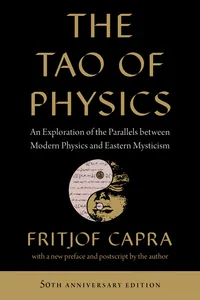
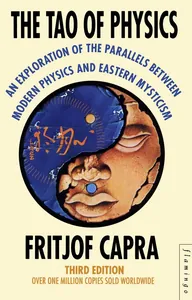
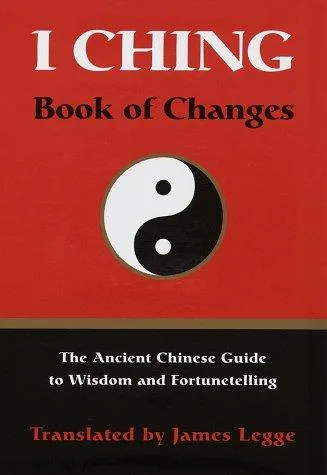
For those new to Eastern Mysticism, starting with accessible introductions is key. Fritjof Capra's 'The Tao of Physics' offers a compelling bridge between modern science and Eastern thought, explaining complex ideas clearly. Nataša Pantović Nuit's 'Guide to Chanting Mantras' provides practical guidance on a common meditative practice. James Legge's translation of the 'I Ching' serves as an entry point to one of China's most influential philosophical texts, offering insights into cyclical change and cosmic order.
Intermediate Reading
Building on foundational knowledge, intermediate texts delve deeper into specific traditions and their philosophical underpinnings. John Blofeld's 'Beyond the Gods' explores esoteric aspects of Eastern religions. The 'I Ching' by John Minford offers a more contemporary translation and commentary. 'The Eye of Shiva' by Amaury De Riencourt provides a historical and cultural context for understanding the spiritual range of the East.
Classical / Advanced Texts
Advanced study often involves engaging with primary sources or scholarly analyses of core texts. Arthur Edward Waite's 'Analogies and Distinctions of Attainment and Records of Eastern Mysticism' offers a historical overview of mystical traditions. While not solely Eastern, Harvey D. Egan's 'Christian Mysticism' can offer comparative perspectives on mystical experiences across cultures. Primary translations of foundational texts, like those of the 'I Ching,' are crucial for deep engagement.
Reading Order — Step by Step
Begin with accessible overviews. Month 1: Start with Fritjof Capra's 'The Tao of Physics' and Nataša Pantović Nuit's 'Guide to Chanting Mantras'. Week 3-4: Introduce James Legge's 'I Ching' for foundational Chinese philosophy. Month 2: Explore John Blofeld's 'Beyond the Gods' and Amaury De Riencourt's 'The Eye of Shiva' for broader context. Month 3: Engage with John Minford's 'I ching' translation and Arthur Edward Waite's 'Analogies and Distinctions of Attainment and Records of Eastern Mysticism' for deeper analysis.
Frequently Asked Questions
Which Eastern Mysticism book should I read first?
For a gentle introduction, start with Fritjof Capra's 'The Tao of Physics'. It skillfully bridges scientific concepts with Eastern philosophical ideas, making complex subjects accessible and relevant.
What is the difference between Eastern and Western mysticism?
Eastern mysticism often emphasizes direct experiential realization and inner transformation through practices like meditation, while Western mysticism can sometimes focus more on theological doctrine or divine union through contemplation of God.
Is 'The Tao of Physics' a mystical text?
'The Tao of Physics' by Fritjof Capra is not a primary mystical text but a modern work that draws parallels between concepts in quantum physics and Eastern mystical philosophies, making them understandable to a broad audience.
How do I approach reading the 'I Ching'?
Begin with James Legge's translation for historical context or John Minford's for a more modern interpretation. Approach it as a text for contemplation and insight into cyclical patterns rather than a predictive tool.
Are there practical exercises in these books?
Yes, books like Nataša Pantović Nuit's 'Guide to Chanting Mantras' offer practical techniques. Many texts also implicitly guide the reader towards meditative states or contemplative practices.
What is the role of 'Alchemy' in Eastern Mysticism?
In Eastern contexts, alchemy often refers to spiritual transformation and purification of the self, aiming for enlightenment or immortality, as explored in works like 'Ama Alchemy of Love'.
Are these books suitable for academic study?
Many texts, especially scholarly analyses like Arthur Edward Waite's work or classic translations of the 'I Ching', are highly suitable for academic study, providing historical and philosophical depth.