The Tao of Systems Thinking
 74
74

The Tao of Systems Thinking
The Tao of Systems Thinking performs an admirable feat of bridging two seemingly disparate intellectual landscapes: the mystical aphorisms of Lao Tzu and the analytical rigor of modern systems science. McCurley’s central argument—that the Tao Te Ching offers a profound, albeit ancient, precursor to systems thinking principles—is both intriguing and well-supported. The comparison between concepts like *wu wei* and feedback loops is particularly illuminating, offering a fresh perspective on understanding complex phenomena. A notable strength is the book’s ability to unpack dense philosophical ideas and technical systems concepts with clarity. However, the work occasionally feels more like an extended essay than a fully developed treatise. While the comparisons are insightful, a deeper exploration of the practical application of these integrated ideas in specific, contemporary scenarios would have strengthened its impact. The verdict is that this book offers a unique and valuable synthesis for those seeking to harmonize ancient wisdom with modern analytical tools.
📝 Description
74
Michael McCurley's 2023 book connects the Tao Te Ching to modern systems thinking.
The Tao of Systems Thinking draws a direct line between the 2,500 year old philosophy of Lao Tzu and contemporary systems thinking methodologies. McCurley highlights the surprising accord between the Tao Te Ching's principles and the ideas that emerged with computer science and the work of figures like Jay W. Forrester and Donella Meadows. The book is for anyone interested in how natural laws and human actions interrelate. It offers a way to view complex problems by blending deep philosophical thought with practical analytical tools. Readers who enjoy looking at connections between Eastern philosophy and Western science will find this work valuable.
This exploration traces the philosophical roots of Taoism, a tradition dating to the 6th century BCE, and its links to systems thinking. This field grew in prominence in the mid-20th century, shaped by pioneers such as Jay W. Forrester at MIT. Later, Donella Meadows' research on systems dynamics and global modeling further influenced the discipline.
The central argument proposes that core Taoist concepts like balance, flow, and wu wei (non-action) provide a useful framework for understanding how systems behave. The book shows how these ancient ideas can shed light on feedback loops, leverage points, and emergent properties within complex systems, offering a fresh approach to problem solving.
This book is situated within contemplative traditions that seek universal principles across diverse cultures and eras. It bridges the ancient Taoist emphasis on natural order and effortless action (wu wei) with modern scientific inquiry into interconnectedness. By aligning the wisdom of Lao Tzu with the analytical frameworks of systems thinking, McCurley places this work in a lineage of thought that finds profound resonance between contemplative philosophy and the study of complex, dynamic phenomena.
💡 Why Read This Book?
• Gain a unique perspective on problem-solving by understanding how the 2,500-year-old Tao Te Ching provides frameworks for modern Systems Thinking, as explored in the book's juxtaposition of Lao Tzu's philosophy with concepts like feedback loops. • Discover actionable insights into managing complexity by learning how principles such as *wu wei* (non-action) can inform strategic decision-making, drawing from the book's examination of these ideas. • Broaden your intellectual horizons by exploring the unexpected parallels between Eastern mysticism and Western scientific thought, as demonstrated through the work of figures like Jay W. Forrester and Fritjof Capra.
⭐ Reader Reviews
Honest opinions from readers who have explored this book.
❓ Frequently Asked Questions
What is the core argument of The Tao of Systems Thinking?
The book argues that the ancient wisdom of the Tao Te Ching, attributed to Lao Tzu, shares striking parallels with modern Systems Thinking principles, offering a philosophical foundation for understanding complex interdependencies.
Who are some key thinkers mentioned in relation to Systems Thinking?
The work references pioneers of Systems Thinking such as Jay W. Forrester, Donella Meadows, and Fritjof Capra, highlighting their contributions to the field.
When was The Tao of Systems Thinking first published?
The book by Michael McCurley was first published on December 5, 2016.
What is the significance of the Tao Te Ching in this context?
The Tao Te Ching, written approximately 2,500 years ago, is presented as a source of profound, 'timeless' wisdom that offers insights into balance, flow, and natural order, aligning with systemic principles.
Does the book offer practical applications of these ideas?
While focusing on conceptual parallels, the book invites readers to explore how these integrated ideas can be applied to resolving contemporary challenges and understanding systemic issues.
What is the Esoteric Library's classification for this book?
The Tao of Systems Thinking is classified under the 'Esoteric' category by the Esoteric Library, reflecting its exploration of philosophical and interconnected wisdom.
🔮 Key Themes & Symbolism
Taoist Principles in Systems
The book intricately maps core Taoist concepts, such as *wu wei* (effortless action) and the Tao's inherent flow, onto the operational dynamics of complex systems. It suggests that by understanding the natural principles of balance and non-interference advocated in the Tao Te Ching, one can better identify leverage points and unintended consequences within systems. This perspective frames systemic problems not as disruptions to be forcefully corrected, but as imbalances to be understood and guided toward harmony, echoing the Taoist pursuit of alignment with the natural order.
Modern Systems Science Parallels
McCurley draws direct correlations between the insights of ancient Taoism and the formalized theories of modern Systems Thinking. This includes exploring how concepts like feedback loops, emergent properties, and interconnectedness, central to the work of thinkers like Donella Meadows and Jay W. Forrester, find their philosophical roots in Lao Tzu's observations of natural patterns. The book posits that the advent of modern computing and scientific inquiry has merely provided new language and tools to describe phenomena that have long been understood intuitively within Taoist philosophy.
Holistic Problem-Solving
A central theme is the promotion of a holistic approach to addressing challenges. By integrating the subtle, interconnected view of reality from Taoism with the analytical frameworks of Systems Thinking, the book advocates for solutions that respect the inherent nature of systems rather than imposing external controls. This encourages a move away from linear, reductionist thinking towards a more nuanced understanding of causality and influence within complex environments.
The Nature of Change
The work examines the Taoist perspective on change as a natural, cyclical process, contrasting it with a more rigid, Western approach. It explores how understanding the ebb and flow, the waxing and waning, as described in the Tao Te Ching, can inform how we perceive and manage transitions in both personal and societal systems. This perspective suggests that embracing natural cycles, rather than resisting them, is key to navigating transformations effectively.
💬 Memorable Quotes
Direct passages from the work, attributed to the author.
“The Tao Te Ching and Systems Thinking share a focus on understanding interconnectedness and the flow of natural processes.”
— This core observation highlights the book's central thesis: that ancient philosophical texts can offer profound, foundational insights into modern scientific methodologies, suggesting a universal quality to certain wisdom traditions.
“Lao Tzu's concept of 'wu wei' aligns with principles of identifying optimal leverage points in systems.”
— This interpretation connects a specific Taoist tenet to a key concept in Systems Thinking, illustrating how seemingly abstract philosophical ideas can have direct, practical applications in analysis and intervention.
“Modern computers provide tools to explore what Lao Tzu observed intuitively.”
— This statement frames technological advancement as a means to validate and explore the insights derived from ancient contemplative practices, bridging the gap between spiritual wisdom and empirical study.
“Understanding feedback loops is crucial for navigating systemic challenges, much like understanding the Tao.”
— This comparison suggests that the principles governing complex systems, such as feedback mechanisms, are akin to the fundamental principles of the Tao, implying a unified underlying order in the universe.
💡 Key Ideas
Editorial paraphrase of the work's core concepts — not direct quotes.
The emergence of modern systems thinking parallels ancient observations of natural order.
This paraphrased concept emphasizes the book's argument that contemporary scientific understanding is, in many ways, rediscovering or formalizing wisdom that was already present in older philosophical traditions like Taoism.
🌙 Esoteric Significance
Tradition
The work interfaces with a broad stream of esoteric thought that seeks to find universal principles underlying both the material world and human consciousness. While not strictly adhering to a single lineage like Hermeticism or Kabbalah, it draws heavily from Taoism, which is often considered a foundational esoteric tradition in its exploration of natural law and cosmic order. It aligns with the esoteric principle of correspondence, suggesting that the macrocosm (universal order) is reflected in the microcosm (human systems and individual understanding).
Symbolism
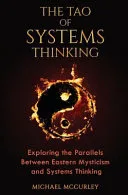
The primary symbolic resonance lies within Taoism itself. The concept of the Tao, often symbolized by water (yielding, persistent, flowing), represents the underlying, ineffable principle of existence. The symbol of Yin and Yang embodies the dynamic interplay of opposites, a core concept in understanding systemic balance and feedback. The book implicitly uses these symbols to illustrate how balance and interdependence are fundamental to all systems, whether natural or man-made.
Modern Relevance
Contemporary thinkers and practitioners in fields such as organizational development, sustainability science, and complexity theory are increasingly looking to integrated frameworks that combine analytical rigor with philosophical depth. McCurley's work is relevant to those exploring non-linear dynamics, adaptive leadership, and holistic approaches to problem-solving. It speaks to a modern yearning for wisdom that transcends purely technical solutions, finding resonance with movements advocating for more mindful and interconnected ways of operating in the world.
👥 Who Should Read This Book
• Students of comparative philosophy and Eastern thought seeking concrete links between ancient wisdom and modern scientific frameworks. • Systems thinkers and analysts interested in expanding their conceptual toolkit with insights from Taoist philosophy. • Leaders and strategists looking for novel approaches to understanding and navigating complex organizational or societal challenges.
📜 Historical Context
Published in 2016, Michael McCurley's *The Tao of Systems Thinking* emerged during a period of increased interest in interdisciplinary studies and the application of systems science to a wide array of fields, from ecology to economics. The intellectual currents it engages with trace back to mid-20th century thinkers like Jay W. Forrester, a pioneer in system dynamics at MIT, and later to figures like Donella Meadows, whose work on global modeling and leverage points significantly shaped the field. This era also saw a burgeoning dialogue between Western science and Eastern philosophies, partly influenced by earlier syntheses like Fritjof Capra's *The Tao of Physics* (1975), which explored parallels between quantum mechanics and Eastern mysticism. McCurley's work builds upon this tradition, positioning the Tao Te Ching not merely as a spiritual text but as a foundational document for understanding systemic principles, offering a counterpoint to purely mechanistic or reductionist approaches that were prevalent in some scientific circles.
📔 Journal Prompts
The Tao's principle of 'wu wei' and its application to systemic leverage points.
Juxtaposing feedback loops described by Donella Meadows with Taoist observations of natural flow.
Reflecting on the interconnectedness of elements within a personal system, inspired by the Tao Te Ching.
The concept of balance as presented in the Tao Te Ching and its relevance to contemporary systemic issues.
Exploring how modern computer modeling validates intuitive insights from Lao Tzu's writings.
🗂️ Glossary
Tao Te Ching
An ancient Chinese text, traditionally attributed to Lao Tzu, foundational to Taoism. It explores principles of natural order, balance, and ethical living through aphoristic verses.
Systems Thinking
An approach to analysis that focuses on the way components of a system interact with each other and with their environment, emphasizing interconnectedness and emergent behavior.
Wu Wei
A central concept in Taoism, often translated as 'non-action' or 'effortless action.' It refers to acting in accordance with the natural flow of things, without forcing or striving.
Feedback Loops
In systems theory, a process where the outputs of a system are routed back as inputs, influencing subsequent behavior. They can be reinforcing (amplifying) or balancing (stabilizing).
Leverage Points
Specific places within a complex system where a small change can produce a large effect, as identified in Systems Thinking and popularized by Donella Meadows.
Jay W. Forrester
An American systems engineer and computer scientist, considered the founder of system dynamics, a method for understanding the behavior of complex systems over time.
Donella Meadows
An influential environmental scientist and systems analyst, known for her work on global modeling, systems thinking, and identifying leverage points for social and environmental change.