The Tao of Physics
 74
74

The Tao of Physics
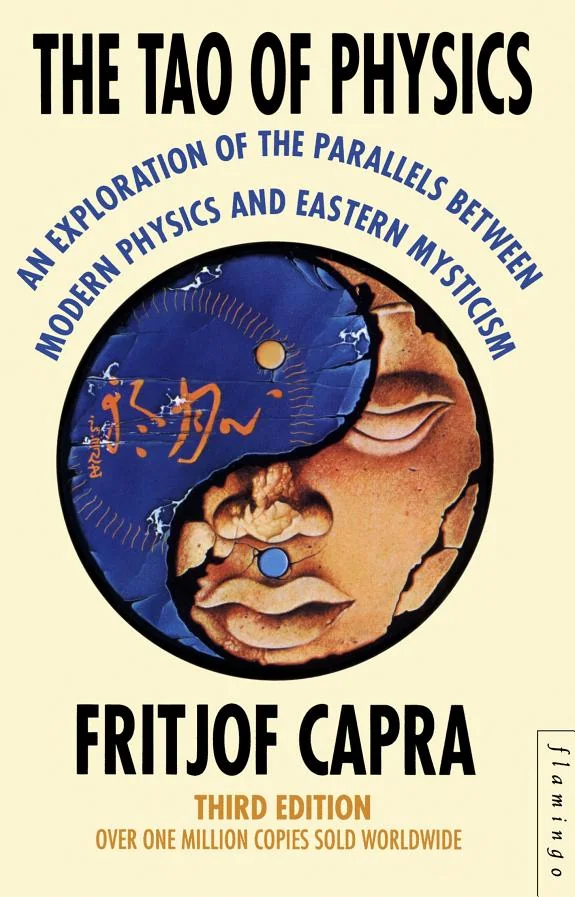
Fritjof Capra's *The Tao of Physics* remains a significant text for its audacious attempt to map the conceptual landscapes of quantum mechanics onto the philosophies of the East. Its strength lies in drawing clear, often striking, parallels between the descriptions of subatomic reality and ancient mystical cosmologies. The chapter discussing the 'cosmic dance' vividly illustrates how the energetic, interconnected nature of particles mirrors the eternal flux described in Vedic traditions. However, the work occasionally falters by overstating its case, presenting correlations as definitive proof of a shared underlying reality rather than suggestive analogies. The 2010 edition, while updating the scientific context, retains the original's spirit. Capra's synthesis offers a valuable perspective for those exploring the philosophical dimensions of science, even if it requires a critical reading of its more assertive claims. It is a book that invites contemplation on the nature of existence, bridging worlds that often seem disparate.
📝 Description
74
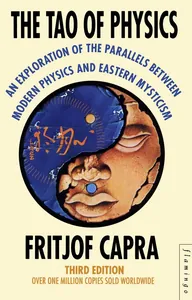
Fritjof Capra's 1975 book, *The Tao of Physics*, connects modern physics with Eastern mysticism.
First published in 1975, Fritjof Capra's *The Tao of Physics* attempts to bridge the gap between contemporary scientific understanding and ancient Eastern contemplative traditions. Capra examines how discoveries in quantum mechanics and relativity theories seem to echo concepts found in Hinduism, Buddhism, and Taoism. He frames physics not merely as an objective science, but as a process connected to human consciousness and philosophical thought.
The book aims for accessibility, avoiding excessive technical jargon. It is intended for readers interested in the philosophical implications of physics, those drawn to Eastern mysticism, or anyone curious about the historical connections between Western scientific ideas and older Eastern philosophies. Capra's work emerged during a period of cultural openness to alternative ways of understanding the universe, offering a framework for viewing the potential convergence of scientific and spiritual viewpoints.
Capra's work is situated within the broader esoteric tradition of seeking unity between the material and spiritual worlds. It aligns with movements that question purely materialistic explanations and look to ancient wisdom traditions for deeper insights. By linking the findings of 20th-century physics to the philosophical frameworks of Hinduism, Buddhism, and Taoism, the book participates in a long-standing quest to find universal principles that transcend specific cultural or disciplinary boundaries. It reflects a historical trend in the late 20th century where individuals sought to integrate scientific knowledge with spiritual experience.
💡 Why Read This Book?
• Understand the philosophical implications of quantum mechanics, such as the interconnectedness of all things, a concept Capra links to Vedic cosmology. • Explore how Eastern mystical traditions, like Buddhism's concept of emptiness (sunyata), offer frameworks for comprehending the paradoxical nature of subatomic particles. • Gain a new perspective on the observer effect in physics, seeing its potential resonance with the role of consciousness in shaping reality as described in Taoist philosophy.
⭐ Reader Reviews
Honest opinions from readers who have explored this book.
❓ Frequently Asked Questions
When was Fritjof Capra's The Tao of Physics first published?
Fritjof Capra's *The Tao of Physics* was first published in 1975, with a revised edition appearing in 2010.
What modern scientific theories does The Tao of Physics compare to Eastern mysticism?
The book compares discoveries in quantum mechanics and relativity, including concepts like the subatomic 'cosmic dance' and the observer effect, to Eastern philosophical ideas.
Which Eastern traditions are explored in The Tao of Physics?
Capra draws parallels with Hinduism, Buddhism (particularly Zen and the concept of sunyata), and Taoism, highlighting their shared emphasis on interconnectedness and dynamism.
What is the 'cosmic dance' concept mentioned in The Tao of Physics?
The 'cosmic dance' refers to the dynamic, energetic nature of subatomic particles, which appear and disappear, reflecting the perpetual motion and flux described in ancient cosmological traditions.
Is The Tao of Physics a physics textbook?
No, it is not a technical physics textbook. It explores the philosophical and spiritual implications of modern physics, making it accessible to a broader audience interested in these connections.
What is sunyata as discussed in The Tao of Physics?
Sunyata, a Buddhist concept, is discussed as 'emptiness' or 'voidness,' interpreted in the book as a way to understand the ground of all phenomena and the lack of inherent, independent existence of particles.
🔮 Key Themes & Symbolism
Quantum Reality and Eastern Philosophy
The work posits a profound congruence between the findings of 20th-century physics, particularly quantum theory, and the philosophical insights of Eastern traditions. It argues that the subatomic world, characterized by flux, interconnectedness, and the absence of fixed properties, echoes concepts like the Vedic 'cosmic dance' and the Buddhist notion of emptiness (sunyata). Capra suggests that these scientific discoveries are not merely objective descriptions but philosophical statements about the nature of reality that resonate with millennia-old contemplative wisdom.
The Observer and Consciousness
A central theme is the role of the observer in quantum mechanics. The book highlights how the act of measurement can influence the state of a quantum system, suggesting a participatory universe. This mirrors mystical traditions where consciousness is not separate from reality but is integral to its manifestation. Capra explores how this scientific observation aligns with contemplative practices that emphasize the interconnectedness of mind and matter, challenging a purely materialistic worldview.
Unity and Non-Duality
Capra emphasizes the non-dualistic perspective that permeates both advanced physics and Eastern spirituality. The universe, as described by quantum physics, is seen as an indivisible whole where distinctions between energy and matter, or between observer and observed, become blurred. This speaks to Taoist principles of the unity of opposites and the underlying oneness of existence, suggesting that the ultimate nature of reality is holistic and interconnected, transcending conventional dualistic thinking.
Paradigm Shifts in Science
The book frames the revolution in physics as a fundamental rethinking, comparable to shifts in other fields of knowledge. It suggests that science, when it pushes its boundaries, arrives at insights that are surprisingly similar to those reached through introspection and spiritual practice. This perspective challenges the notion of a strict dichotomy between science and spirituality, proposing instead a potential integration where both offer valid paths to understanding the cosmos and our place within it.
💬 Memorable Quotes
Direct passages from the work, attributed to the author.
“The various schools of Eastern mysticism... describe a universe that is dynamic and flowing, a cosmic dance of energy.”
— This highlights Capra's core argument: that the energetic, ever-changing nature of the subatomic realm, as revealed by physics, finds profound parallels in the descriptions of reality found in ancient Eastern spiritual traditions.
“In the Vedic cosmology, the universe is seen as a great cosmic dance performed by a god who is lord of the dance.”
— This specific reference to Vedic thought illustrates the book's method of drawing direct comparisons between scientific models and religious cosmologies, finding traces of modern concepts in ancient myths and philosophies.
“The quantum theory has thus revealed a basic oneness of the universe.”
— This is a key interpretive statement, suggesting that the scientific understanding of the quantum realm points towards an interconnected, unified reality, aligning with non-dualistic philosophies.
“The Taoist view of nature emphasizes the interconnectedness and interdependence of all things and events.”
— This interpretation underscores the book's alignment with Taoist philosophy, using it as a lens to understand the holistic and relational aspects of reality described by physics.
💡 Key Ideas
Editorial paraphrase of the work's core concepts — not direct quotes.
The observer seems to play an important role in bringing about the observed properties of the object.
This paraphrased concept points to the observer effect in quantum mechanics, which Capra uses to suggest a connection between consciousness and the material world, a theme common in mystical thought.
🌙 Esoteric Significance
Tradition
While not strictly adhering to a single lineage, *The Tao of Physics* draws heavily from Indic traditions (Hinduism, Buddhism) and Taoism, presenting their cosmological and philosophical frameworks as congruent with modern scientific discoveries. It fits within the broader esoteric interest in finding universal truths across cultures and disciplines, particularly the Theosophical and New Age movements that sought to synthesize science and spirituality.
Symbolism
The 'cosmic dance' is a potent symbol, representing the dynamic, energetic, and cyclical nature of existence described in both Vedic cosmology and quantum field theory. The concept of 'emptiness' (sunyata) from Buddhism serves as a symbol for the ground of being, a reality that is not void but pregnant with potential, challenging our classical understanding of substance.
Modern Relevance
Capra's work continues to influence contemporary thinkers in fields like integral theory, consciousness studies, and ecopsychology. Modern proponents of systems thinking and complexity theory often cite *The Tao of Physics* as an early example of recognizing the interconnectedness that underlies both natural and social phenomena, resonating with current discussions on ecological crises and holistic approaches to problem-solving.
👥 Who Should Read This Book
• Aspiring scientists and philosophers seeking to explore the metaphysical dimensions of physics and challenge conventional materialistic assumptions. • Students of Eastern religions and philosophies interested in how their ancient wisdom aligns with contemporary scientific understanding. • General readers curious about the potential convergence of science and spirituality, looking for a thoughtful exploration of interconnectedness.
📜 Historical Context
First published in 1975, *The Tao of Physics* emerged during a period of intense intellectual and cultural exploration in the West. The counterculture movement had fostered a significant interest in Eastern philosophies, meditation, and alternative worldviews, creating a receptive audience for Capra's ideas. The book directly engaged with the philosophical implications of quantum mechanics, a field that had undergone radical revisions throughout the early and mid-20th century. While some physicists appreciated its synthesis, others, such as physicist and critic Richard Feynman, were skeptical of equating scientific findings with mystical doctrines. Capra's work contributed to a broader dialogue about the nature of reality, science, and spirituality that was gaining momentum, positioning itself as a bridge between seemingly disparate ways of knowing.
📔 Journal Prompts
The observer effect in quantum mechanics and its parallels with consciousness.
Reflecting on the Vedic concept of the 'cosmic dance' in daily life.
The meaning of 'emptiness' (sunyata) beyond its scientific interpretation.
Exploring the interconnectedness of all phenomena as described in Taoism.
Considering how a rethinking in understanding reality might impact personal beliefs.
🗂️ Glossary
Quantum Mechanics
A fundamental theory in physics describing nature at the smallest scales of energy and matter, characterized by concepts like quantization, wave-particle duality, and the uncertainty principle.
Relativity
The theories of special and general relativity, developed by Albert Einstein, which describe the relationship between space, time, gravity, and motion, particularly at high speeds and in strong gravitational fields.
Eastern Mysticism
A broad term encompassing contemplative and spiritual traditions originating in Asia, such as Hinduism, Buddhism, and Taoism, often emphasizing inner experience, interconnectedness, and non-dualistic views of reality.
Cosmic Dance
A metaphor, particularly from Vedic cosmology and used by physicist Geoffrey Chew, to describe the continuous creation and destruction of subatomic particles as an energetic, dynamic interplay.
Sunyata
A central concept in Mahayana Buddhism, often translated as 'emptiness' or 'voidness,' referring to the lack of inherent existence or self-nature in all phenomena.
Observer Effect
In quantum mechanics, the phenomenon where the act of observing or measuring a quantum system inevitably influences its state.
Rethinking
A fundamental change in the basic concepts and experimental practices of a scientific discipline, as described by Thomas Kuhn.
This book appears in 1 collection
🔮 Readers Also Liked
Browse all →








From the “Eastern Mysticism” Collection
View all →






More Free Mysticism & Contemplation Books
View all →