The Book of Life
 71
71

The Book of Life
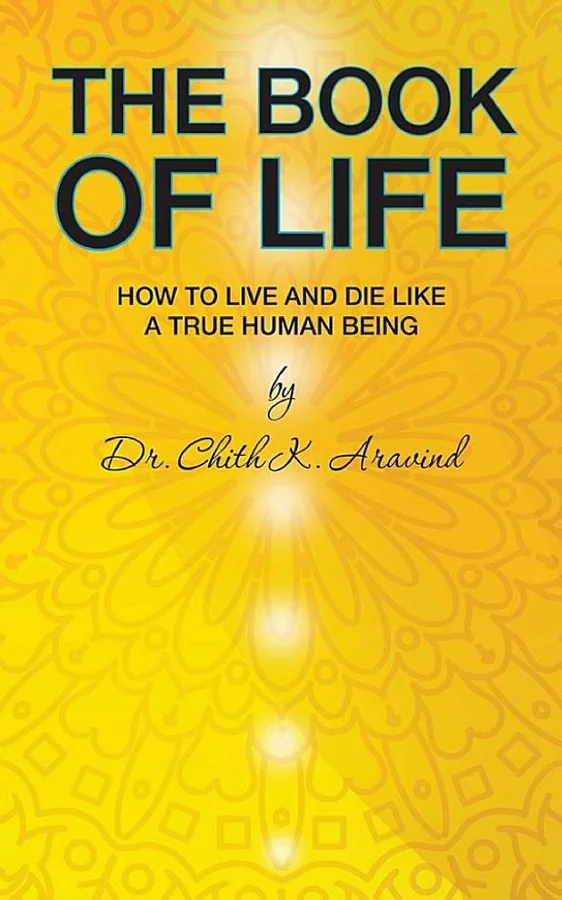
Dr. Chith K. Aravind's "The Book of Life" offers a candid look at the internal landscape shaped by a life of professional achievement. The strength of the work lies in its unpretentious honesty, particularly in its examination of how a dentist and entrepreneur grapples with the 'thinking that has shaped his external world'. A specific passage discussing the nature of perception, drawing parallels between dental diagnostics and self-awareness, stands out for its originality. However, the narrative occasionally feels less like a structured philosophical argument and more like a series of personal reflections, which might leave some readers desiring a more systematic exploration of its concepts. The work's explicit engagement with and demystification of certain Hindu beliefs, as noted by Dr. B. Ashok, is bold and certainly a departure from more conventional spiritual texts. Ultimately, "The Book of Life" provides a relatable, if sometimes meandering, account of self-discovery.
📝 Description
71
Published in 2017, The Book of Life details a personal path from dentistry to inner consciousness.
Dr. Chith K. Aravind's work charts a course from a career in dentistry and entrepreneurship toward a deeper connection with inner awareness. The book examines how outward accomplishments and the thought processes behind them connect with one's internal state. It functions as a collection of reflections on personal growth and self-discovery.
This book is for individuals aiming to align their outward actions with their inner lives. It will attract those who have found external success but feel a void or seek greater meaning. Readers interested in self-inquiry, personal philosophy, and the integration of daily life with spiritual exploration will find value here.
The Book of Life was published in 2017, a time of renewed interest in mindfulness, personal development, and esoteric thought. It follows a lineage of self-help and philosophical inquiry that gained momentum in the late 20th century, influenced by figures such as Carl Jung and various Eastern spiritual traditions. The author's approach, however, is grounded in his specific life experiences and observations.
💡 Why Read This Book?
• Gain practical insights into aligning your external achievements with your inner state, as exemplified by Dr. Aravind's professional journey. • Explore the demystification of religious and spiritual perceptions, offering a fresh lens on established beliefs, directly referencing the work's approach to Hindu concepts. • Understand the connection between your thought processes and your reality, a core tenet discussed throughout the book's 2017 publication.
⭐ Reader Reviews
Honest opinions from readers who have explored this book.
❓ Frequently Asked Questions
What is the primary focus of Dr. Chith K. Aravind's "The Book of Life"?
The primary focus is an introspective journey exploring the author's transition from a career as a dentist and entrepreneur to a deeper understanding of his inner self and the relationship between his thoughts and external reality.
When was "The Book of Life" first published?
"The Book of Life" was first published on April 11, 2017.
What kind of insights does the book offer regarding religious beliefs?
The book aims to demystify certain religious beliefs, particularly Hindu concepts, offering a bold and explicit perspective that challenges conventional interpretations, as noted by Dr. B. Ashok.
Who is Dr. Chith K. Aravind?
Dr. Chith K. Aravind is the author of "The Book of Life," with a background as a dentist and entrepreneur, who has undertaken extensive global travel influencing his philosophical outlook.
What is the core philosophical stance of "The Book of Life"?
The core stance is that deep contemplation of one's thinking processes is key to understanding one's inner self and how it shapes the external world.
Does the book discuss Jesus?
Yes, the book enables readers to understand Jesus and his principles, suggesting an exploration of Christian thought alongside other spiritual traditions.
🔮 Key Themes & Symbolism
Self-Inquiry and Perception
The work emphasizes a profound examination of the self, positing that understanding the 'thinking that has shaped his external world' is paramount to inner realization. It suggests that our perception is not merely a passive reception of reality but an active construction influenced by our beliefs and experiences. Dr. Aravind’s background as a dentist provides a unique lens through which to analyze the meticulous observation and diagnostic processes, applying them to the subtler areas of consciousness and self-awareness. This theme encourages readers to question their own ingrained thought patterns and how these manifest in their lived experiences.
Bridging External Success and Inner Fulfillment
A central concern of "The Book of Life" is the potential dichotomy between outward professional achievements and inner contentment. Dr. Aravind, drawing from his dual careers as a dentist and entrepreneur, probes the psychological range of success, questioning whether material or professional accomplishments equate to genuine fulfillment. The book advocates for a holistic approach to life, where the pursuit of external goals is harmonized with a deep understanding and cultivation of one's inner world. It’s an invitation to reflect on what truly constitutes a 'well-lived' life beyond societal metrics.
Explaining Spiritual and Religious Concepts
The book takes a bold stance in explaining established religious and spiritual doctrines. It aims to strip away dogma and present core concepts in a more accessible and explicit manner. References to understanding Jesus and the explicit mention of unchaining perceptions in Hindu beliefs suggest a comparative approach that seeks universal truths beneath diverse traditions. This theme challenges readers to re-examine their own spiritual frameworks and encourages an open-minded engagement with diverse belief systems, fostering a personal interpretation rather than blind adherence.
The Global Footprint of Consciousness
Dr. Aravind’s extensive global travels serve as a backdrop and a source of inspiration for his reflections. The 'Global footfall' mentioned in the original blurb signifies an engagement with diverse cultures and perspectives, which informs his understanding of human consciousness. This theme suggests that while the journey of self-discovery is personal, it is also influenced by and contributes to a broader human experience. The book implicitly argues that understanding one's own consciousness can lead to a greater appreciation of the interconnectedness of all beings.
💬 Memorable Quotes
Direct passages from the work, attributed to the author.
“He has deeply thought of the thinking that has shaped his external world and deeply pondered how that relates to his inner self.”
— This observation highlights the core methodology of the book: a rigorous self-analysis focused on the author's cognitive processes and their direct impact on his outward reality, linking external actions to internal mental frameworks.
“Unchained some perceptions in Hindu beliefs and really explaining bold and explicit.”
— This points to the book's critical engagement with religious traditions, specifically Hinduism, aiming to present its tenets in a clear, direct, and unconventional manner that liberates the reader from potentially limiting interpretations.
“Enables one to understand Jesus and his p”
— This suggests the book offers a perspective on Christian teachings, likely focusing on the practical or philosophical aspects of Jesus's message, integrating it into a broader exploration of spiritual understanding.
“The Book of Life is an insightful journey to self from the Global footfall Dr. Aravind has had.”
— This frames the narrative as a personal odyssey of self-discovery, influenced and informed by the author's extensive international experiences and the diverse perspectives gained from them.
“He has deeply thought of the thinking that has shaped his external world.”
— This expresses the book's central thesis: that a conscious examination of one's own thought processes is fundamental to understanding and potentially transforming one's lived experience and achievements.
🌙 Esoteric Significance
Tradition
While not explicitly aligned with a single esoteric lineage, "The Book of Life" draws implicitly from Hermetic and Gnostic principles by emphasizing the power of inner knowledge and the transformative potential of self-awareness. Its focus on understanding the 'thinking that has shaped his external world' reflects the Hermetic axiom 'As above, so below,' applied to the microcosm of individual consciousness. The demystification of religious concepts also aligns with Gnostic aims to reveal hidden truths and personal gnosis, though its approach is more grounded in personal experience than in classical Gnostic cosmology.
Symbolism
The title itself, "The Book of Life," is a potent symbol, often associated in esoteric traditions with the Akashic records or a divine ledger of existence. In the context of the book, it likely represents the unfolding narrative of an individual's existence, written through their thoughts, actions, and consciousness. The author's background as a dentist might symbolize the meticulous, analytical approach required to 'diagnose' and understand the 'anatomy' of the self, while entrepreneurship could represent the active manifestation of inner will into the external world.
Modern Relevance
In contemporary spiritual and self-help circles, "The Book of Life" speaks directly to the growing interest in mindfulness, cognitive behavioral principles, and personalized spiritual paths. Its emphasis on the mind-body connection and the power of thought speaks to modern psychological approaches and practices like neuro-linguistic programming (NLP) and positive psychology. Thinkers and practitioners focused on conscious living, manifestation, and the integration of diverse spiritual ideas into everyday life will find Dr. Aravind's grounded, experiential approach particularly relevant.
👥 Who Should Read This Book
• Individuals with successful careers who feel a disconnect between their external achievements and inner fulfillment, seeking a framework to integrate both aspects of their lives. • Readers interested in comparative spirituality and philosophy who wish to explore clarified perspectives on religious concepts, particularly Hindu beliefs and Christian teachings. • Those starting or deepening their personal journey of self-inquiry, looking for relatable accounts of introspection that bridge practical life experience with profound self-understanding.
📜 Historical Context
Published in 2017, "The Book of Life" arrived during a period of heightened interest in personal development and consciousness studies, a trend amplified by the digital age and a global resurgence of spiritual inquiry outside traditional religious institutions. It emerged in dialogue with a burgeoning self-help industry and a renewed academic and popular fascination with Eastern philosophies and Western esoteric traditions. While not directly engaging with specific academic debates, its demystification of Hindu beliefs and its focus on the individual's internal landscape echo themes explored by thinkers like Alan Watts and, in a more psychological vein, Carl Jung. The work’s explicit aim to 'unchain some perceptions' in established religions suggests a counter-current to more orthodox theological discourse, positioning itself as a personal philosophical guide rather than a denominational text. Its reception, while not marked by specific events like censorship or major awards, contributes to the broader conversation on accessible spirituality and self-actualization prevalent in the early 21st century.
📔 Journal Prompts
The thinking that has shaped your external world: identify one core belief influencing your career.
Relating dental diagnostics to self-awareness: how can precise observation reveal inner truths?
Explaining perceptions: explore a Hindu concept from the book and your personal interpretation.
Understanding Jesus: reflect on a principle of his teachings and its relevance today.
The Book of Life as a personal ledger: what new entries will you author through conscious thought?
🗂️ Glossary
Global footfall
Refers to the author's extensive international travel experiences and the diverse perspectives gained from engaging with cultures worldwide, influencing his philosophical outlook.
Thinking that has shaped his external world
This phrase denotes the author's conscious and subconscious thought processes, beliefs, and mental frameworks that have directly influenced his actions, career, and the reality he has manifested.
Inner self
The internal essence of an individual, encompassing consciousness, emotions, spiritual awareness, and the core of one's being, distinct from external identity or achievements.
Explaining
The process of clarifying, simplifying, and making complex or obscure concepts, particularly religious or spiritual ones, accessible and understandable to a broader audience.
Perceptions in Hindu beliefs
Refers to the specific interpretations and understandings of Hindu doctrines and philosophies that the author aims to re-examine or present in a new light.
Understand Jesus and his p
Indicates the book's exploration of the teachings and principles attributed to Jesus Christ, likely focusing on their practical or philosophical implications for personal life.
Self
The totality of an individual's being, encompassing their consciousness, identity, experiences, and the ongoing process of self-awareness and self-realization.
This book appears in 1 collection
🔮 Readers Also Liked
Browse all →









From the “Eastern Mysticism” Collection
View all →









More Free Mysticism & Contemplation Books
View all →