Who Are You
 80
80

Who Are You
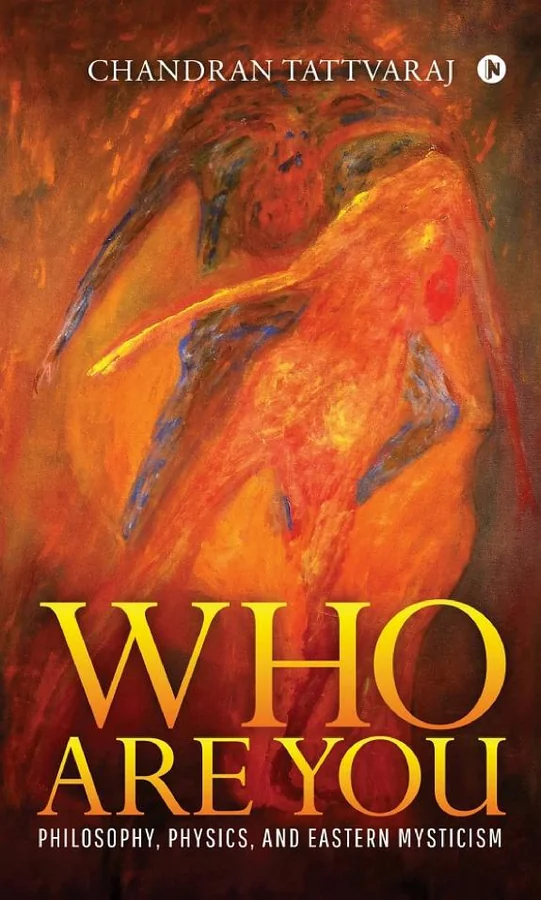
Chandran Tattvaraj's "Who Are You" tackles a question as old as human consciousness itself, but does so with an eye toward contemporary scientific discourse. The author’s strength lies in drawing accessible parallels between ancient Vedantic principles and modern physics, particularly quantum mechanics’ implications for observation and reality. The initial chapters, which dissect the nature of thought and the 'voice in the head,' are particularly sharp, forcing a stark confrontation with one's own mental processes. However, the book occasionally falters in its transition from abstract philosophical discourse to concrete experiential guidance. While it skillfully points towards the 'thinker beyond thought,' the practical steps for realizing this state remain somewhat underspecified, leaving the reader intellectually stimulated but perhaps experientially wanting. It's a valuable bridge between esoteric traditions and empirical inquiry.
📝 Description
80
Chandran Tattvaraj's 2018 book, "Who Are You," connects ancient self inquiry with modern science.
Chandran Tattvaraj's "Who Are You" addresses the question of selfhood by comparing ancient philosophical ideas with current scientific understanding. The book draws connections between traditional spiritual thought, including Vedanta and Western mysticism, and contemporary fields like neuroscience and quantum physics. It proposes that these diverse areas of inquiry may converge on similar insights about consciousness and identity. Tattvaraj encourages readers to look past fleeting thoughts and internal dialogue to find a more constant sense of being.
This book is suitable for individuals who practice self-inquiry and are curious about the relationship between spirituality and science. Readers familiar with Eastern philosophies or Western esoteric traditions will find it helpful for aligning those perspectives with modern scientific theories. It offers ample material for contemplation for anyone grappling with existential questions or seeking to grasp the fundamental nature of consciousness.
Published in 2018, "Who Are You" participates in a long tradition of spiritual inquiry into the nature of the self. It echoes the explorations of figures like the ancient Vedanta sages and 20th-century mystics such as Ramana Maharshi. The book engages with the ongoing scientific study of consciousness, particularly the "hard problem" that has occupied thinkers like David Chalmers. Tattvaraj bridges these perspectives, suggesting a resonance between contemplative practices and theoretical physics.
💡 Why Read This Book?
• Gain a framework for distinguishing the observer from the observed, inspired by the 2018 publication date’s engagement with modern science, offering a fresh perspective on self-inquiry. • Explore the convergence of perennial philosophies and contemporary physics, understanding how ancient insights into consciousness align with concepts like quantum entanglement. • Challenge ingrained notions of selfhood by examining the nature of thought and the 'voice in the head,' as detailed in the book's early sections.
⭐ Reader Reviews
Honest opinions from readers who have explored this book.
❓ Frequently Asked Questions
What is the main philosophical question Chandran Tattvaraj addresses in "Who Are You"?
The book primarily questions the fundamental nature of identity: are we our thoughts, the internal narrator, the thinker, or something entirely beyond these transient phenomena? It explores the self amidst the flux of consciousness.
How does "Who Are You" relate contemporary science to ancient philosophies?
Tattvaraj contrasts ancient perennial philosophies and mystics' insights with contemporary scientific conclusions, particularly in fields like neuroscience and quantum physics, suggesting a surprising alignment.
What is the core concept of the 'thinker beyond thought' explored in the book?
This concept suggests that the true self is not the stream of thoughts or the internal voice, but the underlying awareness or consciousness in which these mental events occur.
When was "Who Are You" first published?
The book was first published on January 13, 2018, placing it within the contemporary discourse on consciousness studies and spirituality.
What is the esoteric tradition that influences "Who Are You"?
The work draws heavily from Eastern traditions, particularly Vedanta and Advaita Vedanta, alongside broader mystical and perennial philosophy lineages.
Does the book offer practical exercises for self-discovery?
While deeply contemplative, the book focuses more on conceptual clarity and pointing towards a different perception of self, rather than providing structured exercises.
🔮 Key Themes & Symbolism
The Observer and the Observed
A central theme is the radical separation of the conscious observer from the content of consciousness – thoughts, emotions, and perceptions. Tattvaraj guides the reader to recognize that 'you' are not the mental activity but the field of awareness in which it arises. This perspective challenges the ego's identification with fleeting mental states, pointing toward a stable, unchanging self that is pure consciousness, a concept resonant with Advaita Vedanta's non-dualistic framework.
Consciousness and Modern Science
The book bridges the gap between ancient spiritual insights and contemporary scientific understanding, particularly in quantum physics and neuroscience. It suggests that modern scientific findings regarding the observer effect in quantum mechanics and the nature of subjective experience echo millennia-old mystical teachings. This dialogue frames the perennial question of 'Who are you?' not just as a spiritual pursuit but as a subject of empirical and theoretical investigation.
The Nature of Thought
Tattvaraj meticulously dissects the phenomenon of thought, differentiating between the 'voice in the head' and the underlying awareness. The work posits that identifying with thoughts is the primary source of confusion regarding identity. By observing thoughts as transient events, rather than integral parts of the self, readers are encouraged to recognize a deeper identity that is not conditioned by mental constructs or personal history.
Self-Inquiry Beyond the Ego
The book advocates for a form of self-inquiry that transcends the limitations of the ego and the conditioned self. It proposes that true understanding of 'who you are' comes not from accumulating knowledge about oneself, but from a direct realization of one's essential nature. This process involves disidentification from the personal narrative and the assumption of a witness-consciousness, aligning with contemplative practices found across various esoteric traditions.
💬 Memorable Quotes
Direct passages from the work, attributed to the author.
“Amidst the flood of thoughts, who is the one observing?”
— This question directly probes the reader's sense of self, urging a distinction between the mental content and the awareness experiencing it, a foundational step in self-realization.
“Are we the voice in the head, or the silence it arises within?”
— This highlights the core inquiry into identity, contrasting the ephemeral nature of internal dialogue with the enduring presence of consciousness, suggesting the latter as the true self.
“Contemporary science is returning to conclusions ancient mystics suggested.”
— This statement underscores the book's thesis that modern empirical investigation is validating the clear insights into consciousness and reality offered by ancient spiritual traditions.
“The thinker is not the thought, nor the mind, but that which witnesses.”
— This directly addresses the misconception of identity, pointing towards a pure, disembodied awareness as the true locus of self, distinct from mental processes.
“The Eastern reflection offers enlightenment aligned with Western science.”
— This interpretation emphasizes the cross-cultural and interdisciplinary approach of the book, suggesting a universal truth accessible through both mystical contemplation and scientific inquiry.
🌙 Esoteric Significance
Tradition
The work is deeply rooted in the Advaita Vedanta tradition of Hinduism, emphasizing non-duality (Advaita) and the ultimate reality of Brahman, which is identical to the individual self (Atman). It also aligns with broader perennial philosophy, a concept popularized by Aldous Huxley, which posits a common mystical core underlying all world religions and esoteric traditions. Tattvaraj departs from literal interpretations of scripture, focusing instead on the direct experiential realization of the Self, a hallmark of many mystical paths.
Symbolism
The book implicitly uses the symbol of the 'witness' or 'observer' as a key motif. This represents pure consciousness, detached from the phenomena it perceives. The 'flood of thoughts' symbolizes the illusory nature of the ego-constructed self, a transient mental landscape. The contrast between the 'voice in the head' and the 'silence' it inhabits serves as a symbolic representation of the distinction between conditioned mental activity and the unconditioned awareness that is the true self.
Modern Relevance
Contemporary thinkers and practitioners in fields like mindfulness, transpersonal psychology, and even certain branches of theoretical physics are exploring similar themes. Tattvaraj's work provides a conceptual bridge for those in the scientific community seeking to understand subjective experience and consciousness through a non-materialist lens. It also speaks to modern spiritual seekers who are disillusioned with dogma and are looking for direct experiential understanding of the self, drawing parallels to contemporary teachers like Eckhart Tolle.
👥 Who Should Read This Book
• Individuals questioning the nature of their identity and consciousness, seeking to understand the self beyond the limitations of the ego and the 'voice in the head.' • Students of comparative philosophy and religion interested in the intersection of Eastern spiritual traditions (like Vedanta) and modern scientific theories of consciousness. • Seekers of spiritual awakening who are looking for intellectual frameworks that support direct experiential realization of the Self, moving beyond belief systems.
📜 Historical Context
Published in 2018, Chandran Tattvaraj's "Who Are You" arrived at a moment when the dialogue between consciousness studies, neuroscience, and spirituality was gaining significant momentum. It follows in the wake of popular science books that explored similar territory, such as those by authors like Daniel Dennett and Anil Seth, who engage with the 'hard problem of consciousness' from empirical standpoints. Tattvaraj’s work, however, leans more heavily on the perennial philosophy, echoing the non-dualistic teachings of figures like Ramana Maharshi and Nisargadatta Maharaj, prominent in the mid-to-late 20th century. While not directly engaging with specific critiques, the book implicitly addresses the materialist assumptions prevalent in much of Western science, offering a counterpoint grounded in subjective experience and ancient wisdom traditions. Its reception, while not marked by major public events, contributes to a growing body of literature seeking to synthesize these diverse perspectives.
📔 Journal Prompts
The thought stream's constant presence: what remains when thoughts cease?
Identifying the 'thinker': distinguish this from the thoughts themselves.
The silence between thoughts: explore its quality and your relation to it.
Contrasting ancient mystics' conclusions with 21st-century scientific findings.
The observer's role: how does awareness shape perceived reality?
🗂️ Glossary
Self
In this context, the true, unchanging essence of being, often equated with pure consciousness or awareness, distinct from the personality or ego.
Thought
Any mental event, including ideas, memories, judgments, and the internal monologue or 'voice in the head'; considered transient phenomena.
Observer
The pure awareness or consciousness that witnesses thoughts, feelings, and perceptions without identification, representing the true self.
Perennial Philosophy
The concept that all major world religions and esoteric traditions share a common metaphysical core concerning the nature of reality and the human spirit.
Advaita Vedanta
A school of Hindu philosophy emphasizing the non-duqualistic nature of reality, where the individual self (Atman) is identical to the ultimate reality (Brahman).
Ego
The sense of self constructed from personal experiences, beliefs, and identifications, often mistaken for the true self.
Consciousness
The state or quality of awareness, or of being aware of an external object or something within oneself; the fundamental ground of being explored in the book.
This book appears in 1 collection
🔮 Readers Also Liked
Browse all →




From the “Eastern Mysticism” Collection
View all →






More Free Mysticism & Contemplation Books
View all →



![The Conference Of The Birds Penguin Classics [download]](/img/thumb/the-conference-of-the-birds-penguin-classics-download.webp)