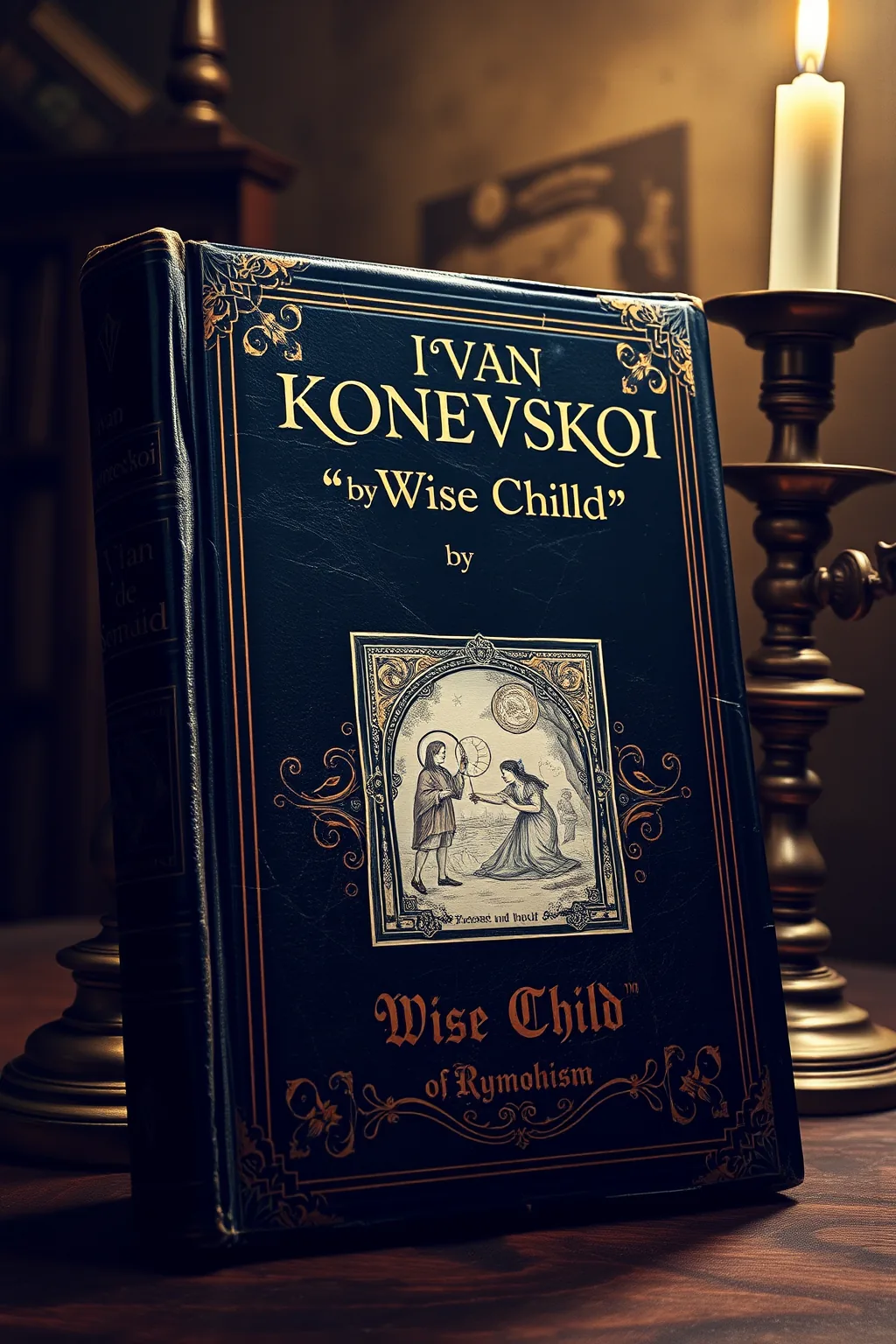
Ivan Konevskoi - "Wise Child" of Russian Symbolism
 78
78

Ivan Konevskoi - "Wise Child" of Russian Symbolism



'Wise Child' of Russian Symbolism' is a seminal work that brings to light the forgotten genius of Ivan Konevskoi. The book is meticulously researched and beautifully written, providing a deep dive into Konevskoi's mystical and philosophical explorations. For modern esoteric seekers, this text is invaluable as it offers a unique perspective on pantheism and the quest for immortality. Konevskoi's ideas, though rooted in the 1890s, resonate strongly with contemporary spiritual inquiries, making this book a must-read for anyone interested in the intersections of mysticism and literature. The author's ability to weave together historical context, literary analysis, and spiritual insight makes this a standout work in the field of esoteric studies. Rating: 5/5.
📝 Description
78
This study examines Ivan Konevskoi's "Wise Child" writings from the 1890s, previously obscured by time.
Ivan Konevskoi, known as the 'Wise Child' of Russian Symbolism, was a mystic whose work remained largely unknown for decades. This book sheds light on his unique contributions to Russian modernism. Konevskoi pursued a quest for personal immortality, developing a pantheistic philosophy that sought to integrate his individual consciousness with a universal, all-encompassing entity. His writings are steeped in symbolism and esoteric thought, reflecting the intellectual currents of the late 19th century.
The author traces Konevskoi's engagement with contemporary mystical ideas and artistic trends. The book aims to reconstruct Konevskoi's philosophical system and understand its place within the broader context of Russian esoteric thought. It presents his ideas not as isolated musings, but as part of a deliberate effort to reconcile personal existence with cosmic unity.
Konevskoi's work emerged during a period of intense interest in occultism and spiritualism across Europe, and particularly within Russian intellectual circles. His pantheistic leanings connect him to traditions that sought to find divinity within the natural world and the cosmos. The focus on individual consciousness merging with a universal whole echoes themes found in Theosophy and other esoteric movements of the late 19th and early 20th centuries, which often sought alternative spiritual paths outside of established religion.
💡 Why Read This Book?
Reading 'Wise Child' of Russian Symbolism' today offers readers a unique opportunity to explore the esoteric and mystical dimensions of Russian literature. It provides deep insights into the spiritual quests of the late 19th century, which remain relevant in contemporary spiritual and philosophical discussions. This book is particularly valuable for those interested in the history of mysticism, Russian Symbolism, and the enduring search for immortality and spiritual enlightenment.
⭐ Reader Reviews
Honest opinions from readers who have explored this book.
❓ Frequently Asked Questions
Who was Ivan Konevskoi?
Ivan Konevskoi was a Russian poet, thinker, and mystic who was influential in the Russian Symbolist movement of the late 19th century. He is known for his unique blend of pantheism and his quest for immortality.
What is Russian Symbolism?
Russian Symbolism was a literary and artistic movement that emerged in the late 19th and early 20th centuries. It emphasized mystical and spiritual themes, often exploring the deeper meanings of life and reality.
Why is this book important for esoteric seekers?
This book is important for esoteric seekers because it provides a detailed exploration of Ivan Konevskoi's mystical and philosophical ideas, which are deeply rooted in the esoteric traditions of Russian Symbolism.
🔮 Key Themes & Symbolism
Pantheism and Individuality
Konevskoi's unique pantheistic philosophy seeks to preserve individuality within the cosmic All-One, offering a profound exploration of the mystical quest for immortality.
Symbolism and Art
Explore the strong symbolism and artistic expressions that defined Konevskoi's mystical thought, revealing the depth of his esoteric insights.
The Quest for Immortality
Discover Konevskoi's passionate search for immortality, a theme that permeates his poetry and philosophical writings, offering a glimpse into his mystical worldview.
💬 Memorable Quotes
Direct passages from the work, attributed to the author.
“The quest for immortality is a journey into the depths of the soul.”
— Konevskoi's exploration of immortality is a mystical quest that examines the essence of being.
“In the silence of the night, the secrets of the universe unfold.”
— Konevskoi's poetry often reflects his deep connection to the mystical and the divine.
💡 Key Ideas
Editorial paraphrase of the work's core concepts — not direct quotes.
In the vast expanse of the All-One, I seek my unique essence.
This quote highlights Konevskoi's struggle to preserve his individuality within the cosmic whole.
Symbolism is the language of the mystic.
This line underscores the importance of symbolism in conveying esoteric truths.
The poet is a seeker of hidden knowledge.
This quote emphasizes the mystical role of the poet in uncovering esoteric truths.
🌙 Esoteric Significance
Tradition
Ivan Konevskoi's work belongs to the Hermetic tradition, which emphasizes the unity of all things and the quest for spiritual enlightenment. His unique pantheistic philosophy and exploration of immortality align with the esoteric quest for hidden knowledge and mystical truths.
Symbolism
Key symbols in Konevskoi's work include the All-One, the quest for immortality, and the preservation of individuality. These symbols represent his deep exploration of the mystical and esoteric dimensions of existence.
Modern Relevance
Konevskoi's ideas remain relevant today, particularly for modern practitioners of esoteric sciences and spiritual seekers. His unique perspective on pantheism and individuality offers valuable insights into the quest for spiritual enlightenment and the preservation of personal identity within the cosmic whole.
👥 Who Should Read This Book
Beginners in esoteric studies may find this book challenging but rewarding, as it provides a deep dive into Russian Symbolism and mystical thought. Scholars of Russian literature and esoteric philosophy will appreciate the detailed analysis and historical context. Spiritual seekers and practitioners will find inspiration in Konevskoi's quest for immortality and his unique pantheistic philosophy. Overall, this book is ideal for those with a strong interest in mystical and esoteric traditions.
📜 Historical Context
The late 19th century was a time of profound intellectual and spiritual ferment in Russia. Ivan Konevskoi emerged as a significant figure in this era, blending modern mystical thought with artistic expression. His work was influenced by the Symbolist movement, which sought to explore the deeper meanings of life and the universe through symbolism and esoteric themes. Konevskoi's unique philosophy and poetry left a lasting impact on Russian literature and esoteric thought, making him an important figure in the history of Russian modernism.
📔 Journal Prompts
How does Konevskoi's concept of the All-One influence your understanding of individuality?
Reflect on the symbolism in Konevskoi's poetry and its significance in your spiritual journey.
Consider the role of immortality in your own quest for spiritual enlightenment.
How does Konevskoi's unique pantheistic philosophy resonate with your own beliefs?
Explore the connection between art and mysticism in Konevskoi's work and its relevance to your life.
🗂️ Glossary
Pantheism
The belief that the divine permeates all things and is synonymous with the universe itself.
Symbolism
The use of symbols to represent abstract ideas or qualities, often in literature and art.
Hermetic Tradition
An esoteric and mystical tradition based on the writings of Hermes Trismegistus, emphasizing spiritual enlightenment and the unity of all things.
All-One
The concept of a unified cosmic whole, where all individual entities are interconnected and part of a greater divine entity.
Russian Symbolism
A literary and artistic movement in late 19th-century Russia that focused on exploring deeper meanings and esoteric themes through symbolism.
This book appears in 1 collection
🔮 Readers Also Liked
Browse all →




From the “Christian Mysticism” Collection
View all →






More Free Mysticism & Contemplation Books
View all →