Universe

 83
83

Universe
Adam Ford’s "Universe" presents a dense, ambitious exploration of existence that, by its very nature, demands significant reader engagement. Its primary strength lies in its systematic attempt to bridge empirical observation with metaphysical speculation, a feat few authors manage with such sustained focus. The chapter detailing the "Law of Resonance" offers a particularly compelling articulation of how subjective experience might be inherently linked to objective phenomena, moving beyond mere metaphor. However, the book’s reliance on its own internal lexicon, while consistent, can at times feel exclusionary. For instance, Ford’s exposition on the "Akashic Field" assumes a familiarity with the concept that may not be present even in well-read individuals, requiring frequent cross-referencing or acceptance on faith. While the 1987 publication date places it within a specific intellectual milieu, its core ideas feel remarkably undiluted. "Universe" is a rigorous, if occasionally opaque, manual for understanding the fabric of reality.
📝 Description
83
Adam Ford's 'Universe,' published in 1987, examines existence and consciousness through integrated scientific and mystical lenses.
Adam Ford's 'Universe,' published in 1987, is a philosophical work that addresses the fundamental nature of existence and consciousness. It does not present a narrative or historical account. Instead, the book offers a framework for understanding the connections between all things, from the smallest particles to large cosmic structures. Ford combines scientific observation with mystical intuition to explore these profound ideas. This book is for those seriously questioning reality, consciousness, and the spiritual aspects of life. It suits students of religion, philosophy, and esoteric traditions looking for a unified perspective. Readers interested in the links between quantum physics and metaphysical thought, or who wish to look beyond materialist viewpoints, will find it valuable. It is a text for the dedicated student, not for casual interest.
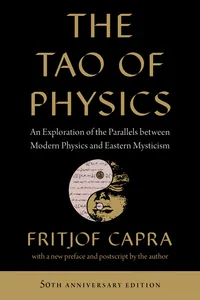
Published in 1987, 'Universe' appeared during a time of growing interest in New Age ideas and perennial philosophies, partly fueled by translated Eastern texts and figures like Joseph Campbell. The intellectual atmosphere showed a departure from purely materialist scientific explanations, seeking instead holistic worldviews. Ford's synthesis shared common ground with contemporaries exploring physics and consciousness, such as Fritjof Capra, though Ford's approach was distinct from Capra's more scientific-theoretical focus.
💡 Why Read This Book?
• Gain a foundational understanding of the "Law of Resonance" as presented by Ford, learning how sympathetic vibrations might link disparate elements of existence and consciousness. • Explore the concept of the "Akashic Field," as detailed in Ford's work, to grasp a metaphysical model for universal information and memory. • Understand the principle of "As Above, So Below" within the specific framework of Ford's 1987 publication, seeing how macrocosmic laws are posited to mirror human experience.
⭐ Reader Reviews
Honest opinions from readers who have explored this book.
❓ Frequently Asked Questions
What is the primary focus of Adam Ford's "Universe"?
Adam Ford's "Universe," published in 1987, focuses on the metaphysical exploration of existence, consciousness, and the interconnectedness of all things, integrating esoteric principles with a framework for understanding reality.
Who is Adam Ford, the author of "Universe"?
Adam Ford is an author known for his contributions to esoteric and metaphysical literature. "Universe," his 1987 work, is considered a significant text in this field, exploring foundational principles of existence.
When was "Universe" by Adam Ford first published?
"Universe" by Adam Ford was first published in 1987, positioning it within a wave of renewed interest in metaphysical and esoteric studies.
What are some key concepts discussed in "Universe"?
Key concepts include the "Law of Resonance," the "Akashic Field," the principle of "As Above, So Below," and the idea of consciousness as primary reality.
Is "Universe" a scientific book?
While "Universe" touches upon concepts that intersect with scientific inquiry, such as energy and vibration, it is primarily a metaphysical and esoteric text, not a scientific treatise in the conventional sense.
What esoteric tradition does "Universe" relate to?
Ford's "Universe" draws from and synthesizes elements found in various esoteric traditions, including Hermeticism and Neoplatonism, focusing on universal principles of manifestation and consciousness.
🔮 Key Themes & Symbolism
The Unity of All Things
Ford posits that underlying the apparent diversity of the cosmos is a singular, fundamental unity often referred to as "The All." This concept suggests that all phenomena, from subatomic particles to galaxies, are interconnected expressions of this one underlying principle. The book explores how this unity is not merely philosophical but a demonstrable reality accessible through focused awareness and understanding of universal laws. It challenges the perception of separation, encouraging readers to see the world not as discrete objects but as an integrated whole where every part influences every other part.
Consciousness as Primary Reality
A central tenet of "Universe" is the assertion that consciousness, not matter, is the fundamental basis of existence. Ford argues that the material world arises from and is sustained by consciousness. This perspective aligns with certain monistic and idealistic philosophies, suggesting that our perceptions and thoughts are not merely byproducts of a material brain but are integral to the creation and experience of reality. The work explores how individual and universal consciousness interact, shaping the manifested universe and our experience within it.
The Law of Resonance
The "Law of Resonance" is presented as a key principle governing the interaction and manifestation of energy and consciousness. Ford explains that like attracts like, and that any entity, whether a thought, emotion, or physical object, vibrates at a specific frequency. Similar frequencies resonate with each other, drawing them together and influencing their development. This law is depicted as a mechanism for creation and interaction within the universe, explaining how intentions can manifest and how connections are formed on both subtle and physical levels.
Correspondence and Microcosm/Macrocosm
Ford extensively explores the Hermetic principle of "As Above, So Below," illustrating how the laws governing the greater universe (macrocosm) are reflected in the smaller, individual human experience (microcosm). This principle serves as a tool for understanding and interpreting universal truths by observing their manifestation in our own lives and in the natural world. The book uses this concept to bridge abstract metaphysical ideas with practical, observable realities, suggesting that by understanding ourselves, we can understand the cosmos, and vice versa.
💬 Memorable Quotes
Direct passages from the work, attributed to the author.
“The universe is not a collection of separate things, but a single, indivisible field of energy and consciousness.”
— This statement expresses Ford's monistic view, emphasizing the fundamental interconnectedness of all existence. It suggests that our perception of individuality and separation is an illusion, and that true understanding lies in recognizing the underlying unity.
“Every thought, every feeling, every intention sends out vibrations that shape our reality.”
— This highlights the active role of consciousness and emotion in manifestation, directly linked to the Law of Resonance. It implies that our inner states are not passive but are potent forces that influence the external world we experience.
“To truly understand the universe, one must first understand the nature of awareness itself.”
— This points to consciousness as the foundational element for comprehending reality. It suggests that an inward exploration of awareness is a prerequisite for grasping the external cosmos and its workings.
“Energy follows thought; where intention is directed, there the creative force will manifest.”
— This concisely explains the mechanism by which consciousness influences the energetic fabric of the universe. It underscores the power of focused will and intention in shaping outcomes and creating experiences.
💡 Key Ideas
Editorial paraphrase of the work's core concepts — not direct quotes.
The macrocosm reflects the microcosm; the laws governing the stars are the same laws that govern the human soul.
This paraphrase of the "As Above, So Below" principle illustrates how universal patterns and principles are mirrored at all levels of existence, from cosmic structures to individual consciousness and experience.
🌙 Esoteric Significance
Tradition
Ford's "Universe" draws heavily from the Hermetic tradition, particularly its emphasis on universal laws, correspondence, and the primacy of consciousness. It also incorporates elements reminiscent of Neoplatonic thought and certain interpretations of Eastern philosophies, such as Advaita Vedanta, in its assertion of a singular, underlying reality. The work synthesizes these influences into a coherent system that aims to provide a comprehensive metaphysical map, departing from strictly lineage-bound teachings by offering its own interpretive framework for these ancient concepts.
Symbolism
Key symbols within "Universe" include the concept of "The All" as a unified field, representing undifferentiated potential. "Vibration" serves as a primary symbol for the energetic basis of all manifestation, where different frequencies denote different forms of existence. The "Akashic Field" functions symbolically as a cosmic library or memory bank, representing the interconnectedness of all information and experience throughout time and space.
Modern Relevance
Contemporary thinkers in fields like consciousness studies, quantum mysticism, and personal development continue to engage with Ford's ideas. His emphasis on the role of intention and resonance in shaping reality finds echoes in modern manifestation techniques and law of attraction principles. Esoteric practitioners and students of comparative spirituality often cite "Universe" as a key text for understanding the underlying principles of various traditions and for developing a unified metaphysical perspective.
👥 Who Should Read This Book
• Aspiring metaphysicians and students of esoteric philosophy seeking a comprehensive framework for understanding existence beyond materialism. • Individuals interested in the intersection of consciousness studies and quantum physics who want to explore more speculative, principle-based models. • Practitioners of spiritual disciplines looking to deepen their understanding of universal laws like resonance and correspondence in their personal practice.
📜 Historical Context
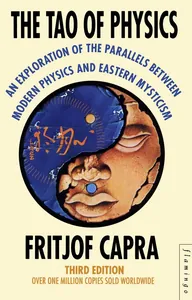
Adam Ford's "Universe," emerging in 1987, arrived during a period when the New Age movement was gaining significant cultural traction, blending Eastern mysticism, quantum physics interpretations, and alternative spirituality. The intellectual climate was ripe for works that sought to synthesize these disparate elements into a cohesive worldview, challenging the perceived limitations of materialistic science. This era saw a resurgence of interest in perennial philosophy and Gnostic ideas, spurred by accessible translations and popularizations. Ford's work offered a systematic, albeit esoteric, framework that resonated with those seeking meaning beyond conventional paradigms. It stood apart from the more scientifically focused explorations of consciousness found in works like Fritjof Capra's "The Tao of Physics" (1975), offering a more overtly metaphysical interpretation of universal laws and principles. While not tied to a specific academic debate, "Universe" contributed to the broader discourse on consciousness and reality that was gaining momentum outside traditional academic circles.
📔 Journal Prompts
The concept of "The All" as a singular, indivisible field.
How the "Law of Resonance" might apply to daily interactions and personal beliefs.
The implications of "Consciousness as Primary Reality" for individual agency.
Reflecting on the "As Above, So Below" principle in a personal life event.
Exploring the energetic nature of thoughts and emotions as described in "Universe."
🗂️ Glossary
The All
A fundamental principle in Ford's work representing the singular, unified source or substance from which all manifested reality originates. It signifies an indivisible, all-encompassing energetic and conscious field.
Law of Resonance
A core principle stating that like attracts like; entities vibrating at similar frequencies tend to interact and influence each other, forming the basis for connection and manifestation in the universe.
Akashic Field
Conceptualized as a universal energetic field or consciousness that records all events, thoughts, and emotions throughout history. It serves as a cosmic repository of information accessible through subtle awareness.
As Above, So Below
A Hermetic principle asserting that the patterns and laws governing the macrocosm (the universe) are mirrored in the microcosm (individual beings and experiences), providing a basis for symbolic interpretation and understanding.
Vibration
The fundamental energetic property of all existence, according to Ford. Differences in vibration create differences in form and consciousness, with specific frequencies corresponding to distinct phenomena.
Consciousness
Presented not as a byproduct of matter, but as the primary reality from which all phenomena arise. It is the fundamental ground of being that underlies and sustains the manifested universe.
Correspondence
The principle that there exist relationships and parallels between different levels or aspects of reality, enabling understanding through analogy and the recognition of recurring patterns.
This book appears in 1 collection
🔮 Readers Also Liked
Browse all →








From the “Eastern Mysticism” Collection
View all →






More Free Mysticism & Contemplation Books
View all →