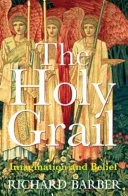
The Holy Grail
 81
81

The Holy Grail
Barber's "The Holy Grail" offers a scholarly, yet accessible, account of a legend that has captivated minds for centuries. The author demonstrates a keen eye for textual analysis, particularly in tracing the shift from Chrétien de Troyes's Arthurian court to the more overtly religious interpretations that followed. A particular strength lies in his detailed exposition of the various medieval romances and their distinct contributions to the evolving mythos. For instance, his discussion of Wolfram von Eschenbach’s "Parzival" clearly delineates its unique theological and philosophical dimensions compared to earlier versions. However, while the historical and literary tracing is robust, the book could benefit from a more expansive exploration of the legend's impact on later occult and esoteric movements beyond the medieval period, a dimension hinted at but not fully developed. Despite this, Barber’s work provides a solid foundation for understanding the Grail's genesis. It is a valuable resource for anyone seeking to understand the primary layers of this complex legend.
📝 Description
81
Richard Barber's 2004 book traces the Grail legend from 12th-century romances to its symbolic meanings.
Richard Barber's "The Holy Grail" traces the legend's development from its origins in 12th-century Arthurian romances to its later religious and esoteric interpretations. The book begins with Chrétien de Troyes's early poems, which introduced the mysterious vessel and its quests into Western literature. Barber shows how these secular tales of chivalry and courtly love formed the basis for subsequent understandings of the Grail.
The work then examines the legend's absorption into Christian theology. Barber details how the secular quest became a metaphor for spiritual enlightenment and divine favor, particularly through the contributions of writers like Robert de Boron. This transformation integrated the Grail into a Christological framework.
Later sections discuss medieval texts such as Wolfram von Eschenbach's "Parzival" and the "Queste del Saint Graal." Barber analyzes how these diverse works reflected the spiritual and cultural concerns of their times, highlighting the blend of mysticism, chivalry, and evolving religious thought across Europe. The book also considers the Grail's resonance within various esoteric traditions as a symbol of hidden knowledge or spiritual realization.
This book fits within the study of Western esoteric traditions by examining how a medieval literary motif evolved into a symbol of spiritual attainment. Barber details how the Grail, initially a subject of courtly romance, was later imbued with mystical and theological significance. It became a focal point for understanding hidden knowledge, spiritual quests, and direct divine connection within various medieval and later esoteric currents. The work shows how this symbol transcended its literary origins to represent a deeper, often occult, pursuit of truth.
💡 Why Read This Book?
• Gain a clear understanding of the Grail legend's origins, starting with Chrétien de Troyes's 12th-century romances, and how they established the core narrative elements. • Discern the significant theological shifts, such as the Grail's reinterpretation within medieval Christianity, moving from a secular ideal to a symbol of divine grace. • Explore the varied symbolic meanings attributed to the Grail across different medieval texts, including Wolfram von Eschenbach's "Parzival," revealing its adaptability as a spiritual emblem.
⭐ Reader Reviews
Honest opinions from readers who have explored this book.
❓ Frequently Asked Questions
What are the earliest known literary sources for the Holy Grail legend?
The earliest known literary sources are the 12th-century romances by Chrétien de Troyes, particularly "Perceval, le Conte du Graal," which introduced the mysterious vessel and its quest into Western literature.
How did the Holy Grail legend evolve from secular romance to religious symbolism?
The legend transitioned as authors like Robert de Boron integrated Christian theology, reframing the Grail as a sacred relic connected to Christ's passion, thereby transforming its meaning from courtly adventure to spiritual pursuit.
Which medieval authors significantly contributed to the Grail mythos?
Key contributors include Chrétien de Troyes, Robert de Boron, and Wolfram von Eschenbach, whose respective works "Perceval," "Joseph d'Arimathie," and "Parzival" each added distinct layers to the legend's development.
Does Richard W. Barber's book discuss the Grail in non-Christian traditions?
While primarily focused on the Western European development, the book explores the esoteric interpretations of the Grail, touching upon its symbolic resonance that transcends purely Christian frameworks in later mystical thought.
When was Richard W. Barber's "The Holy Grail" first published?
Richard W. Barber's "The Holy Grail" was first published in 2004, offering a comprehensive overview of the legend's historical and literary trajectory.
What is the significance of the Grail in Wolfram von Eschenbach's "Parzival"?
In "Parzival," the Grail is depicted as a mystical stone or chalice that sustains life and grants spiritual insight, guarded by a chivalric order, presenting a unique philosophical and theological perspective distinct from earlier versions.
🔮 Key Themes & Symbolism
Literary Genesis
Barber meticulously traces the nascent stages of the Grail legend, focusing on Chrétien de Troyes's "Perceval, le Conte du Graal" (c. 1180s) as the seminal text. This section highlights how the concept of a sacred quest and a mysterious object, initially lacking specific religious connotation, emerged within the Arthurian chivalric tradition. The analysis emphasizes the blend of courtly love, adventure, and nascent spiritual undertones that characterized these early romances, setting the stage for subsequent interpretations and explorations of the vessel's meaning.
Theological Infusion
This theme examines the critical transition of the Grail legend into a predominantly Christian symbol. Works like Robert de Boron's "Joseph d'Arimathie" (early 13th century) are central, reinterpreting the Grail as the vessel used at the Last Supper and by Joseph of Arimathea to collect Christ's blood. Barber illustrates how this infusion of Christian narrative transformed the Grail from a literary device into an object of profound religious significance, deeply embedded within the fabric of medieval piety and theological discourse.
Symbolic Diversification
Barber explores how the Grail legend fractured and diversified across various medieval texts and interpretations. He contrasts Chrétien's secular quest with the more overtly religious "Queste del Saint Graal" (c. 1230s) and Wolfram von Eschenbach's "Parzival" (early 13th century). This section underscores the Grail's adaptability as a symbol, representing not just a relic but also spiritual perfection, divine grace, hidden knowledge, and the ultimate goal of human aspiration, resonating differently within distinct literary and philosophical contexts.
Esoteric Undercurrents
Beyond its mainstream literary and religious manifestations, the book touches upon the Grail's resonance within esoteric traditions. Barber hints at how the legend's symbolism—the quest for hidden truth, the attainment of spiritual enlightenment, and the search for a lost divine connection—found echoes in later mystical and occult philosophies. This theme positions the Grail not merely as a historical artifact or literary motif but as a potent archetypal symbol for inner transformation and Gnostic-style revelation.
💬 Memorable Quotes
Direct passages from the work, attributed to the author.
“The Grail legend began its life in the sophisticated courtly romances of 12th-century France.”
— This statement anchors the origin of the Grail mythos firmly within the literary and cultural context of medieval French courtly literature, distinguishing its initial secular roots from later religious or esoteric appropriations.
“The medieval Church adapted the secular ideal of the Grail into a religious version.”
— This highlights the crucial transformation the legend underwent, as religious authorities integrated the popular romantic motif into Christian doctrine, imbuing it with theological meaning and spiritual purpose.
“Wolfram von Eschenbach's "Parzival" presents a unique philosophical and theological interpretation of the Grail.”
— This points to the diversity within the Grail tradition, emphasizing that different authors conceptualized the Grail and its quest in distinct ways, offering varied symbolic and spiritual dimensions.
“The early romances established the Grail as a mysterious object of quest and spiritual significance.”
— This emphasizes the foundational role of the earliest literary depictions in establishing the core elements of the Grail narrative: the object itself, the inherent journey, and its profound, albeit initially undefined, importance.
“The legend evolved from secular adventure to a potent symbol of divine attainment.”
— This succinctly captures the overarching arc of the Grail's development, illustrating its metamorphosis from a motif in knightly tales to a profound emblem of spiritual aspiration and connection to the divine.
🌙 Esoteric Significance
Tradition
The Holy Grail legend, as explored by Barber, finds its deepest roots in the Western Esoteric Tradition, particularly within Christian mysticism and Gnosticism, though it also intersects with Hermeticism. It represents a quest for hidden knowledge and divine union, aligning with the Gnostic pursuit of gnosis (direct spiritual knowledge). The Grail acts as a focal point for spiritual alchemy, symbolizing the transformation of the mundane into the sacred, a concept central to Hermetic philosophy. While Barber focuses on medieval origins, the legend's enduring power lies in its capacity to serve as an archetypal image for the soul's journey toward illumination and integration with the divine.
Symbolism
Key symbols within the Grail legend include the **Grail itself**, often depicted as a chalice or vessel, representing divine grace, spiritual nourishment, and the receptacle of sacred mysteries (like Christ's blood). The **quest** symbolizes the individual's spiritual journey, a path fraught with trials and requiring purification, akin to alchemical processes or the Gnostic ascent. The **Fisher King**, a wounded guardian figure, represents the spiritual malaise or imbalance in the world, whose healing is intrinsically linked to the successful completion of the Grail quest, signifying a restoration of spiritual order.
Modern Relevance
Contemporary esoteric practitioners and thinkers continue to draw upon the Grail legend. Its archetypal nature makes it relevant to modern depth psychology, particularly in exploring themes of individuation and the search for meaning. New Age and Neopagan movements often reinterpret the Grail as a symbol of the Sacred Feminine, earthly abundance, or a source of healing energy. Furthermore, scholars and authors exploring comparative mythology and the evolution of spiritual symbolism find the Grail a persistent motif reflecting humanity's eternal yearning for transcendence and connection to the divine, influencing contemporary spiritual seekers and writers.
👥 Who Should Read This Book
• Students of medieval literature and Arthurian legend seeking to understand the foundational texts and their development. • Comparative religion scholars interested in how religious narratives and symbolism evolve across different cultural contexts. • Individuals exploring esoteric traditions and archetypal symbolism who wish to trace the roots of potent mystical imagery like the Grail.
📜 Historical Context
Richard W. Barber's "The Holy Grail" emerged in 2004, a period when academic and popular interest in medieval literature and mythology remained strong. The work situates itself within a long scholarly tradition that has grappled with the origins and interpretations of the Grail legend, a tradition significantly shaped by figures like Jessie Weston and her influential 1920 study, "From Ritual to Romance." Barber engages with the intellectual currents of medieval studies, particularly the interplay between secular chivalric culture and the pervasive influence of Christian theology in the 12th and 13th centuries. His analysis acknowledges the foundational role of Chrétien de Troyes, writing in the 1180s, and the subsequent theological reframing by authors such as Robert de Boron in the early 13th century. The reception of such works in their time often involved working through the Church's evolving stance on vernacular literature and its potential for heresy or secularization, although direct censorship events for these specific early Grail texts are less documented than for later mystical writings.
📔 Journal Prompts
The initial literary depiction of the Grail by Chrétien de Troyes.
The transformation of the Grail from secular ideal to religious symbol.
Wolfram von Eschenbach's unique concept of the Grail.
The Grail as a symbol of spiritual knowledge and divine connection.
The symbolic role of the Fisher King in the legend's narrative.
🗂️ Glossary
Chrétien de Troyes
A 12th-century French poet considered one of the earliest and most influential authors of Arthurian romance, credited with introducing the figure of the Grail into literature.
Arthurian Romance
A genre of medieval literature featuring King Arthur and his knights, characterized by themes of chivalry, courtly love, adventure, and often supernatural elements.
Robert de Boron
A 13th-century French poet whose works, such as "Joseph d'Arimathie," significantly Christianized the Grail legend, linking it to the Last Supper and the Passion of Christ.
Wolfram von Eschenbach
A German knight and poet of the late 12th and early 13th centuries, author of the epic "Parzival," which offers a distinct, philosophically rich interpretation of the Grail.
Queste del Saint Graal
An anonymous 13th-century French prose romance that forms part of the Lancelot-Grail cycle, focusing on the spiritual quest for the Grail, emphasizing purity and divine revelation.
Chivalry
The medieval knightly code of conduct, emphasizing bravery, honor, loyalty, courtesy, and service, often a central theme in Arthurian literature.
Esoteric
Relating to or accessible only by a select group of initiated people; concerned with the inner, spiritual, or mystical aspects of a subject, often contrasting with exoteric or public teachings.