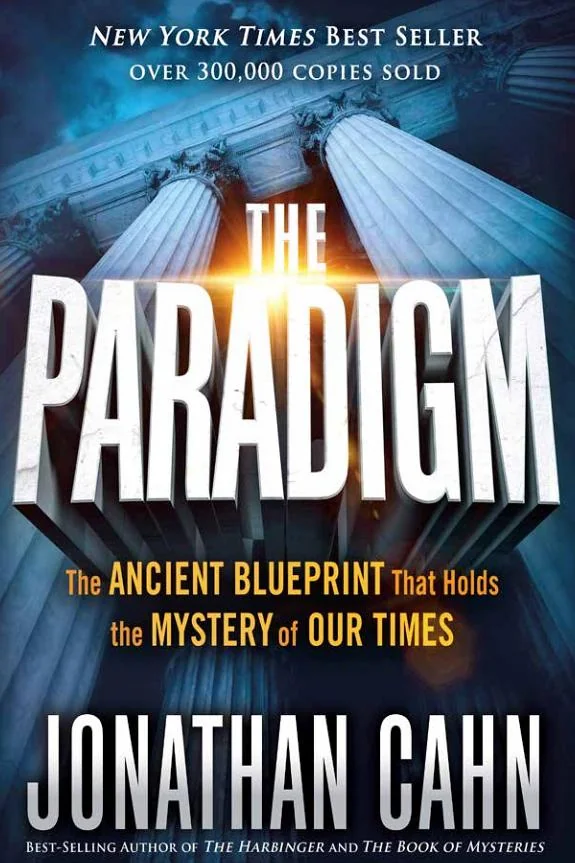
The Paradigm
 78
78

The Paradigm
Jonathan Cahn’s "The Paradigm" attempts a bold synthesis, equating the ancient narrative of Jezebel with the modern political career of Hillary Clinton, culminating in Donald Trump’s 2016 electoral victory. The strength of the work lies in its detailed exposition of the Jezebel story from 1 Kings, meticulously drawing parallels in ambition, methods, and perceived spiritual opposition. However, the interpretive leap from ancient Israelite politics to 21st-century American democracy often feels strained, relying on symbolic associations that may not convince those outside the author's interpretive framework. The specific comparison of Clinton's public life to Jezebel's reign, while detailed, sometimes overlooks the vast historical and cultural differences, prioritizing thematic resonance over strict historical analogy. The book’s central thesis, that ancient patterns dictate modern outcomes, is provocative, but its execution can feel more like an assertion than a rigorously demonstrated conclusion. Ultimately, "The Paradigm" offers a unique, albeit controversial, lens through which to view contemporary events through a biblical lens.
📝 Description
78
Jonathan Cahn's 2017 book, The Paradigm, compares the biblical figure of Jezebel to Hillary Clinton.
Published in 2017, Jonathan Cahn's "The Paradigm" draws a parallel between the Old Testament figure of Jezebel and contemporary political events, specifically mapping her story onto the public career of Hillary Clinton. The book then frames Donald Trump's 2016 presidential election victory within this biblical context, suggesting a recurring historical pattern.
Cahn's work is directed at readers interested in theological interpretations of current affairs and those who look for ancient prophecy in modern political situations. It will likely resonate with followers of his prior books and individuals familiar with applying biblical exegesis to contemporary society. The book's appearance followed the intensely polarized 2016 U.S. Presidential election, a period marked by discussions about faith's role in public life. Cahn's method fits within a historical practice of viewing current events through biblical narratives, a style seen in various religious movements.
"The Paradigm" operates within a tradition that finds deeper, often prophetic, meaning in current events by connecting them to biblical narratives. This approach is characteristic of certain forms of biblical interpretation that seek to identify repeating patterns or divine blueprints in history. Cahn's method suggests that ancient spiritual dynamics, as exemplified by figures like Jezebel, continue to influence and shape the modern world. This perspective aligns with eschatological thinking and the belief that historical occurrences are part of a larger, often foretold, sequence.
💡 Why Read This Book?
• Understand the specific biblical narrative of Jezebel as presented by Cahn, learning how ancient figures are re-contextualized for modern political analysis. • Grasp Cahn's methodology for identifying recurring "paradigms" in history, exploring how he connects Old Testament events to the 2016 U.S. Presidential election. • Engage with a unique interpretive framework that applies biblical prophecy to contemporary American politics, offering a distinct perspective on recent historical events.
⭐ Reader Reviews
Honest opinions from readers who have explored this book.
❓ Frequently Asked Questions
What is the central biblical figure used in Jonathan Cahn's 'The Paradigm'?
The central biblical figure is Jezebel, the Phoenician princess who became queen of Israel. Cahn uses her story as a primary framework for his analysis of modern political events and figures.
When was 'The Paradigm' by Jonathan Cahn first published?
Jonathan Cahn's 'The Paradigm' was first published in 2017, shortly after the 2016 U.S. Presidential election.
What contemporary political figure does Cahn compare to Jezebel in 'The Paradigm'?
In 'The Paradigm,' Cahn draws parallels between the biblical figure of Jezebel and the public career of Hillary Clinton.
Does 'The Paradigm' offer an interpretation of the 2016 U.S. Presidential election?
Yes, the book interprets the 2016 U.S. Presidential election, including Donald Trump's victory, through the lens of the biblical paradigm Cahn outlines.
What is the core concept of 'The Paradigm'?
The core concept is the 'paradigm,' which Cahn defines as a recurring pattern or model derived from biblical narratives that he posits repeats itself throughout history.
What is the primary focus of Jonathan Cahn's comparative analysis in 'The Paradigm'?
The primary focus is the comparison between the Old Testament story of Jezebel and the career of Hillary Clinton, with implications for the 2016 election outcome.
🔮 Key Themes & Symbolism
Biblical Pattern Recognition
The work centers on the concept of the "paradigm," which Cahn posits as a divinely ordained pattern or model from biblical history that reappears in contemporary times. He meticulously details the narrative of Jezebel from the books of Kings, highlighting her actions and influence. This ancient story is then presented as a template to understand modern political figures and events, suggesting a cyclical nature to spiritual warfare and leadership dynamics across millennia. The book argues that understanding these historical precedents offers critical insight into current societal and political phenomena.
Jezebel as Archetype
Jezebel, the Phoenician queen of Israel, serves as the primary archetype in "The Paradigm." Cahn focuses on her perceived idolatry, ruthless ambition, and manipulation of power. The book explores how these traits, as depicted in the Old Testament, are allegedly mirrored in the actions and public persona of Hillary Clinton. This comparative approach aims to demonstrate how ancient spiritual forces and character archetypes continue to manifest in the modern world, impacting political landscapes and societal values.
Prophetic Interpretation of Elections
A significant theme is the application of biblical prophecy and historical patterns to interpret electoral outcomes. "The Paradigm" frames the 2016 U.S. Presidential election, particularly Donald Trump's victory, as a fulfillment or manifestation of the established biblical paradigm. Cahn suggests that spiritual forces, as exemplified by the Jezebel narrative, were at play, and that understanding these dynamics is crucial for discerning the underlying meaning of political events beyond surface-level analysis.
Spiritual Warfare in Politics
The book implicitly frames contemporary politics as a stage for ongoing spiritual warfare. By drawing parallels between biblical accounts of conflict and modern political struggles, Cahn positions events and figures within a larger, unseen cosmic battle. The "paradigm" serves as a tool to identify the spiritual forces at work, urging readers to recognize that political contests have deeper, often spiritual, implications that transcend earthly strategies and outcomes.
💬 Memorable Quotes
Direct passages from the work, attributed to the author.
“The ancient paradigm of Jezebel continues to manifest in the modern era.”
— This statement expresses the core thesis of the book, suggesting that the character and actions of the biblical queen Jezebel are not merely historical footnotes but recurring archetypes that reappear in contemporary figures and events, particularly in the political sphere.
“The spirit of Jezebel influences modern leadership.”
— This concept, drawn from the book, posits that the negative spiritual influence attributed to Jezebel in the Old Testament is still active and observable in contemporary leaders and political dynamics. It suggests a continuity of spiritual forces across historical epochs.
“The 2016 election outcome aligns with an ancient biblical model.”
— This interpretation reflects the book's application of its core thesis to a specific event: the 2016 U.S. Presidential election. It suggests that the results of this election can be understood not as random or solely based on political factors, but as a manifestation of a pre-established biblical pattern.
“Identifying the paradigm reveals the underlying spiritual reality.”
— This captures the book's didactic purpose: by recognizing and understanding the "paradigm" (specifically the Jezebel narrative in this case), readers can allegedly gain insight into the deeper, often hidden, spiritual forces shaping political and social realities.
💡 Key Ideas
Editorial paraphrase of the work's core concepts — not direct quotes.
The patterns of the past are being replayed.
This paraphrase highlights Cahn's central argument: that history, particularly biblical history, operates on recurring patterns or "paradigms." The book seeks to demonstrate how these ancient models are allegedly being re-enacted in the present day, offering a framework for understanding current events.
🌙 Esoteric Significance
Tradition
While "The Paradigm" is framed within a broadly Christian, specifically evangelical, interpretive tradition, its method of pattern recognition and symbolic mapping has resonances with esoteric practices. The identification of recurring archetypes and the belief in hidden spiritual forces influencing worldly events echo Gnostic and Hermetic thought, which often sought to uncover secret correspondences between the celestial and terrestrial realms. Cahn's work, however, operates with a specific biblical canon and a linear-eschatological framework, diverging from the more cyclical or universalist tendencies found in some Western esoteric traditions. It repurposes a method of symbolic interpretation often found in esotericism for a distinctly evangelical audience.
Symbolism
The primary symbol is Jezebel herself, representing not just a historical figure but an archetype of manipulative power, spiritual rebellion, and destructive influence within leadership. Another motif is the "paradigm" itself, functioning as a symbolic key or cipher that unlocks the hidden meaning of contemporary events by aligning them with ancient biblical narratives. This symbolic act of mapping the past onto the present suggests a belief in the enduring power of archetypal forces and the idea that spiritual battles, though their manifestations change, remain fundamentally the same across time.
Modern Relevance
In contemporary discourse, "The Paradigm" speaks to a segment of the population seeking to understand political events through a spiritual or prophetic lens. Thinkers and groups interested in the intersection of faith and politics, particularly within evangelical Christianity, may find Cahn's work relevant. Its method of applying ancient texts to modern media and political figures also appeals to certain contemporary forms of cultural criticism that explore recurring myths and archetypes in society. While not directly part of academic esoteric studies, its popular appeal in certain circles indicates a broader contemporary hunger for symbolic interpretations of worldly affairs.
👥 Who Should Read This Book
• Readers of Jonathan Cahn's previous works seeking further application of his interpretive methods to recent political history. • Individuals interested in theological or prophetic interpretations of contemporary American politics and electoral events. • Those exploring comparative religious studies who are examining how ancient biblical narratives are applied to modern socio-political contexts.
📜 Historical Context
Published in 2017, "The Paradigm" emerged during a period of intense political division in the United States, immediately following the 2016 Presidential election. The intellectual climate was rife with discussions about the role of faith in public life, the interpretation of current events through religious lenses, and the perceived spiritual underpinnings of societal shifts. Cahn's work taps into a long-standing tradition of prophetic interpretation, where contemporary events are viewed as fulfilling or mirroring biblical prophecies. This approach contrasts with purely secular or sociological analyses of politics. While specific critical reception details for "The Paradigm" might be varied, Cahn's previous works, such as "The Harbinger," garnered significant attention, indicating a substantial audience interested in his blend of biblical exegesis and contemporary commentary. His approach aligns with certain evangelical circles that actively seek scriptural validation for current affairs, a practice that has seen various iterations throughout Christian history, often sparking debate among differing theological viewpoints.
📔 Journal Prompts
The Jezebel paradigm as a lens for analyzing modern political figures.
Identifying recurring patterns in biblical narratives and their potential modern parallels.
The spiritual implications of electoral outcomes as presented in the text.
Reflecting on the archetype of Jezebel and its contemporary manifestations.
How the concept of a historical 'paradigm' informs understanding of current events.
🗂️ Glossary
Paradigm
In the context of "The Paradigm," a paradigm refers to a divinely ordained pattern or model derived from biblical history that Cahn argues reappears and repeats in contemporary times, influencing events and figures.
Jezebel
A biblical figure, the Phoenician princess who became queen of Israel. In the book, she serves as an archetype representing manipulative power, spiritual rebellion, and destructive influence, particularly in leadership roles.
Old Testament
The first section of the Christian Bible, containing the narrative of creation, the history of the Israelites, and the Law. Cahn heavily draws upon its narratives, particularly the books of Kings, for his analysis.
Hillary Clinton
An American politician who served as First Lady, U.S. Senator, and Secretary of State. In "The Paradigm," she is presented as a modern figure whose career parallels that of the biblical Jezebel.
Donald Trump
An American businessman and politician who served as the 45th President of the United States. His victory in the 2016 election is interpreted within the book through the lens of the established biblical paradigm.
2016 U.S. Presidential Election
The election that resulted in Donald Trump defeating Hillary Clinton. This event is a central focus of "The Paradigm," which interprets its outcome as a manifestation of ancient biblical patterns.
Spiritual Warfare
The concept that human events and conflicts are influenced by unseen spiritual forces. "The Paradigm" frames contemporary politics as an arena for such warfare, with biblical narratives offering insight into these dynamics.
This book appears in 1 collection
🔮 Readers Also Liked
Browse all →









From the “Prophecy” Collection
View all →
![The secrets of black arts!: A key note to witchcraft, devination [sic], omens, forwarnings, apparitions, sorcery, dæmonology, dreams, predictions, visions, and the Devil's legacy to earth mortals, compacts with the Devil! With the most authentic history of Salem witchcraft](/img/thumb/the-secrets-of-black-arts-b-a-key-note-to-witchcraft-devination-sic-omens-forwarnings-apparitions-sorcery-d-monology-dreams-predictions-visions-and-the-devil-s-legacy-to-earth-mortals-compacts-with-th.webp)


More Free Sacred Texts & Gnosticism Books
View all →