Western Esotericism in Scandinavia
 82
82

Western Esotericism in Scandinavia
The ambitious scope of "Western Esotericism in Scandinavia" is its most striking feature. By bringing together 47 specialists, the book provides a rare, consolidated view of a geographically and intellectually diverse field. One particularly insightful section details the influence of Theosophy in Sweden, tracing its integration into local spiritualist circles in the late 19th and early 20th centuries. However, the sheer volume of contributors, while a strength, occasionally leads to uneven depth between articles. Some entries feel more like brief summaries than critical analyses. For instance, the discussion on Scandinavian Gnosticism could benefit from more direct engagement with primary texts. Despite this, the work's comprehensive nature makes it an indispensable reference for anyone studying the global spread of Western esoteric thought. It offers a much-needed regional focus to a field often dominated by Western European narratives.
📝 Description
82
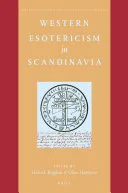
Published in 2016, Western Esotericism in Scandinavia gathers 80 articles by 47 international experts.
This volume functions as a detailed survey of esoteric traditions within Denmark, Finland, Norway, and Sweden. It comprises over 80 articles written by 47 international specialists, published in 2016. The book is organized thematically, offering critical overviews of various movements. These include Alchemy, Anthroposophy, Astrology, Theosophy, Traditionalism, and even UFO Movements.
The work is primarily aimed at scholars in religious studies, history, and cultural anthropology who are interested in how Western esoteric traditions spread and adapted beyond their original European centers. It also offers a comprehensive understanding for practitioners and enthusiasts looking into unique Scandinavian expressions of these spiritual and philosophical systems. Researchers studying the globalization of ideas will find it a valuable resource for its systematic cataloging and analysis of regional manifestations.
The 2016 publication of this work reflects a growing academic interest in the global study of esoteric traditions. Its encyclopedic structure follows a trend toward systematic cataloging and critical analysis of regional esoteric manifestations, a path also seen in works like the "Dictionary of Gnosis and Western Esotericism" (2005). This approach engages with established academic discourse on Western esotericism, acknowledging scholars like Antoine Faivre.
💡 Why Read This Book?
• Learn about the specific adaptations of Hermeticism in Denmark, Norway, and Sweden, understanding how these ancient principles were reinterpreted locally beyond the general framework presented in broader Western esoteric studies. • Discover the impact of Anthroposophy in Finland, examining how Rudolf Steiner's philosophy found unique expression and followers in the Nordic cultural landscape, a perspective not commonly found in general Anthroposophy texts. • Gain insight into the development of UFO Movements in Scandinavia, exploring their distinct narratives and connections to other esoteric currents within the region, offering a specific case study of fringe beliefs in a modern context.
⭐ Reader Reviews
Honest opinions from readers who have explored this book.
❓ Frequently Asked Questions
What is the primary focus of 'Western Esotericism in Scandinavia'?
The book provides an encyclopedic overview of esoteric currents across Denmark, Finland, Norway, and Sweden. It covers over 80 topics, including Alchemy, Astrology, Theosophy, and UFO Movements, written by 47 specialists.
When was 'Western Esotericism in Scandinavia' first published?
The book was first published on June 21, 2016, making it a relatively recent academic compilation on the subject.
Who are the intended readers for this work?
It is designed for scholars of religious studies, history, and cultural anthropology, as well as practitioners and enthusiasts interested in the regional expressions of Western esoteric traditions.
What major esoteric movements are discussed in the book?
The book features critical overviews of Alchemy, Anthroposophy, Astrology, Theosophy, Traditionalism, and UFO Movements as they appear in Scandinavia.
Is this book a primary source or a secondary analysis?
It is a collection of scholarly articles that analyze and synthesize information about Western esotericism in Scandinavia, making it a secondary analytical work.
How does this book compare to other works on Western Esotericism?
Its unique contribution lies in its specific regional focus on Scandinavia, offering detailed coverage not typically found in broader surveys of Western esotericism.
🔮 Key Themes & Symbolism
Nordic Adaptations of Global Currents
The work meticulously details how universal esoteric traditions like Hermeticism, Gnosticism, and Theosophy were not merely imported but actively adapted to the cultural, social, and historical landscapes of Denmark, Finland, Norway, and Sweden. It explores how local folklore, philosophical traditions, and societal structures influenced the reception and manifestation of these imported ideas, leading to unique Scandinavian variants of otherwise widely disseminated esoteric systems. This includes examining how concepts like the divine feminine or cosmic evolution were understood through a Nordic lens.
The Spectrum of Scandinavian Esotericism
This theme encompasses the vast range of movements covered, from historical practices like Alchemy and Astrology to modern phenomena such as Anthroposophy and UFO Movements. The book presents a panorama of spiritual and philosophical exploration, illustrating that Scandinavian esotericism is not a monolithic entity but a complex constellation of diverse beliefs and practices. It highlights the continuity and change within these traditions, showing how ancient ideas persist and transform within contemporary contexts across the region.
Regional Centers and Networks
The book implicitly maps out the intellectual and practical centers where Western esotericism took root in Scandinavia. It identifies key figures, institutions, and publication networks that facilitated the dissemination of esoteric knowledge. By focusing on specific countries and their distinct historical trajectories, it reveals how certain cities or intellectual circles became hubs for Alchemical studies, Theosophical societies, or the development of national esoteric identities, offering a micro-historical perspective on the macro-phenomenon of esoteric diffusion.
Esotericism and Modernity
A significant aspect explored is the relationship between Western esotericism and the process of modernization in Scandinavia. The work examines how esoteric ideas engaged with, critiqued, or were influenced by scientific advancements, secularization, and broader cultural shifts. It highlights the ways in which individuals and groups sought spiritual meaning and alternative knowledge systems in response to the perceived challenges and transformations of modernity, demonstrating the enduring appeal of esotericism even in highly secularized societies.
💬 Memorable Quotes
Direct passages from the work, attributed to the author.
“The reception of Theosophy in Sweden involved significant engagement with local spiritualist movements.”
— This highlights how Theosophical ideas did not emerge in a vacuum but were integrated into existing frameworks of spiritual inquiry prevalent in Sweden during the late 19th and early 20th centuries.
“Finnish Anthroposophy developed unique pedagogical approaches.”
— This suggests that Rudolf Steiner's movement in Finland took on distinct characteristics, diverging from its implementation in other countries due to local educational philosophies and cultural norms.
“Alchemy in Denmark often retained a strong connection to practical, material transformation.”
— This points to a persistent emphasis on the physical and chemical aspects of alchemy, perhaps less focused on purely spiritual or psychological interpretations compared to other European traditions.
“UFO Movements in Norway sometimes incorporated elements of older Norse mythology.”
— This observation indicates a syncretic tendency, where modern beliefs about extraterrestrial visitors were blended with indigenous cultural narratives and archetypes.
“Traditionalism found a niche in Scandinavian intellectual circles seeking ancient wisdom.”
— This suggests that thinkers interested in perennial philosophy and ancient traditions within Scandinavia gravitated towards the core tenets of Traditionalism as presented by figures like René Guénon.
🌙 Esoteric Significance
Tradition
This work situates itself within the academic study of Western Esotericism, a field that broadly examines esoteric currents originating from or influenced by Hermeticism, Gnosticism, Kabbalah, and Neoplatonism. It specifically addresses how these traditions, along with later developments like Theosophy and Anthroposophy, were received and transformed within the distinct cultural and historical contexts of Scandinavia. The book departs from purely historical accounts by focusing on the regional nuances, demonstrating that these traditions are not static but dynamically interact with local belief systems and societal changes.
Symbolism
The book likely explores symbols such as the Alchemical Ouroboros, representing cyclical processes and cosmic unity, as interpreted within Scandinavian contexts. It may also discuss the Theosophical Root Races, a complex cosmological concept adapted from Helena Blavatsky's work, and how these were understood by followers in the Nordic countries. Furthermore, symbols related to Anthroposophy, such as the evolving human consciousness or the spiritual significance of certain festivals, are probable motifs examined for their specific Scandinavian interpretations.
Modern Relevance
Contemporary scholars and practitioners of comparative religion and Western esotericism find significant value in this work for understanding the globalization and localization of spiritual movements. Thinkers exploring the impact of secularization on belief systems, or the persistence of alternative spiritualities in modern societies, can draw upon the case studies presented. Furthermore, researchers investigating national identity and esoteric thought, or the specific development of movements like Anthroposophy and UFOlogy in non-Anglophone/non-Central European contexts, utilize this volume as a key resource.
👥 Who Should Read This Book
• Scholars of comparative religion and cultural history seeking to understand the specific manifestations of global esoteric movements within a Nordic framework. • Students of the history of ideas interested in how traditions like Alchemy, Theosophy, and Anthroposophy were adapted and evolved in Denmark, Finland, Norway, and Sweden. • Practitioners and enthusiasts of Western esotericism looking for detailed regional studies that go beyond general overviews to explore local expressions of spiritual and occult practices.
📜 Historical Context
Published in 2016, "Western Esotericism in Scandinavia" emerged during a period of heightened academic interest in the global spread and regional particularities of esoteric traditions. The work's encyclopedic structure, mirroring the 2005 "Dictionary of Gnosis and Western Esotericism," signifies a scholarly move towards comprehensive cataloging and critical analysis of previously under-examined areas. It implicitly responds to scholarship by figures like Antoine Faivre, who emphasized the need to study esotericism beyond its Western European heartlands. The volume's creation acknowledges the increasing academic acceptance of esoteric studies as a legitimate field within religious and cultural history, moving away from earlier dismissals or purely fringe categorizations. While specific reception events for this particular volume are not detailed, its publication itself represents a milestone in consolidating research on Scandinavian esotericism, filling a significant gap acknowledged by scholars in comparative religion and occult studies.
📔 Journal Prompts
The Scandinavian adaptation of Hermetic principles.
The influence of Theosophy on Swedish intellectual life.
Regional variations in Anthroposophical education.
The emergence of UFO Movements in Norway.
Alchemical practices in Danish historical records.
🗂️ Glossary
Alchemy
An ancient practice involving the transformation of matter, often associated with the pursuit of transmutation of base metals into gold and the discovery of elixirs for longevity, encompassing both practical chemistry and spiritual symbolism.
Anthroposophy
A spiritual philosophy founded by Rudolf Steiner, seeking to understand the spiritual nature of the human being and the universe through methods of thought that bridge the gap between science and spirituality.
Theosophy
A spiritual movement founded by Helena Blavatsky, aiming to form a nucleus of the universal brotherhood of humanity, encouraging the study of comparative religion, philosophy, and science, and investigating the unexplained laws of nature and the powers latent in humanity.
Hermeticism
A philosophical and religious tradition based on writings attributed to Hermes Trismegistus, emphasizing the unity of all things, the correspondence between the macrocosm and microcosm ('as above, so below'), and the path to spiritual knowledge through gnosis.
Traditionalism
A philosophical and spiritual movement, often associated with René Guénon and Julius Evola, that posits the existence of a primordial, universal tradition of wisdom underlying all exoteric religions and philosophies.
Gnosticism
A diverse set of religious and philosophical systems that emphasize direct, intuitive knowledge (gnosis) as the means of salvation, often characterized by a dualistic worldview and a belief in a divine spark within humanity.
UFO Movements
Groups and belief systems centered around the phenomenon of Unidentified Flying Objects, often incorporating extraterrestrial contact narratives, advanced technologies, and sometimes esoteric or spiritual interpretations of these encounters.