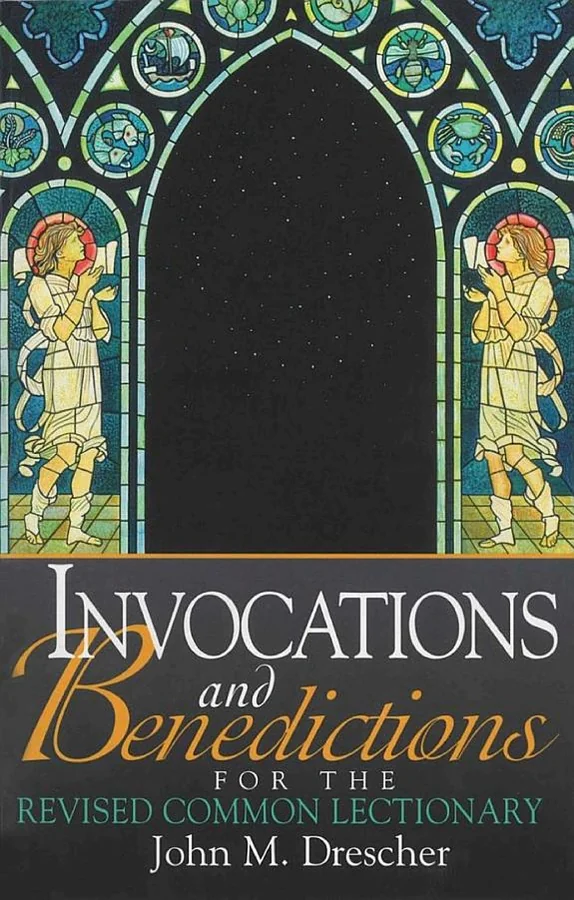
Invocations and Benedictions for the Revised Common Lectionary
 79
79

Invocations and Benedictions for the Revised Common Lectionary
John Drescher’s "Invocations and Benedictions for the Revised Common Lectionary" offers a commendable solution for a recurring pastoral need. The book's primary strength lies in its systematic organization, providing a distinct invocation and benediction for every Sunday of the three-year lectionary cycle. This direct alignment with the Revised Common Lectionary (RCL) is its most significant asset, saving considerable planning time. However, the collection, while functional, occasionally feels somewhat generic. For instance, the invocations for Year A, Sunday 3, while grammatically sound, lack a certain spark to truly elevate the worship experience beyond mere recitation. One notable passage that does offer a richer tone is the benediction for Year B, Sunday 12, which more artfully captures the mutuality of God's presence. The work is a practical tool, but its esoteric depth is limited by its lectionary-bound structure. It functions reliably, but rarely surprises.
📝 Description
79
John Drescher's 1998 book offers invocations and benedictions for every Sunday of the Revised Common Lectionary.
Published in 1998, John Drescher's "Invocations and Benedictions for the Revised Common Lectionary" is a practical guide for worship leaders. The book provides a structured set of prayers, including one invocation and one benediction for each Sunday across the three-year cycle of the Revised Common Lectionary (Years A, B, and C). Its intention is to simplify the preparation of liturgical services by furnishing ready-to-use material that corresponds with the lectionary's appointed readings.
This resource is primarily suited for clergy, worship committees, and lay leaders in Christian denominations that utilize the Revised Common Lectionary. It is a useful tool for those responsible for planning weekly worship, especially those aiming to deepen their congregational prayers and blessings. The book's thoroughness also recommends it for theological students examining liturgical practices or for anyone interested in the specific devotional language tied to this widely adopted lectionary system.
While the Revised Common Lectionary itself is a product of ecumenical dialogue aimed at shared biblical proclamation, Drescher's collection focuses on the devotional language and structure of worship. The lectionary, established in the late 20th century, sought to create a common framework for scripture readings across various Christian traditions. Drescher's work, appearing in 1998, taps into this by providing specific prayer forms that align with this standardized liturgical calendar, offering a tool for deepening congregational engagement with scripture through structured prayer.
💡 Why Read This Book?
• Gain practical, ready-to-use invocations and benedictions specifically aligned with the Revised Common Lectionary's Year A, B, and C cycles, streamlining worship preparation. • Access a structured collection that ensures liturgical prayer complements the appointed scripture readings for each Sunday, fostering a cohesive worship experience. • Benefit from a resource developed in the context of late 20th-century liturgical renewal, offering prayers consistent with ecumenical trends in Christian worship.
⭐ Reader Reviews
Honest opinions from readers who have explored this book.
❓ Frequently Asked Questions
What is the Revised Common Lectionary (RCL) that this book uses?
The Revised Common Lectionary is a three-year cycle of Bible readings for worship, developed ecumenically and widely adopted by Protestant and Catholic churches. It provides a systematic way to read through scripture over time.
How many prayers are included in "Invocations and Benedictions for the Revised Common Lectionary"?
The book contains one invocation and one benediction for each Sunday across all three years (A, B, and C) of the Revised Common Lectionary, totaling over 150 sets of prayers.
Who is the author, John Drescher?
John Drescher is an author and minister known for his contributions to resources for Christian worship and ministry, particularly those focused on liturgical practices and congregational life.
When was this book first published?
This collection of invocations and benedictions was first published in 1998, reflecting the widespread use of the Revised Common Lectionary at that time.
Is this book suitable for non-Christian spiritual practices?
No, the book is specifically designed for Christian worship services that follow the Revised Common Lectionary and is not intended for other spiritual or esoteric traditions.
Does the book offer prayers for special occasions like Christmas or Easter?
The book focuses on the Sunday cycle of the Revised Common Lectionary. While it covers all Sundays, it primarily provides prayers keyed to the lectionary's weekly scripture readings, not necessarily specific festival days unless they fall on a standard Sunday.
🔮 Key Themes & Symbolism
Liturgical Prayer Structure
The collection centers on the functional components of Christian worship: the invocation and the benediction. It presents these as structured utterances designed to consecrate worship and send forth the community. Each prayer is intentionally crafted to align with the lectionary's scripture assignments, ensuring a thematic coherence between the readings and the spoken prayers. The emphasis is on providing accessible, scripturally-informed language for these critical moments in a service.
Revised Common Lectionary Alignment
A defining feature is its direct mapping to the three-year cycle of the Revised Common Lectionary (RCL). This system, developed ecumenically, provides a shared framework for biblical proclamation. Drescher's work leverages this structure by offering specific prayers for each Sunday, Year A, B, and C. This methodical approach ensures that the invocations and benedictions are contextually relevant to the particular biblical texts and themes assigned for that week.
Worship Planning Resource
The book functions as a practical toolkit for clergy and worship committees. It addresses the need for prepared, thoughtful prayers that can be readily incorporated into worship services. By providing a comprehensive set of invocations and benedictions, it aims to alleviate the burden of constant prayer composition, allowing leaders to focus on other aspects of ministry and congregational care while maintaining a high standard of liturgical language.
Pastoral Language
The prayers are written in accessible, pastoral language intended for congregational use. While rooted in theological concepts, they avoid overly academic or obscure phrasing. The goal is to facilitate genuine engagement with God's presence and blessing for the gathered community. This focus on clarity and relevance makes the resource suitable for a wide range of church settings and leadership styles.
💬 Memorable Quotes
Direct passages from the work, attributed to the author.
“A benediction sending forth the community in peace and service.”
— This interpretation focuses on the function of a benediction as a concluding blessing that not only offers peace but also empowers the congregation to carry their faith into the world and engage in active service.
“Prayers keyed to the specific scripture readings of the week.”
— This highlights the book's core methodology: ensuring that the liturgical prayers (invocations and benedictions) are directly relevant and responsive to the biblical texts appointed by the Revised Common Lectionary for each particular Sunday.
“Resource for worship leaders and planners.”
— This statement directly addresses the intended user and primary benefit of the book, positioning it as a practical aid for those responsible for the organization and execution of public worship services.
“Materials for the full three-year cycle of the Revised Common Lectionary.”
— This emphasizes the comprehensiveness of the resource, noting that it covers the entirety of the RCL's three-year lectionary (Years A, B, and C), providing consistent prayer support throughout the liturgical year.
💡 Key Ideas
Editorial paraphrase of the work's core concepts — not direct quotes.
An invocation for God's presence to hallow the gathered people.
This paraphrased concept highlights the purpose of an invocation: to formally invite and acknowledge divine presence, setting the sacred tone for worship and consecrating those who have assembled.
🌙 Esoteric Significance
Tradition
This work does not align with any specific esoteric tradition such as Hermeticism, Gnosticism, or Kabbalah. Its focus is strictly within the field of mainstream Christian liturgical practice, specifically the Revised Common Lectionary. Any perceived esoteric resonance would be entirely emergent from individual interpretation of its devotional language rather than intentional design within an occult framework.
Symbolism
The book's primary "symbols" are functional within a Christian context: the invocation represents the call to divine presence and consecration, while the benediction signifies divine favor and sending forth. The overarching structure, the three-year cycle of the RCL, can be seen as symbolizing the church's journey through sacred history and scripture, guiding the faithful through different facets of the divine narrative.
Modern Relevance
While not directly esoteric, contemporary practitioners in fields like comparative religion or liturgical studies might reference Drescher's work as a data point in the evolution of Protestant and ecumenical worship practices post-Vatican II. Its structured approach to prayer could also be examined by those studying the psychology of ritual and the efficacy of formalized devotional language in community settings.
👥 Who Should Read This Book
['• Clergy and Worship Leaders: Those responsible for planning and leading weekly worship services who utilize the Revised Common Lectionary and need practical, scripturally-aligned prayers.', '• Church Committees: Members of worship or planning committees seeking a comprehensive resource to ensure consistency and quality in congregational prayer.', '• Theological Students: Individuals studying liturgy, homiletics, or practical theology who wish to understand the structure and language of contemporary Christian worship resources.']
📜 Historical Context
Published in 1998, John Drescher's "Invocations and Benedictions for the Revised Common Lectionary" emerged during a period of significant adoption and integration of the RCL within various Christian denominations. The Revised Common Lectionary itself, first published in 1969 and revised in 1980, represented a major ecumenical effort to create a shared framework for biblical preaching and worship, notably bridging traditions like Lutheran, Methodist, Presbyterian, and Catholic churches. Drescher’s work arrived as a practical response to the needs of pastors and worship planners who were actively utilizing this lectionary system and required accessible, reliable liturgical resources. It contributed to a broader trend of liturgical renewal and the development of user-friendly aids for congregational worship in the late 20th century. While not engaging directly with esoteric traditions, its grounding in a widely adopted liturgical structure placed it within the mainstream of contemporary Christian practice, contrasting with more experimental or historically niche liturgical forms.
📔 Journal Prompts
The specific invocation for Year A, Sunday 5, and its thematic connection to the lectionary readings.
Reflecting on the structure of the benediction for Year B, Sunday 18, and its implications for mission.
Consider the spiritual discipline of invoking divine presence at the start of a task.
How does the concept of a 'benediction' shape your understanding of God's ongoing relationship with the world?
Exploring the role of formalized prayer in personal spiritual practice, using the provided examples as a guide.
🗂️ Glossary
Invocation
A prayer offered at the beginning of a worship service or significant act, calling upon God's presence, blessing, and guidance for the proceedings.
Benediction
A prayer of blessing, typically offered at the close of a worship service, invoking God's favor and peace upon the congregation as they depart.
Revised Common Lectionary (RCL)
A three-year cycle of appointed scripture readings for Christian worship, designed for ecumenical use, which provides a systematic approach to biblical study over time.
Year A, B, C
Designations for the three sequential years of the Revised Common Lectionary cycle, each year focusing on different Gospels (Matthew, Mark, Luke) and associated Old Testament and New Testament readings.
Liturgical Prayer
Formalized prayers used within the context of public Christian worship, often following established structures and traditions.
Worship Leader
An individual responsible for guiding and facilitating a worship service, which may include prayer, scripture reading, and presiding over various elements.
Liturgy
The established form of public worship in a religious community, often involving a set order of prayers, readings, and rituals.
This book appears in 1 collection
🔮 Readers Also Liked
Browse all →







From the “Invocation” Collection
View all →




More Free Sacred Texts & Gnosticism Books
View all →
![Brahmandic Gyanum [Universal Knowledge]](/img/thumb/brahmandic-gyanum-universal-knowledge-vashisht-vaid-346050.webp)