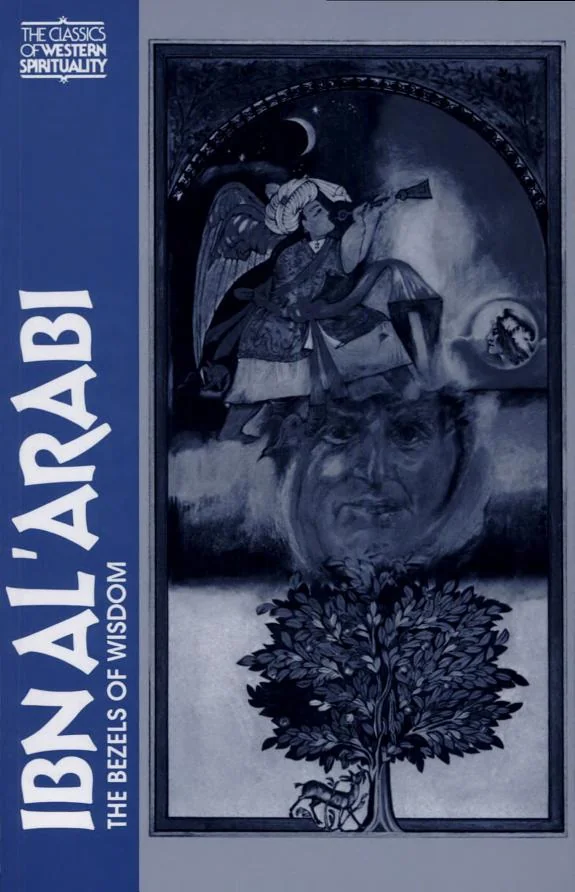
Ibn Al' Arabi
 76
76

Ibn Al' Arabi
Ibn al-'Arabi's exploration of divine love and wisdom, as presented here, is a formidable encounter with a mind that shaped centuries of Islamic thought. The strength of this work lies in its systematic exposition of complex metaphysical concepts, particularly the Unity of Being, through the lens of prophetic narratives. The original blurb rightly points to its use of figures from Adam to Muhammad, a method that grounds abstract theology in relatable divine messengers. However, the sheer density of the material, especially for those unfamiliar with Quranic exegesis or Sufi terminology, presents a significant barrier. A clearer glossary or more extensive introductory notes within the 1980 edition itself might have aided accessibility. The book's examination of how each prophet manifests divine attributes is particularly striking, offering a nuanced perspective on revelation. Ultimately, this is a scholarly presentation of a pivotal figure in mystical thought, demanding patience and intellectual rigor from its readers.
📝 Description
76
This 1980 edition presents the theological and mystical ideas of the 13th-century master Ibn al-'Arabi.
This volume collects the teachings and philosophical inquiries of Ibn al-'Arabi, a 13th-century Andalusian Sufi master. It is not a biography but a guide to his thought on God, existence, and the soul's connection to the Divine. The text draws on Quranic verses and prophetic accounts to explain the relationship between the Creator and creation.
The work is intended for scholars of Islamic mysticism, comparative religion, and Western esotericism. Readers interested in Sufism, hermetic philosophy, and the development of monotheistic ideas will find it relevant. It requires serious engagement with theological and philosophical concepts, particularly those concerning divine love and the notion of the Perfect Human.
Ibn al-'Arabi, known as 'al-Shaykh al-Akbar', lived during a time of intellectual activity in Al-Andalus. His teachings, part of the broader Sufi tradition, formed a distinct metaphysical framework. This framework influenced later Sufi orders, Islamic philosophy, and Western esoteric thought, though it also faced criticism from more literalist theologians.
Ibn al-'Arabi's work is central to Sufi metaphysics and has had a lasting impact on esoteric traditions. His concept of Wahdat al-Wujud, or Unity of Being, suggests a fundamental oneness underlying all reality. This idea shaped later mystical thought within Islam and influenced Western hermeticism. His articulation of divine love and the path to spiritual realization offers a unique perspective within contemplative traditions.
💡 Why Read This Book?
• Gain a foundational understanding of *Wahdat al-Wujud*, Ibn al-'Arabi's concept of the Unity of Being, as articulated in the 13th century. • Explore the symbolic roles of prophets from Adam to Muhammad, understanding their function as manifestations of Divine Names and Attributes. • Grasp the concept of Divine Love (*ishq*) as a cosmic principle, a core idea central to Ibn al-'Arabi's metaphysical system.
⭐ Reader Reviews
Honest opinions from readers who have explored this book.
❓ Frequently Asked Questions
Who was Ibn al-'Arabi and when did he live?
Ibn al-'Arabi (1165-1240 CE) was a highly influential Andalusian Sufi mystic and philosopher. He is often called 'al-Shaykh al-Akbar' (the Greatest Master) and is considered one of the most prolific and important writers in the history of Islamic mysticism.
What is the central theme of Ibn al-'Arabi's philosophy?
The central theme is *Wahdat al-Wujud*, or the Unity of Being, which posits that all existence is fundamentally a single reality, a manifestation of the Divine Essence. This concept underpins his understanding of God, creation, and the human soul.
How does Ibn al-'Arabi use biblical and prophetic figures?
He uses figures like Adam, Noah, Abraham, Moses, Jesus, and Muhammad as symbolic exemplars. Each prophet is seen as embodying specific Divine Names and Attributes, illustrating different stages of spiritual realization and the unfolding of God's self-disclosure to humanity.
What is meant by the 'Perfect Human' in Ibn al-'Arabi's work?
The 'Perfect Human' (al-Insan al-Kamil) is the ideal spiritual being who fully realizes their unity with the Divine. They are seen as the microcosm reflecting the macrocosm of God's creation and the point of connection between the human and the Divine.
What is the significance of Divine Love (*ishq*) in his writings?
Divine Love is presented as the primary impetus for creation. God's love for Himself, expressed through self-disclosure, is what brings the universe into being. This love is also the force that draws the created being back to its Divine source.
Is this book suitable for beginners in Sufism?
While foundational, the book's philosophical depth and theological complexity make it more suitable for intermediate to advanced students of Sufism or comparative religion. Beginners might benefit from introductory texts on Ibn al-'Arabi first.
🔮 Key Themes & Symbolism
Unity of Being (Wahdat al-Wujud)
This core doctrine posits that reality is fundamentally one, a manifestation of the singular Divine Essence. All perceived multiplicity and separation are illusory from the ultimate perspective. The work meticulously unpacks how creation is both distinct from and identical to God, not in substance but in existential dependence. This concept challenges dualistic thinking and emphasizes the immanence of the Divine within all phenomena, urging the reader to see the reflection of the Absolute in the relative.
Divine Love as Creative Force
Ibn al-'Arabi presents love (*'ishq*) not merely as an emotion but as the primordial, generative principle of the cosmos. God's yearning for self-knowledge and self-expression, driven by love, is the impetus behind creation. The text illustrates this through the relationship between the Lover (God) and the beloved (creation), highlighting how this divine impulse sustains existence and draws all things back to their origin.
The Realities of the Prophets
The book analyzes prophets from Adam to Muhammad not just as historical figures but as archetypes embodying specific Divine Names and Attributes. Each prophet represents a unique facet of God's self-disclosure. Muhammad, as the Seal of the Prophets, is depicted as the complete manifestation of the Divine, the Perfect Human (*al-Insan al-Kamil*), embodying the totality of God's attributes in human form.
Symbolic Interpretation of Scripture
Drawing on the Quran and utilizing examples from Biblical narratives, Ibn al-'Arabi employs allegorical and symbolic interpretation to reveal deeper metaphysical truths. These figures and stories are not literal historical accounts but vehicles for understanding complex theological concepts such as divine mercy, justice, and the nature of revelation. The work encourages seeing the outward form of religious narratives as pointers to inner, spiritual realities.
💬 Memorable Quotes
Direct passages from the work, attributed to the author.
“The universe is a mirror in which the Real (God) beholds Himself.”
— This captures the concept of *Wahdat al-Wujud*. It suggests that the created world, in its entirety, serves as a reflective surface for the Divine Essence, implying that understanding creation is a path to understanding God.
“Love is the essence of all existence; without it, nothing would be.”
— This highlights the centrality of Divine Love (*ishq*) in Ibn al-'Arabi's cosmology. Love is presented as the fundamental creative and sustaining power, the underlying principle that brings forth and maintains the universe.
“Every prophet carries a unique divine name.”
— This refers to the 'Realities of the Prophets.' It means each prophetic figure embodies and manifests specific attributes or Names of God, serving as a distinct channel through which the Divine is revealed to humanity.
“To know oneself is to know God.”
— This aphorism points to the esoteric understanding of self-knowledge as the ultimate path to Divine knowledge. In recognizing the true nature of the self, one realizes its absolute dependence on and unity with the Divine Essence.
“The greatest veil is the 'I' that perceives itself as separate.”
— This speaks to the illusory nature of ego-consciousness. The sense of individual, separate selfhood is seen as the primary obstacle to experiencing the Unity of Being and recognizing one's true nature.
🌙 Esoteric Significance
Tradition
Ibn al-'Arabi is a central figure in the tradition of Islamic mysticism, known as Sufism. His work represents a highly developed metaphysical systematization of Sufi experience, often termed 'Sufi metaphysics' or 'speculative Sufism.' He is considered the most important exponent of the doctrine of the Unity of Being (*Wahdat al-Wujud*), which profoundly influenced subsequent Sufi thought and practice, bridging mystical experience with intricate philosophical articulation.
Symbolism
Key symbols in Ibn al-'Arabi's work include the Mirror, representing creation's capacity to reflect the Divine; the Kaaba, symbolizing the spiritual heart or the locus of Divine presence; and the concept of Light (*Nur*), signifying Divine manifestation and gnosis. The prophets themselves are potent symbols, each embodying particular Divine Names and Attributes, serving as archetypes for spiritual realization and the path to the Perfect Human.
Modern Relevance
Ibn al-'Arabi's ideas continue to be studied and applied by contemporary scholars of religion, philosophy, and mysticism. His concept of Unity of Being finds echoes in modern interfaith dialogue and discussions on consciousness. Thinkers and practitioners in Western esotericism, particularly those interested in Hermeticism and comparative mysticism, frequently engage with his writings, seeing parallels with Gnostic and Neoplatonic traditions.
👥 Who Should Read This Book
• Students of comparative mysticism and Islamic philosophy seeking to understand a foundational thinker in Sufism. • Esoteric practitioners interested in the metaphysical underpinnings of Divine Love and the nature of reality as articulated in the 13th century. • Scholars of religion and theology looking to explore the concept of *Wahdat al-Wujud* and its implications for monotheistic thought.
📜 Historical Context
Ibn al-'Arabi's thought emerged in the late 12th and early 13th centuries, a period of intense intellectual and spiritual activity within the Islamic world, particularly in Al-Andalus and North Africa. He was a contemporary of figures like the philosopher Averroes, though their philosophical approaches differed significantly; Averroes focused on Aristotelian rationalism, while Ibn al-'Arabi examined mystical metaphysics. Ibn al-'Arabi's prolific writings, estimated to be over 300 works, developed the sophisticated doctrine of *Wahdat al-Wujud* (Unity of Being). This concept offered a profound reinterpretation of monotheism that, while influential within Sufi circles, also drew criticism from more orthodox theologians and jurists who viewed it as potentially pantheistic. His work profoundly shaped later Sufi orders, including the Naqshbandi and Mevlevi traditions, and later influenced thinkers in Persian, Turkish, and Indian Islamic cultures, as well as Western esotericists.
📔 Journal Prompts
The concept of the universe as a mirror reflecting the Real.
The role of Divine Love (*ishq*) in the creative process.
Prophetic figures as embodiments of Divine Names.
The ego's perception of separation from the Divine.
The path to realizing the Unity of Being.
🗂️ Glossary
Wahdat al-Wujud
An Arabic term meaning 'Unity of Being.' It is a central metaphysical doctrine in Ibn al-'Arabi's thought, asserting that all existence is fundamentally one reality, a manifestation of the Divine Essence.
Al-Shaykh al-Akbar
An honorific title meaning 'the Greatest Master,' commonly bestowed upon Ibn al-'Arabi due to his immense influence and prolific writings in Islamic mysticism.
'Ishq
Arabic for 'love,' specifically intense, passionate divine love. In Ibn al-'Arabi's cosmology, it is the primary creative impulse and the force that draws creation back to its Divine source.
Al-Insan al-Kamil
The 'Perfect Human.' This concept refers to the ideal spiritual being who fully realizes their unity with the Divine and acts as a perfect microcosm reflecting the macrocosm of God's attributes.
Divine Names (Asma al-Husna)
The 'Most Beautiful Names' of God in Islam, believed to encompass all of God's attributes. Ibn al-'Arabi saw these Names as being manifested through creation, particularly through the prophets.
Gnosis
Spiritual knowledge or insight, often understood as direct experiential knowledge of the Divine. In Ibn al-'Arabi's context, it relates to the unveiling of spiritual truths through mystical experience and contemplation.
Al-Andalus
The region of the Iberian Peninsula (modern Spain and Portugal) under Muslim rule from the 8th to the 15th centuries. It was a major center of Islamic civilization, scholarship, and culture.
This book appears in 1 collection
🔮 Readers Also Liked
Browse all →









From the “Sufism” Collection
View all →





More Free Sacred Texts & Gnosticism Books
View all →