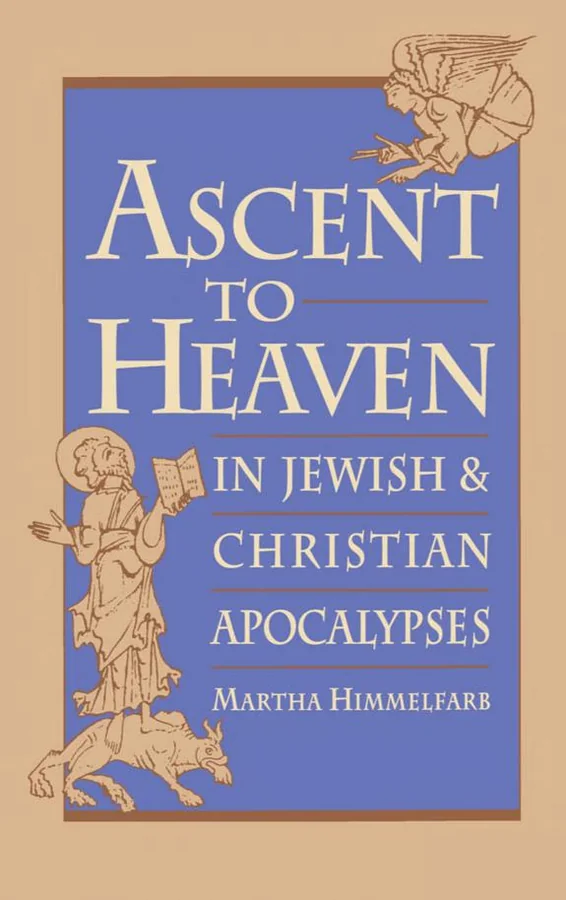
Ascent to Heaven in Jewish and Christian Apocalypses
 71
71

Ascent to Heaven in Jewish and Christian Apocalypses
Martha Himmelfarb's "Ascent to Heaven in Jewish and Christian Apocalypses" offers a rigorous comparative analysis of ancient visionary literature. The strength of this work lies in its meticulous contextualization; Himmelfarb brilliantly situates Jewish and Christian ascent narratives within the broader landscape of Hellenistic and Roman thought, demonstrating how common cultural currents informed disparate theological expressions. A particularly compelling section details the varied portrayals of celestial travel, moving beyond simple thematic comparison to examine the specific literary and rhetorical strategies employed. However, the book's academic density, while a virtue for specialists, may present a barrier to readers less familiar with classical languages and theological exegesis. It assumes a substantial prior knowledge of the primary texts discussed. Despite this limitation, Himmelfarb's scholarly assessment remains an essential resource for understanding early apocalypticism and the ancient yearning for divine proximity. It is a vital contribution to the study of comparative religion.
📝 Description
71
Martha Himmelfarb's 1993 book examines celestial journeys in Jewish and Christian apocalypses.
Martha Himmelfarb's "Ascent to Heaven in Jewish and Christian Apocalypses" analyzes ancient beliefs about ascension narratives. The book goes beyond simple description to compare these visions, placing them within their Hellenistic and Roman cultural settings. Himmelfarb scrutinizes how Jewish and early Christian thinkers understood and depicted ascents to the divine, linking them to broader Graeco-Roman ideas about apotheosis and journeys to the afterlife. This scholarly work is for academics in religious studies, comparative literature, and ancient history. It is also useful for students of early Judaism and Christianity who want to understand apocalyptic literature and its theological basis. Those interested in the historical development of mystical experiences and divine encounters will find the detailed analysis valuable.
The book was a significant contribution to understanding the shared intellectual climate of late antiquity. Himmelfarb situates the ascent narratives within a wide array of texts, including canonical apocalypses and contemporary Graeco-Roman literature. This comparative method highlights the exchange of ideas about transcendence and the human desire to reach celestial realms during a time of intense religious and philosophical change. The study focuses on 'ascent' as a literary and theological concept. It looks at how different authors imagined the journey to heaven, the figures encountered, and the transformation of the visionary. Himmelfarb differentiates between various types of ascent, discussing their theological significance and connection to established religious traditions.
This book engages with the esoteric dimensions of early Jewish and Christian thought, specifically the visionary experiences described in apocalyptic literature. It situates these accounts within a broader history of ideas concerning transcendence and direct access to the divine. The focus on celestial journeys and encounters with heavenly beings aligns with traditions that emphasize altered states of consciousness and the soul's movement through spiritual realms. By comparing Jewish and Christian texts with Graeco-Roman concepts, Himmelfarb illuminates a shared aspiration for otherworldly knowledge and transformation present in late antiquity.
💡 Why Read This Book?
• Gain a nuanced understanding of ancient Jewish and Christian views on heaven, informed by Himmelfarb's comparative analysis of ascent narratives against their Graeco-Roman backdrop, a perspective not readily available in general religious histories. • Explore the specific literary and theological structures used to depict celestial journeys, as detailed in Himmelfarb's examination of texts from the late antique period, offering unique insights into visionary rhetoric. • Understand the historical development of concepts like divinization and apotheosis by analyzing Himmelfarb's engagement with both canonical apocalypses and contemporary Graeco-Roman literature, providing a concrete historical anchor for abstract spiritual aspirations.
⭐ Reader Reviews
Honest opinions from readers who have explored this book.
❓ Frequently Asked Questions
What is the primary focus of Martha Himmelfarb's book on ascensions?
The book offers a comparative study of ancient Jewish and Christian beliefs and narratives concerning the ascent into heaven. It contextualizes these visions within the broader cultural and literary trends of the Graeco-Roman world.
When was 'Ascent to Heaven in Jewish and Christian Apocalypses' first published?
The original publication date for Martha Himmelfarb's significant work was 1993, making it a foundational text for scholars analyzing ancient apocalyptic literature.
Does the book only discuss religious texts?
No, Himmelfarb's study extends beyond Jewish and Christian apocalypses to include relevant Graeco-Roman literature on ascent and divinization, providing a broader cultural context.
What is 'divinization' as discussed in the book?
Divinization refers to the process or belief in becoming divine or god-like, a concept explored by Himmelfarb in relation to ascent narratives where individuals are believed to reach the celestial realm or achieve a divine status.
Is this book suitable for a casual reader interested in mysticism?
While the topic is mystical, the book is a scholarly work with a dense academic style. It is best suited for students, researchers, or those with a serious academic interest in comparative religion and ancient literature.
What historical period does Himmelfarb's analysis cover?
The analysis primarily focuses on the late antique period, examining Jewish and Christian texts alongside contemporary Graeco-Roman literature to understand the historical and cultural milieu of ascent traditions.
🔮 Key Themes & Symbolism
Celestial Journey Narratives
This theme investigates the literary conventions and theological implications of ancient accounts depicting journeys to the heavens. Himmelfarb contrasts the specific trajectories, angelic guides, and divine encounters described in Jewish and Christian apocalypses with similar motifs found in Graeco-Roman texts. The analysis reveals how these narratives served not only to explore eschatological possibilities but also to articulate complex cosmologies and the perceived relationship between the human and the divine in antiquity. The work dissects the structural elements and symbolic language used to represent these otherworldly voyages.
Divinization and Apotheosis
Himmelfarb examines the concept of divinization, or the process of becoming divine, as it relates to heavenly ascents. This theme explores how certain individuals in these narratives were believed to attain a higher, even divine, status through their celestial journey. The study draws parallels with Graeco-Roman ideas of apotheosis, the deification of mortals. By comparing these traditions, Himmelfarb illuminates the diverse ways ancient cultures conceptualized transcendence and the ultimate destiny of the soul, highlighting the aspiration for union with the divine.
Apocalyptic Literature Context
This theme situates the ascent narratives within the broader genre of apocalyptic literature, particularly from late antiquity. Himmelfarb analyzes how these visions of heavenly ascent function within canonical apocalypses and related texts, often revealing divine secrets or offering salvific perspectives. The work considers the historical and cultural milieu that fostered such literature, exploring its role in providing meaning and hope amidst socio-political upheaval. The relationship between apocalyptic visions and established religious doctrines is a key focus.
Comparative Religious Thought
The core of Himmelfarb's work lies in its comparative approach to religious thought in antiquity. By juxtaposing Jewish and Christian ascent traditions with their Graeco-Roman counterparts, the book highlights both shared conceptual frameworks and distinct theological developments. This comparative lens allows for a richer understanding of the intellectual currents of the Hellenistic and Roman periods and demonstrates how ideas about the afterlife, transcendence, and the divine were debated and reinterpreted across different cultural and religious boundaries.
💬 Memorable Quotes
Direct passages from the work, attributed to the author.
“The ascent narratives are placed within their cultural and historical context.”
— This statement underscores Himmelfarb's methodological commitment to understanding ancient texts not in isolation, but as products of specific social, religious, and intellectual environments, particularly the Hellenistic and Roman worlds.
“Exploration of the relationship to canonical apocalypses.”
— This highlights the book's focus on how ascent stories connect with, and are understood within, established bodies of Jewish and Christian apocalyptic literature, examining their canonical significance and thematic links.
“Comparison with Graeco-Roman literature of ascent and divinization.”
— This points to a crucial aspect of the study: drawing parallels and contrasts between Jewish/Christian visions and similar concepts of ascension and becoming divine found in classical antiquity, revealing cross-cultural influences.
“Analysis of views on the ascent into heaven.”
— This phrase signifies the central subject matter: the detailed examination of ancient perspectives, both Jewish and Christian, on the literal or metaphorical journey to the divine realm, and what such journeys represented.
“The work considers the phenomenon of otherworldly travel.”
— This emphasizes Himmelfarb's engagement with the broader ancient human experience and imagination concerning journeys beyond the earthly realm, exploring how these were conceived and articulated across different traditions.
🌙 Esoteric Significance
Tradition
This work interfaces significantly with the study of esoteric traditions, particularly within the broader lineage of Abrahamic mysticism and Gnosticism. While not strictly a manual for practice, it meticulously details the conceptual frameworks and symbolic language used in antiquity to describe transcendence. It provides historical grounding for later esoteric developments by examining early instances of soul travel and divine union, showing how these aspirations were articulated in Jewish and Christian contexts, often on the fringes of orthodoxy.
Symbolism
Key symbols explored include the 'heavenly ascent' itself, representing the soul's journey towards the divine or ultimate knowledge. Angels and divine beings encountered during these ascents function as mediators or gatekeepers, symbolizing the hierarchical structure of the cosmos and the challenges of spiritual progression. The concept of 'divinization' or apotheosis is another potent symbol, representing the ultimate goal of spiritual attainment – a transformation of being that mirrors the divine.
Modern Relevance
Contemporary thinkers and practitioners in fields like comparative mysticism, depth psychology (particularly Jungian analysis of archetypal journeys), and various schools of Western Esotericism, such as Hermeticism and certain Kabbalistic interpretations, draw upon the historical insights provided by Himmelfarb's work. Understanding these ancient ascent narratives offers a foundational perspective on perennial themes of spiritual seeking, visionary experience, and the human desire for transcendence that continue to inform modern spiritual discourse and practice.
👥 Who Should Read This Book
• Students of Comparative Religion: Researchers seeking to understand the interconnections between ancient Jewish, Christian, and Graeco-Roman beliefs regarding the afterlife and spiritual journeys will find this book invaluable. • Scholars of Apocalyptic Literature: Academics specializing in apocalyptic texts will benefit from Himmelfarb's detailed analysis and contextualization of ascent narratives within this specific genre. • Early Christianity and Judaism Researchers: Those studying the development of theological concepts and visionary experiences in late antiquity will gain a deeper appreciation for the shared and divergent paths of these traditions.
📜 Historical Context
Published in 1993, Martha Himmelfarb's "Ascent to Heaven" emerged during a period of intense scholarly interest in apocalyptic literature and the formation of early Christianity and Rabbinic Judaism. The late 20th century saw a growing recognition of the intricate connections between Jewish traditions and the nascent Christian movement, as well as their engagement with the broader Hellenistic intellectual milieu. Himmelfarb's work directly addressed this, placing Jewish and Christian ascent narratives within the vibrant context of Graeco-Roman thought, where concepts of divine ascent and apotheosis were prevalent. Key figures and schools of thought in this era's religious studies, such as the work of scholars like Gershom Scholem on Jewish mysticism and later scholars examining Gnosticism and Hermeticism, provided a backdrop for understanding the esoteric dimensions of these texts. The book's comparative methodology was particularly significant, challenging earlier approaches that might have isolated Jewish and Christian traditions. It engaged with a wide array of primary sources, including apocalypses and philosophical texts from antiquity, contributing to a more nuanced understanding of religious syncretism and shared visionary experiences.
📔 Journal Prompts
The structure of celestial journeys as depicted in ancient apocalypses.
The concept of divinization within Jewish and Christian ascent narratives.
Graeco-Roman parallels to early Christian and Jewish visions of heaven.
Symbolic meanings of angelic encounters during heavenly ascents.
The historical context informing the composition of ascent literature.
🗂️ Glossary
Apocalypse
A genre of revelatory literature, often containing symbolic language, depicting divine secrets, eschatological events, and otherworldly journeys, typically attributed to a visionary figure.
Ascent Narrative
A literary account describing a journey from the earthly realm to the celestial or divine spheres, often involving encounters with supernatural beings and revelations.
Divinization
The process or belief in becoming divine or god-like, often achieved through spiritual or mystical means, as explored in ancient religious and philosophical traditions.
Apotheosis
The elevation of someone to divine status; deification. A concept prominent in Graeco-Roman culture, often applied to rulers or heroes.
Hellenistic Period
The historical period following the conquests of Alexander the Great (c. 323 BCE) to the rise of the Roman Empire (c. 31 BCE), characterized by the spread of Greek culture and ideas across the ancient world.
Graeco-Roman Literature
Writings produced in the Hellenistic and Roman periods that were influenced by both Greek and Roman cultures, encompassing philosophy, history, poetry, and religious texts.
Canonical Apocalypses
Apocalyptic texts that have been accepted into the authoritative scripture of a religious tradition, such as certain books in the Hebrew Bible or the New Testament.
This book appears in 1 collection
🔮 Readers Also Liked
Browse all →



![L'évangile selon Thomas : [traduction et commentaire]](/img/thumb/lévangile-selon-thomas-traduction-et-commentaire-jacques-é-ménard-042100.webp)




From the “Apocalyptic Literature” Collection
View all →





More Free Sacred Texts & Gnosticism Books
View all →