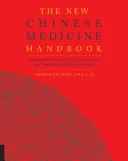
The New Chinese Medicine Handbook
 79
79

The New Chinese Medicine Handbook
Misha Ruth Cohen's *The New Chinese Medicine Handbook* presents TCM not as an exotic mystery, but as a practical system for self-care. The strength lies in its clear articulation of core concepts like Qi and the Five Elements, making them understandable to the uninitiated. Cohen avoids overly technical jargon, which is commendable, though at times this simplification might leave advanced practitioners wanting more depth. A particularly effective section explains the interplay of the Five Elements in relation to emotions and physical organs, demonstrating how an imbalance in one area, like the Liver (Wood), can manifest as irritability and affect digestion (Earth). While the book is an excellent primer, its primary limitation is its scope; it introduces rather than exhaustively details diagnostic methods or complex herbal formulas. Nevertheless, it successfully equips the reader with foundational knowledge for personal health management. It serves as a solid gateway to a vast medical tradition.
📝 Description
79
Misha Ruth Cohen's 2008 handbook translates ancient Chinese medicine for modern wellness.
This guide unpacks the core ideas of Traditional Chinese Medicine (TCM) for readers interested in holistic health. It explains TCM's view of the body as an interconnected system of mind, body, and spirit. The book aims to make complex theories understandable, so readers can take a more active role in their personal well-being.
It is written for anyone wanting to use traditional healing methods in everyday life. Whether you are new to TCM or a practicing professional looking for a useful reference, this book offers practical insights. It helps individuals seeking greater balance and energy through a better grasp of their body's energetic workings.
The text covers essential TCM principles, including Qi, the concept of vital energy, and the balance of Yin and Yang. It also details the Five Element theory and the meridian system, which is the pathway for Qi flow. The relationships between organ systems and their energetic connections are also discussed. Understanding these concepts is presented as key to identifying imbalances and choosing appropriate treatments.
Chinese Medicine's origins stretch back millennia, representing one of the world's oldest continuous medical traditions. Its development relied on close observation of nature and human health. Foundational texts like the *Huangdi Neijing*, from the Han Dynasty, established core concepts still relevant today. This book places those ancient principles within a framework for personal spiritual and physical development.
💡 Why Read This Book?
• Gain practical insights into balancing your body's energy (Qi) using the principles of Yin and Yang, a core concept originating from ancient Chinese philosophy. • Learn to identify the energetic correspondences of the Five Elements (Wood, Fire, Earth, Metal, Water) and their impact on your emotional and physical well-being, as detailed in TCM. • Understand the foundational meridian system, the pathways of Qi within the body, enabling a new perspective on how to support your vitality, a concept central to Misha Ruth Cohen's approach.
⭐ Reader Reviews
Honest opinions from readers who have explored this book.
❓ Frequently Asked Questions
When was The New Chinese Medicine Handbook first published?
The New Chinese Medicine Handbook by Misha Ruth Cohen was first published on October 15, 2015, making it a relatively recent exploration of traditional principles.
What are the core principles of Chinese Medicine discussed in the book?
The book focuses on fundamental TCM concepts such as Qi (vital energy), Yin and Yang, the Five Elements theory, and the meridian system, explaining their roles in health and balance.
Is this book suitable for someone with no prior knowledge of Chinese Medicine?
Yes, the handbook is designed to be accessible to beginners, breaking down complex theories into understandable lessons for those new to the subject.
What is Qi in the context of Chinese Medicine as presented by Cohen?
Qi, as explained in the book, is the vital life force or energy that flows through the body's meridian system, essential for maintaining health and vitality.
Does the book cover specific treatments or remedies?
While it explains the foundational principles, the book emphasizes understanding the energetic basis of health to empower readers in their healing process, rather than detailing extensive treatment protocols.
Who is Misha Ruth Cohen, the author?
Misha Ruth Cohen is a practitioner and educator in the field of Chinese Medicine, bringing her extensive experience to this accessible guide.
🔮 Key Themes & Symbolism
Qi and Energetic Flow
The central theme revolves around Qi, the vital energy that animates all life according to Traditional Chinese Medicine. The book explains how Qi circulates through specific pathways known as meridians, similar to rivers nourishing the land. Maintaining a smooth and abundant flow of Qi is presented as paramount for physical and emotional well-being. Imbalances, blockages, or deficiencies in Qi are identified as the root cause of illness. This concept positions health not just as the absence of disease, but as a dynamic state of energetic harmony.
Yin and Yang Dynamics
Cohen elaborates on the fundamental concept of Yin and Yang, the dualistic yet interconnected forces that govern the universe and the human body. Yin represents aspects like coolness, stillness, and substance, while Yang embodies heat, activity, and function. The book illustrates how health depends on the dynamic equilibrium between these opposing forces. An excess or deficiency in either Yin or Yang leads to specific disharmonies. Understanding this balance is crucial for interpreting symptoms and guiding the body back towards homeostasis.
The Five Elements Framework
A significant portion of the handbook is dedicated to the Five Elements theory (Wood, Fire, Earth, Metal, Water). This framework provides a sophisticated map for understanding the relationships between different organ systems, emotions, seasons, and even tastes. For instance, the Wood element is associated with the Liver and Gallbladder, with emotions like anger and the season of spring. The book details the generative and control cycles between these elements, offering a lens through which to view interconnectedness and potential points of imbalance within the body's energetic matrix.
Holistic Self-Care
The overarching message is one of empowerment through knowledge. The New Chinese Medicine Handbook encourages readers to take an active role in their health by understanding the underlying energetic principles. It moves beyond symptom management to address root causes, promoting a lifestyle that supports natural balance. This holistic approach integrates diet, emotional well-being, and lifestyle adjustments as integral components of healing, fostering a proactive relationship with one's own body.
💬 Memorable Quotes
Direct passages from the work, attributed to the author.
“Balance your mind, body, and spirit with lessons in Chinese Medicine.”
— This concise statement captures the book's core aim: to provide readers with the knowledge to harmonize their internal states through the principles of TCM, fostering overall well-being.
“Qi is the vital energy that flows through the body.”
— This defines the fundamental concept of Qi, emphasizing its role as the essential life force whose circulation is key to health in the Chinese medical paradigm.
“Understanding Yin and Yang helps identify energetic imbalances.”
— This highlights the practical application of the Yin and Yang theory, suggesting it serves as a diagnostic tool for recognizing disharmonies that may lead to illness.
“The Five Elements offer a map to understand interconnectedness.”
— This interpretation points to the Five Elements theory as a comprehensive system for mapping the relationships between various aspects of the body and its environment.
“Take control of your healing process.”
— This imperative calls for personal agency in health management, positioning the book as a guide for readers to actively engage in their own wellness journey.
🌙 Esoteric Significance
Tradition
While rooted in a medical system, TCM shares significant philosophical underpinnings with Taoism, a major esoteric tradition of China. Concepts like Qi and the balance of Yin and Yang are central to Taoist cosmology and practices aimed at harmonizing with the Tao (the Way). The focus on energetic flow, subtle body maps (meridians), and the interconnectedness of all phenomena aligns with a broader esoteric worldview that sees the universe as an animated, energetic system. This handbook, by clarifying these principles, acts as an entry point to a more animistic and energetic understanding of existence.
Symbolism
Key symbols in TCM, as explored in the handbook, include the flowing Qi, representing life force and vitality, and the Taijitu (Yin-Yang symbol), visually depicting the inseparable, dynamic duality that governs reality. The Five Elements (Wood, Fire, Earth, Metal, Water) also function as potent symbols, each representing a complex set of correspondences related to nature, human physiology, and psychology. These symbols are not merely decorative; they are functional diagrams for understanding the energetic architecture of both the cosmos and the individual.
Modern Relevance
Contemporary thinkers and practitioners in fields like integrative medicine, somatic psychology, and even certain branches of energy healing draw inspiration from TCM principles. The emphasis on holistic balance, the body's innate healing capacity, and the connection between emotional states and physical health resonates strongly with modern wellness movements. Figures like Dr. Aviva Romm, who integrates herbal medicine and natural approaches, and researchers exploring the physiological effects of acupuncture, demonstrate the ongoing relevance and integration of TCM concepts into contemporary health paradigms.
👥 Who Should Read This Book
• Individuals seeking to understand the energetic basis of their health, moving beyond a purely physical or biochemical model, will find clarity on concepts like Qi and meridians. • Those interested in the philosophical underpinnings of Eastern traditions, particularly Taoism, will appreciate the accessible explanation of Yin-Yang and the Five Elements. • Beginners exploring natural health modalities and looking for practical ways to support their well-being through diet and lifestyle adjustments based on ancient wisdom.
📜 Historical Context
The New Chinese Medicine Handbook emerges from a rich historical lineage, with Traditional Chinese Medicine (TCM) dating back over two millennia. Its foundational texts, such as the *Huangdi Neijing* (Yellow Emperor's Inner Canon), compiled around the 2nd century BCE, established concepts like Qi, Yin-Yang, and the Five Elements. By the 20th century, TCM faced modernization efforts and standardization, particularly after the establishment of the People's Republic of China in 1949, which led to the formalization of TCM as a distinct medical system. While Western medicine gained prominence globally, TCM continued to be practiced and studied. Misha Ruth Cohen's work, published in 2015, arrives in an era where interest in complementary and alternative medicine has surged globally, making ancient systems like TCM more accessible to Western audiences. It builds upon the work of earlier translators and practitioners who introduced these concepts to the West, such as Ted Kaptchuk, whose *The Web That Has No Weaver* (1983) was a seminal text in explaining TCM to a broader audience.
📔 Journal Prompts
Reflect on the flow of Qi in your daily life.
Consider the balance of Yin and Yang within your current routines.
How do the Five Elements manifest in your personal environment and emotions?
Identify one aspect of your mind-body connection that feels out of energetic balance.
Explore the relationship between your emotions and the Zang-Fu organs discussed.
🗂️ Glossary
Qi (Chi)
The fundamental vital life force or energy that flows through all living things. In TCM, its smooth circulation is essential for health and vitality.
Yin and Yang
Two complementary, opposing forces that describe the dualistic nature of reality. Yin is associated with coolness, stillness, and substance, while Yang represents heat, activity, and function.
Five Elements
A cyclical system (Wood, Fire, Earth, Metal, Water) used in TCM to explain the relationships and interactions between different phenomena in nature and the human body.
Meridians
A network of channels or pathways throughout the body through which Qi flows, connecting different organs and tissues.
Zang-Fu Organs
The internal organ systems in TCM, categorized into Yin (Zang) and Yang (Fu) organs, each with specific functions and energetic properties.
Holistic
An approach that considers the whole person—mind, body, and spirit—as an interconnected system, rather than focusing on isolated symptoms or parts.
Homeostasis
A state of stable internal equilibrium in the body, maintained through various regulatory processes. TCM aims to restore and maintain this balance.
This book appears in 1 collection
🔮 Readers Also Liked
Browse all →








From the “Qi Gong” Collection
View all →


More Free Occult Philosophy Books
View all →