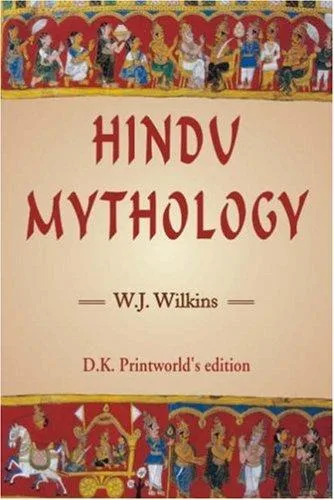
Hindu Mythology
 80
80

Hindu Mythology
Wilkins's "Hindu Mythology" presents a remarkably thorough and systematically organized catalog of Hindu deities and narratives. Its strength lies in its dispassionate, encyclopedic approach, which provides a clear map of a complex spiritual landscape. The section detailing the lineage and attributes of various devas, particularly Shiva and Vishnu, is exceptionally well-rendered. However, the book's primary limitation is its academic distance; it meticulously describes the 'what' and 'how' of Hindu myths but rarely ventures into the 'why' from a practitioner's perspective, leaving the deeply felt spiritual dimensions largely unexplored. A notable passage is the careful exposition of the various Puranic accounts of creation, highlighting textual variations. Ultimately, it is a definitive scholarly reference for the structure of Hindu mythology.
📝 Description
80
W. J. Wilkins's "Hindu Mythology" was published in 1986, detailing Hindu gods, cosmic cycles, and foundational stories.
This 1986 work by W. J. Wilkins offers a detailed look at Hindu religious thought, covering its gods, cosmic cycles, and the stories that have shaped spiritual understanding. Wilkins examines the genealogies of deities, the cyclical nature of time, and the core narratives without pushing a single interpretation. The book serves as a scholarly introduction for those interested in the complex world of Hindu narratives, favoring a factual, historically grounded approach.
It moves past popular notions to examine the connections between deities, cosmology, and Hindu philosophy. Wilkins's study emerged during a period of increased academic interest in Eastern religions, following a mid-20th century rise in engagement with Indic traditions. This book contributed to Western scholarship that aimed to present Hindu traditions with academic rigor, engaging with earlier ethnographic work and textual criticism. It focuses on specific concepts like the Trimurti, the Yugas, Karma, Dharma, and avatars, drawing from the Puranas and epics such as the Ramayana and Mahabharata.
Published in 1986, Wilkins's "Hindu Mythology" falls within a scholarly tradition that sought to academically analyze and present Eastern religious traditions. This approach emerged as Western engagement with Indic philosophies and mythologies grew, moving beyond purely devotional or ethnographic accounts. The book's focus on detailed textual analysis of the Puranas and epics, alongside core philosophical concepts, aligns it with scholarship aimed at understanding these traditions as complex systems of thought and narrative, rather than solely as objects of faith or anthropological study.
💡 Why Read This Book?
• Gain a structured understanding of the Trimurti (Brahma, Vishnu, Shiva) and their cosmic functions, as detailed in the Puranic accounts, offering clarity on the foundational trinity of Hindu cosmology. • Explore the concept of Yugas, the cyclical ages of the world, and how this framework shapes the narrative arcs of Hindu epics, providing a unique perspective on time and recurrence. • Learn about the significance of Vishnu's avatars, such as Rama and Krishna, as presented through the lens of the Ramayana and Mahabharata, understanding their roles as divine interventions within human history.
⭐ Reader Reviews
Honest opinions from readers who have explored this book.
❓ Frequently Asked Questions
When was W. J. Wilkins's Hindu Mythology first published?
W. J. Wilkins's "Hindu Mythology" was first published in 1986. This edition provides a comprehensive academic survey of the subject matter.
What are the primary sources Wilkins uses for Hindu Mythology?
The work primarily draws upon the Puranas and the great epics, the Ramayana and the Mahabharata, to detail the vast array of Hindu deities and narratives.
Does the book explain the concept of Karma and Dharma?
Yes, "Hindu Mythology" explores fundamental concepts like Karma and Dharma, explaining their roles within the cosmological and ethical frameworks presented in Hindu stories.
Is this book suitable for beginners in mythology studies?
Absolutely. Its structured approach and factual presentation make it an excellent starting point for beginners interested in understanding the foundational myths of Hinduism.
What is the Trimurti according to Wilkins's book?
The book explains the Trimurti as the Hindu divine triad comprising Brahma the creator, Vishnu the preserver, and Shiva the destroyer, outlining their distinct roles in cosmic maintenance.
Does the book cover the concept of Yugas?
Yes, "Hindu Mythology" details the Yugas, the cyclical ages of the world in Hindu cosmology, explaining their progression and impact on the unfolding of divine narratives.
🔮 Key Themes & Symbolism
The Divine Triad
The work meticulously details the Trimurti – Brahma, Vishnu, and Shiva – and their interconnected cosmic functions. Wilkins outlines their respective mythologies, genealogies, and symbolic representations, clarifying their roles as creator, preserver, and destroyer. This section is crucial for understanding the fundamental architecture of the Hindu pantheon, showing how these deities embody the cyclical nature of existence and divine intervention in the world.
Cosmic Cycles and Time
A significant focus is placed on the Hindu concept of Yugas, the vast cyclical ages that structure cosmic time. Wilkins explains the progression from Satya Yuga through Kali Yuga, detailing the characteristics and divine activities associated with each era. This provides a framework for understanding the unfolding of history and the recurring patterns within Hindu narratives and eschatology.
Epic Narratives and Avatars
The book studies the principal Hindu epics, the Ramayana and the Mahabharata, analyzing their key characters and plotlines. Special attention is given to the concept of avatars, particularly Vishnu's incarnations like Rama and Krishna. Wilkins illustrates how these divine manifestations act within human history to restore Dharma, offering profound lessons on duty, righteousness, and spiritual struggle.
Deities and Their Domains
Beyond the Trimurti, Wilkins maps out a wide array of other significant deities, including goddesses like Durga and Lakshmi, and celestial beings. Each is presented with their associated myths, iconography, and spheres of influence. This comprehensive catalog serves as a guide to the diverse forces and spiritual energies that populate the Hindu cosmos.
💬 Memorable Quotes
Direct passages from the work, attributed to the author.
“The Puranas contain a vast amount of mythological and legendary matter.”
— This statement highlights the Puranic texts as primary repositories of Hindu lore, emphasizing their sheer volume and the breadth of narratives they encompass, from divine genealogies to cosmic cycles.
“The concept of an Avatar is central to Hindu theology.”
— This underscores the importance of divine incarnations, particularly Vishnu's, as a mechanism through which the divine interacts with the mortal realm to uphold cosmic order (Dharma).
“Shiva is often depicted as the destroyer, but also as the ascetic and the dancer.”
— This points to the many-sided nature of Shiva, illustrating that his role as destroyer is balanced by his asceticism and his cosmic dance (Nataraja), representing creation and destruction in perpetual motion.
“Time is understood cyclically, with ages repeating.”
— This interpretation captures the essence of the Yuga system, presenting Hindu cosmology's view of time as a continuous cycle of creation, preservation, and dissolution, rather than a linear progression.
💡 Key Ideas
Editorial paraphrase of the work's core concepts — not direct quotes.
The Mahabharata narrates the great war between the Pandavas and the Kauravas.
This concisely summarizes the central conflict of the epic, framing it as a foundational narrative of struggle, duty, and moral consequence within Hindu tradition.
🌙 Esoteric Significance
Tradition
While "Hindu Mythology" is primarily a scholarly work, its detailed exploration of deities, cosmic cycles, and narrative structures provides foundational knowledge for various esoteric traditions that draw from or interact with Indic thought. It serves as a bridge for practitioners of Western esotericism, such as Theosophy or certain modern magical systems, seeking to understand the source material from which many syncretic beliefs have emerged.
Symbolism
The book illuminates potent symbols like the lotus (purity, creation), the trident (Shiva's power), and the conch shell (cosmic sound, Vishnu's presence). It explains how these, along with recurring motifs like the cosmic serpent (Ananta Shesha) and the divine dance of Shiva (Nataraja), represent profound cosmological principles and spiritual truths within the Hindu worldview.
Modern Relevance
Contemporary spiritual seekers, comparative mythology enthusiasts, and scholars of religion continue to reference Wilkins's work for its clear exposition of Hindu deities and myths. Its structured approach remains valuable for those exploring modern interpretations of yoga, Vedanta, and Tantra, providing essential context for the philosophical and mythological underpinnings of these practices.
👥 Who Should Read This Book
• Students of comparative mythology seeking a structured overview of a major world tradition, benefiting from the book's systematic cataloging of deities and narratives. • Scholars of religious studies requiring a reliable academic reference for the foundational myths and cosmologies of Hinduism, useful for contextualizing broader research. • Individuals interested in esoteric traditions that incorporate Indic elements, who need a clear understanding of the original source myths before engaging with syncretic interpretations.
📜 Historical Context
Published in 1986, W. J. Wilkins's "Hindu Mythology" arrived during a period of significant academic engagement with South Asian religions. The post-World War II era saw a move beyond colonial-era Orientalism towards more critical and systematic studies. This work contributed to a growing corpus of scholarly texts that aimed to present Hindu traditions with precision, often drawing on textual analysis and comparative mythology. It stood in contrast to earlier, more impressionistic accounts and alongside the work of scholars like Wendy Doniger O'Flaherty (later Wendy Doniger), who were also exploring Hindu narratives with a focus on psychological and anthropological dimensions. The book offered a structured, accessible introduction at a time when Western academic interest in Indic religions was expanding, providing a valuable reference for students and researchers.
📔 Journal Prompts
The Trimurti's distinct roles in creation, preservation, and destruction.
The cyclical nature of the Yugas and their impact on cosmic events.
Vishnu's avatars as archetypes of divine intervention.
The symbolic meaning of Shiva's cosmic dance.
The narrative arcs within the Ramayana and Mahabharata.
🗂️ Glossary
Trimurti
The divine triad of Brahma (the creator), Vishnu (the preserver), and Shiva (the destroyer), representing the cyclical cosmic functions in Hinduism.
Yuga
An age or era within the Hindu cosmology's cyclical understanding of time, with four distinct Yugas (Satya, Treta, Dvapara, Kali) forming a grand cycle.
Avatar
A deliberate descent or incarnation of a deity, most notably Vishnu, into the earthly realm to restore Dharma (cosmic order) or achieve specific cosmic purposes.
Dharma
A complex concept encompassing righteousness, duty, cosmic law, and the natural order of the universe. Upholding Dharma is a central theme in Hindu ethics and narratives.
Puranas
A vast genre of Sanskrit literature in Hinduism that narrates tales of gods, goddesses, cosmology, genealogies of kings, and ancient sages, forming a core part of Hindu scripture.
Ramayana
One of the two major Sanskrit epics of ancient India, chronicling the life of Prince Rama and his quest to rescue his wife Sita from the demon king Ravana.
Mahabharata
The longest Sanskrit epic poem, central to Hindu tradition, which narrates the conflict between the Pandavas and the Kauravas, containing philosophical and devotional material like the Bhagavad Gita.
🔮 Readers Also Liked
Browse all →








More by W. J. Wilkins
All books →

More Free Occult Philosophy Books
View all →