Do What Thou Wilt
 81
81

Do What Thou Wilt
The strength of 'Do What Thou Wilt' lies in its direct, no-nonsense approach to the foundational practice of magical journaling. It correctly identifies this activity as paramount, a point often understated in more theoretical occult texts. The emphasis on active exploration, particularly through sigil creation and dream recording, is well-articulated. However, the book's brevity means it functions more as a template or prompt than an exhaustive exploration of journaling techniques. While the blurb mentions a "powerful symbol used," the actual visual or conceptual symbol is not detailed within the provided information, leaving a gap for practitioners seeking specific symbolic guidance. Despite this, for anyone serious about occult studies, the insistence on maintaining a magical diary is a vital reminder and a practical starting point.
📝 Description
81
Published in 2018, 'Do What Thou Wilt' is a journal template for occult practitioners.
This book functions as a practical journal and template for individuals involved in various occult traditions. It emphasizes the importance of keeping detailed magical records, including dreams, ritual outcomes, and sigil creation. The journal is presented as more than just a log; it is a tool for actively engaging with one's unconscious and subconscious mind. It is designed for practitioners of Witchcraft, Chaos Magick, Thelema, Satanism, and Wicca who recognize the value of systematic documentation in their spiritual development. The journal provides a structured method for enhancing understanding of personal magical workings and inner experiences, acting as a companion for those on a path of active magical exploration.
The practice of maintaining magical journals has a long history across esoteric traditions. From medieval grimoires to the diaries of 19th-century occultists, documenting magical experiences has been a consistent element. The 2018 publication aligns with a contemporary revival of interest in occultism and personal magical practice, particularly influenced by movements like Chaos Magick. These movements often stress individual experimentation and experiential results. The core idea is that the magical journal is an essential skill for conscious engagement with magical and psychological processes. Its specific uses include recording dreams for later analysis, detailing ritual successes and failures, and creating sigils as focal points for intention.
The practice of magical journaling has roots in diverse esoteric traditions, extending back centuries. This book's emphasis on meticulous record-keeping connects it to historical practices seen in grimoires and the private diaries of figures like Aleister Crowley. Its 2018 release situates it within a modern resurgence of interest in personal occult practice, influenced by experiential approaches found in Chaos Magick. The work frames journaling as an active method for self-exploration and understanding magical workings, a concept echoed in various traditions that value introspection and personal gnosis.
💡 Why Read This Book?
• Learn the critical role of a magical journal in traditions like Thelema, as detailed in the book, enabling deeper self-understanding through documented experimentation. • Gain practical methods for recording dreams and ritual outcomes, directly applicable to Chaos Magick practices, fostering a more disciplined approach to occult work. • Understand the importance of sigil creation as an active tool for subconscious exploration, a technique central to modern witchcraft as presented in this journal.
⭐ Reader Reviews
Honest opinions from readers who have explored this book.
❓ Frequently Asked Questions
What is the primary purpose of a magical journal according to 'Do What Thou Wilt'?
The book emphasizes that a magical journal is an active tool for exploring the unconscious and subconscious realms. It's essential for recording dreams, magical experiments, rituals, and sigil creation, serving as a cornerstone of occult practice.
Which occult traditions does 'Do What Thou Wilt' specifically address?
The journal is designed for practitioners of Witchcraft, Chaos Magick, Thelema, Satanism, and various Wiccan traditions. It highlights the common need for magical record-keeping across these diverse paths.
When was 'Do What Thou Wilt' first published?
The book 'Do What Thou Wilt' was first published on June 5, 2018, as part of the Black Magick Black Magick Journals series.
How does this journal facilitate exploration of the subconscious?
By providing a dedicated space to record dreams, sketch images, and write down thoughts and magical workings, the journal encourages practitioners to actively engage with and analyze their subconscious material.
Is 'Do What Thou Wilt' a book of spells or a practical tool?
It functions primarily as a practical tool and guide for magical record-keeping. While it supports spellwork and ritual by documenting them, it is not a grimoire of spells itself.
What makes magical journaling an 'esoteric skill'?
It's considered an esoteric skill because it requires discipline, introspection, and a structured approach to understanding subtle energies and psychological states. The journal acts as a bridge between the practitioner's inner world and their outward magical practice.
🔮 Key Themes & Symbolism
The Imperative of the Magical Journal
This journal posits magical record-keeping not as an optional add-on but as a fundamental esoteric skill. It argues that documenting dreams, rituals, and experiments is crucial for practitioners across traditions like Thelema and Chaos Magick. The act of writing and sketching becomes a method for actively engaging with and understanding one's magical path and the subconscious mind. It's a tool for conscious progression and self-awareness within occult disciplines.
Active Exploration of the Unconscious
The work frames journaling as a dynamic process of self-discovery. Through the creation of sigils, the recording of dreams, and detailed accounts of magical workings, practitioners are encouraged to consciously interact with their subconscious and unconscious realms. This active engagement is presented as vital for personal growth and for refining magical techniques, moving beyond passive observation to direct exploration.
Interdisciplinary Esoteric Practice
'Do What Thou Wilt' acknowledges the common threads binding diverse esoteric paths. By providing a framework for magical journaling, it serves practitioners of Witchcraft, Chaos Magick, Thelema, and Satanism. The emphasis on practical documentation transcends specific dogma, focusing instead on the universal requirement for self-reflection and record-keeping to advance one's magical journey, regardless of tradition.
Sigil Craft and Symbolic Creation
The journal highlights the importance of sigil creation as a method for focused intent and subconscious communication. It provides a space for users to design, record, and potentially analyze the effectiveness of their sigils. This practice is linked directly to exploring the inner landscape, making the journal a practical workbook for developing and understanding one's personal symbolic language.
💬 Memorable Quotes
Direct passages from the work, attributed to the author.
“Keeping a magical record, magical journal or magical diary is the most important esoteric skills in magick and occultism.”
— This statement elevates journaling from a mere hobby to a core competency within occult practice. It suggests that without diligent record-keeping, a practitioner's understanding and effectiveness are significantly limited.
“Its is used to record your dreams, magical experiments, rituals and for active exploration of the unconscious and subconscious realms through creation of sigils, drawing sketching and writing.”
— This defines the practical utility of the journal, outlining specific applications. It emphasizes that the act of documenting is intrinsically linked to psychological and magical exploration, rather than just creating a passive archive.
“This is a deeply important aspect of Witchcraft, Chaos Magick, Thelema, Satanism, Wicca and Wiccan Traditions.”
— This highlights the cross-traditional relevance of magical journaling. It asserts that despite doctrinal differences, the core practice of keeping a magical record is a shared, vital component across numerous occult paths.
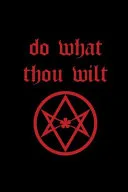
“The powerful symbol used”
— While not fully elaborated in the provided text, this phrase suggests the presence of significant symbolic elements within the journal or its associated practices, hinting at deeper layers of meaning and application.
💡 Key Ideas
Editorial paraphrase of the work's core concepts — not direct quotes.
magical record-keeping is the most important esoteric skills
This paraphrased concept underscores the book's central thesis: that the discipline of documenting magical experiences and insights is a foundational skill, paramount to progress in occult studies.
🌙 Esoteric Significance
Tradition
This work is primarily aligned with contemporary esoteric practices that emphasize personal gnosis and experiential learning, particularly within the broad umbrella of modern occultism. While it directly references Thelema, its core emphasis on practical record-keeping and exploration of the subconscious resonates strongly with the principles of Chaos Magick, which emerged in the latter half of the 20th century. It departs from rigidly structured traditional magical systems by framing journaling as a universally applicable tool for self-discovery and magical refinement, rather than a component tied to a specific cosmology or pantheon.
Symbolism
While the provided text is brief, it mentions the 'creation of sigils' and a 'powerful symbol used.' Sigils, in occultism, are symbolic representations of intent, often created through methods like letter condensation or abstract design, serving as focal points for the subconscious. The mention of a 'powerful symbol' suggests that the journal might incorporate or reference specific symbolic imagery, perhaps related to foundational occult concepts or the specific traditions it addresses, acting as a visual anchor for magical work.
Modern Relevance
Contemporary practitioners of Chaos Magick, modern Witchcraft, and even individual Thelemites looking to deepen their personal practice find value in 'Do What Thou Wilt.' Its emphasis on documenting personal experimentation and psychological exploration aligns with current trends in self-actualization and mindfulness within esoteric circles. Thinkers and practitioners who prioritize experiential results and the development of personal magical systems are likely to engage with the practical methodology it promotes for understanding the subconscious.
👥 Who Should Read This Book
• Aspiring Chaos Magick practitioners seeking to develop rigorous experimental methods and document their results. • Students of Thelema interested in practical applications of keeping a magical record for self-analysis and magical advancement. • Witches and practitioners of Wicca looking for structured ways to deepen their understanding of their craft through dream journaling and ritual documentation.
📜 Historical Context
The publication of 'Do What Thou Wilt' in 2018 places it within a contemporary landscape marked by a significant resurgence in occult interest, particularly online. While the practice of keeping magical journals dates back centuries, with notable examples like the diaries of Aleister Crowley in the early 20th century, this work reflects modern approaches. It aligns with the experiential and individualistic ethos prevalent in Chaos Magick, a movement that gained traction in the late 20th century, emphasizing practical results and personal gnosis over adherence to established doctrines. The book's focus on journaling as a core skill carries the foundational texts of Western esotericism, yet its presentation is tailored for a generation familiar with digital content and personalized practice. Unlike earlier periods, where such practices might have been confined to secret societies or scholarly circles, contemporary works like this contribute to a broader, more accessible occult revival.
📔 Journal Prompts
Magical journal documentation of sigil creation.
Dream recording and subconscious exploration.
Ritual experiment logs.
Personal sigil sketches and intent.
Reflection on esoteric skills development.
🗂️ Glossary
Esoteric Skill
A practice or knowledge considered fundamental within occult or mystical traditions, often requiring discipline, introspection, and specialized understanding beyond conventional learning.
Magical Record
A systematic log or diary maintained by a practitioner to document magical workings, dreams, insights, and experiments for study and reference.
Sigil Creation
The process of designing and charging a symbol to represent a specific magical intent, intended to bypass conscious resistance and impress upon the subconscious mind.
Subconscious Realm
The part of the mind containing feelings, thoughts, urges, and memories outside of conscious awareness, often accessed through dreams, altered states, or symbolic work.
Thelema
A religious philosophy and spiritual path founded by Aleister Crowley, centered on the principle 'Do what thou wilt shall be the whole of the Law.'
Chaos Magick
A modern magical practice emphasizing belief as a tool, focusing on practical results and experimentation, often drawing eclectic elements from various traditions.
Wicca
A contemporary Neopagan religion characterized by the practice of witchcraft, often involving reverence for nature and a duotheistic divinity.