A Soul Returns
 83
83

A Soul Returns
Phillip Wayne Cummins’s “A Soul Returns” posits a compelling premise: a global titan manipulating events to fulfill an ancient, destructive prophecy. The author attempts to fuse modern political machinations with deep-seated religious eschatology, a fusion that, while ambitious, occasionally strains under its own weight. Sayyid Rashid, the antagonist, is a chillingly plausible figure, his vast resources and modern medical science twisted to create a messianic figure for a destructive purpose. A particular strength lies in the novel's exploration of how ancient narratives can be reinterpreted and weaponized in contemporary geopolitical arenas. However, the sheer scope of Rashid's influence sometimes borders on the unbelievable, requiring significant reader suspension of disbelief. The sudden introduction of an unforeshadowed evil, as hinted at in the original blurb, feels like a narrative shortcut to escalate the stakes. Ultimately, “A Soul Returns” offers an intricate, if sometimes overstuffed, vision of how ancient animosities can manifest through modern power structures.
📝 Description
83
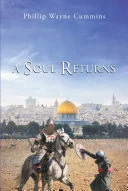
Phillip Wayne Cummins' 2020 novel, A Soul Returns, stages a magnate's plan to engineer a world leader fulfilling ancient prophecies.
A Soul Returns follows Sayyid Rashid, a wealthy magnate employing global influence and advanced medical technology. His objective is to create a specific world leader who will execute an ancient agenda: the dismantling of Israel. The narrative presents a fundamental conflict arising from the clash between two ancient civilizations and their distinct religious doctrines.
The novel appeals to readers who enjoy conspiracy thrillers interwoven with esoteric themes. Those drawn to stories that examine the intersection of global politics, religious history, and speculative fiction will find its complex plot engaging. It suits individuals who appreciate intricate narratives featuring powerful figures and the machinations of ancient prophecies.
Cummins draws upon historical tensions and religious narratives, particularly those concerning the Middle East and Israel's existence. The plot references ongoing geopolitical dynamics that have shaped the region. The core conflict echoes themes found in historical religious texts and interpretations of divine mandates and end-times prophecies, framing current political actions within an ancient spiritual context.
The novel engages with concepts of divinely appointed or manipulated leaders who enact significant geopolitical change. It examines the use of wealth and technology for grand, potentially malevolent, designs rooted in ancient ideologies. The collision of modern medical science with ancient religious eschatology forms a central thematic element, placing the narrative within traditions that explore hidden spiritual forces influencing world events.
💡 Why Read This Book?
• Gain insight into how ancient religious narratives can be reinterpreted to influence modern geopolitical strategies, as demonstrated through Sayyid Rashid's machinations. • Explore the ethical implications of advanced medical technology and vast wealth being used to engineer a prophesied leader, a concept central to the 2020 publication. • Understand the clash between two ancient civilizations and religions, a core conflict that provides the narrative engine for this speculative thriller.
⭐ Reader Reviews
Honest opinions from readers who have explored this book.
❓ Frequently Asked Questions
What is the central conflict in A Soul Returns?
The central conflict involves two ancient civilizations and religions clashing, driven by Sayyid Rashid's goal to destroy Israel using his immense wealth and modern pharmaceutical corporation's technology.
Who is Sayyid Rashid?
Sayyid Rashid is the wealthiest man in the world, the owner of the largest pharmaceutical corporation, who manipulates global policies to achieve his ultimate goal of destroying Israel.
What is the role of modern technology in the book?
Modern medical technology is used by Sayyid Rashid to create a powerful leader, likening him to figures from ancient times, as part of his grand, destructive plan.
When was A Soul Returns first published?
A Soul Returns was first published on August 10, 2020.
What are the primary themes explored in the novel?
The novel explores themes of geopolitical manipulation, the intersection of ancient prophecies with modern events, the corrupting influence of power and wealth, and religious conflict.
Does the book focus on a specific historical period or region?
While drawing on ancient religious contexts, the book's primary focus is on contemporary geopolitical issues, particularly concerning the Middle East and the United States' policies.
🔮 Key Themes & Symbolism
Prophecy and Manipulation
The work examines how ancient prophecies, particularly those concerning the Middle East, can be weaponized by powerful individuals. Sayyid Rashid, through his vast resources, aims to engineer events and create a leader that fulfills a destructive, divinely-tinged agenda. This theme questions the nature of destiny versus free will and the potential for spiritual narratives to be co-opted for political ends.
Power and Technology
A central theme is the corrupting influence of immense wealth and advanced technology. Cummins depicts how these forces, embodied by Rashid's global pharmaceutical empire, can be used not for healing but for enacting ancient, malevolent plans. The narrative scrutinizes the ethical boundaries when modern science is employed to fulfill what appears to be an ancient, possibly apocalyptic, religious mandate.
Clash of Civilizations
The novel is framed around the collision of two ancient civilizations and religions. This conflict is not merely political but deeply spiritual, suggesting that historical animosities and divine claims continue to shape contemporary global affairs. The narrative explores the idea that certain ancient conflicts are cyclical and destined to resurface, driven by figures seeking to enact long-held prophecies.
The Engineered Messiah
Cummins examines the concept of an artificially created leader, a figure intended to rival ancient prophets or divine avatars. This engineered messiah is a product of modern science and ancient design, meant to fulfill a specific, destructive purpose. The theme questions the authenticity of leadership and the potential for external forces to shape key historical figures.
💬 Memorable Quotes
Direct passages from the work, attributed to the author.
“Generations have passed, yet the ancient fires burn hotter.”
— This phrase captures the novel's core tension: the idea that historical grievances and religious fervor, far from diminishing, have intensified over time, setting the stage for contemporary conflict.
“His wealth was not just currency; it was a conduit for ancient design.”
— This interpretation highlights how the protagonist's immense fortune is portrayed as more than just financial power, but as a tool to directly manifest a long-standing, possibly divinely ordained or diabolical, plan.
“Medicine's promise twisted into prophecy's peril.”
— This succinctly articulates the perversion of modern medical technology within the narrative, where its potential for healing is subverted to serve an ancient, destructive religious agenda.
“Two faiths, two peoples, one ancient battleground.”
— This emphasizes the narrative's focus on the enduring conflict between religious and civilizational groups, suggesting that the current geopolitical landscape is a continuation of an age-old struggle.
“He did not anticipate the evil that would answer his call.”
— This suggests a critical turning point where the protagonist's plans backfire, unleashing forces or consequences that even his vast intellect and resources could not foresee, hinting at a supernatural or cosmic element.
🌙 Esoteric Significance
Tradition
The work draws heavily from Abrahamic eschatology, particularly interpretations common in evangelical Christianity and some strains of Islamic thought concerning end-times prophecies and the role of specific nations and figures. It touches upon themes of divine intervention, chosen peoples, and the manifestation of powerful leaders intended to enact cosmic or historical shifts.
Symbolism
Key symbols likely include the 'engineered leader' representing a perversion of the messianic archetype, and the manipulation of global policies as a modern manifestation of ancient spiritual warfare. The pharmaceutical corporation symbolizes modern power and science being turned towards an ancient, potentially malevolent, spiritual design.
Modern Relevance
In contemporary circles, this narrative speaks to groups interested in geopolitical conspiracy theories and end-times prophecy fulfillment. Thinkers exploring the weaponization of religious texts for political gain, or the occult dimensions of global finance and power, might find parallels with Cummins's portrayal of Sayyid Rashid's machinations.
👥 Who Should Read This Book
• Readers interested in geopolitical thrillers with a speculative, religious undertone, particularly those who enjoy narratives about hidden agendas and ancient prophecies influencing current events. • Students of comparative religion and eschatology who are curious about how ancient religious narratives are reinterpreted and potentially applied to modern conflicts and power structures. • Fans of conspiracy fiction who appreciate complex plots involving wealthy magnates, global manipulation, and the idea of a divinely or malevolently appointed figure emerging.
📜 Historical Context
Published in 2020, Phillip Wayne Cummins’s “A Soul Returns” emerged during a period of heightened global political tension and renewed interest in eschatological narratives. The novel taps into ongoing discussions surrounding Middle Eastern geopolitics, particularly the Israeli-Palestinian conflict, framing it through a lens of ancient religious prophecies. The era saw a rise in speculative fiction that explored conspiracy theories and the intersection of faith and global power, influenced by earlier works like Hal Lindsey's “The Late, Great Planet Earth” (1970) which popularized end-times interpretations. Cummins’s work specifically engages with the idea of powerful individuals manipulating events to fulfill religious destinies, a concept that resonates within certain evangelical Christian and Islamic eschatological frameworks. While not directly engaging with academic theological debates, it reflects a popular fascination with how ancient scriptures might predict or influence modern events, particularly in regions considered holy ground by multiple faiths.
📔 Journal Prompts
The concept of Sayyid Rashid’s ancient design, and how it manifests through modern means.
The ethical implications of using advanced medical technology to create a world leader.
Reflect on how historical religious prophecies are utilized within the narrative’s plot.
The symbolic meaning of a pharmaceutical corporation being central to an ancient, destructive plan.
Consider the collision of two ancient religions and civilizations as depicted in the book.
🗂️ Glossary
Sayyid Rashid
The primary antagonist, depicted as the world's wealthiest man and owner of a major pharmaceutical corporation, who manipulates global affairs to achieve a specific, destructive goal.
Engineered Leader
A figure created through modern medical technology, intended by Sayyid Rashid to be a powerful leader akin to those described in ancient religious texts, for a specific, destructive purpose.
Ancient Religions/Civilizations
Refers to the historical and spiritual traditions that form the backdrop for the core conflict, suggesting their doctrines and animosities continue to influence contemporary events.
Geopolitical Manipulation
The act of influencing international relations and policies, in this context, by Sayyid Rashid using his vast wealth and corporate power to achieve his ultimate objective.
Eschatology
The theological study of end-times and final events, a key element in the novel as it underpins the motivations and predicted outcomes driving the narrative's conflict.
Pharmaceutical Corporation
The vast corporate entity owned by Sayyid Rashid, which serves as a vehicle for his power and the means by which he employs advanced medical technology for his nefarious plans.
Destruction of Israel
The ultimate stated goal of Sayyid Rashid, framing the central conflict within a context of long-standing religious and political tensions in the Middle East.
This book appears in 1 collection
🔮 Readers Also Liked
Browse all →









From the “Templar Knights” Collection
View all →







More Free Occult Philosophy Books
View all →