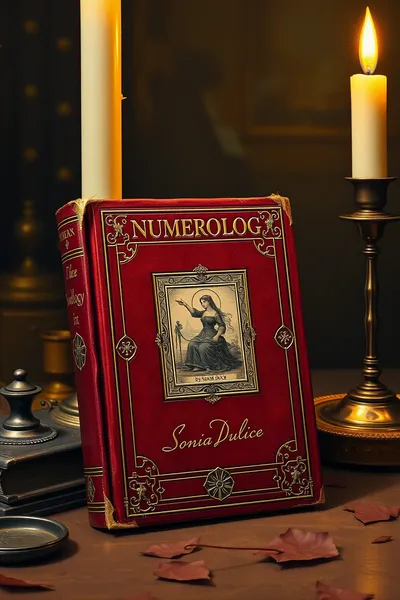
The Night Has a Naked Soul

 71
71

The Night Has a Naked Soul
Alan Kilpatrick’s "The Night Has a Naked Soul" is an ambitious work that does not shy away from complexity. Its strength lies in its intellectual rigor and its comprehensive engagement with a wide spectrum of esoteric thought, particularly evident in its detailed examination of alchemical symbolism. However, the very depth that makes it valuable can also render it inaccessible to those without a foundational understanding of its subject matter. A passage that stands out is the intricate mapping of the Lesser and Greater Mysteries, which, while illuminating, requires significant prior knowledge. Kilpatrick offers a demanding but rewarding encounter with the hidden currents of Western esotericism. It is a demanding text, best suited for the seasoned seeker.
📝 Description
71
Alan Kilpatrick's 1997 book investigates esoteric philosophy and occult thought.
Published in 1997, 'The Night Has a Naked Soul' by Alan Kilpatrick presents a dense study of esoteric philosophy and occult thought. The book does not fit neatly into a single category, instead weaving together various mystical traditions with personal gnosis. Its conceptual frameworks are complex, requiring significant reader engagement. This is not a book for casual reading; it is an academic pursuit for those committed to exploring the deeper aspects of spiritual inquiry.
This work is intended for dedicated students of occultism and comparative mysticism. It is for readers who have moved past introductory materials and desire rigorous intellectual engagement with difficult ideas. Those interested in the philosophical foundations of different spiritual paths, especially those with connections to Gnosticism and Hermeticism, will find substantial material. It suits scholars, advanced practitioners, and serious autodidacts.
The book examines concepts like consciousness beyond the physical, the symbolic language of ancient myths, and hidden correspondences in nature. It approaches perennial philosophical questions from an occult perspective, suggesting that true understanding arises from direct experience and gnosis, not from dogma. The text is rich with references to alchemical symbolism and the Kabbalah.
Emerging in 1997, 'The Night Has a Naked Soul' appeared during a period when Western Esotericism was gaining academic recognition, influenced by scholars like Frances Yates and Antoine Faivre. The late 20th century saw a rise in occult studies moving toward more academic discourse. Kilpatrick's work contributed by offering a detailed exposition that engaged with older traditions while establishing its own distinct approach, separate from more popular New Age interpretations.
💡 Why Read This Book?
• You will gain a deeper comprehension of alchemical processes as metaphors for spiritual transformation, specifically through Kilpatrick's detailed exploration of the *solve et coagula* stages, a concept central to the Great Work. • You will learn to interpret ancient mythologies through an occult lens, understanding how symbols like the serpent or the Ouroboros function within esoteric cosmologies, as presented in the book's analysis of archetypal imagery. • You will develop a more nuanced understanding of consciousness beyond physical limitations, examining Kilpatrick's theories on the astral and causal bodies, which are presented as distinct from standard physiological models.
⭐ Reader Reviews
Honest opinions from readers who have explored this book.
❓ Frequently Asked Questions
When was "The Night Has a Naked Soul" first published?
The book was first published in 1997, a period when academic interest in Western Esotericism was gaining momentum.
What esoteric traditions does Alan Kilpatrick's work draw upon?
Kilpatrick's work integrates elements from Gnosticism, Hermeticism, and alchemical traditions, examining their symbolic language and philosophical underpinnings.
Is "The Night Has a Naked Soul" suitable for beginners in esotericism?
The book is generally considered advanced, requiring a solid foundation in esoteric concepts due to its complex philosophical arguments and dense subject matter.
What is the primary focus of the book's symbolism?
The book frequently employs alchemical symbolism as a metaphor for spiritual development and explores the archetypal language found in ancient mythologies.
Does the book offer practical occult techniques?
While rich in theory and philosophical exploration, the book's primary focus is on understanding the conceptual frameworks of esoteric traditions rather than providing step-by-step practical rituals.
What does the title "The Night Has a Naked Soul" suggest?
The title hints at themes of unveiling, hidden truths, and the unadorned essence of the soul that is revealed in deeper states of consciousness or during profound spiritual inquiry.
🔮 Key Themes & Symbolism
Alchemical Transformation Metaphors
Kilpatrick masterfully employs alchemical processes—such as calcination, dissolution, separation, conjunction, and coagulation—as potent metaphors for the stages of spiritual evolution. The *solve et coagula* (dissolve and coagulate) principle is central, illustrating the necessity of breaking down the old self to reconstruct a refined spiritual identity. The book examines how these ancient laboratory operations mirror inner psychological and spiritual work, offering a framework for understanding personal gnosis through material allegory. This perspective positions alchemy not merely as proto-chemistry but as a profound psychological and spiritual map.
Gnostic Underscores and Soul's Journey
The work deeply engages with Gnostic concepts of the divine spark trapped within the material world and the arduous path of liberation through gnosis (direct knowledge). Kilpatrick explores the soul's descent and potential ascent, framing human existence as a journey of remembrance and awakening. This theme is intricately linked to the idea of the 'naked soul'—the essential, unadorned self stripped of material and egoic illusions. The text suggests that true spiritual realization involves recognizing this inherent divinity, often obscured by ignorance or illusion.
Symbolic Language of Esotericism
A significant portion of the book is dedicated to deciphering the rich symbolic language inherent in esoteric traditions, drawing from mythology, astrology, and Hermetic philosophy. Symbols such as the Ouroboros, the serpent, and various alchemical symbols are analyzed not as mere images but as keys to understanding cosmic principles and the nature of reality. Kilpatrick argues that these symbols form a universal language accessible to the initiated, providing a framework for comprehending the unseen forces and structures that govern existence.
Consciousness Beyond the Material
Kilpatrick probes the nature of consciousness, positing its existence and functionality independently of the physical brain. The book discusses various planes of existence and subtle bodies (astral, mental, causal), suggesting that human awareness is not confined to the corporeal form. This exploration challenges materialistic paradigms, presenting a view where consciousness is fundamental and potentially operative in realms beyond our ordinary sensory perception, forming an integral part of the esoteric cosmology presented.
💬 Memorable Quotes
Direct passages from the work, attributed to the author.
“The alchemical fire is not merely a physical force but the catalyst for the soul's purification.”
— This statement highlights Kilpatrick's view of alchemy as a spiritual discipline. The 'fire' represents transformative energy, whether internal or external, that burns away impurities and reveals the essential nature of the soul.
“Gnosis is the awakening of a dormant awareness, not the acquisition of new information.”
— This interpretation captures the Gnostic emphasis on inherent knowledge. It suggests that spiritual insight is not learned externally but is a form of remembering or activating an innate understanding that already exists within the individual.
“Mythology is the unconscious mind of humanity speaking in archetypal language.”
— This interpretation frames myths not as simple stories but as profound expressions of collective psychological truths. It aligns with the book's approach to understanding esoteric concepts through the symbolic narratives found in ancient traditions.
💡 Key Ideas
Editorial paraphrase of the work's core concepts — not direct quotes.
Understanding the Great Work begins with recognizing the microcosm within the macrocosm.
This paraphrase emphasizes the Hermetic principle of 'As Above, So Below.' It suggests that the principles governing the universe are reflected within the individual, and that spiritual development (the Great Work) involves aligning one's inner state with universal laws.
The night, in its profound darkness, is where the soul can shed its veils.
This conceptual paraphrase directly relates to the book's title. It implies that periods of obscurity, introspection, or crisis ('the night') are fertile ground for spiritual revelation and the stripping away of superficial identities.
🌙 Esoteric Significance
Tradition
The work is deeply rooted in the Hermetic and Gnostic traditions, drawing heavily on their philosophical underpinnings and symbolic language. It also incorporates significant elements from alchemy, viewing its processes as allegorical maps for spiritual and psychological transformation. Kilpatrick departs from purely historical or academic treatments by emphasizing the experiential and gnomic aspects central to these traditions, positioning the book as a guide for inner realization rather than mere historical exposition.
Symbolism
Key symbols include the Ouroboros, representing cyclical existence, unity, and the eternal return, which Kilpatrick interprets as a map of cosmic and personal cycles. The alchemical retort and alembic are central, symbolizing the vessels of transformation where matter and spirit are refined. The concept of the 'naked soul' itself functions symbolically, representing the unadorned essence of being, stripped of egoic and material illusions, a state sought through gnosis.
Modern Relevance
Contemporary practitioners of Hermeticism and Gnosticism often cite Kilpatrick's work for its depth in exploring the philosophical architecture of these traditions. His approach to alchemical symbolism as psychological allegory also finds resonance with modern depth psychology and esoteric psychology practitioners. Furthermore, the book's emphasis on gnosis as direct experiential knowledge continues to inform contemporary spiritual seekers exploring non-dogmatic paths to self-realization.
👥 Who Should Read This Book
• Advanced students of Hermeticism and Gnosticism seeking a rigorous philosophical framework for their studies. • Practitioners of alchemy (both physical and spiritual) looking for deeper symbolic interpretations of the Great Work. • Scholars of Western Esotericism interested in detailed analyses of occult traditions and their historical contexts.
📜 Historical Context
Published in 1997, "The Night Has a Naked Soul" emerged during a period of increased academic and popular engagement with Western Esotericism. Scholars like Antoine Faivre had begun to establish esoteric studies as a legitimate field of academic inquiry, moving it from the fringes. The late 20th century saw a proliferation of works on occultism, Hermeticism, and Gnosticism, seeking to contextualize these traditions within broader intellectual histories. Kilpatrick’s work appeared alongside contemporary authors exploring similar themes, though his approach was often more philosophically dense than more accessible New Age literature. It contributed to the discourse by offering a rigorous, detailed analysis that challenged readers, distinct from the more popularized occult revival movements. The work engaged with the intellectual currents that sought to understand hidden traditions not as mere superstition but as complex philosophical systems with historical roots.
📔 Journal Prompts
The alchemical retort as a vessel for inner transformation.
Reflecting on the 'naked soul' as described in the text.
Archetypal significance of the Ouroboros in personal cycles.
The role of gnosis in understanding the divine spark.
Correlations between the microcosm and macrocosm in daily life.
🗂️ Glossary
Gnosis
Direct, intuitive knowledge or spiritual insight, particularly emphasized in Gnostic traditions, as opposed to knowledge gained through reason or faith.
Hermeticism
A religious, philosophical, and esoteric tradition based primarily upon the writings attributed to Hermes Trismegistus, emphasizing cosmology, alchemy, astrology, and theurgy.
Alchemy
An ancient practice involving the transformation of matter, often interpreted as a symbolic process of spiritual purification and enlightenment, aiming for the 'Great Work'.
Solve et Coagula
Latin for 'dissolve and coagulate.' An alchemical principle signifying the process of breaking down existing forms and then recombining them into a new, refined substance, analogous to psychological and spiritual transformation.
Ouroboros
An ancient symbol depicting a serpent or dragon eating its own tail, representing cyclicality, unity, infinity, and the eternal return.
Macrocosm/Microcosm
The principle that the universe (macrocosm) is reflected in the individual human being (microcosm), and vice versa, a key tenet of Hermetic philosophy.
Astral Body
In esoteric traditions, a subtle body or plane of existence associated with emotions, desires, and dreams, distinct from the physical body.
🔮 Readers Also Liked
Browse all →









More by Alan Kilpatrick
All books →

More Free Occult Philosophy Books
View all →