Compendium Maleficarum
 78
78

Compendium Maleficarum
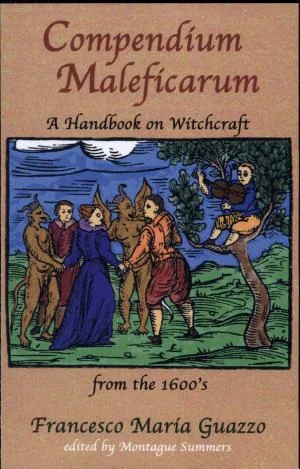
Francesco Maria Guazzo's *Compendium Maleficarum* is less a historical curiosity and more a chilling testament to the systematic fear and persecution that characterized early modern Europe. Published in 1628, it reads like a detailed indictment, outlining every conceivable aspect of witchcraft as understood by its contemporary authorities. Its strength lies in its comprehensive cataloging of accusations and alleged practices, offering an unparalleled glimpse into the minds of witch hunters. For instance, the detailed descriptions of demonic pacts and the physical characteristics attributed to witches provide stark evidence of the era's anxieties. However, the book's inherent bias is its most significant limitation; it operates entirely within a framework that presupposes witchcraft's reality and its malevolent intent, offering no room for skepticism or alternative interpretations. A particularly striking passage describes the supposed methods by which witches curse crops, illustrating the blend of superstitious belief and practical accusation. The *Compendium Maleficarum* stands as a vital, albeit deeply disturbing, primary source for understanding the mechanisms of witch persecution.
📝 Description
78
Francesco Maria Guazzo's Compendium Maleficarum, published in 1628, served as a manual for witch prosecution.
Francesco Maria Guazzo's Compendium Maleficarum, first published in 1628, is a detailed account of witchcraft as understood in early modern Europe. It functions not as a historical survey, but as a practical guide for identifying, prosecuting, and understanding sorcery and demonic pacts. The text meticulously describes the supposed methods witches employ, the physical marks attributed to them, their alleged pacts with Satan, and the rituals they perform. Guazzo drew heavily on earlier demonological texts and theological arguments to construct this comprehensive, though biased, depiction of the perceived threat of witchcraft.
This work is particularly relevant for scholars of early modern European history, religious persecution, demonology, and the social history of magic. Students of occult studies and comparative religion will find it useful for understanding the historical roots of Western witchcraft traditions and the anxieties that drove witch trials. The Compendium also offers substantial material for those interested in the psychology of belief and how societies construct 'otherness'.
Emerging from the intense religious climate of the early 17th century, Guazzo's work is a product of European demonological discourse. It reflects a period of widespread witch hunts fueled by theological concerns and the perceived influence of Satan. Published in Milan under Spanish rule, the Compendium mirrored anxieties about heresy and supernatural threats prevalent in both Catholic and Protestant territories. It was intended as a practical tool for inquisitors and magistrates navigating perceived supernatural dangers.
💡 Why Read This Book?
• Understand the mechanics of historical witch trials through Guazzo's detailed catalog of accusations and alleged practices, offering concrete examples of perceived demonic pacts and rituals. • Examine the specific concept of the 'witch's mark' as described in the Compendium, gaining insight into physical evidence used during persecutions. • Appreciate the historical context of early 17th-century demonology by contrasting Guazzo's work with earlier texts like the *Malleus Maleficarum* and understanding its place in the discourse of the era.
⭐ Reader Reviews
Honest opinions from readers who have explored this book.
❓ Frequently Asked Questions
When was Francesco Maria Guazzo's Compendium Maleficarum first published?
Francesco Maria Guazzo's Compendium Maleficarum was first published in 1628, during a period of intense witch trials across Europe.
What was the primary purpose of the Compendium Maleficarum?
The primary purpose of the Compendium Maleficarum was to serve as a comprehensive manual for identifying, prosecuting, and understanding witchcraft, based on the beliefs and fears of early modern European authorities.
Does the Compendium Maleficarum present historical evidence of witchcraft?
The Compendium Maleficarum presents the beliefs and accusations of its time as evidence, rather than verifiable historical proof of witchcraft. It reflects the mindset of those conducting witch trials.
How does Guazzo's work relate to the Malleus Maleficarum?
Guazzo's Compendium Maleficarum draws upon and synthesizes earlier demonological works, including the influential Malleus Maleficarum by Heinrich Kramer and Jacob Sprenger, presenting a similar, though often more detailed, view of witchcraft.
Is the Compendium Maleficarum considered an occult text?
While the Compendium Maleficarum details occult practices from a persecutory perspective, it is primarily considered a historical and theological work on demonology rather than a grimoire or practical occult manual.
Where was the Compendium Maleficarum published?
The Compendium Maleficarum was first published in Milan in 1628, a city then under Spanish rule, highlighting the widespread concern with perceived supernatural threats across Catholic Europe.
🔮 Key Themes & Symbolism
Demonic Pact Theory
The Compendium Maleficarum meticulously outlines the concept of the demonic pact, a central tenet of early modern witch persecution. Guazzo details how individuals supposedly enter into agreements with Satan, renouncing their faith and receiving supernatural powers in return. This theme explores the theological and social anxieties that framed such pacts as the ultimate heresy, leading to severe persecution. The work details the alleged signs and consequences of these pacts, solidifying the idea of a coordinated satanic conspiracy.
Identification of Witches
A significant portion of Guazzo's work is dedicated to methods for identifying individuals suspected of witchcraft. This includes detailed descriptions of physical 'witch's marks' – often insensitive areas of the skin believed to be where the devil had touched or suckled the witch. The text also discusses behavioral signs, confessions under torture, and the role of familiars (demonic spirits in animal form) as indicators. This theme highlights the pseudo-scientific and superstitious approaches used to condemn individuals.
The Witch's Sabbath
The Compendium Maleficarum vividly describes the supposed nocturnal gatherings of witches, known as the Sabbath. Guazzo details the alleged rituals, blasphemous acts, and orgiastic celebrations that took place, often said to be presided over by Satan himself. This theme reflects deep-seated fears about secret societies, heresy, and the inversion of Christian sacraments, portraying the Sabbath as the nexus of demonic activity and anti-Christian conspiracy.
Demonological Framework
Guazzo's treatise is firmly rooted in the established demonological frameworks of his time, drawing heavily on theological arguments and earlier works like the Malleus Maleficarum. This theme examines how the book constructs a worldview where demons are active agents in the human realm, constantly seeking to corrupt and destroy. It explores the perceived hierarchy of demons, their modes of operation, and the divine permission believed to be granted for their influence, underscoring the belief in an ongoing supernatural war.
💬 Memorable Quotes
Direct passages from the work, attributed to the author.
“The mark of the witch is a sign by which they are known, often insensitive to pain.”
— This highlights a key diagnostic tool used during witch trials. The concept of the 'witch's mark' underscores the blend of superstition and alleged physical evidence employed to identify and condemn accused individuals.
“Witches often have familiars, demonic spirits assuming animal forms.”
— This refers to the belief that witches were aided by demons in disguise. These familiars were seen as tangible proof of a witch's pact and their connection to the infernal realm.
“The Sabbath is a profane assembly where witches perform blasphemous rites.”
— This describes the infamous nocturnal gatherings attributed to witches. The Compendium portrays these events as the height of their heresy and demonic communion, a direct affront to Christian worship.
“Demonic pacts are the foundation of witchcraft, leading to the corruption of souls.”
— This expresses the theological core of the Compendium's argument: that witchcraft originates from a deliberate agreement with the Devil, resulting in spiritual damnation.
“Sorcery can be detected through various signs and confessions, often obtained under duress.”
— This points to the methods employed in witch trials, acknowledging that 'evidence' could include physical signs and forced confessions, revealing the flawed and often brutal justice system of the era.
🌙 Esoteric Significance
Tradition
The *Compendium Maleficarum* does not align with typical esoteric traditions like Hermeticism or Kabbalah, which often seek hidden knowledge or spiritual enlightenment. Instead, it represents the theological and legalistic framework of early modern demonology, which viewed magic and witchcraft primarily as malevolent forces to be combated. It stands as a historical artifact of a specific, albeit influential, current of thought that permeated religious and judicial institutions, rather than a text for spiritual practice or mystical exploration.
Symbolism
The primary 'symbols' in Guazzo's work are not mystical sigils but rather the perceived 'marks' of witchcraft – physical imperfections or insensitive spots on the body used as evidence. Another significant motif is the 'familiar,' a demonic spirit often appearing as an animal (cat, toad, etc.), which symbolizes the witch's direct connection to and servitude under Satan. These symbols were not esoteric keys but rather interpreted signs of demonic influence and pacts within a framework of persecution.
Modern Relevance
In contemporary occult studies, the *Compendium Maleficarum* is studied not as a practical guide but as a critical historical document. Modern practitioners of Wicca and other neopagan traditions often reference it to understand the historical roots of negative perceptions of witchcraft and the persecution faced by their predecessors. Scholars of comparative religion and cultural history utilize it to analyze the construction of fear, the sociology of belief, and the mechanisms of mass hysteria during periods of intense social anxiety.
👥 Who Should Read This Book
• Historians and students of early modern Europe seeking primary source material on demonology and witch trials. • Scholars of comparative religion and folklore interested in the historical categorization and persecution of perceived magical practices. • Researchers into the psychology of belief and societal anxieties, examining how fear is constructed and directed through textual evidence.
📜 Historical Context
Francesco Maria Guazzo's *Compendium Maleficarum*, published in 1628, emerged during the tail end of Europe's most intense period of witch hunts. The early 17th century was marked by profound religious anxieties, exacerbated by events like the Thirty Years' War and lingering Reformation tensions. Demonological treatises were common, serving as both theological arguments and practical guides for magistrates and inquisitors. Guazzo’s work built upon foundational texts such as Heinrich Kramer and Jacob Sprenger’s *Malleus Maleficarum* (1487), a work that had significantly shaped anti-witchcraft discourse for over a century. While the peak of the witch trials was receding in some areas by 1628, the *Compendium* reflects the persistent belief in organized witchcraft and the need for its eradication. It was published in Milan, a center of Spanish Habsburg influence, where concerns about heresy and social order remained paramount.
📔 Journal Prompts
The concept of the 'witch's mark' as described by Guazzo.
Familiars as symbols of demonic pacts.
The structure and alleged purpose of the Witch's Sabbath.
Guazzo's view on the necessity of rooting out perceived evil.
The role of theological arguments in shaping accusations of witchcraft.
🗂️ Glossary
Demonic Pact
A formal agreement, believed to be made between an individual and Satan or another demon, in which the human renounces their faith and receives supernatural power or favor in return for allegiance.
Familiar
A supernatural entity, often believed to be a minor demon, that assists witches in their craft. Familiars were frequently thought to manifest as animals like cats, dogs, or toads.
Witch's Mark
A physical blemish or insensitive spot on the body of an accused witch, believed to be a sign of their pact with the devil, where the demon might have suckled them.
Sabbath
A nocturnal assembly of witches, often described in demonological texts as a perverse parody of Christian worship, where they allegedly engaged in blasphemous rituals and communion with Satan.
Demonology
The study of demons or beliefs about demons. In the context of the Compendium Maleficarum, it refers to the theological and juridical framework used to understand and combat perceived witchcraft.
Sorcery
The practice of magic, especially forbidden or malevolent magic. In early modern Europe, it was often conflated with witchcraft and believed to be empowered by demonic forces.
Inquisitor
An official, particularly within the Roman Catholic Church, responsible for investigating and combating heresy. Such figures played a significant role in witch trials.
This book appears in 2 collections
🔮 Readers Also Liked
Browse all →









From the “Witchcraft” Collection
View all →



![AD [frag.] Gela Hermann Büder Wittwe zu Rodenbach Clägerin. Contra Die Gemeindte desselbsten und sonderlich Johannes ... 1650-1651: Iss 180](/img/thumb/ad-frag-gela-hermann-b-der-wittwe-zu-rodenbach-cl-gerin-contra-die-gemeindte-desselbsten-und-sonderlich-johannes-1650-1651-iss-180-buder-gela.webp)

More Free Occult Philosophy Books
View all →