The Nag Hammadi Scriptures
 71
71

The Nag Hammadi Scriptures
The Meyer translation of the Nag Hammadi Scriptures offers a crucial, albeit dense, gateway into the Gnostic worldview. Its strength lies in presenting a comprehensive corpus, allowing for direct engagement with texts that shaped alternative spiritualities. The clarity of the Coptic to English translation is commendable, though the sheer volume and philosophical abstraction can be daunting for the uninitiated. One particularly striking element is the Gospel of Thomas, with its cryptic sayings that seem to offer a different path to spiritual insight than the canonical Gospels. However, the scholarly apparatus, while necessary, can sometimes overshadow the visceral impact of the original texts. This collection is not a casual read; it demands focused attention and a willingness to grapple with unfamiliar cosmologies. It stands as an indispensable resource for anyone serious about understanding the full breadth of early mystical thought.
📝 Description
71
Discovered in 1945, the Nag Hammadi library contains texts offering a vital look at early Gnostic thought.
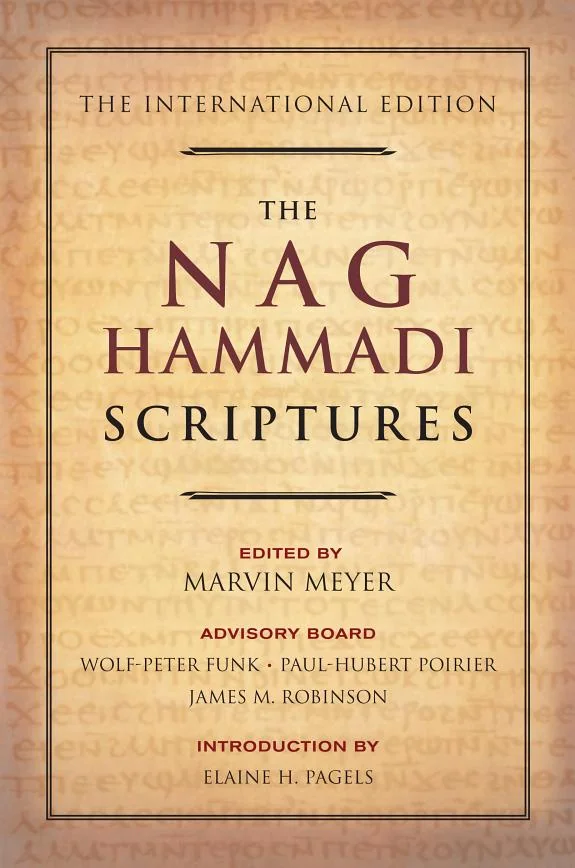
The Nag Hammadi Scriptures is a collection of ancient Gnostic texts, mostly Coptic translations of earlier Greek works. These documents, found near Nag Hammadi, Egypt, give direct access to early Christian and Hellenistic philosophical ideas that differed from developing orthodox beliefs. The volume includes gospels, apocalypses, treatises, and philosophical dialogues. These writings illuminate spiritual and intellectual currents of the late antique world.
This book is important for scholars of early Christianity, Gnosticism, and religious history. Students of comparative religion, philosophy of religion, and those interested in mystical traditions will also find it valuable. Readers looking for alternative perspectives on the roots of Western spirituality, beyond standard historical accounts, will find this collection particularly useful. It is for those prepared to engage with complex theological and philosophical ideas from a non-canonical viewpoint.
The library emerged from a time when early Christianity was forming its doctrines. The texts, largely written in the 2nd and 3rd centuries CE, represent a range of Gnostic beliefs that often conflicted with proto-orthodox Christianity. Their discovery demonstrated the variety within early Christian movements and changed earlier understandings based only on orthodox writings. The texts were hidden for centuries, probably to protect them from suppression.
These scriptures represent a significant branch of Gnosticism, a diverse set of religious and philosophical movements in the early centuries CE. Gnosticism often emphasized personal spiritual knowledge (gnosis) as the path to salvation, contrasting with salvation through faith and works as taught by emerging orthodox Christianity. The Nag Hammadi texts reveal Gnostic cosmology, including concepts like the Pleroma, Aeons, and the Demiurge, and portray a different understanding of Jesus' teachings and the human condition. They provide a counterpoint to the dominant narratives of early religious history.
💡 Why Read This Book?
• Gain direct access to the foundational texts of Gnosticism, including the Gospel of Thomas, offering a unique perspective on early Christian thought distinct from canonical scriptures. • Understand the concept of *gnosis* as a path to spiritual liberation, a central tenet of Gnostic traditions that emphasizes experiential knowledge over dogma. • Explore the complex cosmology involving Sophia, Aeons, and the Demiurge, providing a counter-narrative to conventional creation myths and divine structures.
⭐ Reader Reviews
Honest opinions from readers who have explored this book.
❓ Frequently Asked Questions
When and where were the Nag Hammadi Scriptures discovered?
The Nag Hammadi Scriptures were discovered in 1945 near the town of Nag Hammadi in Upper Egypt. This collection of ancient Gnostic texts includes thirteen codices containing over fifty different writings.
What is Gnosticism and how do these texts relate to it?
Gnosticism is a complex religious and philosophical movement that emphasized *gnosis* (knowledge) as the path to salvation. These scriptures are the primary source material for understanding Gnostic beliefs, cosmology, and spiritual practices.
Are these texts part of the Christian Bible?
No, the Nag Hammadi Scriptures are not part of the Christian Bible. They represent a collection of texts from early Christian and Hellenistic traditions that were considered heretical by the developing orthodox church.
What is the significance of the Gospel of Thomas found in the collection?
The Gospel of Thomas is significant for its collection of sayings attributed to Jesus, offering a different perspective on his teachings than the canonical Gospels. It focuses on inner spiritual knowledge and self-discovery.
Who translated the Nag Hammadi Scriptures in this edition?
This edition was translated and edited by Marvin W. Meyer, with contributions from scholars like Wolf-Peter Funk. It aims to provide a comprehensive English rendering of the Coptic texts.
What is the Pleroma in Gnostic cosmology?
The Pleroma refers to the divine realm or fullness in Gnostic cosmology, inhabited by Aeons. It is the perfect spiritual world from which emanations, including Sophia, originate.
🔮 Key Themes & Symbolism
The Divine Feminine and Sophia's Fall
A recurring theme is the figure of Sophia (Wisdom), often depicted as a divine being whose desire or error leads to the creation of the flawed material world and the Demiurge. Her story within these texts explains the origin of suffering and the perceived imperfection of existence, setting the stage for the Gnostic quest for redemption and return to the divine Pleroma.
Gnosis as Liberation
The central tenet is *gnosis*, a direct, intuitive, and experiential knowledge of the divine. This is presented not as intellectual assent but as a transformative inner awakening that liberates the divine spark within humanity from the ignorance imposed by the material cosmos and its rulers. Salvation is achieved through this profound self-knowledge and recognition of one's true spiritual origin.
The Demiurge and Material Creation
Many texts posit a Demiurge, often identified with the God of the Old Testament, as the imperfect creator of the material universe. This creator is seen as ignorant of the true, transcendent God. The material world is thus depicted as a prison or illusion, contrasting sharply with the Pleroma, the true spiritual reality from which Gnostics seek to escape.
Alternative Christologies
The Nag Hammadi scriptures present varied interpretations of Jesus Christ. Some texts portray him as a divine revealer of secret knowledge, emphasizing his spiritual teachings over his physical suffering and death. These portrayals often differ significantly from orthodox Christian doctrines, focusing on his role as a guide to gnosis.
💬 Memorable Quotes
Direct passages from the work, attributed to the author.
“Jesus said, 'Those who seek shall find, do not stop seeking until you find.'”
— This saying from the Gospel of Thomas captures the Gnostic emphasis on active, persistent pursuit of spiritual knowledge. It suggests that the path to enlightenment is an ongoing journey requiring dedication and a refusal to settle for superficial understanding.
“The world is a corpse, and the goal is to become alive.”
— This stark statement reflects the Gnostic view of the material world as dead or illusory. The spiritual quest is thus a process of awakening from this 'death' through gnosis, achieving a state of true spiritual vitality and awareness.
“I am not your disciple, nor am I the son of Joseph, but I am the son of the pure conception.”
— This declaration, found in texts like the *Apocryphon of John*, highlights a distinct Gnostic understanding of Christ's divine nature, separate from conventional human lineage and birth. It emphasizes a spiritual, rather than purely biological or historical, origin.
“The Kingdom of the Father is not here or there, but it is spread out upon the earth and no one sees it.”
— This interpretation of the Kingdom of God suggests it is not a physical location but a state of spiritual awareness accessible in the present moment, often hidden from those who do not possess the requisite inner vision or gnosis.
“The soul, when it is in the body, is like a prisoner.”
— This metaphor illustrates the Gnostic belief in the soul's entrapment within the material body and the physical world. Liberation from this state is the primary goal of the Gnostic path.
🌙 Esoteric Significance
Tradition
The Nag Hammadi Scriptures are central to the study of Gnosticism, a complex and diverse set of religious and philosophical movements that flourished in the early centuries CE. While often associated with early Christianity, Gnosticism also drew from Hellenistic philosophy, Judaism, and Egyptian traditions. It represents a distinct path of esoteric spirituality focused on achieving *gnosis* (knowledge) for liberation from the material world.
Symbolism
Key symbols include Sophia (Wisdom), often depicted as a divine entity whose actions precipitate the material creation, and the Pleroma, representing the divine fullness or spiritual realm. The Demiurge, an ignorant creator of the material world, is another crucial figure. The divine spark trapped within the human soul is a central motif, symbolizing the potential for liberation through awakened knowledge.
Modern Relevance
Contemporary esoteric traditions, including some branches of Western esotericism and New Age spirituality, draw significantly from Gnostic themes. Thinkers and movements exploring consciousness, liberation from societal constructs, and the nature of reality often reference Gnostic cosmologies and the quest for inner knowledge. The emphasis on personal revelation and direct experience continues to resonate.
👥 Who Should Read This Book
• Students of early Christianity and comparative religion seeking to understand non-canonical texts and diverse theological viewpoints that shaped the ancient world. • Esoteric practitioners and philosophers interested in Gnostic cosmology, the concept of *gnosis*, and alternative paths to spiritual liberation. • Researchers of ancient philosophy and late antique intellectual history looking for primary source material on mystical and dualistic worldviews.
📜 Historical Context
The discovery of the Nag Hammadi library in 1945 provided a direct counterpoint to the historical narrative of early Christianity as presented by proto-orthodox figures. These Coptic texts, primarily dating from the 2nd and 3rd centuries CE, reveal a vibrant field of Gnostic thought that competed with developing orthodox doctrines. Scholars like Irenaeus of Lyons had previously documented Gnostic beliefs primarily to refute them, making the Nag Hammadi codices useful for understanding these movements from their own perspectives. The existence of such a diverse collection, hidden for centuries likely to evade persecution, underscores the intellectual ferment of the late antique period and the significant theological pluralism that characterized early Christianity before its eventual consolidation.
📔 Journal Prompts
The concept of the divine spark within the human soul, as explored in the Apocryphon of John.
Reflecting on the Gospel of Thomas's emphasis on finding the Kingdom within.
The role of Sophia in Gnostic cosmology and its implications for understanding creation.
Contrasting the Demiurge's creation with the Pleroma as depicted in the texts.
Interpreting the purpose of *gnosis* as presented in the various treatises.
🗂️ Glossary
Gnosis
A Greek term meaning 'knowledge,' central to Gnosticism. It refers to intuitive, experiential, and salvific knowledge of the divine and the true nature of reality, distinct from intellectual or orthodox belief.
Pleroma
In Gnostic cosmology, the Pleroma is the divine fullness or the totality of spiritual powers and beings that emanate from the unknowable, supreme God.
Sophia
Greek for 'Wisdom.' In Gnostic mythologies, Sophia is often a divine emanation whose actions, sometimes involving error or desire, lead to the creation of the material world and the Demiurge.
Demiurge
A lesser, often ignorant or malevolent, creator deity responsible for the material universe. In Gnosticism, the Demiurge is typically distinct from and subordinate to the true, transcendent God.
Aeons
Divine beings or spiritual emanations that populate the Pleroma. They represent aspects or powers of the supreme God and are part of the divine hierarchy.
Coptic
A late stage of the Egyptian language, written using a modified Greek alphabet. Many Gnostic texts were translated into Coptic from earlier Greek originals.
Codex
An ancient manuscript book, typically made of folded sheets of papyrus or parchment. The Nag Hammadi library consists of thirteen such codices.
This book appears in 1 collection
🔮 Readers Also Liked
Browse all →






From the “Gnosticism” Collection
View all →



More Free Sacred Texts & Gnosticism Books
View all →