Irish druidism
 75
75

Irish druidism
Bonwick’s "Irish Druidism" attempts to sift through centuries of speculation to find the kernel of truth regarding the ancient Celtic priesthood. The author commendably avoids the more fanciful interpretations that often cloud discussions of Druidism. A particular strength lies in Bonwick's careful attention to early historical sources, even while acknowledging their limitations. For instance, his discussion of Caesar's commentaries as a primary, albeit biased, window into Druidic society is well-reasoned. However, the book's prose, reflecting its 2018 publication based on earlier research, can feel somewhat dated, and at times, the arguments become dense, requiring significant reader concentration. The exploration of their possible astronomical knowledge, while intriguing, remains speculative. Overall, Bonwick provides a valuable, if somewhat dry, scholarly overview of a perpetually fascinating subject.
📝 Description
75
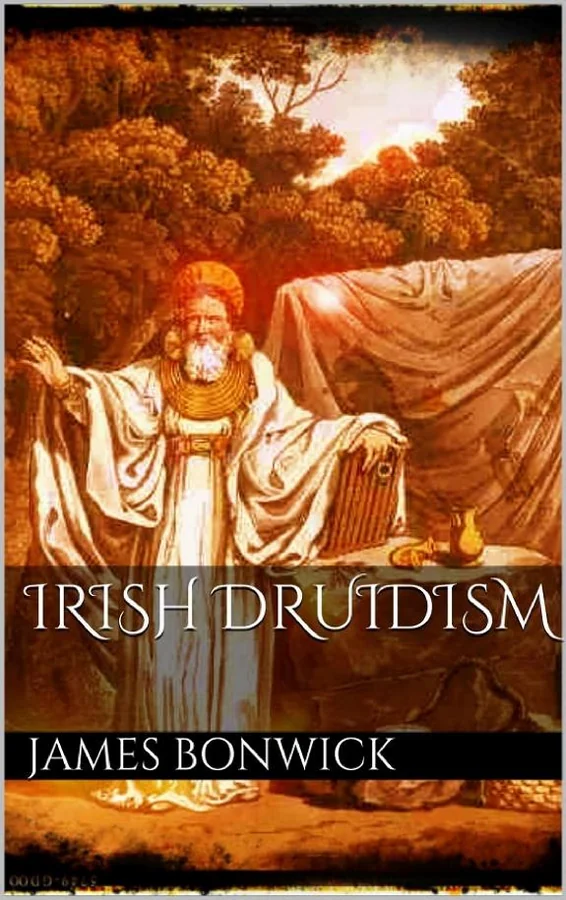
James Bonwick's 2018 study moves beyond romantic notions of Irish Druidism.
James Bonwick's "Irish Druidism" offers a scholarly examination of the ancient Celtic priesthood, aiming to move beyond romanticized notions and explore their historical and cultural significance. The book synthesizes available ancient texts, archaeological findings, and early historical accounts to reconstruct a picture of Druidic practices and beliefs. It addresses persistent questions about the Druids' origins, their geographical reach beyond Ireland and Gaul, and their societal role.
This work situates Druidism within the broader context of Iron Age Europe, acknowledging its presence in regions from the British Isles to Scandinavia. The study grapples with the limited and often biased nature of primary sources, such as Roman accounts by figures like Julius Caesar, which provide crucial but often prejudiced insights. The book investigates the enduring memory of the Druids, noting how tradition has imbued them with an aura of piety and superiority.
The text examines Druidic reverence for nature, associated with stone circles and ancient groves, and investigates the transmission of their knowledge, potentially through oral traditions. It touches upon their role as philosophers, judges, and spiritual leaders, as well as their possible connections to astronomical observation. The work aims to clarify the historical reality behind the myths surrounding these figures.
This book engages with the historical study of a pre-Christian European spiritual tradition. It seeks to understand the beliefs and practices of the ancient Celtic priesthood, distinct from later religious developments. The work focuses on reconstructing a historical understanding of Druidism by analyzing ancient textual and archaeological evidence, separating historical fact from later romantic or mythological interpretations. It contributes to the scholarly understanding of European paganism and its historical expressions.
💡 Why Read This Book?
• Gain a historical perspective on Druidic practices, understanding their societal role in Iron Age Celtic cultures as detailed in Bonwick's analysis of early historical accounts. • Explore the geographical extent of Druidic influence beyond Britain and Gaul, as Bonwick examines evidence for their presence in other parts of ancient Europe. • Appreciate the scholarly approach to interpreting fragmented historical evidence, learning how Bonwick distinguishes between historical fact and later romanticization.
⭐ Reader Reviews
Honest opinions from readers who have explored this book.
❓ Frequently Asked Questions
What are the primary sources James Bonwick uses to discuss Irish Druidism?
Bonwick relies on early historical accounts, including those from Roman writers like Julius Caesar, as well as archaeological evidence and traditional lore from the British Isles.
Does 'Irish Druidism' cover modern Druidry or Neo-Paganism?
No, the book focuses strictly on the historical practices and beliefs of the ancient Celtic priesthood as understood through pre-modern scholarship.
What is the main challenge in studying ancient Druidism, according to Bonwick?
The primary challenge is the scarcity and often biased nature of the surviving historical records, which makes definitive conclusions difficult.
When was James Bonwick's 'Irish Druidism' first published?
The work was first published on 2018-11-26, drawing upon earlier research and scholarship.
Did Druids have a significant presence in regions outside of Ireland and Gaul?
Bonwick's work explores the potential presence of Druids in areas beyond Ireland and Gaul, including parts of Britain and potentially Scandinavia, though evidence is less direct.
What kind of knowledge did Druids supposedly possess?
Tradition attributes to Druids knowledge of philosophy, law, astronomy, and a deep understanding of natural phenomena, though historical verification is challenging.
🔮 Key Themes & Symbolism
Historical Reconstruction
Bonwick's work is fundamentally an exercise in historical reconstruction, attempting to build a coherent picture of the Druids from fragmented and often contradictory ancient sources. He grapples with the limitations imposed by writers like Julius Caesar, whose accounts of the Gallic Wars (circa 50s BCE) provide some of the earliest detailed, albeit Roman-centric, descriptions of Druidic society and practices. The book emphasizes the difficulty in separating historical fact from the romanticism and legend that has accrued around the Druids over centuries.
Geographical Reach of Druidism
The study investigates the geographical extent of Druidic influence, challenging the common perception that their domain was solely limited to ancient Gaul and Britain. Bonwick examines traditional accounts and historical hints that suggest Druidic presence or at least a shared cultural sphere extending into Ireland, and possibly even further afield into regions of Scandinavia. This exploration seeks to understand the broader impact of this priestly class on early European societies.
The Druid as Philosopher and Judge
Beyond their spiritual functions, the book examines the perceived roles of Druids as intellectual leaders and arbiters of justice within their communities. They are often depicted in tradition as possessing profound knowledge, acting as keepers of lore, and serving as judges in disputes. Bonwick examines the implications of this many-sided societal position, where religious authority was intertwined with legal and philosophical understanding, shaping the social fabric of Celtic peoples.
Tradition vs. Romance
A central tension in the book is the contrast between the historical reality of the Druids and the romanticized image that has persisted through folklore and literature. Bonwick addresses how tradition preserves their memory as a "pious and superior race," often associated with mystical chants in stone circles. The work strives to critically evaluate these traditions, seeking to uncover the tangible aspects of Druidic life and belief beneath layers of myth and speculation.
💬 Memorable Quotes
Direct passages from the work, attributed to the author.
“Tradition preserves their memory as of a pious and superior race, prominently associated with the British Isles and France...”
— This statement highlights the enduring legacy of the Druids in popular imagination, portraying them as figures of high moral standing and intellectual prowess, primarily linked to these specific European regions.
“Who were the Druids? This question has agitated the minds of the learned for a long period; and various, as well as contradictory, have been the replies.”
— This opening observation underscores the historical difficulty and ongoing debate surrounding the true nature and identity of the Druids, indicating the work's intent to navigate this complex historical puzzle.
“Much romance has been long attached to them.”
— Bonwick acknowledges the significant overlay of myth and romantic storytelling that has surrounded the Druids, setting the stage for a more critical and historical examination of their actual existence.
“We hear their chants in the Stone Circles. We listen to the heaven-inspired utterances of...”
— This evocative imagery points to the romantic associations of Druids with ancient sacred sites and the belief in their divine inspiration, elements Bonwick aims to contextualize historically.
💡 Key Ideas
Editorial paraphrase of the work's core concepts — not direct quotes.
This question has agitated the minds of the learned for a long period...
This paraphrase emphasizes the long-standing scholarly fascination and the lack of consensus regarding the identity and role of the Druids throughout history.
🌙 Esoteric Significance
Tradition
While not strictly belonging to a single esoteric lineage like Hermeticism or Kabbalah, "Irish Druidism" taps into the Western Esoteric Tradition's fascination with ancient priesthoods and nature-based spirituality. It serves as a historical counterpoint to later, more formalized esoteric systems, grounding esoteric interest in the perceived wisdom of pre-Christian European cultures. The work fits within the broader Theosophical and later Neo-Pagan interest in finding ancient roots for spiritual practices, albeit from a historical, rather than directly initiatory, perspective.
Symbolism
The book implicitly touches upon potent symbols associated with Druidism, such as stone circles (e.g., Stonehenge, although not exclusively Irish) and sacred groves. These represent ancient ritual spaces and deep connections to the natural world. Bonwick’s work explores the traditional association of Druids with the oak tree, a symbol of strength and longevity in Celtic lore, and the mistletoe, often linked to healing and mystical properties, hinting at the symbolic language of nature central to their practices.
Modern Relevance
Contemporary Druidic revival movements and various nature-based spiritual paths frequently draw inspiration from historical accounts of the Druids. Thinkers and practitioners in modern Paganism, Eco-spirituality, and certain branches of Celtic Reconstructionism look to works like Bonwick's for historical context, seeking to understand the lineage and potential authenticity of their own practices. The ongoing academic and popular interest in Celtic history ensures that Bonwick's scholarly approach remains relevant for those seeking to connect with historical roots.
👥 Who Should Read This Book
• Students of comparative religion and ancient European history seeking a scholarly overview of pre-Christian Celtic beliefs and practices. • Researchers of Iron Age societies interested in the societal roles and perceived knowledge of ancient priesthoods like the Druids. • Individuals exploring the historical underpinnings of modern Druidic or nature-based spiritual traditions, who require a grounded, source-based perspective.
📜 Historical Context
James Bonwick's "Irish Druidism" emerges from a tradition of antiquarian scholarship that sought to understand the pre-Christian past of the British Isles. Published in 2018, its research likely draws on 19th and early 20th-century analyses, a period marked by intense interest in Celtic origins and mythology. This era saw figures like John Rhys and W.Y. Evans-Wentz exploring similar themes, often blending philology with spiritual inquiry. Bonwick’s work engages with the challenges posed by Roman historians such as Tacitus and Caesar, whose writings, while providing crucial data, were shaped by imperial perspectives. The reception of such works often mirrored contemporary nationalistic sentiments, with scholars eager to establish the unique heritage of Celtic peoples. Bonwick’s approach, by focusing on scholarly synthesis rather than pure romanticism, positions itself within a more critical lineage of historical study.
📔 Journal Prompts
The "pious and superior race" tradition attributed to Druids: historical basis or romantic embellishment?
Druidic geographical reach: evaluating evidence beyond Ireland and Gaul.
The Druid as judge: implications for understanding societal structure.
Interpretations of Stonehenge and similar stone circles in relation to Druidic practices.
Reconciling Roman accounts (e.g., Caesar) with indigenous traditions concerning Druids.
🗂️ Glossary
Druid
A member of the educated, professional, and religious class among the ancient Celts of Gaul, Britain, and Ireland, acting as priests, teachers, judges, and lore-keepers.
Gaul
An ancient region of Western Europe, encompassing present-day France, Belgium, and parts of Switzerland, Germany, and the Netherlands, inhabited by Celtic peoples.
British Isles
The group of islands off the northwestern coast of mainland Europe, comprising Great Britain, Ireland, and numerous smaller islands.
Stone Circles
Prehistoric monuments consisting of a ring of standing stones, often associated with ritualistic or astronomical purposes, found across Britain and Ireland.
Oral Tradition
The transmission of cultural knowledge, history, or law from one generation to another by spoken word, common in societies lacking widespread literacy.
Antiquarianism
A historical pursuit focused on collecting and studying ancient objects and artifacts, often preceding modern academic disciplines like archaeology and history.
Iron Age
The period in prehistory typically characterized by the widespread use of iron tools and weapons, preceding Roman influence in many parts of Europe.
This book appears in 1 collection
🔮 Readers Also Liked
Browse all →








From the “Druidism” Collection
View all →



More Free Sacred Texts & Gnosticism Books
View all →