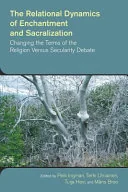
The Relational Dynamics of Enchantment and Sacralization
 81
81

The Relational Dynamics of Enchantment and Sacralization
The Relational Dynamics of Enchantment and Sacralization offers a much-needed corrective to the pervasive anthropocentrism in contemporary discourse. By foregrounding the work of scholars like Bruno Latour, the editors and contributors effectively dismantle the facile narrative of a linear progression from an "enchanted" past to a "disenchanted" present. The strength of the volume lies in its refusal to treat enchantment and sacralization as mere psychological states or relics of a bygone era; instead, it investigates them as relational dynamics that continue to shape our engagement with the world. A particularly compelling thread explores how the very act of defining "superstition" historically served to reinforce human exceptionalism. However, the collection occasionally succumbs to its own theoretical density, with some essays requiring considerable background knowledge of actor-network theory and post-structuralist thought to fully appreciate their nuances. The limitation lies in its accessibility for readers outside of specialized academic circles. Despite this, the work's insistence on recognizing the agency of non-human entities provides a vital perspective for understanding our complex, interconnected reality. It stands as a significant contribution to ongoing debates about nature, culture, and the sacred.
📝 Description
81
Published in 2016, this collection questions the modern human/non-human divide.
The Relational Dynamics of Enchantment and Sacralization challenges the idea that modernity has disenchanted the world. The contributors examine how historical power structures, particularly those that arose from the 'battle against superstition,' have dismissed the agency of objects, spirits, and natural forces. Instead of seeing enchantment and sacralization as a conflict between divine and human power, the book suggests alternative ways to understand these phenomena. It focuses on the relational aspects, arguing that these concepts are not simply theological or psychological but are constructed through social and intellectual forces.
The volume is aimed at academics and students in religious studies, sociology, anthropology, philosophy of science, and cultural theory. It will interest readers engaged with post-humanist ideas, actor-network theory, and critiques of modernity. Those studying the historical formation of 'enchantment' and 'sacralization' outside of traditional religious or psychological frameworks will find valuable material. The book also speaks to anyone considering the philosophical implications of granting agency or consciousness to non-human entities.
This collection engages with a long-standing esoteric interest in the perceived 'ensoulment' or inherent spiritual qualities of the natural world. While not strictly an occult manual, it revisits concepts akin to animism and panpsychism, traditions that posit a vital force or consciousness within objects, places, and phenomena. By examining the historical processes that led to the dismissal of such views as mere superstition, the book implicitly supports the esoteric perspective that the modern separation of the human from the non-human is an artificial construct, obscuring deeper relational dynamics.
💡 Why Read This Book?
• Gain a nuanced understanding of "enchantment" and "sacralization" not as subjective feelings but as relational processes, challenging the modern separation of human and non-human agency, as explored in the book's introduction. • Grasp how historical "battles against superstition," as referenced in the blurb, served to establish human dominance and disqualify the agency of other entities, a key concept discussed throughout the volume. • Explore alternative frameworks for understanding the world that move beyond anthropocentrism, potentially re-enchanting one's perception of everyday objects and phenomena, a central aim of the 2016 publication.
⭐ Reader Reviews
Honest opinions from readers who have explored this book.
❓ Frequently Asked Questions
What is the core argument of 'The Relational Dynamics of Enchantment and Sacralization' regarding modernity?
The book argues that modernity's perceived "disenchantment" is not a universal historical fact but a constructed narrative that disqualifies non-human agency. It challenges the idea that human reason alone is the measure of all things, as discussed in the introduction.
How does the book relate to Bruno Latour's theories?
It directly engages with Latour's critique of the "modern constitution" and his concept of the "battle against superstition." The volume uses his arguments to re-examine how power dynamics sidelined the agency of non-human entities.
Who are the primary authors of this collection?
The book is edited by Peik Ingman, Terhi Utriainen, and Tuija Hovi. They bring together various contributors to explore the central themes.
What does the book propose as an alternative to viewing enchantment and sacralization as human-centric concepts?
It suggests understanding enchantment and sacralization as relational dynamics that acknowledge the agency of objects, spirits, and natural phenomena, rather than solely as outcomes of divine-human conflict.
When was 'The Relational Dynamics of Enchantment and Sacralization' first published?
The original publication date for this volume was 2016, placing it within contemporary scholarly discussions on the ontological turn and critiques of modernity.
What is the 'disenchantment thesis' as discussed in this book?
The disenchantment thesis posits that modernity, driven by scientific rationalization, led to a decline in magical beliefs and a loss of enchantment. This book critically examines and challenges this widely held assumption.
🔮 Key Themes & Symbolism
Critique of Anthropocentrism
The volume fundamentally challenges the modern Western assumption that humans are the sole measure of reality. It dissects how Enlightenment thought, particularly through the "battle against superstition," systematically disqualified the agency and significance of non-human entities—be they natural phenomena, objects, or spiritual forces. This perspective moves beyond simple nature-veneration to a more complex relational understanding where enchantment is not merely a subjective feeling but an acknowledgment of diverse agencies in the world.
Reconceptualizing Enchantment
Rather than dismissing enchantment as a primitive or naive state, this work explores its potential as a mode of relating to the world that resists modern disenchantment. It examines how enchantment can be understood through the inherent qualities and potential agency of things themselves, rather than solely through human perception or projection. This reframing is crucial for understanding how sacralization operates beyond traditional religious frameworks.
Agency of Non-Humans
A central theme is the reassertion of agency for non-human elements. The book investigates how concepts like sacralization can be applied to understand the significance attributed to objects, places, or natural processes, independent of human decree. This perspective aligns with contemporary philosophical movements that seek to decenter the human subject and recognize a plurality of actors within the world's unfolding dynamics.
The 'Disenchantment Thesis' Revisited
The collection directly confronts the widely accepted "disenchantment thesis"—the idea that modernity led to a loss of magic and sacredness. By examining how this thesis was constructed, often through the marginalization of "superstition," the authors offer a counter-narrative. They suggest that enchantment and sacralization persist and can be understood in ways that do not rely on pre-modern or irrational frameworks, but rather on complex relational dynamics.
💬 Memorable Quotes
Direct passages from the work, attributed to the author.
“Might enchantment and sacralization be understood in other ways than through this battle between almighty gods and almighty humans?”
— This provocative question from the original blurb lies at the heart of the volume. It calls into question the binary oppositions that have structured Western thought—divine vs. human, rational vs. superstitious—and suggests exploring relational dynamics that encompass a broader spectrum of agency.
“The battle against superstition entailed shifting power away from God/the gods to humans, thereby disqualifying the agency of all the other objects in the world.”
— This interpretation of Bruno Latour's argument highlights a key mechanism of modern disenchantment. It suggests that the rise of humanistic and scientific authority involved a deliberate suppression of perceived agency in the non-human realm, framing it as a power struggle.
“The modern notion that man (alone) is the measure of all things.”
— This phrase from the blurb expresses the philosophical stance the book seeks to dismantle. It refers to a Protagorean-esque humanism that has, according to the book's premise, led to the exclusion of non-human perspectives and agencies from our understanding of the world.
“The volume revisits the concepts of enchantment and sacralization in light of perspectives which challenge the modern notion that man (alone) is the measure of all things.”
— This statement from the original blurb clearly outlines the book's objective: to re-examine core concepts through a lens that questions human exceptionalism and explores the relational aspects of how things become enchanted or sacred.
💡 Key Ideas
Editorial paraphrase of the work's core concepts — not direct quotes.
man (alone) is the measure of all things.
This paraphrased concept directly critiques anthropocentrism. It points to the philosophical underpinnings of modernity that place human perception and judgment at the center of reality, thereby diminishing or ignoring the intrinsic value and agency of the non-human world.
🌙 Esoteric Significance
Tradition
This work does not strictly adhere to a single esoteric lineage but engages with themes resonant across many. Its critique of anthropocentrism and exploration of non-human agency echo Gnostic and Hermetic philosophies that posit hidden powers within creation and question the primacy of mundane human perception. The re-evaluation of "enchantment" and "sacralization" can be seen as a modern, scholarly approach to understanding animistic and panpsychist worldviews often found in shamanic traditions and various forms of folk magic, albeit framed through contemporary theory.
Symbolism
While the book itself is theoretical, its subject matter touches upon potent symbols. The concept of "enchantment" evokes the idea of hidden energies or spirits animating the world, akin to the "anima mundi" (world soul) found in Neoplatonism and Hermeticism. "Sacralization" points to the symbolic process of imbuing objects or places with divine or potent energy, a practice central to alchemy (e.g., the consecration of the Great Work) and ritual magic, where mundane items are transformed into sacred vessels or foci.
Modern Relevance
Contemporary practitioners and theorists in fields like object-oriented ontology (OOO), speculative realism, and new materialism find significant resonance in this work's challenge to anthropocentrism. Scholars of religion and ritual studies exploring the persistence of the sacred in secular societies draw upon its relational framework. Its ideas are pertinent to modern animism movements and those seeking to decolonize Western epistemologies, fostering a more ecologically aware and less human-dominated worldview.
👥 Who Should Read This Book
• Academics and graduate students in religious studies, anthropology, sociology, and philosophy of science seeking to deconstruct the modern "disenchantment thesis" and explore non-anthropocentric relational dynamics. • Researchers interested in actor-network theory and post-humanist critiques, particularly those examining how agency is attributed (or denied) to non-human entities in social and cultural contexts. • Individuals exploring the philosophical underpinnings of enchantment, magic, and sacralization, aiming to understand these phenomena not as subjective states but as active processes in the world.
📜 Historical Context
First published in 2016, 'The Relational Dynamics of Enchantment and Sacralization' emerged during a period of significant intellectual ferment concerning the limitations of modernist thought. The "ontological turn" in anthropology and philosophy, championed by figures like Philippe Descola and Eduardo Viveiros de Castro, was gaining traction, challenging the Western nature-culture divide. The work directly engages with Bruno Latour's influential critiques of modernity, particularly his analysis of how the "modern constitution" separated human and non-human realms. This collection positions itself against the prevailing "disenchantment thesis," which posits a universal decline of magic and religion with the advent of modernity. It also implicitly engages with earlier critiques of secularization that originated in the mid-20th century. By focusing on relational dynamics and non-human agency, the book offered a timely intervention, providing a framework for understanding enduring forms of sacrality and enchantment in a globalized, technologically saturated world.
📔 Journal Prompts
The concept of "disqualifying the agency of all the other objects in the world."
Reflecting on the "battle against superstition" and its implications for modern thought.
The relational dynamics of sacralization beyond divine-human conflict.
Reimagining enchantment: what non-human agencies might be present?
The measure of all things: Challenging anthropocentrism in daily life.
🗂️ Glossary
Enchantment
In this context, not merely a subjective feeling of wonder, but a mode of relating to the world that acknowledges the potential agency and significance of non-human entities and phenomena.
Sacralization
The process by which certain objects, places, beings, or concepts become imbued with special significance, power, or sacredness, often outside of established religious institutions or doctrines.
Disenchantment Thesis
The widely held historical argument that modernity, through the rise of science and rationalism, led to a decline in magical beliefs, religious influence, and a general loss of enchantment in the world.
Anthropocentrism
A worldview or practice that places human beings at the center of concern, often leading to the belief that humans are the most significant entity in the universe and interpreting reality through a human-centered perspective.
Non-human Agency
The capacity of entities other than humans (such as objects, animals, natural forces, or abstract concepts) to act independently and have an effect on the world.
Modern Constitution
A term, often associated with Bruno Latour, referring to the set of assumptions and separations (e.g., nature/culture, science/religion) that underpin modern Western thought and society.
Superstition
Belief or practice regarded by most people following the điển hình or rational beliefs as irrational or supernatural. The book examines how this label was historically used to discredit non-human agency.
This book appears in 1 collection
🔮 Readers Also Liked
Browse all →








From the “Enchantment” Collection
View all →






More Free Sacred Texts & Gnosticism Books
View all →