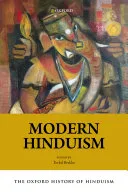
The Oxford History of Hinduism: Modern Hinduism
 71
71

The Oxford History of Hinduism: Modern Hinduism
Torkel Brekke’s examination of Modern Hinduism offers a rigorous counterpoint to more hagiographic accounts of the tradition’s recent past. He commendably avoids romanticizing the reform movements of the 19th and 20th centuries, instead presenting a sober analysis of how global forces, particularly colonialism and its aftermath, shaped contemporary religious expression. Brekke excels in demonstrating the interconnectedness of religious change with political and social shifts. A notable strength is the detailed exploration of how concepts like 'Hinduism' itself were historically constructed and contested. However, the sheer density of academic discourse might present a barrier for the casual reader; the book often assumes a high level of familiarity with scholarly debates. The section on the influence of globalization, while crucial, could have benefited from more vivid case studies beyond the well-trodden paths. Ultimately, this is a critical, indispensable resource for understanding the intricate evolution of Hindu traditions in the modern world.
📝 Description
71
Torkel Brekke's 2018 book examines Hindu traditions from the 19th century onward.
This volume traces the significant shifts within Hindu traditions starting in the 19th century. Brekke moves beyond a simple chronology to investigate how internal reform efforts interacted with outside forces, such as colonialism and globalization. The book begins by establishing the historical background that influenced modern Hindu thought and practice.
It addresses how Western scholarship, colonial rule, and later globalization reshaped Hinduism. Brekke emphasizes the ongoing adaptation and reinterpretation of Hindu practices and philosophies as they engage with various global cultures and ideas. The work considers how colonial perspectives helped form the concept of 'Hinduism' as a unified whole. It also looks at how religious ideas spread through global connections and the rise of new devotional and ascetic movements. Figures like Swami Vivekananda and the Ramakrishna Mission are discussed for their part in shaping a modern Hindu identity.
While the book focuses on modern historical developments, it touches upon how certain Hindu traditions have been interpreted and presented to the West. The discussion of figures like Vivekananda and the Ramakrishna Mission inherently engages with how Hindu philosophies and practices were adapted for a global audience. This includes how they were sometimes framed in ways that aligned with or responded to Western intellectual currents. The work implicitly addresses the ongoing dialogue between traditional Hindu thought and its reception in a modern, often secularized, world.
💡 Why Read This Book?
• Gain a nuanced understanding of how colonialism and globalization actively reshaped Hindu practices, moving beyond simplistic notions of tradition as static, as explored in Part Two concerning religious changes. • Grasp the historical construction of 'Hinduism' as a unified concept, recognizing it as a modern category influenced by external academic and administrative frameworks, a key point discussed early in the book. • Identify specific adaptations and innovations within Hindu devotional and ascetic traditions in response to modernity, as detailed through examples like the Ramakrishna Mission’s global outreach.
⭐ Reader Reviews
Honest opinions from readers who have explored this book.
❓ Frequently Asked Questions
What is the primary focus of The Oxford History of Hinduism: Modern Hinduism?
The book concentrates on developments within Hindu traditions resulting from internal movements and external contacts, specifically colonialism and globalization, from the 19th century onwards.
How does Torkel Brekke approach the topic of Hindu reforms?
Brekke moves beyond discussing 19th and early 20th-century reforms to examine broader historical shifts and the ongoing evolution of religious practice in the modern era.
What historical background does the book provide for modern Hinduism?
Part one of the book details the historical context that led to contemporary conceptualizations of Hinduism, setting the stage for subsequent analysis.
Which external influences on Hinduism are emphasized in the book?
The work highlights the significant impact of colonialism and globalization on the development and expression of Hindu traditions.
Who is the author of this volume on Modern Hinduism?
The author is Torkel Brekke, and the book was first published on June 27, 2019.
What is the structure of The Oxford History of Hinduism: Modern Hinduism?
The book is divided into three parts, with the first focusing on historical background, and subsequent parts detailing key developments and changes in religious practice.
🔮 Key Themes & Symbolism
Colonialism's Imprint
Brekke meticulously details how British colonial rule and its associated academic and administrative structures fundamentally influenced the conceptualization and practice of Hinduism. The book explores how 'Hinduism' itself became a category often defined by outsiders, impacting internal reform movements and the articulation of religious identity in response to colonial discourse. This section highlights the intricate relationship between power, knowledge, and religious evolution.
Globalization and Religious Diffusion
The volume examines the outward projection of Hindu traditions in the modern era, driven by globalization. It analyzes how figures and movements, such as the Ramakrishna Mission, established transnational networks, spreading Hindu philosophy and practice across the globe. This theme addresses the adaptation of traditions to diverse cultural contexts and the emergence of new forms of global Hinduism.
Internal Dynamics and Modernity
Beyond external pressures, Brekke investigates the internal dialogues, reform efforts, and reinterpretations within Hindu traditions. The book looks at how religious leaders and practitioners engaged with modernity, addressing challenges posed by scientific thought, social reform movements, and changing political landscapes. This theme underscores Hinduism's inherent dynamism and capacity for self-critique and renewal.
The Shifting Range of Practice
A core focus is the transformation of religious practices in modern Hinduism. Brekke details changes in devotionalism, asceticism, and the role of religious authority. The work illustrates how established rituals and beliefs were modified or re-contextualized to remain relevant in a rapidly changing social and intellectual environment, often in dialogue with Western ideas.
💬 Memorable Quotes
Direct passages from the work, attributed to the author.
“Modern conceptualizations of Hinduism are shaped by historical background.”
— This reflects the book's foundational argument that understanding contemporary Hindu thought requires an in-depth look at its historical roots and the influences that have shaped it over time.
“Movements within the tradition interacted with contact between India and the outside world.”
— This highlights the dynamic interplay between internal religious developments and external forces like colonialism and globalization, emphasizing that change is often a result of this interaction.
“Five chapters presenting key developments and changes in religious practice.”
— This points to the detailed, thematic exploration of how Hindu practices have evolved, indicating the book's focus on concrete transformations rather than abstract theological discussions.
“Developments resulting from colonialism and globalization.”
— This captures the core thesis concerning the external forces that have profoundly altered the trajectory of Hindu traditions in the modern period.
“Part one considers the historical background to modern conceptualizations.”
— This indicates the book's methodological approach, prioritizing historical context as essential for comprehending the complexities of modern Hinduism.
🌙 Esoteric Significance
Tradition
While not explicitly within a single esoteric lineage like Theosophy or Hermeticism, Brekke's work engages with how Hindu traditions, often containing esoteric elements, have been presented and adapted globally. It aligns with a broader scholarly interest in esoteric movements that gained traction in the West from the 19th century onwards, examining the transmission and transformation of spiritual ideas across cultures.
Symbolism
The book implicitly touches upon the symbolic shifts within Hinduism. For instance, the reinterpretation of yogic practices and Vedanta philosophy for Western audiences, as seen with figures like Swami Vivekananda, represents a symbolic translation and adaptation of core concepts. The evolving iconography and devotional practices discussed also reflect changing symbolic meanings in response to modernity.
Modern Relevance
Contemporary thinkers and practitioners exploring syncretism, global spirituality, and the adaptation of Eastern traditions in the West draw upon the historical insights provided by Brekke. His work is relevant to discussions on religious pluralism, the impact of secularization on traditional beliefs, and the ongoing negotiation of identity for diasporic Hindu communities worldwide.
👥 Who Should Read This Book
• Students of religious studies and South Asian history seeking a scholarly overview of Hinduism's evolution from the 19th century onwards. • Researchers interested in the impact of colonialism and globalization on religious traditions, particularly how external forces shape internal dynamics. • Individuals curious about the historical construction of religious identities and the adaptation of spiritual practices in response to modernity.
📜 Historical Context
Published in 2019, Torkel Brekke's *The Oxford History of Hinduism: Modern Hinduism* entered a scholarly landscape already engaged with the complexities of religious change in South Asia. The late 20th and early 21st centuries saw a surge in postcolonial studies and critical examinations of religious traditions interacting with global forces. Brekke's work builds upon and challenges earlier scholarship, particularly the focus on 19th-century reform movements, by integrating the impact of colonialism and globalization more thoroughly. Contemporaries like scholars of South Asian studies such as André Wink and scholars of religion engaging with globalization, like Peter Beyer, provide a backdrop against which Brekke's specific focus on Hinduism's adaptive strategies can be understood. The book's detailed analysis of how 'Hinduism' was constructed under colonial rule offers a critical perspective, engaging with debates initiated by scholars like Bernard Cohn and Rosalind O'Hanlon.
📔 Journal Prompts
The historical background to modern conceptualizations of Hinduism.
Key developments and changes in religious practice during modernity.
The influence of colonialism on Hindu traditions.
The role of globalization in shaping Hinduism's global reach.
Internal movements and their impact on Hindu practice.
🗂️ Glossary
Colonialism
The practice of domination, which involves the subjugation of one person or group by another. In this context, it refers to the period of European imperial expansion and its impact on Indian society and religious traditions.
Globalization
The process by which businesses or other organizations develop international influence or start operating on an international scale. In religion, it refers to the spread of ideas, practices, and communities across borders.
Reform Movements
Organized efforts to change specific aspects of a religion or society, often in response to perceived internal corruption or external pressures, prominent in 19th and early 20th-century Hinduism.
Religious Practice
The observable actions, rituals, and observances that individuals and communities engage in as part of their religious life, which can evolve significantly over time.
Conceptualizations
The way in which something is understood or imagined; a particular way of thinking about or seeing something, relevant here to how 'Hinduism' has been defined.
Transnational Networks
Connections and interactions that cross national boundaries, often involving the exchange of ideas, people, and resources, significant for the global spread of religious movements.
Modernity
The condition of being modern, characterized by a focus on reason, science, individualism, and often a critique of traditional institutions and beliefs.