Everyday Hinduism
 77
77

Everyday Hinduism
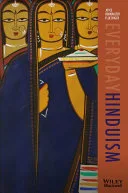
Joyce Burkhalter Flueckiger's "Everyday Hinduism" succeeds admirably in its stated goal of presenting Hinduism through the lens of contemporary practice. The strength of the book lies in its ethnographic grounding; the descriptions of rituals and festivals in Chhattisgarh and Hyderabad feel immediate and authentic, avoiding the sterile, generalized accounts often found in introductory texts. Flueckiger's discussion of the Atlanta Hindu community is particularly insightful, illustrating the complex negotiations of identity and practice in a diasporic context. A potential limitation, however, is the sheer breadth of the subject matter, which, while necessary for an introduction, can sometimes feel like a rapid survey rather than an in-depth exploration of any single aspect. The exploration of 'puja' (worship) in domestic settings, for instance, offers a valuable glimpse but leaves one wanting more detail on the nuanced theological underpinnings for practitioners. Nevertheless, Flueckiger provides a valuable, grounded perspective on a vast tradition. It is a solid, fact-based primer for understanding Hinduism as it is actually lived.
📝 Description
77
Joyce Burkhalter Flueckiger's 2015 book examines Hinduism through the lens of daily practice.
First published in 2015, "Everyday Hinduism" looks at Hindu traditions not as abstract theology, but as lived realities. Joyce Burkhalter Flueckiger draws on her extensive ethnographic research in central and south India to show how rituals, festivals, and domestic observances shape Hindu life. The book details practices observed in Chhattisgarh, Hyderabad, and Tirupati, giving readers a grounded understanding of religious expression.
This text is suited for students and general readers who want a clear, yet scholarly, introduction to Hinduism. It focuses on how religious beliefs manifest in daily activities and considers the Hindu diaspora. The anthropological approach makes it especially useful for those studying sociology or religion.
While "Everyday Hinduism" focuses on common practices, its examination of lived religion and the role of deities in daily life touches on esoteric themes. The book details how individuals and communities enact their faith through rituals and festivals, reflecting a practical, experiential approach to spirituality. It shows how these everyday acts connect believers to broader traditions and divine forces, offering a perspective on how spiritual life is woven into the fabric of existence.
💡 Why Read This Book?
• Gain insight into the practical application of Hindu beliefs through detailed ethnographic accounts from Chhattisgarh and Hyderabad, offering a view of religious life beyond scripture. • Understand the dynamics of religious practice in diaspora by examining the specific case study of the Hindu community in Atlanta. • Grasp the significance of daily rituals and festivals, such as Diwali, as central components of lived Hindu experience, as detailed in the text.
⭐ Reader Reviews
Honest opinions from readers who have explored this book.
❓ Frequently Asked Questions
What is the primary focus of Joyce Burkhalter Flueckiger's "Everyday Hinduism"?
The book's primary focus is on understanding Hinduism through its contemporary, everyday practices, rituals, and lived experiences, rather than solely through historical or theological doctrines. It utilizes extensive ethnographic fieldwork.
Where did the author conduct her ethnographic research for "Everyday Hinduism"?
Joyce Burkhalter Flueckiger conducted extensive ethnographic fieldwork in several regions of India, including central India (Chhattisgarh), the Deccan Plateau (Hyderabad), and South India (Tirupati), as well as studying the Hindu diaspora in Atlanta.
What does "Everyday Hinduism" reveal about Hindu diasporic communities?
The book explores how Hindu traditions are maintained, adapted, and expressed by communities living outside India, using the Hindu community in Atlanta as a specific case study to illustrate these dynamics.
Is "Everyday Hinduism" suitable for beginners?
Yes, it is an introductory textbook designed for students and general readers. It provides an accessible yet academically grounded overview of Hindu practices and beliefs in contemporary life.
What is the significance of the year 2015 in relation to "Everyday Hinduism"?
The year 2015 marks the initial publication date of Joyce Burkhalter Flueckiger's "Everyday Hinduism," positioning it as a relatively recent academic exploration of the subject.
How does the book differ from traditional academic texts on Hinduism?
It distinguishes itself by prioritizing lived religious experience and ethnographic data from specific Indian regions and diasporic communities, offering a more grounded and practical perspective than purely textual analyses.
🔮 Key Themes & Symbolism
Lived Religion and Practice
This theme centers on the idea that Hinduism is best understood through its active performance by individuals and communities. Flueckiger emphasizes rituals, festivals, and domestic observances as crucial sites of religious meaning-making. The book moves beyond abstract theological concepts to illustrate how beliefs are enacted daily, from household pujas to participation in larger community celebrations. The ethnographic data from Chhattisgarh and Hyderabad grounds these discussions in tangible human experience.
Hindu Diaspora and Identity
The work significantly addresses the adaptation and continuity of Hindu traditions among emigrant communities. By examining the Hindu population in Atlanta, Flueckiger demonstrates the challenges and innovations involved in maintaining religious identity in a new cultural context. This includes navigating cultural differences, forming community institutions, and passing traditions to younger generations, highlighting the dynamic nature of religious expression across borders.
Ethnographic Methodology
A core aspect of the book is its reliance on extensive ethnographic fieldwork conducted by the author. This approach provides rich, firsthand accounts of religious life in specific locales like Tirupati and Hyderabad. The methodology allows for a nuanced understanding of local variations in practice and belief, offering insights that might be missed by more generalized or historical studies. The integration of images further supports this visual and experiential dimension.
Rituals and Festivals
The book meticulously details the role of various Hindu rituals (pujas, life-cycle ceremonies) and festivals (like Diwali) in shaping the religious landscape. It explores their social, communal, and personal significance, illustrating how these events punctuate the year and reinforce shared values and cosmic understandings. The focus is on how these observances are actively performed and experienced by adherents.
💬 Memorable Quotes
Direct passages from the work, attributed to the author.
“Hinduism is explored through contemporary, everyday practice.”
— This core idea shifts the focus from ancient scriptures or abstract philosophy to the dynamic, lived reality of Hinduism as experienced by people in their daily lives and communities.
“Ethnographic fieldwork in central India, the Deccan Plateau, and South India.”
— This highlights the book's empirical foundation, grounding its analysis in direct observation and interaction within specific geographical and cultural contexts of Hinduism.
“Coverage of Hindu diasporas, including a study of the Hindu community in Atlanta.”
— This points to the book's engagement with the global spread of Hinduism and how traditions are maintained and transformed in new cultural settings.
“Introduction to central practices and beliefs of Hinduism.”
— This indicates the book's foundational purpose: to serve as a guide for understanding the essential elements of Hindu faith and observance for newcomers.
“Includes text and images contextualizing rituals, festivals, and lived experiences.”
— This emphasizes the multimodal approach of the book, using both written descriptions and visual aids to convey the sensory and experiential dimensions of Hindu religious life.
🌙 Esoteric Significance
Tradition
While not strictly an esoteric text in the Western Hermetic or Kabbalistic sense, "Everyday Hinduism" engages with the practical, ritualistic, and symbolic dimensions of a major world religion. Its focus on the lived experience of deities, rituals, and cosmology can be seen as aligning with the experiential aims of many esoteric traditions that seek direct engagement with the divine or transcendent through practice and symbolism, albeit within a distinct cultural framework.
Symbolism
The book explores potent symbols within Hinduism, such as the domestic shrine ('puja room') as a microcosm of the cosmos and a direct link to the divine, and the annual celebration of Diwali, symbolizing the triumph of light over darkness and knowledge over ignorance. These symbols are not merely decorative but are active components of practitioners' understanding of reality and their place within it, facilitating a connection to deeper truths through participation.
Modern Relevance
Contemporary thinkers and practitioners interested in ritual studies, religious anthropology, and the sociology of religion find Flueckiger's work highly relevant. It informs discussions on how traditions adapt in globalized contexts and how religious identity is performed and maintained in diverse settings. The book’s emphasis on lived experience speaks to modern spiritual seekers who prioritize personal practice and embodied understanding over dogmatic adherence.
👥 Who Should Read This Book
• Beginning students of comparative religion and Hinduism seeking an accessible introduction grounded in real-world practices. • Anthropology and sociology students interested in ethnographic methods and the study of lived religion in diverse cultural contexts. • Individuals curious about contemporary Hindu life, both in India and within diasporic communities like the one studied in Atlanta.
📜 Historical Context
Published in 2015, Joyce Burkhalter Flueckiger's "Everyday Hinduism" emerged during a period of significant growth in the academic study of lived religion and religious pluralism. The book’s ethnographic approach, focusing on contemporary practices rather than solely historical or theological doctrines, aligned with a broader shift in religious studies away from institutionalized dogma towards the lived experiences of adherents. While scholars like Diana Eck were already examining the burgeoning Hindu presence in American cities, Flueckiger’s work offered a specific, detailed examination of diaspora, complementing existing scholarship. The inclusion of fieldwork from regions like Chhattisgarh and Hyderabad provided granular data on Hindu practice within India itself. The book’s reception likely fell within academic circles focused on South Asian studies, anthropology of religion, and sociology of religion, offering a grounded counterpoint to more abstract theoretical works. There is no widely documented censorship or controversy associated with its publication.
📔 Journal Prompts
The significance of domestic puja spaces described in the text.
Daily rituals and their role in shaping Hindu identity.
Festival observances in Chhattisgarh and their cultural context.
The experience of Hinduism in the Atlanta diaspora.
The author's ethnographic fieldwork methodology.
🗂️ Glossary
Puja
A devotional ritual performed by Hindus, typically involving offerings to a deity. It can range from simple daily practices in a home shrine to elaborate public ceremonies.
Ethnographic Fieldwork
The systematic study of people and cultures through immersive observation and interaction within their natural environment. It forms the basis of anthropological research.
Diwali
A major festival of lights celebrated by Hindus, Jains, Sikhs, and some Buddhists, symbolizing the victory of light over darkness and good over evil.
Diaspora
The dispersion of any people from their original homeland. In this context, it refers to Hindu communities living outside of India.
Lived Religion
An academic concept focusing on how religious beliefs and practices are actually experienced and performed by individuals in their daily lives, rather than adherence to formal doctrines.
Deccan Plateau
A large, elevated area of land in western and southern India, forming a distinct geographical and cultural region.
Chhattisgarh
A state in central India, known for its diverse tribal populations and religious practices, serving as a site for the author's research.