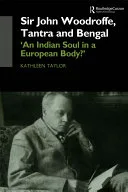
Sir John Woodroffe, Tantra and Bengal
 82
82

Sir John Woodroffe, Tantra and Bengal
Kathleen Taylor's "Sir John Woodroffe, Tantra and Bengal" offers a necessary corrective to the often romanticized or misunderstood figure of Woodroffe, known primarily as 'Arthur Avalon.' Taylor meticulously unpacks Woodroffe's identity as a British colonial judge in Calcutta, demonstrating how this social position informed, and was informed by, his deep engagement with Sanskrit Tantric texts. A notable strength is Taylor's contextualization of Woodroffe's work within the intellectual and social landscape of late 19th and early 20th century Bengal, moving beyond a purely textual analysis. While the book is academically rigorous, its dense prose might present a challenge for readers seeking a purely introductory overview of Tantra. The examination of Woodroffe's correspondence, for instance, reveals the intricate negotiations between his official duties and his esoteric pursuits. This study is an essential piece for anyone serious about the history of Tantra's transmission to the West.
📝 Description
82
Kathleen Taylor's 2001 study examines Sir John Woodroffe's role in Western understanding of Indian esotericism.
This 2001 biographical study by Kathleen Taylor details the life and scholarly pursuits of Sir John Woodroffe, a key figure in how Indian esoteric traditions were received in the West. The book examines Woodroffe's position in colonial Calcutta and his deep engagement with Sanskrit texts. Taylor goes beyond a simple life story to analyze Woodroffe's complex social identity and his academic work.
The study places Woodroffe's efforts within the context of late Victorian and Edwardian India. It considers the colonial environment of Calcutta, where Woodroffe worked as a judge, and his parallel immersion in Indian philosophical and religious writings. This era was marked by substantial Orientalist scholarship and growing Western interest in Eastern spirituality, often viewed through Theosophical or neo-Vedantic frameworks.
Taylor clarifies Woodroffe's notable contributions, such as his use of the pseudonym 'Arthur Avalon' and his significant work on the Mahanirvana Tantra. The book also discusses his efforts to harmonize Tantric practices with established Hindu philosophy, addressing concepts like Shakti and Kundalini from Sanskrit sources and his impact on Western ideas about these traditions.
This book engages with the history of Western esoteric interests in South Asia, particularly during the late 19th and early 20th centuries. It focuses on how figures like Sir John Woodroffe, writing under the name Arthur Avalon, mediated Indian philosophical and religious traditions, such as Tantra, for a Western audience. The work situates Woodroffe's interpretations within the broader trends of Orientalism and the reception of Indian thought, often influenced by groups like the Theosophical Society, shaping the intellectual framework through which practices like Tantra and concepts like Kundalini became known outside India.
💡 Why Read This Book?
• Gain a nuanced understanding of Sir John Woodroffe's dual identity as a colonial administrator and pioneering Tantra scholar, learning how his position in Calcutta shaped his interpretations of texts like the *Mahanirvana Tantra*. • Explore the historical reception of Tantric concepts in the West during the early 20th century, appreciating Woodroffe's role in disseminating this knowledge through his 'Arthur Avalon' persona. • Understand the academic and social milieu of Bengal in the late 19th and early 20th centuries, recognizing how this environment influenced Woodroffe's scholarship and his engagement with Sanskrit traditions.
⭐ Reader Reviews
Honest opinions from readers who have explored this book.
❓ Frequently Asked Questions
Who was Sir John Woodroffe and why is he significant?
Sir John Woodroffe was a British colonial judge in Calcutta who became a major proponent and translator of Tantric texts for a Western audience, often writing under the pseudonym 'Arthur Avalon'.
What is the primary focus of Kathleen Taylor's book?
The book examines Woodroffe's life, his social identity in colonial Calcutta, and his scholarly relationship with Sanskrit texts, particularly those concerning Tantra.
When was 'Sir John Woodroffe, Tantra and Bengal' first published?
Kathleen Taylor's study was first published in 2001.
What historical period does the book cover regarding Woodroffe's life?
The book primarily covers the late 19th and early 20th centuries, during Woodroffe's tenure as a judge in Calcutta and his engagement with Indian spiritual traditions.
What specific Tantric texts are discussed in relation to Woodroffe?
The book frequently references Woodroffe's significant work on the *Mahanirvana Tantra*, a key text in his dissemination of Tantric philosophy and practice.
What does the book reveal about Woodroffe's pseudonym 'Arthur Avalon'?
It explores how the pseudonym 'Arthur Avalon' was used by Woodroffe to publish his extensive works on Tantra, separating his esoteric scholarship from his official judicial career.
🔮 Key Themes & Symbolism
Colonial Identity and Esotericism
This theme explores the complex intersection of British colonial identity and the study of Indian esoteric traditions. Sir John Woodroffe, serving as a judge in Calcutta, simultaneously immersed himself in Tantric texts. The book examines how his position within the British Raj influenced his scholarly pursuits and how his engagement with Sanskrit traditions, particularly Tantra, presented a unique challenge to colonial binaries of East and West. It highlights the personal and intellectual negotiations required to bridge these seemingly disparate worlds.
The 'Arthur Avalon' Persona
A central theme is the creation and function of Woodroffe's influential pseudonym, 'Arthur Avalon.' This persona allowed him to publish extensively on Tantra and Hindu philosophy without compromising his judicial career or facing potential censure within the colonial administration. The book analyzes the strategic importance of this literary device in disseminating esoteric knowledge and shaping Western perceptions of Indian spirituality during the early 20th century.
Sanskrit Scholarship and Tantric Texts
The work studies Woodroffe's rigorous engagement with Sanskrit, the classical language of many Indian philosophical and religious texts. It scrutinizes his translations and commentaries, particularly on the *Mahanirvana Tantra*, assessing their accuracy and impact. This theme underscores the importance of philological expertise in understanding esoteric traditions and Woodroffe's contribution to making complex Tantric concepts accessible, albeit through a specific academic lens.
Reception of Tantra in the West
This theme examines how Woodroffe's writings, disseminated under the 'Arthur Avalon' name, significantly influenced the Western understanding of Tantra. The book contextualizes this reception within a broader period of Orientalist scholarship and burgeoning interest in Eastern spirituality. It addresses both the academic impact and the popular fascination, noting how Woodroffe's interpretations provided a framework for subsequent Western engagement with these practices.
💬 Memorable Quotes
Direct passages from the work, attributed to the author.
“Woodroffe's work on the *Mahanirvana Tantra* was instrumental.”
— This highlights the central role of Woodroffe's translation and commentary on this specific Tantric text in shaping both his own legacy and the Western understanding of Tantra.
“His social identity in Calcutta was a crucial factor.”
— This points to the book's focus on how Woodroffe's position as a British judge in colonial India informed his scholarly approach to Indian esoteric traditions.
“The relationship to Sanskrit and the texts was deeply scholarly.”
— This emphasizes the book's exploration of Woodroffe's academic rigor and his direct engagement with original Sanskrit sources, rather than relying solely on secondary interpretations.
“The pseudonym 'Arthur Avalon' served a vital purpose.”
— This interpretation underscores the strategic use of a pen name by Woodroffe to navigate his public career and his private esoteric studies, facilitating the dissemination of his work.
“Taylor examines Woodroffe's engagement with concepts like Shakti.”
— This suggests the book's exploration of specific philosophical and energetic concepts within Tantra, as understood and presented by Woodroffe through his textual studies.
🌙 Esoteric Significance
Tradition
Woodroffe's work is foundational to the Western academic and popular reception of Tantra, particularly within the broader lineage of Indology and comparative religion. While not strictly adhering to a single Western esoteric school like Hermeticism or Theosophy, his scholarship provided the primary textual bridge for many. He engaged with traditions that form a significant part of Hindu esoteric practice, presenting them in a manner that resonated with a Western audience seeking deeper spiritual knowledge beyond superficial exoticism.
Symbolism
Key symbols explored through Woodroffe's work, and thus Taylor's analysis, include *Shakti* (divine feminine energy, often personified) and *Kundalini* (the coiled serpentine energy at the base of the spine). Woodroffe's interpretations, derived from Sanskrit texts, presented these not merely as physiological phenomena but as fundamental principles of cosmic manifestation and individual spiritual awakening, crucial for understanding Tantric cosmology and practice.
Modern Relevance
Contemporary scholars of religion, yoga practitioners, and students of South Asian studies continue to grapple with Woodroffe's legacy. His translations and interpretations, while subject to critical re-evaluation, remain influential in understanding how Tantra was introduced and understood in the West. Modern thinkers and practitioners engaging with classical Tantric texts often find themselves referencing Woodroffe's foundational work, making Taylor's biographical and scholarly analysis essential for historical context.
👥 Who Should Read This Book
• Academic researchers in South Asian studies, religious studies, and the history of colonialism who need to understand the intellectual output of colonial India and its impact on esoteric traditions. • Students of Tantra and yoga seeking to trace the historical pathways through which these practices and philosophies entered Western discourse, particularly Woodroffe's role as 'Arthur Avalon'. • Scholars and practitioners interested in the Orientalist project and its influence on the interpretation and dissemination of non-Western spiritual traditions, offering a case study of a colonial administrator's deep engagement.
📜 Historical Context
Kathleen Taylor's study situates Sir John Woodroffe within the intellectual currents of the late 19th and early 20th centuries, a period marked by intense colonial administration in India and a parallel surge of Western interest in Eastern spiritualities. Woodroffe, serving as a judge in Calcutta, embodied this era's complex engagement with Indian culture. His extensive work, often published under the pseudonym 'Arthur Avalon,' notably his 1917 edition of the *Mahanirvana Tantra*, appeared at a time when figures like Annie Besant and Helena Blavatsky were popularizing Indian thought through the Theosophical Society. While the Theosophists often presented a syncretic or spiritualized version of Indian traditions, Woodroffe's approach, grounded in Sanskrit scholarship, offered a more textually focused perspective, albeit one still filtered through his own interpretive framework. The reception of his work was significant, influencing subsequent generations of scholars and practitioners interested in Tantra.
📔 Journal Prompts
The dual identity of Sir John Woodroffe as judge and scholar.
Woodroffe's strategic use of the pseudonym 'Arthur Avalon'.
The interpretation of *Shakti* and *Kundalini* in Sanskrit Tantric texts.
Working through the social field of Calcutta for esoteric study.
The significance of the *Mahanirvana Tantra* in Western reception.
🗂️ Glossary
Tantra
A complex spiritual and ritualistic tradition originating in India, characterized by the use of mantras, meditation, and rituals to achieve spiritual liberation and empower the practitioner.
Shakti
In Hinduism, the primordial cosmic energy, often personified as the divine feminine, considered the active, creative force of the universe.
Kundalini
A dormant, coiled, serpentine spiritual energy believed to reside at the base of the spine in many Indian traditions, which can be awakened through practices like yoga and Tantra.
Sanskrit
An ancient Indo-Aryan language, the classical literary and liturgical language of Hinduism, Buddhism, and Jainism, crucial for understanding many Indian philosophical and religious texts.
Mahanirvana Tantra
A significant Tantric text, translated and commented upon extensively by Sir John Woodroffe (as Arthur Avalon), detailing rituals, philosophy, and ethical guidelines within a Tantric framework.
Orientalism
A term describing the way Western cultures perceive and represent Eastern societies, often characterized by stereotypes, exoticism, and a sense of Western superiority.
Pseudonym
A fictitious name used by an author to conceal their identity, as famously employed by Sir John Woodroffe under the name 'Arthur Avalon'.