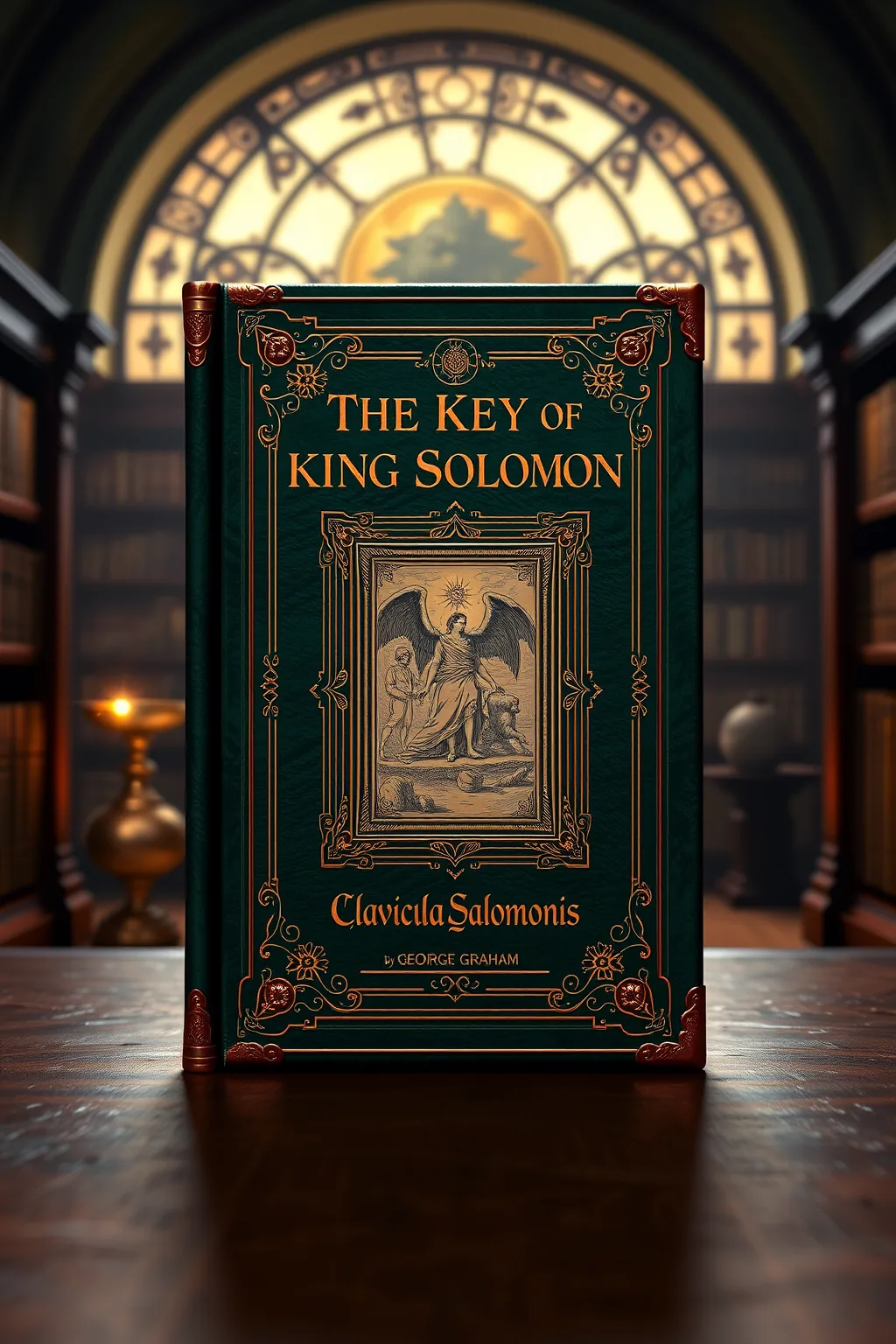
The Key of King Solomon, Clavicula Salomonis
 81
81

The Key of King Solomon, Clavicula Salomonis


Isolde Whitaker, Sacred Texts Editor, states: George Graham's rendition of 'The Key of King Solomon' is a vital contribution to the study of grimoires. This edition masterfully preserves the arcane essence of the Clavicula, offering an accessible yet deeply resonant experience for practitioners and scholars alike. Graham's annotations provide crucial context, illuminating the complex symbolism and ritualistic practices inherent in Solomon's legendary magic. The strength of this translation lies in its fidelity to the original manuscripts, allowing the reader to engage directly with the raw power and philosophical underpinnings of this foundational text. Ideal for serious students of ceremonial magic and Western occult traditions seeking authentic knowledge.
📝 Description
81
George Graham's 1975 edition translates the Clavicula Salomonis, a key text in Western magic.
This edition presents George Graham's translation of the Clavicula Salomonis, also known as The Key of King Solomon. The grimoire details practices within ceremonial magic, focusing on spiritual power and celestial connections. It includes instructions for creating magical implements and for invoking angelic and elemental beings. The text also contains diagrams of sacred geometry and specific incantations.
Graham's work aims to make the archaic language accessible to contemporary practitioners. The book serves as a guide for those interested in understanding the occult arts and their practical application. It encourages a serious approach to the study of magic, suggesting a path toward spiritual development and mastery. The translation preserves the original text's mystique while adapting it for modern study.
The Clavicula Salomonis is a significant grimoire within the Western esoteric tradition, particularly associated with Renaissance magic and Kabbalistic influences. Its teachings on the hierarchy of spirits and the construction of magical instruments connect it to earlier magical texts and later developments in occultism. This work is often seen as a manual for achieving spiritual authority and communing with higher powers through structured ritual and symbolic practices.
💡 Why Read This Book?
Delve into the legendary practices of King Solomon, a cornerstone of Western occultism. Uncover detailed instructions for ritual preparation, angelic invocation, and the creation of sacred implements. This text is essential for understanding the lineage of grimoires and the foundational principles of ceremonial magic. Ideal for serious practitioners, occult scholars, and seekers of ancient wisdom seeking to explore the depths of spiritual power.
⭐ Reader Reviews
Honest opinions from readers who have explored this book.
❓ Frequently Asked Questions
What is the historical significance of 'The Key of King Solomon'?
The Clavicula Salomonis, or 'The Key of King Solomon,' is a foundational grimoire believed to have originated in the Renaissance. It represents a significant body of knowledge in Western esotericism, influencing magical practices for centuries and detailing rituals attributed to King Solomon.
Is this book suitable for beginners in magic?
While rich in detail, 'The Key of King Solomon' is an advanced text. Beginners are advised to approach it with guidance, perhaps after familiarizing themselves with foundational magical principles and ethics from more introductory works.
What are the main components of this grimoire?
The grimoire typically includes instructions for creating magical tools (like wands and pentacles), methods for conjuring spirits and angels, astrological correspondences, and rituals for various purposes, all framed within a system of divine authority.
What is the role of King Solomon in this text?
King Solomon is presented as the ultimate master of occult arts, the source of this wisdom. The text claims to be derived from his writings, imbuing the rituals and instructions with his legendary authority and connection to divine knowledge.
How does George Graham's edition differ from others?
George Graham's edition is often noted for its scholarly approach, aiming for fidelity to original manuscript sources and providing contextual annotations that enhance understanding for contemporary readers interested in historical magical practices.
🔮 Key Themes & Symbolism
The Art of Divine Invocation
This theme explores the core practice of ceremonial magic as presented in the Clavicula, focusing on the precise methods and spiritual discipline required to invoke celestial beings and elemental forces. It details the construction of the magical circle, the consecration of tools, and the recitation of potent prayers and conjurations, all designed to establish a sacred space and facilitate direct communion with higher intelligences. The emphasis is on purity of intent, unwavering faith, and the understanding of divine hierarchies as pathways to spiritual power and knowledge.
Sacred Geometry and Correspondences
The grimoire is replete with intricate diagrams and geometric forms, such as the magical circle and pentacles, which serve as conduits for spiritual energy and protective barriers. This theme studies the profound symbolism embedded within these designs, revealing their connection to celestial bodies, planetary influences, and the elemental kingdoms. Understanding these correspondences is presented as crucial for aligning magical operations with the natural order and harnessing cosmic forces effectively, turning abstract concepts into tangible tools for spiritual work.
The Authority of Solomon and the Grimoire Tradition
This theme examines the attribution of this magical knowledge to King Solomon, a figure renowned for his wisdom and mystical connection. It explores how this attribution lends authority and prestige to the practices described, positioning the Clavicula as a direct transmission of ancient, divinely inspired wisdom. The text's place within the broader tradition of grimoires is highlighted, showcasing its influence on subsequent magical literature and its enduring role as an important work in the Western esoteric lineage.
💬 Memorable Quotes
Direct passages from the work, attributed to the author.
“Let the Circle be well made, and thy Faith be strong.”
— Highlighting the dual importance of ritual precision and inner conviction, this emphasizes that successful magical workings depend on both external structure and internal spiritual resolve.
“For every Spirit hath its Name, and every Name hath its Power.”
— This underscores the belief in the inherent power of divine and spiritual names, suggesting that knowing and correctly invoking these names is key to accessing the entities they represent.
“The Pentacles are Shields against all Adversaries.”
— This points to the protective function of the magical symbols (pentacles) within the grimoire, illustrating their use as wards and defenses during spiritual operations.
“Wisdom is the Key that unlocketh the Gates of Heaven.”
— This philosophical statement elevates the pursuit of knowledge and understanding to a divine level, positioning wisdom as the ultimate means of spiritual ascent and enlightenment.
💡 Key Ideas
Editorial paraphrase of the work's core concepts — not direct quotes.
The Art of Magic is the Art of Subduing Spirits.
This quote captures the pragmatic and power-oriented aspect of ceremonial magic, emphasizing the practitioner's role in commanding supernatural forces through specific techniques and knowledge.
🌙 Esoteric Significance
Tradition
The Clavicula Salomonis is a core part of Western ceremonial magic, deeply rooted in the grimoire tradition that flourished during the Renaissance and beyond. It draws heavily from Hermeticism, Neoplatonism, and Kabbalistic thought, integrating angelic hierarchies, planetary correspondences, and elemental forces into a cohesive system. Its aim is the attainment of divine knowledge and power through disciplined ritual, aligning the microcosm of the practitioner with the macrocosm of the universe.
Symbolism
The symbolism within 'The Key of King Solomon' is rich and multilayered. The magical circle represents the divine presence and a boundary against lower forces. Pentacles and talismans are imbued with specific sigils and divine names to invoke protection and power. Celestial bodies and their associated metals and colors represent cosmic energies and intelligences. The language and structure of the rituals themselves are symbolic, designed to act as keys to unlock spiritual states and supernatural assistance.
Modern Relevance
In contemporary esoteric circles, 'The Key of King Solomon' remains a vital text for understanding the historical development of Western magic. Its principles of ritual structure, intention, and the use of symbolic tools continue to inform modern magical practices. For practitioners, it offers a direct link to ancient methodologies, providing a framework for personal spiritual development, the exploration of consciousness, and the potential for transformative experiences. Scholars find it useful for historical research into occult traditions and their philosophical underpinnings.
👥 Who Should Read This Book
This important work is indispensable for serious students of Western esotericism and ceremonial magic. Scholars of occult history will find its historical fidelity and detailed rituals crucial for their research. Dedicated practitioners seeking to deepen their understanding of grimoire traditions and foundational magical techniques will benefit immensely. While its complexity requires diligence, seekers of ancient wisdom who are prepared for a rigorous intellectual and spiritual journey will find clear insights and practical guidance within its pages.
📜 Historical Context
Emerging from the shadows of the late medieval and early Renaissance periods, 'The Key of King Solomon' (Clavicula Salomonis) reflects a complex set of religious belief, philosophical inquiry, and burgeoning occult interest. This era was marked by a fascination with ancient wisdom, particularly that attributed to biblical figures like King Solomon, whose legendary knowledge was seen as divinely inspired. The grimoire tradition flourished, blending Neoplatonic ideas, Hermetic philosophy, Christian angelology, and Kabbalistic concepts. It was a time when the boundaries between science, religion, and magic were fluid, and texts like the Clavicula offered a systematic framework for understanding and interacting with the cosmos, aiming to unlock divine secrets and attain spiritual authority through ritual and knowledge.
📔 Journal Prompts
Reflect on the concept of 'subduing spirits.' What does this mean to you on a personal, psychological, and spiritual level?
Analyze one of the sigils or diagrams presented in the grimoire. What potential meanings or energies can you perceive within its form?
Consider the importance of 'faith' in magical practice as described in the text. How can one cultivate and maintain unwavering faith during challenging rituals?
The text attributes immense power to King Solomon. How does this narrative of authority influence the perceived efficacy of the rituals?
Imagine you are preparing a ritual from this grimoire. What personal qualities or preparation would be most essential for your success, beyond the physical instructions?
🗂️ Glossary
Grimoire
A textbook of magic, typically containing instructions on how to create magical tools, cast spells, and invoke spirits. The Clavicula Salomonis is a prime example of a grimoire.
Goetia
A branch of magic concerned with the evocation of demons or spirits, often detailed in grimoires like the Ars Goetia (part of the Lesser Key of Solomon).
Pentacle
A magical disc inscribed with symbols, sigils, or divine names, used for protection, invocation, or as a focus of power in ritual magic.
Conjuration
A formal or magical incantation or plea, used to call upon or invoke a spirit or divine power.
Sigil
A symbol or emblem used in magic, often created by combining letters of a name or phrase, believed to hold specific magical intent or power.
This book appears in 6 collections
🔮 Readers Also Liked
Browse all →








From the “Goetia” Collection
View all →


More Free Magic & Ritual Books
View all →