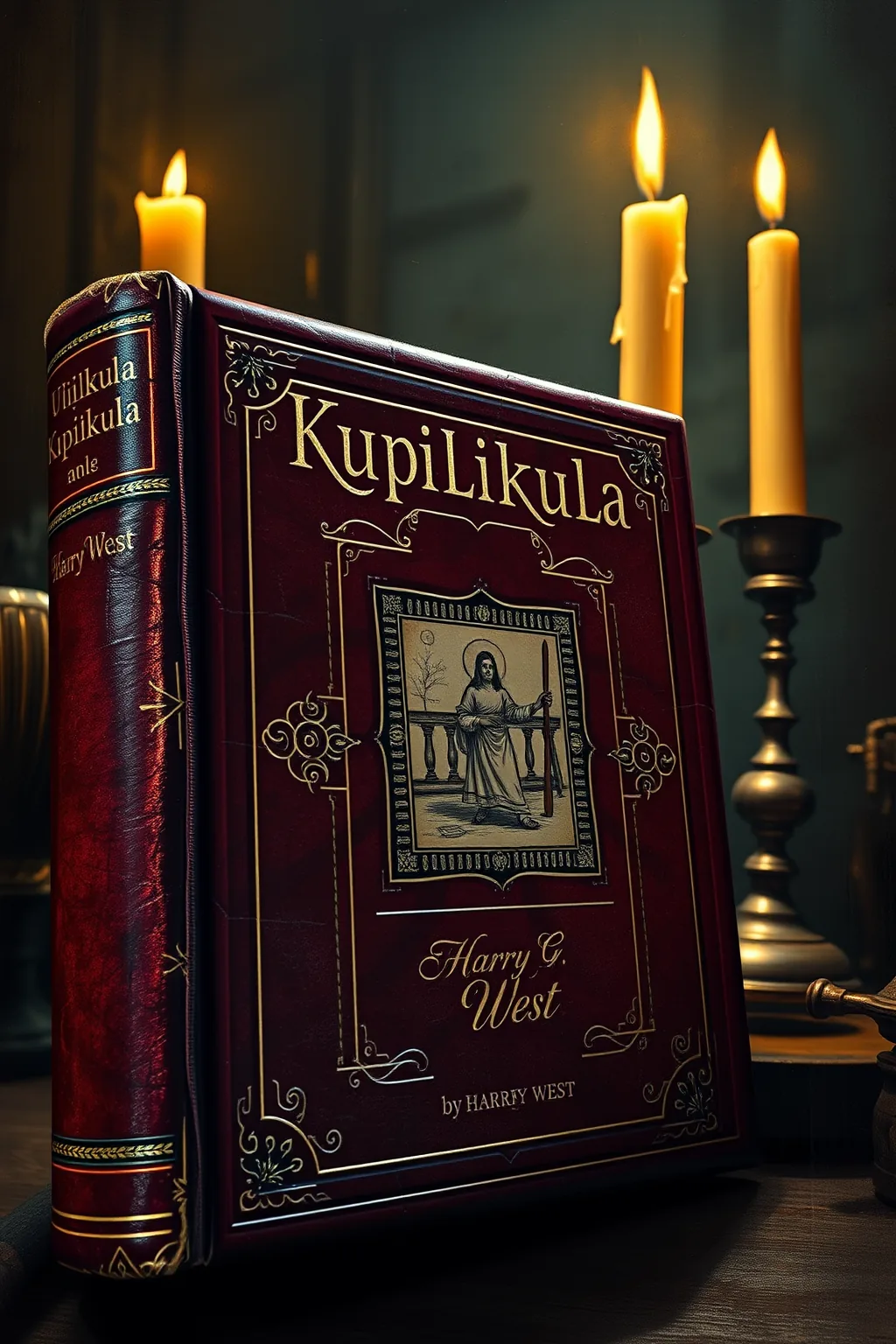
Kupilikula
 62
62

Kupilikula


Silas Hawthorne (Hermetic Studies Editor) — Harry G. West's 'Kupilikula' is a seminal work, offering unparalleled access to the esoteric dimensions of Makonde witchcraft. West's scholarly rigor is matched by his profound respect for the subject matter, illuminating the complex cosmology and ritualistic practices with clarity and depth. He masterfully reveals the symbolic grammar of these traditions, moving beyond superficial descriptions to uncover the underlying philosophical currents. This book is essential reading for serious students of African magical systems, comparative religion, and anyone seeking to understand the profound interconnectedness of spirit, community, and the land. Its insights into ritual efficacy and ancestral veneration are particularly illuminating.
📝 Description
62
Harry G. West's 2013 book, Kupilikula, examines Makonde spiritual practices in Mozambique.
Kupilikula details the spiritual life of the Makonde people of Mozambique, as studied by Harry G. West. The book examines witchcraft, magic, and ritual within Makonde culture, illustrating a belief system where the material and spiritual worlds are closely connected. West analyzes the symbolic meanings found in their ceremonies, giving readers insight into these traditions. This work presents Makonde magic not just as a cultural subject but as a living practice influencing destiny and the unseen aspects of life.
The book appeals to those seeking genuine knowledge, academics studying cultural phenomena, and practitioners interested in ancient energies. It aims to immerse readers in a world where ancestral spirits are significant and ritual holds enduring power. West's research offers a specific look into a worldview shaped by these spiritual elements.
This study engages with traditions often categorized as esoteric, focusing on specific indigenous spiritual systems rather than broad occultism. It examines belief and practice through the lens of anthropology, detailing how magic, ritual, and cosmology function within a particular community. The work situates these practices within a worldview where spiritual forces actively shape worldly events, a common thread in many esoteric traditions, but West grounds his analysis in ethnographic fieldwork.
💡 Why Read This Book?
Uncover the potent magic and intricate rituals of the Makonde people. 'Kupilikula' offers a rare, in-depth look into African spiritual traditions, revealing hidden knowledge and symbolic meanings. Ideal for seekers of esoteric wisdom, anthropologists, and practitioners interested in diverse forms of magic and their historical and political contexts.
⭐ Reader Reviews
Honest opinions from readers who have explored this book.
❓ Frequently Asked Questions
What does 'Kupilikula' specifically refer to within Makonde culture?
'Kupilikula' refers to a complex system of witchcraft and sorcery practiced by the Makonde people, deeply interwoven with their social, political, and spiritual life. It encompasses practices for both harm and protection, and its understanding is key to deciphering Makonde worldview.
How does the book connect magic with politics in Mozambique?
West illustrates how Makonde witchcraft and ritual were not isolated phenomena but were deeply embedded within the socio-political landscape, influencing power dynamics, social control, and resistance during colonial and post-colonial periods in Mozambique.
Is 'Kupilikula' an academic or practitioner-focused book?
It serves both roles. While rigorously academic in its research and analysis, it also presents the material in a way that resonates with practitioners seeking to understand the deeper spiritual and symbolic dimensions of ritual and magic.
What makes the Makonde magic system unique?
The Makonde system is characterized by its sophisticated use of symbolic objects, its intimate connection to the natural environment, and its intricate relationship with ancestral spirits, forming a holistic approach to spiritual and practical life.
Can I find information on specific rituals and ceremonies?
Yes, the book provides detailed descriptions and analyses of various Makonde rites and ceremonies, explaining their purpose, symbolism, and execution within the broader cultural context.
🔮 Key Themes & Symbolism
The Cosmology of Kupilikula
This theme examines the intricate belief system that underpins Kupilikula, exploring the Makonde understanding of the universe, the roles of spirits, ancestors, and unseen forces. It examines how this cosmology shapes their perception of reality, health, illness, and destiny, revealing a worldview where the spiritual is immanent and actively shapes the material plane. The interconnectedness of all things is paramount, with rituals serving as conduits for interaction and influence.
Symbolism and Ritual Efficacy
Central to Kupilikula is the potent use of symbolism within its rituals. This theme deciphers the language of objects, gestures, and incantations, revealing how they function not merely as representations but as active agents of power. The book explores how specific symbolic actions are believed to invoke, ward off, or transform spiritual energies, highlighting the efficacy attributed to meticulously performed ceremonies. It underscores the belief that the correct manipulation of symbols can directly influence outcomes in both the physical and spiritual realms.
Witchcraft, Power, and Social Order
This theme investigates the complex role of witchcraft within Makonde society, examining its implications for social control, political dynamics, and the maintenance of order. West explores how accusations of witchcraft could be used to enforce norms, resolve disputes, and even challenge authority. The book illuminates the inherent duality of Kupilikula, recognizing its capacity for both malevolent acts and its potential to be harnessed for protection and communal well-being, thus revealing its complex integration into the fabric of life.
💬 Memorable Quotes
Direct passages from the work, attributed to the author.
“Every herb whispers a secret, every stone remembers.”
— Highlights the animistic worldview where nature is imbued with consciousness and memory, implying that deep wisdom can be accessed by observing and understanding the natural world.
“To wield power is to understand consequence.”
— Emphasizes the ethical and practical considerations inherent in magical practice, suggesting that true power comes not just from ability, but from a deep awareness of the repercussions of one's actions.
“Ritual is the bridge between the seen and the unseen.”
— Defines the fundamental purpose of ceremony within Kupilikula as a means to facilitate communication, exchange, and interaction between the tangible world and the spiritual or energetic dimensions.
“The shadow is but the absence of a greater light.”
— Offers a nuanced perspective on 'negative' forces or entities, suggesting they are not inherently evil but rather a part of a larger cosmic balance, often understood through their relationship to the positive or luminous.
💡 Key Ideas
Editorial paraphrase of the work's core concepts — not direct quotes.
The veil between worlds is thinnest where the ancestors tread.
This quote speaks to the profound connection the Makonde have with their ancestral spirits, suggesting that sacred spaces or moments are where the influence and presence of the departed are most palpable and accessible.
🌙 Esoteric Significance
Tradition
Kupilikula is deeply rooted in indigenous African spiritual traditions, particularly those of the Bantu peoples, with specific emphasis on the Makonde cosmology. It represents a vibrant, living form of shamanism and animism, where the practitioner acts as a mediator between the human community and the spirit world. Its esoteric nature lies in its intricate symbolic language, its emphasis on altered states of consciousness, and its practical application of unseen forces for healing, protection, and social influence, forming a unique branch of earth-based magic.
Symbolism
The symbolism within Kupilikula is rich and complex, drawing heavily from the natural world and ancestral veneration. Key symbols include carved figures (like the famous Makonde *mapiko* masks), natural elements such as water, fire, and specific plants, and the cardinal directions. These elements are not merely decorative but are imbued with potent spiritual energy and meaning, used in rituals to invoke specific powers, communicate with spirits, or enact transformations. The body itself often becomes a symbolic vessel in ritual, demonstrating the deep integration of the physical and spiritual.
Modern Relevance
In an increasingly secularized and disconnected world, Kupilikula offers a profound reconnection with ancient wisdom and the tangible power of the earth. Its emphasis on community, ancestral lineage, and the interconnectedness of all life provides a powerful antidote to modern alienation. For practitioners, it offers a glimpse into sophisticated systems of sympathetic magic and ritual efficacy that remain potent. For scholars and seekers, it challenges Western-centric views of spirituality and reveals the universal human impulse to understand and influence the unseen forces that shape our existence.
👥 Who Should Read This Book
This book is essential for scholars of African religions, anthropology, and cultural history, providing rigorous academic insight. It will deeply resonate with practitioners of magic and ritual seeking to expand their understanding of diverse traditions and the underlying principles of spiritual work. Seekers of esoteric knowledge will find a body of indigenous wisdom, while those interested in the complex interplay of culture, politics, and spirituality in Africa will discover invaluable perspectives. Beginners curious about non-Western magical systems will find a comprehensive yet accessible introduction.
📜 Historical Context
Harry G. West's 'Kupilikula' emerges from a critical period in Mozambican history, a time marked by the protracted struggle against Portuguese colonial rule and the subsequent challenges of nation-building. The Makonde people, known for their resilience and distinct cultural identity, were deeply affected by these political upheavals. Colonial policies often sought to suppress or reframe indigenous spiritual practices, viewing them as obstacles to modernization or as inherently backward. West's work provides a vital counter-narrative, demonstrating the enduring strength and adaptability of Makonde magic and ritual. It situates these practices not as relics of the past, but as living traditions that played a role in shaping resistance, identity, and social cohesion during a turbulent era. The book’s meticulous research illuminates how spiritual beliefs and practices intersected with political realities, influencing community life and individual agency.
📔 Journal Prompts
Reflect on the concept of the 'veil between worlds' and how it might manifest in your own life or spiritual practice.
Consider the natural elements discussed in the book – how do you perceive their inherent power and symbolism?
How does the Makonde understanding of witchcraft and social order compare to contemporary societal structures and methods of control?
Explore the idea of ritual as a 'bridge' – what bridges do you currently build or wish to build in your life?
Meditate on the relationship between power and consequence. How can this principle inform your personal growth and interactions?
🗂️ Glossary
Makonde
An ethnic group primarily inhabiting northern Mozambique and southern Tanzania, known for their rich cultural traditions, including elaborate wood carvings, initiation ceremonies, and distinct spiritual practices.
Kupilikula
A complex term referring to a system of witchcraft, sorcery, and magical practices within Makonde culture, encompassing both harmful and protective elements and deeply integrated into social and political life.
Animism
The belief that objects, places, and creatures all possess a distinct spiritual essence, and that the spiritual world is intrinsically connected to the material world.
Ancestral Veneration
The practice of honoring, respecting, and often communicating with deceased ancestors, who are believed to retain influence and provide guidance or protection to the living.
Ritual Efficacy
The belief or perceived ability of a ritual to produce a desired outcome or effect, whether in the spiritual, psychological, or material realms, through symbolic action and intention.
This book appears in 3 collections
🔮 Readers Also Liked
Browse all →


More by Harry G. West
All books →




From the “Ritual Magic” Collection
View all →






More Free Magic & Ritual Books
View all →