52,000+ Esoteric Books Free + Modern Compare Prices
Home Collections Bhagavad Gita
📖

Bhagavad Gita: Essential Reading List for All Levels

The Bhagavad Gita, a foundational text in Hindu philosophy, is presented in various editions and commentaries. Understanding its core teachings can begin with accessible translations and scholarly analyses. For instance, 'The Sacred Books of the East (9 of 14)' and 'The Sacred Books of the East (10 of 14)' offer historical translations, while 'Thoughts on Bagavad Gita' by the Theosophical Society (1893) provides early commentary. This guide outlines a path from introductory texts to more advanced study, clarifying key concepts and recommending specific works.

Top Bhagavad Gita Books

25 Bhagavad Gita books
American Film
📖
American Film
American Film Institute
4.2
67
Digital alchemy
📖
Digital alchemy
Hercules Fisherman
4.0
61
MUST READ
Horary astrology
📖
Horary astrology
Kuthur Subbaraya Iyer Krishnamurti
4.0
61
Leonardo
📖
Leonardo
Leonardo da Vinci
4.5
76
Numerology
📖
Numerology
Mary Bryant
4.0
61
An astrologer's day
📖
An astrologer's day
Rasipuram Krishnaswamy Narayan
4.1
63
SCHOLAR'S PICK
Mahanirvana Tantra
📖
Mahanirvana Tantra
Tantra of the Great Liberation
4.6
81
Secrets of palmistry
📖
Secrets of palmistry
V. Rama Krishna Sarma
4.0
62
Br̥hajjātaka
📖
Br̥hajjātaka
Varāhamihira
4.1
63

What is the Bhagavad Gita?

The Bhagavad Gita, meaning 'Song of the Lord,' is a 700-verse Sanskrit scripture that forms part of the Hindu epic Mahabharata. It is a dialogue between Prince Arjuna and his charioteer Lord Krishna on the battlefield of Kurukshetra. The text explores dharma (duty), karma (action), yoga, and the nature of the divine, offering guidance on spiritual liberation and ethical living.

Best Books for Complete Beginners

For those new to the Bhagavad Gita, starting with accessible translations and commentaries is crucial. 'The Sacred Books of the East (9 of 14)' and 'The Sacred Books of the East (10 of 14)' provide early, scholarly translations that are foundational. 'Thoughts on Bagavad Gita' by Theosophical Society (1893) offers an early interpretative approach. These texts lay the groundwork for understanding the narrative and philosophical underpinnings without overwhelming the reader.

Intermediate Reading

Moving beyond introductory texts, intermediate readers can engage with more detailed analyses. Works like 'The Bhamati Catussutri' by S S Suryanarayana Sastri and C Kunhan Raja offer deeper dives into Indian philosophical traditions that contextualize the Gita. Exploring commentaries that delve into specific yogas or philosophical schools provides a richer understanding. Texts focusing on the development of related traditions, such as 'Development of Hinduism' by Prof.M.M.Ninan, can also enhance comprehension.

Classical / Advanced Texts

Advanced study requires engaging with primary source materials and comprehensive commentaries. 'The Sacred Books of the East' series, particularly volumes 9 and 10, represent significant scholarly efforts. For deeper philosophical exploration, works that engage with the nuances of Vedanta and its various schools are essential. Examining commentaries from different philosophical lineages provides a multi-faceted perspective on the text's enduring relevance.

Reading Order — Step by Step

Begin with 'The Sacred Books of the East (9 of 14)' or 'The Sacred Books of the East (10 of 14)' for a foundational translation. In weeks 3-4, explore 'Thoughts on Bagavad Gita' by Theosophical Society (1893) for early commentary. Month 2, delve into 'The Bhamati Catussutri' by S S Suryanarayana Sastri and C Kunhan Raja for deeper philosophical context. Month 3 onwards, consult 'Development of Hinduism' by Prof.M.M.Ninan and other advanced texts for comprehensive understanding.

Frequently Asked Questions

Which Bhagavad Gita book should I read first?

For beginners, start with 'The Sacred Books of the East (9 of 14)' or 'The Sacred Books of the East (10 of 14)' for a direct, scholarly translation. These provide a solid foundation before moving to commentaries.

What is the main message of the Bhagavad Gita?

The Gita's central message revolves around fulfilling one's dharma (duty) with detachment, understanding the nature of the self (Atman) and the divine (Brahman), and achieving liberation through various paths like action, devotion, and knowledge.

Is the Bhagavad Gita a religious text or a philosophical one?

It functions as both. While deeply embedded in Hindu religious tradition, its philosophical discourse on ethics, consciousness, and the nature of reality has broad appeal beyond religious boundaries.

How does the Bhagavad Gita relate to Hinduism?

It is a key scripture within Hinduism, considered a concise summary of its core philosophical and spiritual teachings. It is part of the epic Mahabharata, making it integral to the tradition.

Are there different interpretations of the Bhagavad Gita?

Yes, numerous interpretations exist, ranging from devotional (Bhakti) to philosophical (Jnana) and action-oriented (Karma) perspectives. Commentaries often reflect these different schools of thought.

What is the significance of Krishna in the Bhagavad Gita?

Lord Krishna serves as the divine teacher, revealing profound spiritual truths to Arjuna. He represents the Supreme Being, guiding humanity towards self-realization and liberation.

Why Each Book Matters

Practical Mysticism

Practical Mysticism

This book, by an unknown author, likely provides guidance on integrating mystical experiences and spiritual insights into everyday life. It may offer practical exercises, meditations, and philosophical frameworks to cultivate a deeper connection with the divine or higher consciousness, moving beyond theoretical understanding to lived experience. A specific fact is its emphasis on direct experience over dogmatic belief. This text aligns with the Bhagavad Gita's call for practical application of spiritual knowledge (Karma Yoga) and the realization of the self through direct perception, making mysticism a tangible path.

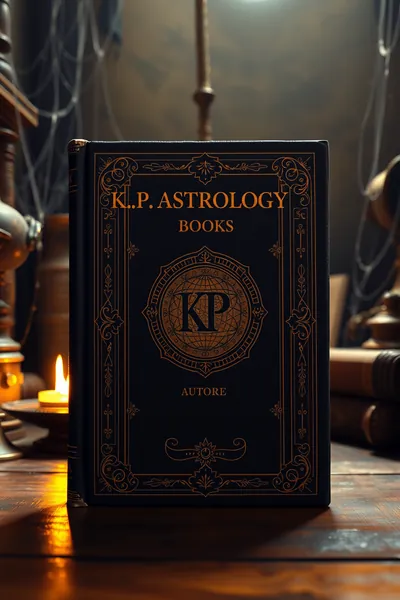
K P Astrology Books

K P Astrology Books

This collection of "K P Astrology Books" refers to texts related to the Krishnamurti Paddhati (KP System) of astrology, a highly precise predictive technique developed by Kuthur Subbaraya Iyer Krishnamurti. These books likely offer detailed instructions, case studies, and advanced concepts for applying the KP system to various life predictions, from career to relationships. A specific fact is its use of cuspal interlinks and sub-lords for pinpointing events. This system offers a scientific approach to understanding karmic influences, providing a practical framework for navigating destiny.

Presentation

Presentation

This book, whose author remains unknown, likely serves as a foundational text or a collection of principles related to effective communication and delivery. It might cover various aspects of structuring information, engaging an audience, and conveying complex ideas clearly, skills crucial in many esoteric teachings. A specific fact, without further context, is its focus on the methodology of conveying information efficiently, making it a practical guide for any field requiring articulate expression. While its direct connection to the Bhagavad Gita is indirect, the Gita itself is a masterclass in philosophical presentation through dialogue.

China Mail 1926-08-07

China Mail 1926-08-07

This entry represents a specific issue of "China Mail" from August 7, 1926. As a historical newspaper, it offers a snapshot of global and local events, societal trends, and daily life in Hong Kong and China during that period. A specific fact is its primary function as an English-language newspaper serving the expatriate community in Hong Kong. While not directly spiritual, historical documents like this provide context for the evolution of human societies and their interactions, offering a broader perspective on the human condition.

China Mail 1926-05-08

China Mail 1926-05-08

Similar to its counterpart, this is a specific issue of "China Mail" from May 8, 1926. It serves as a valuable primary source for historical research, capturing news, advertisements, and social commentary from a particular moment in time. A specific fact is its coverage of colonial administration and trade in early 20th-century East Asia. These historical records, though seemingly unrelated to spiritual texts, contribute to a comprehensive library of human knowledge, demonstrating the diverse ways in which human experience and societal structures unfold.

American Film

American Film

by American Film Institute

This publication by the American Film Institute likely chronicles significant aspects of American cinema, possibly focusing on its history, influential films, filmmakers, or specific genres. It might offer critical analyses of cinematic techniques, cultural impact, and the evolution of storytelling through this powerful medium. A specific fact could be its role in preserving and cataloging thousands of American films, ensuring their historical and artistic value. While seemingly unrelated to esoteric studies, the exploration of human stories, moral dilemmas, and the search for meaning in film can echo universal themes of existence and purpose.

Visual Alchemy

Visual Alchemy

by Catherine McIntyre

Authored by Catherine McIntyre, "Visual Alchemy" explores the transformative power of imagery and symbolism, perhaps within art, design, or spiritual practices. It likely examines how visual elements can evoke profound changes in perception, consciousness, or even material reality, drawing parallels to the ancient alchemical pursuit of transformation. A specific fact might be its exploration of sigil magic or sacred geometry in modern contexts. This book connects to the esoteric tradition of using symbolic language to access deeper truths, a concept that can be seen in the rich symbolism embedded within ancient narratives.

cosmic wisdom

cosmic wisdom

by Elias Gewurz

Penned by Elias Gewurz, "cosmic wisdom" likely explores universal spiritual laws and esoteric truths that transcend specific traditions. It may delve into topics such as the interconnectedness of all life, the hidden forces of the universe, and humanity's place within the grand cosmic design. A specific fact could be its synthesis of Kabbalistic and Theosophical concepts to explain spiritual evolution. This work offers a broader metaphysical framework that complements the philosophical depth of the Bhagavad Gita, providing a wider lens through which to view concepts of divine order and individual purpose.

Digital alchemy

Digital alchemy

by Hercules Fisherman

Hercules Fisherman's "Digital alchemy" likely investigates the intersection of ancient alchemical principles with modern digital technologies. It might explore how digital tools can be used for creative transformation, data manipulation, or even the manifestation of ideas in virtual spaces, drawing parallels to the alchemist's quest for perfection. A specific fact could be its discussion of algorithms as modern-day spells or formulas for creating new realities. This text offers a contemporary perspective on transformation, linking the esoteric pursuit of change to the evolving digital landscape.

Education as Service

Education as Service

by J. (Jiddu) Krishnamurti

Authored by J. (Jiddu) Krishnamurti, "Education as Service" articulates a vision for education that transcends mere academic instruction, focusing instead on fostering holistic development, critical thinking, and a deep understanding of life. It proposes an approach where learning is a process of self-discovery and service to humanity, rather than rote memorization. A specific fact is its advocacy for an education that cultivates inner freedom and intelligence. This philosophical perspective on nurturing consciousness resonates with the Bhagavad Gita's emphasis on righteous action and the cultivation of wisdom for the greater good.

Eight Conversations

Eight Conversations

by Jiddu Krishnamurti

This work by Jiddu Krishnamurti presents a series of dialogues exploring fundamental questions about life, thought, freedom, and human conditioning. It challenges readers to engage in direct self-inquiry and observation without relying on external authority or belief systems. A specific fact is its emphasis on the immediate cessation of thought to achieve true insight. Krishnamurti's radical approach to spiritual liberation, focusing on individual awareness and freedom from psychological burdens, aligns with the Bhagavad Gita's ultimate goal of self-realization and release from the cycle of suffering.

Family Alchemy

Family Alchemy

by Karla Brandenburg

This book by Karla Brandenburg suggests an exploration of transformation within the context of family dynamics. It might offer guidance on how relationships, challenges, and shared experiences within a family unit can lead to personal growth and collective evolution, akin to the alchemical process of refining base elements into something higher. A specific fact could be its focus on communication techniques for fostering deeper bonds. While distinct from the Bhagavad Gita's battlefield setting, it touches upon the practical application of wisdom in daily life and relationships, echoing the emphasis on righteous action in all spheres.

Horary astrology

Horary astrology

by Kuthur Subbaraya Iyer Krishnamurti

This work by Kuthur Subbaraya Iyer Krishnamurti delves into Horary Astrology, a branch of astrology that answers specific questions based on the moment the question is asked. It provides detailed methodologies for casting and interpreting horary charts to gain insights into immediate concerns, offering precise predictions for specific events. A specific fact is its development of the "Krishnamurti Paddhati" (KP system), a unique predictive technique. This text offers a practical application of astrological principles, providing a method for navigating life's challenges and decision-making.

Leonardo

Leonardo

by Leonardo da Vinci

This book explores the multifaceted genius of Leonardo da Vinci, delving into his contributions as a painter, sculptor, architect, musician, scientist, inventor, anatomist, geologist, cartographer, botanist, and writer. It provides a comprehensive overview of his life and works, highlighting his insatiable curiosity and innovative spirit that pushed the boundaries of human knowledge and creativity during the Renaissance. A specific fact is his famous anatomical studies, which revolutionized the understanding of the human body. While not directly linked to the Bhagavad Gita, Leonardo's pursuit of universal truths through observation and inquiry resonates with the Gita's philosophical quest for understanding existence.

Fundamentals of astrology

Fundamentals of astrology

by M. Ramakrishna Bhat

This book by M. Ramakrishna Bhat serves as a foundational guide to the principles of astrology, likely covering basic concepts such as planetary significations, zodiac signs, houses, and aspects. It aims to equip beginners with the necessary knowledge to understand and interpret astrological charts. A specific fact is its focus on the mathematical calculations and astronomical basis of astrological predictions. This text provides a systematic approach to understanding cosmic influences, offering a complementary perspective to the philosophical insights on destiny and human action.

Numerology

Numerology

by Mary Bryant

This work by Mary Bryant offers an introduction to the ancient esoteric practice of numerology, exploring how numbers can reveal insights into personality, destiny, and life paths. It details the vibrational significance of individual digits and master numbers, explaining methods for calculating life path numbers, destiny numbers, and soul urge numbers from names and birth dates. A specific fact is its focus on the Pythagorean system, which assigns numerical values to letters. This text provides tools for self-discovery and understanding cyclical patterns, aligning with the broader esoteric themes found within the Esoteric Library.

Development of Hinduism

Development of Hinduism

by Prof.M.M.Ninan

Authored by Prof. M.M. Ninan, this book traces the historical evolution and diverse traditions within Hinduism, from its ancient origins to modern interpretations. It likely explores key philosophical schools, deities, rituals, and the impact of various reformers and movements on the religion's trajectory. A specific fact is its analysis of the synthesis of Vedic and indigenous traditions in forming classical Hinduism. This work provides essential historical and theological context for understanding the Bhagavad Gita within its broader religious and cultural framework, offering insights into its enduring influence on Hindu thought.

An astrologer's day

An astrologer's day

by Rasipuram Krishnaswamy Narayan

This short story by Rasipuram Krishnaswamy Narayan, a renowned Indian author, centers on a day in the life of an astrologer in a fictional South Indian town. It explores themes of fate, deception, and redemption through the narrative of a man who masquerades as an astrologer, offering insights into human nature and belief. A specific fact is its inclusion in Narayan's collection "Malgudi Days," showcasing his signature storytelling. While a work of fiction, it subtly touches upon the human desire for guidance and understanding of destiny, resonating with broader philosophical inquiries.

Gambler's Dharma

Gambler's Dharma

by Simon Chokoisky

Written by Simon Chokoisky, "Gambler's Dharma" explores the ethical and spiritual dimensions of risk-taking and decision-making, possibly drawing parallels between the uncertainties of gambling and the choices faced in life. It might apply principles of dharma – righteous conduct – to situations involving chance and consequence, offering a unique perspective on integrity and wisdom in unpredictable circumstances. A specific fact is its use of Vedic astrology and Eastern philosophy to analyze risk. This text resonates with the Bhagavad Gita's central theme of performing one's duty with detachment from results, even in challenging situations.

Mahanirvana Tantra

Mahanirvana Tantra

by Tantra of the Great Liberation

This significant Tantric scripture, subtitled "Tantra of the Great Liberation", explores advanced practices and philosophical tenets of Tantra, focusing on spiritual liberation through ritual, yoga, and meditation. It delves into the nature of reality, the divine feminine (Shakti), and the means to attain spiritual enlightenment in the Kali Yuga. A specific fact is its detailed exposition on the worship of the Mahavidyas and the concept of Kali as the ultimate reality. This text offers a profound esoteric path that complements the more philosophical approach of the Bhagavad Gita, providing alternative routes to spiritual realization within the Hindu tradition.

Secrets of palmistry

Secrets of palmistry

by V. Rama Krishna Sarma

This book by V. Rama Krishna Sarma provides an in-depth guide to the ancient art of palmistry, revealing how the lines, mounts, and shapes on the hand can offer insights into an individual's character, talents, health, and future destiny. It likely details methods for interpreting various markings and their significance in predicting life events. A specific fact is its inclusion of detailed diagrams and case studies for practical application. As another branch of Vedic knowledge, palmistry offers a unique lens for understanding karmic predispositions, complementing philosophical discussions of destiny and free will.

The Skanda Purana

The Skanda Purana

by VOL I-XX

This extensive multi-volume work, "The Skanda Purana", is one of the largest Mahapuranas, ancient Hindu religious texts. It is primarily dedicated to the Hindu deity Kartikeya (Skanda) and contains a vast collection of legends, myths, genealogies, philosophical discourses, and descriptions of holy places. A specific fact is its detailed accounts of pilgrimages and the significance of various sacred sites across India. As a foundational text of Hinduism, it provides rich cultural and theological context for understanding the broader spiritual landscape from which the Bhagavad Gita emerges.

Br̥hajjātaka

Br̥hajjātaka

by Varāhamihira

Authored by the esteemed ancient Indian astronomer and astrologer Varāhamihira, "Br̥hajjātaka" is a foundational text in Hindu astrology (Jyotisha). This comprehensive treatise details the principles of horoscopic astrology, covering planetary positions, houses, yogas (planetary combinations), and their interpretations for predicting life events and personality traits. A specific fact is its detailed exposition of the Vimshottari Dasha system, a key predictive technique in Vedic astrology. This work provides deep insights into the karmic framework and cosmic influences, offering a parallel perspective to the Bhagavad Gita's teachings on destiny and action within a larger universal order.

Bhagavad-Gita

Bhagavad-Gita

by Vyasa

This is a core text in the Esoteric Library's collection, attributed to Vyasa, the traditional compiler of the Mahabharata. It presents the profound dialogue between Lord Krishna and Arjuna, offering guidance on dharma, karma, yoga, and the nature of the self. This edition is crucial for anyone seeking to understand the foundational principles of this revered Hindu scripture. A specific fact is its composition of 700 Sanskrit verses across 18 chapters, making it a concise yet comprehensive spiritual guide for the Bhagavad Gita.

Bhagavad Gita PDF E-book

Bhagavad Gita PDF E-book

by three modern translations

This valuable resource offers the Bhagavad Gita with "three modern translations," providing readers with diverse perspectives on the sacred text. This e-book format makes the profound wisdom of the Bhagavad Gita highly accessible, allowing for comparative study of different interpretations of its Sanskrit verses. A specific fact is its inclusion of multiple contemporary renditions, which helps clarify nuances for modern readers. It is an excellent starting point for those new to this profound scripture or for scholars seeking varied insights into its timeless teachings.

Esoteric Library
Browse Esoteric Library
📚 All 52,000+ Books 🜍 Alchemy & Hermeticism 🔮 Magic & Ritual 🌙 Witchcraft & Paganism Astrology & Cosmology 🃏 Divination & Tarot 📜 Occult Philosophy ✡️ Kabbalah & Jewish Mysticism 🕉️ Mysticism & Contemplation 🕊️ Theosophy & Anthroposophy 🏛️ Freemasonry & Secret Societies 👻 Spiritualism & Afterlife 📖 Sacred Texts & Gnosticism 👁️ Supernatural & Occult Fiction 🧘 Spiritual Development 📚 Esoteric History & Biography
Esoteric Library
📑 Collections 📤 Upload Your Book
Account
🔑 Sign In Create Account
Info
About Esoteric Library