Magic
 61
61

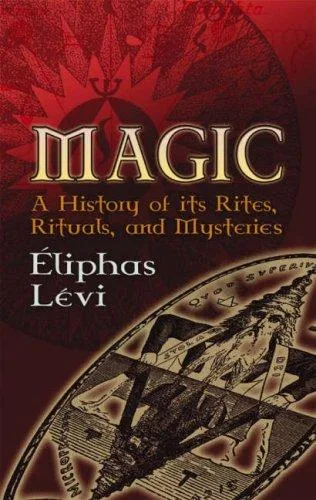
Magic

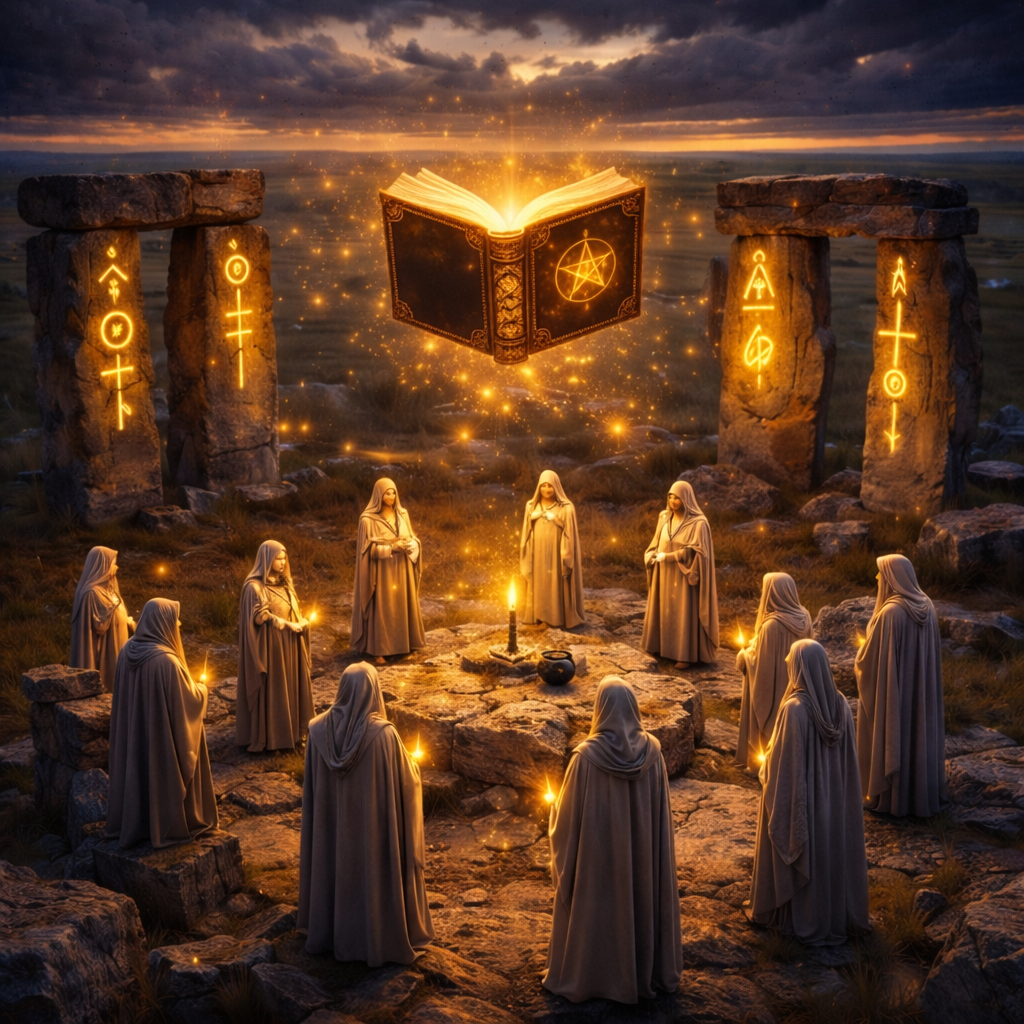

Aurelia Blackwood, Occult Philosophy Critic: Eliphas Levi's 'Magic' remains an unparalleled cornerstone of Western esotericism. Its profound exploration of the Great Arcanum, the divine union of opposites, and the fundamental principles of occult science offers an authoritative guide for serious practitioners and scholars alike. Levi masterfully synthesizes diverse mystical traditions, presenting a coherent and potent system of magical thought. The book's strength lies in its systematic exposition of complex concepts, demystifying the arcane without diminishing its power. It is an indispensable text for anyone seeking to grasp the theoretical underpinnings of ritual, the nature of spiritual forces, and the profound interconnectedness of the universe.
📝 Description
61
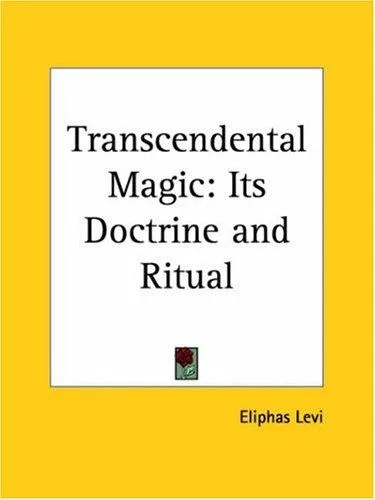
Eliphas Levi's 'Magic,' first published in 1859, claims magic is the science of the wise.
Eliphas Levi's 'Magic' examines magic not as mere illusion, but as a system of universal laws and correspondences. Levi, a key figure in 19th-century occult revival, draws heavily on Kabbalah, ancient philosophies, and hermetic traditions. The book aims to explain the principles underlying magical phenomena, presenting it as a serious intellectual and spiritual discipline.
Levi discusses the nature of divine will, the symbolic language of the universe, and the methods by which practitioners can interact with these forces. He details concepts like the astral light, the power of symbols, and the importance of ceremonial practice. The work is intended for the serious student, offering a structured approach to understanding the hidden aspects of existence and achieving self-mastery through this knowledge.
Published in 1859, Levi's 'Magic' is a cornerstone of modern Western esotericism. It emerged during a period of renewed interest in occultism, hermeticism, and spiritualism. Levi sought to codify and rationalize magical traditions, linking them to established philosophical and religious systems like Kabbalah and Neoplatonism. His work provided a coherent framework for understanding magic as a philosophical science, distinct from both popular superstition and purely religious dogma, influencing subsequent generations of occultists.
💡 Why Read This Book?
For the dedicated seeker of hidden knowledge, Eliphas Levi's 'Magic' offers a profound and systematic exploration of occult principles. It is ideal for those ready to delve beyond surface-level understanding, providing the theoretical framework for advanced magical practice and a deeper comprehension of esoteric symbolism. Scholars will find rich historical and philosophical insights, while practitioners will discover a potent guide to unlocking spiritual forces and achieving self-transformation.
⭐ Reader Reviews
Honest opinions from readers who have explored this book.
❓ Frequently Asked Questions
Is Eliphas Levi's 'Magic' suitable for beginners?
While dense with esoteric lore, Levi's work is foundational. Beginners should approach it with patience and a desire to learn, perhaps alongside introductory texts on occultism, to fully grasp its profound insights.
What is the central philosophy of Levi's 'Magic'?
The central philosophy revolves around the concept of the Great Arcanum – the divine union of opposites (male/female, spirit/matter) – and the belief that magic is the science of controlling these forces for spiritual evolution.
What role does symbolism play in this book?
Symbolism is paramount. Levi extensively analyzes the symbolic language of ancient texts, hieroglyphs, and occult traditions, positing that understanding these symbols is key to unlocking the secrets of the universe and the human psyche.
Does this book offer practical magical techniques?
Yes, though often framed within a philosophical and theoretical context. Levi discusses the principles behind rituals, invocations, and the use of talismans, providing the theoretical groundwork for practical application.
What is the significance of the 'Pentacle of Baphomet' in Levi's work?
The Pentacle, often misunderstood, represents the equilibrium of elements and the harmonious union of macrocosm and microcosm, symbolizing the divine balance and the adept's mastery over the forces of nature.
🔮 Key Themes & Symbolism
The Great Arcanum: Union of Opposites
At the heart of Levi's magical philosophy lies the Great Arcanum, the divine principle of unity derived from the reconciliation of opposing forces. This concept, deeply rooted in Kabbalah and Gnosticism, posits that true magical power and spiritual enlightenment are achieved through the harmonious integration of seemingly contradictory elements – spirit and matter, male and female, light and shadow. Levi elucidates how this universal law manifests across all planes of existence, from the cosmic dance of the stars to the intricate workings of the human soul. Understanding and working with this principle is presented as the ultimate aim of the magician, leading to self-realization and the attainment of divine knowledge.
The Science of the Magi: Theory and Practice
Levi presents magic not as superstition or mere parlor tricks, but as a profound science and art—the 'Science of the Magi.' This section looks at the theoretical underpinnings of magical operations, exploring the nature of astral light, elemental forces, and the subtle energies that permeate the universe. He meticulously details the importance of intention, will, and symbolic representation in directing these forces. The book provides a framework for understanding the principles behind invocation, evocation, divination, and the creation of talismans, emphasizing the ethical responsibilities and necessary preparations for any aspiring practitioner. It is a call to disciplined study and inner purification.
Universal Symbology and Divine Language
Levi argues that the universe communicates through a universal language of symbols, a sacred script woven into the fabric of existence. This theme explores the profound significance of ancient hieroglyphs, alchemical symbols, tarot imagery, and Kabbalistic diagrams. He reveals how these symbols are not arbitrary but are keys to understanding the fundamental laws of nature and the divine mind. By deciphering this symbolic lexicon, the magician gains insight into the hidden correspondences between the material and spiritual realms, allowing for a deeper communion with the cosmos and the divine. This knowledge empowers the adept to influence reality through understanding its underlying patterns.
💬 Memorable Quotes
Direct passages from the work, attributed to the author.
“The key to all the secrets lies in the equilibrium of opposites.”
— This expresses Levi's central doctrine of the Great Arcanum, emphasizing the necessity of balancing dualities to achieve magical power and spiritual harmony.
“Magic is the science of the wise and the art of the saints.”
— Levi elevates magic beyond mere superstition, defining it as a disciplined pursuit of wisdom and a path to spiritual perfection, accessible only through rigorous study and inner virtue.
“The Astral Light is the universal solvent and the universal agent.”
— This highlights the crucial concept of the Astral Light, Levi's term for the pervasive, luminous ether that connects all things and serves as the medium for magical influence.
“To know, to will, to dare, and to be silent – these are the four powers of the magician.”
— These are the cardinal virtues and essential faculties required for successful magical work, emphasizing knowledge, unwavering intent, courage, and discretion.
“The microcosm is the mirror of the macrocosm.”
— This fundamental hermetic principle underscores the interconnectedness of the human being (microcosm) and the universe (macrocosm), suggesting that inner transformation can lead to understanding universal laws.
🌙 Esoteric Significance
Tradition
Levi's work is a profound synthesis of Western esoteric traditions, primarily drawing from Kabbalah, Hermeticism, and Gnosticism. He sought to establish a unified system of occult philosophy, presenting magic as the practical application of these ancient doctrines. His emphasis on the astral light, the divine union of opposites, and the symbolic language of the universe makes 'Magic' a cornerstone text for understanding the lineage and evolution of these interconnected mystical paths.
Symbolism
Symbolism is the very language of Levi's magic. He delves deeply into the hermeneutic interpretation of symbols found in Tarot, hieroglyphs, alchemical diagrams, and religious texts. For Levi, symbols are not mere representations but living keys that unlock hidden truths about the cosmos and the human psyche. He explains how understanding the symbolic interplay of forces—such as the divine feminine and masculine, or the elemental powers—allows the magician to align with and influence the subtle energies of reality, bridging the gap between the visible and invisible worlds.
Modern Relevance
Despite its 19th-century origins, Levi's 'Magic' remains remarkably relevant. Its exploration of psychological archetypes, the power of intention, and the interconnectedness of all things appeals to contemporary interests in consciousness studies, mindfulness, and personal development. The book provides a sophisticated framework for understanding the symbolic nature of reality, offering tools for self-exploration and spiritual growth that transcend specific doctrines. For modern seekers, it serves as a rich source of wisdom for reading through the complexities of existence and cultivating a deeper connection to the sacred.
👥 Who Should Read This Book
Eliphas Levi's 'Magic' is an essential read for serious students of the occult, providing a foundational text for understanding Western esotericism. **Scholars** will find invaluable historical context and a rich synthesis of philosophical ideas. **Seekers** yearning for a deeper understanding of spiritual laws and the hidden architecture of reality will be profoundly enlightened. **Practitioners** seeking to refine their theoretical knowledge and deepen their understanding of magical principles will discover a comprehensive guide. While its density may challenge absolute **beginners**, those with a genuine passion for mystical exploration will find it an indispensable and transformative work.
📜 Historical Context
Eliphas Levi's 'Magic' emerged in the mid-19th century, a period of burgeoning spiritualism and renewed interest in occultism across Europe. The Industrial Revolution had fostered a sense of disillusionment with purely materialistic worldviews, prompting many to seek solace and meaning in ancient wisdom traditions and esoteric philosophies. Levi, a French occultist, synthesized a vast array of sources, including Kabbalah, Hermeticism, Gnosticism, and even early Freemasonry, to create a comprehensive and systematic presentation of magical theory. His work was highly influential, shaping the direction of modern Western esotericism and inspiring subsequent generations of occultists, mystics, and scholars, including figures like Aleister Crowley and the Hermetic Order of the Golden Dawn. It offered a intellectual framework for understanding phenomena that science of the time could not explain.
📔 Journal Prompts
Reflect on a personal experience where you observed the 'equilibrium of opposites.' How did this manifest, and what was its impact?
Choose one symbol discussed by Levi (e.g., the Pentacle, the Caduceus) and meditate on its meaning in your own life. Journal your insights.
How can the concept of the 'Astral Light' inform your understanding of intuition and subtle perception?
Consider the four powers of the magician: To know, to will, to dare, and to be silent. Which do you find most challenging to cultivate, and why?
Explore a personal desire or goal through the lens of Levi's 'Science of the Magi.' What are the underlying principles and intentions required for its manifestation?
🗂️ Glossary
Great Arcanum
Levi's term for the divine principle of unity achieved through the reconciliation of opposing forces, such as spirit and matter, male and female. It represents the ultimate balance and source of magical power.
Astral Light
A pervasive, luminous ether that Levi believed permeates the universe, acting as both the medium for thought and the agent for magical operations. It is the substance of the universal soul.
Microcosm
The human being, seen as a miniature representation of the universe (macrocosm). The principle that the internal world of the individual mirrors the external cosmos, and vice versa.
Macrocosm
The universe as a whole, encompassing all celestial bodies, elements, and forces. The principle that the human being (microcosm) is a reflection of this greater reality.
Kabbalah
A system of Jewish mysticism that explores the divine nature and the creation of the universe through symbolic interpretation of scripture and the use of the Tree of Life. Levi extensively drew from its principles.
This book appears in 2 collections
🔮 Readers Also Liked
Browse all →








More by Eliphas Levi
All books →




From the “Ritual Magic” Collection
View all →






More Free Magic & Ritual Books
View all →