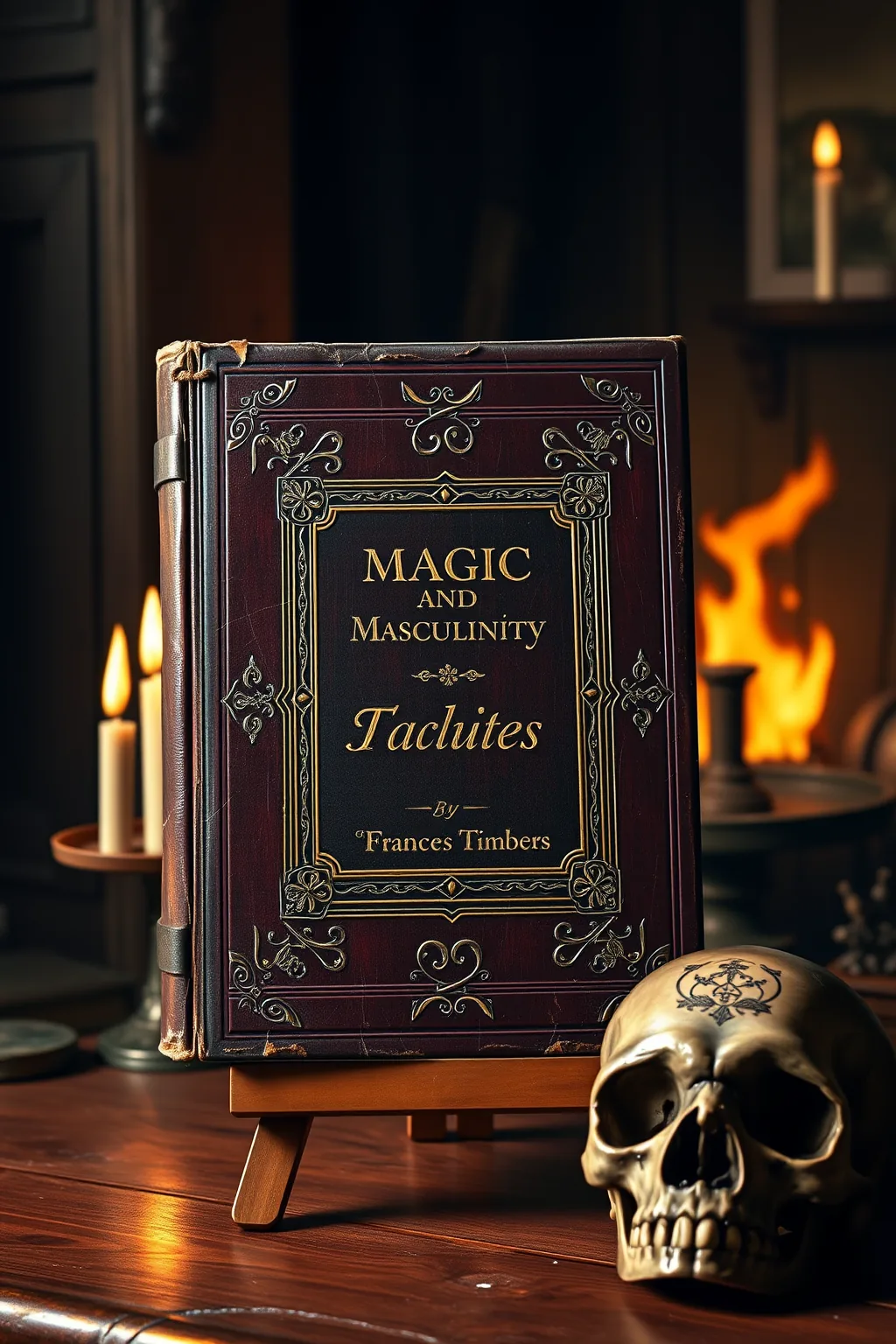
Magic and Masculinity
 61
61

Magic and Masculinity


Frances Timbers' "Magic and Masculinity" is a masterclass in historical occult scholarship. It offers a nuanced perspective on early modern English magic, moving beyond simplistic interpretations to reveal its intricate relationship with gender and social hierarchy. Timbers expertly navigates the complex motivations of male practitioners, demonstrating how ritual magic could simultaneously uphold and undermine patriarchal structures. The book's strength lies in its deep engagement with primary sources, uncovering forgotten narratives of spiritual ambition and power dynamics. This is essential reading for serious students of esotericism, gender studies, and early modern history seeking authoritative insights into the lived experience of magic.
📝 Description
61
Frances Timbers' 2023 book examines how early modern English magic shaped gender roles.
In early modern England, the practice of magic was intertwined with the assertion and subversion of gender. Frances Timbers' "Magic and Masculinity" examines how ritualistic practices, often involving attempts to communicate with celestial and infernal entities, influenced contemporary ideas about masculinity.
The book details how men, frequently in positions of societal power, used magical arts to bolster their authority. Conversely, it also shows how some individuals employed esoteric knowledge to push against gendered expectations, seeking a distinct form of control or self definition. Timbers highlights the intricate relationship between spiritual pursuits and social identity, uncovering subtle dynamics of power and individual action within the era's mystical currents.
This study sheds light on the symbolism and philosophical ideas behind magical practices during a significant period. It is suited for those interested in hidden histories and scholarly examinations of esoteric traditions.
This work sits within the study of Western esotericism, specifically focusing on the practical application of magical traditions in the early modern period. It connects historical occultism with social history, examining how figures like Agrippa or Dee, and the broader currents they represent, interacted with societal structures of gender and power. The book addresses the historical reality of magical beliefs and practices rather than purely theoretical or philosophical aspects, placing it in a lineage of scholarship that views esotericism as a lived historical phenomenon.
💡 Why Read This Book?
Uncover the secret ways ritual magic shaped gender roles in early modern England. "Magic and Masculinity" reveals how practitioners used the occult to assert or defy societal norms, offering a unique lens into historical power dynamics. Essential for scholars, seekers of hidden histories, and practitioners interested in the socio-cultural impact of esoteric arts.
⭐ Reader Reviews
Honest opinions from readers who have explored this book.
❓ Frequently Asked Questions
What period does 'Magic and Masculinity' primarily cover?
The book predominantly focuses on early modern England, specifically the period from the 16th to the 18th centuries, a time of significant intellectual and spiritual ferment regarding magical practices.
Are women's experiences with magic discussed in this book?
While the primary focus is on male practitioners and their engagement with masculinity, the original notes suggest that the experiences of women claiming magical abilities were also considered, though often through a different societal lens.
What types of magic are explored?
The book delves into ritual or ceremonial magic, particularly practices involving the attempted communication with spiritual entities like angels and demons, as a means of understanding its impact on social constructs.
Is this book suitable for beginners in occult studies?
While offering profound insights, the book's scholarly depth may be best appreciated by those with some foundational knowledge of historical occultism or a strong academic interest in the subject.
Does the book explore the philosophical implications of magic on identity?
Absolutely. A central theme is how the practice of magic provided a framework for exploring, reinforcing, and sometimes subverting deeply ingrained societal ideas about identity, particularly concerning gender and power.
🔮 Key Themes & Symbolism
The Alchemy of Power and Gender
This theme examines how the pursuit of arcane knowledge and the performance of ritual magic served as a potent tool for men in early modern England to solidify their social standing and patriarchal authority. It explores the symbolic language of command and control inherent in summoning rituals, and how this mirrored existing societal hierarchies. The book investigates instances where magical practice was not merely an individual quest but a public or semi-public performance designed to reinforce the magician's perceived power and dominion over both the spiritual and earthly realms, intertwining personal ambition with the broader social fabric.
Subverting the Patriarchal Matrix
Beyond mere reinforcement, this theme studies the fascinating ways in which certain male practitioners utilized the discourse and practice of magic to subtly, or overtly, challenge prevailing gender norms. It highlights how the pursuit of hidden truths and the attainment of esoteric wisdom could offer an alternative path to influence and prestige, one that was not solely dependent on inherited social status or conventional masculine roles. The book uncovers the complex strategies employed to achieve a form of 'hegemony' through the mystical, demonstrating magic's capacity to disrupt and reconfigure established power dynamics and gendered expectations.
The Esoteric as a Mirror to Society
This crucial theme positions the practice of ceremonial magic in early modern England not as an isolated phenomenon, but as a deeply embedded reflection and shaper of societal values and customs. The book argues that the rituals, beliefs, and aspirations of magicians offer a unique window into the anxieties, desires, and power struggles of the era, particularly concerning the construction and maintenance of masculinity. By analyzing how individuals engaged with the supernatural, we gain useful insights into their understanding of self, society, and the forces that governed their world, revealing the intricate connection between the visible and invisible dimensions of human existence.
💬 Memorable Quotes
Direct passages from the work, attributed to the author.
“Angelic invocation was a evidence of divine aspiration, demonic pact a descent into forbidden knowledge.”
— This highlights the dual nature of early modern magic, encompassing both the pursuit of higher spiritual attainment and the allure of forbidden, potentially dangerous, occult secrets.
“Masculinity found its echo in the magician's command.”
— This phrase expresses the idea that the act of commanding spirits in ritual magic was seen as an extension or validation of the magician's perceived masculine authority in the social sphere.
“The veil between worlds was thin for the determined will.”
— This speaks to the belief in the power of focused intention and spiritual discipline to breach the boundaries of mundane reality and access hidden areas of knowledge and influence.
💡 Key Ideas
Editorial paraphrase of the work's core concepts — not direct quotes.
The circle drawn was a microcosm of the ordered world.
This quote suggests that the physical and symbolic boundaries of magical rituals mirrored the magician's desire for control and understanding of the cosmos, reflecting societal aspirations for order.
Power was not just held, but conjured.
This quote underscores the active, performative nature of power acquisition in early modern magic, suggesting that influence and authority were actively sought and manifested through ritual means.
🌙 Esoteric Significance
Tradition
This work studies the Western Esoteric Tradition, specifically focusing on its manifestation within early modern European ceremonial magic. It engages with Hermeticism, Kabbalah, and angelic/demonic invocations, exploring how these ancient streams of knowledge were adapted and practiced within a specific historical and cultural context. The book examines the symbolic systems and ritualistic frameworks that sought to bridge the mundane and the divine, offering practitioners a path to spiritual illumination and enhanced worldly influence.
Symbolism
Key symbols explored include the magician's circle as a protective and sacred space, angelic and demonic figures representing divine and infernal forces, and the elemental correspondences used in ritual construction. The act of invocation itself symbolizes the human desire to connect with higher powers or to harness hidden energies for personal or societal aims. The interplay of these symbols reveals a complex worldview where the microcosm (the magician and their ritual) reflects the macrocosm (the universe), and where the mastery of symbols is key to unlocking hidden potentials.
Modern Relevance
The exploration of magic and masculinity in early modern England offers useful insights into the enduring human quest for identity, power, and meaning. In contemporary society, where discussions around gender roles, societal expectations, and the search for authenticity are paramount, this historical perspective provides a valuable comparative lens. It challenges us to consider how individuals have historically used various frameworks, including the esoteric, to define themselves, assert their agency, and navigate complex social structures, offering timeless lessons on the human condition.
👥 Who Should Read This Book
This informative volume is a treasure for several distinct groups. For the **scholar** of history and religious studies, it provides rigorous analysis and a nuanced understanding of early modern occultism. **Seekers** of esoteric knowledge will find a body of historical magical practices and their philosophical underpinnings. **Practitioners** of modern magic will gain valuable historical context and a deeper appreciation for the evolution of magical thought and its relationship with societal structures. Even **beginners** with a serious interest in the occult and its historical impact will discover a compelling narrative that clarifies a complex and fascinating subject.
📜 Historical Context
"Magic and Masculinity" emerges from the vibrant intellectual milieu of early modern England, a period marked by profound shifts in religious, scientific, and social thought. The Renaissance and the Reformation had both challenged established authorities and opened new avenues for inquiry, including the persistent fascination with the occult. Ceremonial magic, whether aimed at angelic communion or demonic negotiation, was not a fringe activity but a subject of considerable interest and debate, often intertwined with the burgeoning scientific investigations of the natural world. This era saw a complex interplay between Christian theology, Neoplatonic philosophy, and practical magic, creating a rich landscape where ideas about power, knowledge, and the divine were constantly being re-examined. The prevailing patriarchal social structure provided a backdrop against which the performances and aspirations of male magicians were inevitably cast, shaping their understanding and application of magical arts.
📔 Journal Prompts
How did the societal expectations of masculinity in early modern England influence the way men approached and practiced magic?
In what ways can the historical pursuit of ritual magic be seen as a form of self-empowerment or personal transformation?
Reflect on the symbolism of the magician's circle and its potential relevance to creating personal boundaries or sacred spaces in your own life.
Consider how contemporary understandings of gender might interact with or diverge from the historical concepts explored in the book.
What does the pursuit of 'hegemony' through magical means reveal about human desires for control and influence across different eras?
🗂️ Glossary
Ceremonial Magic
A form of magic that emphasizes the use of elaborate rituals, incantations, symbolic gestures, and often specific tools to achieve magical effects, typically involving the invocation of spiritual entities.
Patriarchal Society
A social system in which the father or eldest male is the head of the family, and men hold primary power and authority in roles of political leadership, moral authority, social privilege, and control of property.
Hegemony
The political, economic, or military predominance of one state over others, or the social or political dominance of one group or class over others, often achieved through consent rather than overt coercion.
Esoteric
Intended for or likely to be understood by only a small number of people with a specialized knowledge or interest; relating to or characteristic of occult or mystical subjects.
Invocation
The act of calling upon a deity, spirit, or sacred power for assistance, protection, or inspiration, often through prayer or ritualistic recitation.
This book appears in 4 collections
🔮 Readers Also Liked
Browse all →




More by Frances Timbers
All books →
From the “Ritual Magic” Collection
View all →




More Free Magic & Ritual Books
View all →