The Enchantment of Modern Life
 73
73

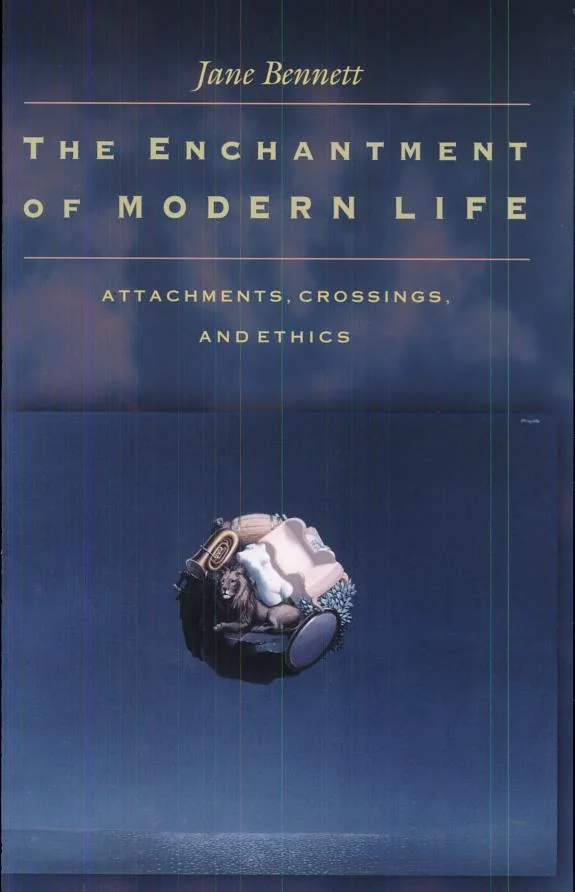
The Enchantment of Modern Life
Jane Bennett’s intervention in *The Enchantment of Modern Life* is a bracing antidote to the prevailing narrative of secular disenchantment. The book’s signal achievement is its insistence that wonder is not a relic of the past but a potent force for ethical responsiveness in the present. Bennett compellingly argues that our capacity for ethical action is diminished when we cease to experience the world as possessing a certain vitality or strangeness. I found her exploration of how aesthetic encounters, particularly with the non-human, can reawaken this sense of enchantment particularly persuasive. However, the book's theoretical density, while rewarding, can occasionally obscure the very affective experiences it seeks to illuminate. Bennett’s discussion of the political implications of enchantment, while present, could perhaps have been expanded to more fully address the mechanisms by which such experiences translate into concrete social change. Ultimately, Bennett offers a vital reorientation, urging readers to recognize the sources of wonder that persist even within the most mundane aspects of modern existence.
📝 Description
73
Jane Bennett's 2001 book argues enchantment is vital for ethical engagement.
Jane Bennett's *The Enchantment of Modern Life* challenges the idea that modern, rational life excludes wonder. Published in 2001, the book contends that enchantment is not a relic of the past but a present possibility. Bennett suggests that experiences of wonder, vitality, and the uncanny can arise from our interactions with the material world and our practices.
This work is for readers interested in political theory, philosophy, and religious studies who question purely materialist views of contemporary existence. Bennett's argument, which she terms 'vital materialism,' posits that even inanimate objects possess a form of agency. This perspective aims to foster a more ethically aware engagement with the world by recognizing the affective dimensions of our experiences.
While not strictly occult, *The Enchantment of Modern Life* engages with traditions that question purely rationalist accounts of reality. It echoes philosophies that find agency and meaning beyond the strictly human or material, resonating with animistic thought and certain strands of process philosophy. Bennett's work offers a contemporary philosophical framing for appreciating the 'vitality' of the non-human world, a concept that can inform esoteric understandings of interconnectedness and immanent meaning.
💡 Why Read This Book?
• Learn how Jane Bennett's concept of 'vital materialism' challenges purely mechanistic views of the world, offering a framework for understanding the agency of non-human entities, a perspective distinct from purely anthropocentric philosophies. • Discover the argument that experiencing enchantment is crucial for motivating ethical behavior, a concept directly linked to Bennett's critique of secular disenchantment prevalent since the work of thinkers like Max Weber. • Gain practical insight into how to cultivate a sense of wonder in everyday life by paying attention to specific examples Bennett provides of aesthetic encounters, which can reawaken affective responsiveness in a rationalized society.
⭐ Reader Reviews
Honest opinions from readers who have explored this book.
❓ Frequently Asked Questions
When was Jane Bennett's 'The Enchantment of Modern Life' first published?
Jane Bennett's 'The Enchantment of Modern Life' was first published on August 5, 2001. This date places its intellectual origins in the early years of the 21st century, a period of significant philosophical and theoretical development.
What is the central argument of 'The Enchantment of Modern Life'?
The book's central argument is that enchantment, or a sense of wonder, is not incompatible with modern life and is, in fact, essential for motivating ethical behavior, challenging the common notion that modernity inherently leads to disenchantment.
What academic fields does Jane Bennett draw upon in this book?
Jane Bennett creatively blends concepts and methods from political theory, philosophy, and literary studies to construct her argument about enchantment and ethical responsiveness.
What does Bennett mean by 'vital materialism'?
Vital materialism, as explored by Bennett, suggests that matter possesses an inherent vitality or agency, moving away from a purely passive view of objects and emphasizing the reciprocal relationship between humans and the non-human world.
How does Bennett propose we experience enchantment today?
Bennett suggests that enchantment can be found through various encounters, particularly aesthetic ones, with the material world, including both human-made objects and natural phenomena, fostering a renewed sense of wonder.
Is 'The Enchantment of Modern Life' a work of spirituality?
While the book discusses enchantment and wonder, it is primarily a work of academic philosophy and critical theory, using these concepts to explore ethics and politics rather than advocating for specific spiritual practices.
🔮 Key Themes & Symbolism
Rehabilitating Enchantment
Bennett directly confronts the widespread belief that the modern, rationalized world has rendered enchantment obsolete. She argues against this 'disenchantment thesis,' positing that genuine experiences of wonder are not only possible but are crucial for a robust ethical life. This theme reframes enchantment not as a nostalgic longing for the past or a surrender to superstition, but as a vital, present-day capacity that can inform our actions and perceptions.
Vital Materialism and Agency
A core concept is 'vital materialism,' which attributes a degree of agency or vitality to non-human and inanimate objects. This perspective challenges anthropocentrism, suggesting that humans are not the sole actors in the world. By recognizing the active role of material things—from political institutions to natural elements—Bennett opens up new avenues for understanding our ethical responsibilities and the interconnectedness of life.
Enchantment as Ethical Motivation
Bennett controversially links the capacity for enchantment directly to the possibility of ethical behavior. She suggests that a world stripped of wonder, perceived as inert or purely instrumental, becomes a world where ethical responsibility is harder to sustain. Experiencing the world as enchanted, as possessing a certain affective pull or strangeness, can thus re-energize our commitment to ethical engagement and political action.
Affect and the Modern Subject
The book explores the role of affect—emotions, feelings, and sensibilities—in shaping our experience of modernity. Bennett examines how certain encounters, often aesthetic or unexpected, can disrupt habitual perceptions and reawaken an affective connection to the world. This focus on affect provides a counterpoint to purely cognitive or rationalist accounts of human agency and ethical decision-making.
💬 Memorable Quotes
Direct passages from the work, attributed to the author.
“The modern world cannot be experienced as enchanted.”
— This represents the common assumption Bennett directly challenges. She uses this widely held belief as a starting point to argue for the possibility and necessity of enchantment in contemporary life, pushing back against secularization theories.
“Enchantment is crucial to motivating ethical behavior.”
— This is a foundational claim of Bennett's work. It posits a direct link between experiencing wonder and the capacity to act ethically, suggesting that a disenchanted worldview can erode our sense of responsibility towards others and the world.
“A creative blend of political theory, philosophy, and literary studies.”
— This highlights Bennett's interdisciplinary approach. She draws from diverse fields to build her argument, demonstrating that understanding enchantment requires insights from how we theorize power, consciousness, and artistic expression.
“The concept of enchantment belongs to past ages of superstition.”
— Bennett identifies this as a prevalent, yet flawed, view. By stating it, she sets up her counter-argument that enchantment is not a historical artifact but a relevant and potent force in the present day.
“The book is a powerful and innovative contribution to an emerging field.”
— This suggests the work's significance within academic discourse. It positions Bennett's writing as pushing boundaries and contributing to new theoretical conversations, particularly around affect and materialism.
🌙 Esoteric Significance
Tradition
While not strictly adhering to a specific esoteric lineage like Hermeticism or Gnosticism, Bennett’s work appeals to certain animistic and pantheistic currents found in various mystical traditions. Her concept of 'vital materialism,' attributing agency to non-human entities, echoes pre-modern understandings of a world imbued with spirit or inherent force, often found in shamanic or nature-based spiritualities. It departs from traditional esoteric focus on hidden knowledge or ritual, instead grounding enchantment in immanent, observable phenomena.
Symbolism
The book's symbolism is less about codified esoteric symbols and more about the affective charge of everyday objects and natural phenomena. For instance, the 'enchantment' found in a well-made artifact or a striking natural landscape can symbolize the potential for the immanent sacredness of the material world. The concept of 'vitality' itself acts as a symbol, representing a force that resists purely mechanistic interpretation and points towards a deeper interconnectedness between the animate and inanimate.
Modern Relevance
Bennett's ideas have found significant traction in contemporary ecocriticism, new materialism, and fields concerned with affect and the environment. Thinkers and artists exploring ecological ethics, the agency of non-human entities, and the emotional dimensions of our relationship with the planet draw upon her framework. Her work provides a philosophical underpinning for movements advocating for a more reciprocal and less exploitative relationship with the natural world.
👥 Who Should Read This Book
• Students of philosophy and critical theory interested in affect, materialism, and ethics, particularly those seeking to move beyond purely rationalist explanations of human motivation. • Environmentalists and ecocritics looking for theoretical frameworks that imbue the non-human world with agency and intrinsic value, challenging anthropocentric perspectives. • Readers curious about the nature of wonder and its role in contemporary life, seeking to understand how enchantment might be cultivated and its ethical implications.
📜 Historical Context
Jane Bennett's *The Enchantment of Modern Life*, published in 2001, arrived at a critical juncture in post-structuralist thought and the burgeoning field of affect theory. The early 2000s saw a growing academic interest in re-evaluating the role of emotion, sensation, and the non-rational in human experience, often as a response to the perceived limitations of purely rationalist or materialist frameworks. Bennett’s work engaged with a broader intellectual current that sought to challenge the 'disenchantment thesis' famously articulated by sociologist Max Weber in the early 20th century, which posited that modernity inevitably leads to a loss of magic and meaning. While thinkers like Weber emphasized the rise of instrumental rationality, Bennett offered a counter-narrative. Her intervention was particularly notable for its engagement with philosophical naturalism and its exploration of 'vital materialism,' a concept that distinguished her from purely phenomenological or psychoanalytic approaches to affect. The book’s reception contributed to the growing discourse on how to understand and articulate experiences of wonder and connection in a secularized, technologically advanced society.
📔 Journal Prompts
The experience of vital materialism and its ethical implications.
Modern disenchantment versus the possibility of contemporary enchantment.
The link between aesthetic encounters and ethical motivation.
Recognizing agency in non-human entities.
The role of affect in shaping our perception of the world.
🗂️ Glossary
Disenchantment
A concept, notably discussed by Max Weber, referring to the process by which the modern world, through rationalization and scientific explanation, loses its magical or spiritual qualities, leading to a perception of reality as purely material and predictable.
Vital Materialism
Bennett's theoretical stance that posits matter itself possesses a degree of vitality, agency, or force, challenging the traditional philosophical view of matter as inert and passive. It emphasizes the reciprocal interactions between humans and the non-human world.
Affect
Refers to the subjective experience of emotions, feelings, and sensibilities. In Bennett's work, affect is crucial for understanding how we respond to the world and how these responses can shape our ethical orientation.
Enchantment
In Bennett's usage, not a return to superstition, but a contemporary experience of wonder, awe, or a sense of the uncanny that arises from encounters with the material world, fostering ethical responsiveness.
Agency
The capacity of an entity to act independently and make its own free choices. Bennett extends this concept to material objects and the non-human world, arguing they possess a form of agency.
Ethical Behavior
Actions or conduct that are morally right and good. Bennett argues that the capacity for enchantment is a prerequisite for genuine ethical engagement with the world.
Secularization
The historical process whereby religious institutions, beliefs, and practices lose social and cultural significance. Bennett's work engages with the idea that secularization has often been wrongly equated with total disenchantment.
This book appears in 1 collection
🔮 Readers Also Liked
Browse all →





From the “Enchantment” Collection
View all →




More Free Esoteric History & Biography Books
View all →