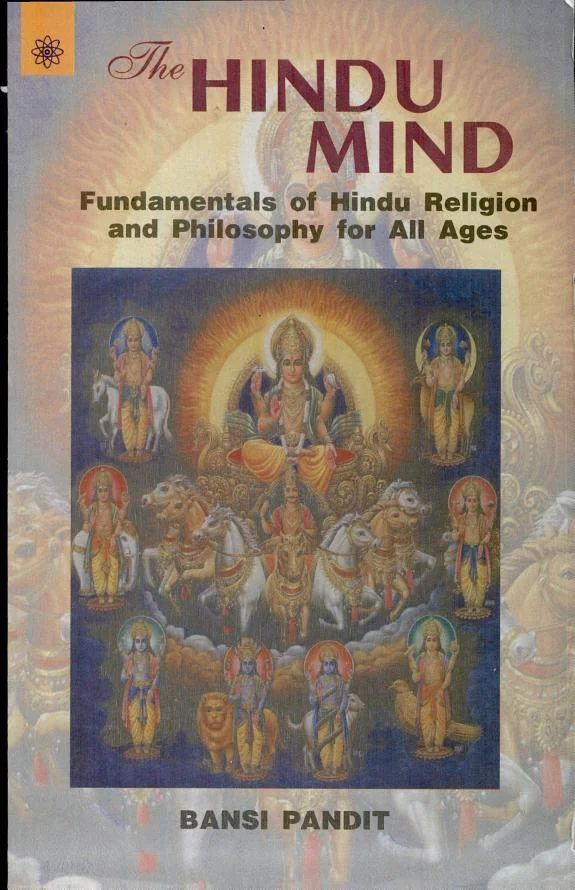
The Hindu Mind
 76
76

The Hindu Mind
Bansi Pandit's The Hindu Mind offers a welcome, structured approach to a vast and often esoteric subject. Its strength lies in its methodical dissection of concepts like Brahman and Atman, providing clarity where many texts rely on metaphor or assertion. Pandit navigates the philosophical nuances with academic rigor, making complex ideas accessible without sacrificing depth. A notable passage meticulously outlines the various interpretations of Maya, the concept of illusion, across different Vedanta schools, highlighting the intellectual diversity within Hinduism. However, the book's academic tone, while a strength for scholars, might prove somewhat dry for readers seeking a more experiential or devotional account of Hindu spirituality. The analysis, while thorough, occasionally feels detached from the lived practice of these philosophies. Despite this, The Hindu Mind remains a valuable scholarly resource for understanding the intellectual architecture of Hindu thought.
📝 Description
76
Bansi Pandit's 2001 book, The Hindu Mind, examines the philosophical and psychological roots of Hindu thought.
First published in 2001, The Hindu Mind by Bansi Pandit is an academic study of the philosophical and psychological foundations of Hindu belief systems. It aims to provide a structured understanding of Indian intellectual traditions, detailing core concepts and their long-term impact. The book breaks down the complex belief structures that have influenced Indian civilization for ages. Pandit's work is intended for scholars of comparative religion and philosophy students, as well as anyone wanting a serious, non-sectarian introduction to Hindu intellectual history. It is suited for readers who prefer detailed analysis and a systematic approach to complicated spiritual and philosophical ideas, especially those looking to gain a deeper understanding beyond surface-level interpretations of Hinduism.
Published as global interest in Eastern thought grew, The Hindu Mind offered an academic perspective distinct from devotional approaches. It emerged from a tradition of Western scholarly engagement with Indian philosophy, building on the work of translators and interpreters of Vedic and Upanishadic texts. Pandit's contribution is situated within this ongoing academic conversation, offering a thorough account of the subject.
The Hindu Mind engages with the philosophical underpinnings of Hinduism, a tradition rich with contemplative practices and metaphysical inquiry. It approaches concepts like Brahman, the ultimate reality, and Atman, the individual soul, not merely as theological points but as frameworks for understanding existence. The book also addresses Karma and Samsara, or reincarnation, as principles governing cause and effect and spiritual development. By examining the different schools of Hindu philosophy, such as Vedanta and Yoga, Pandit places these ideas within a lineage of systematic thought aimed at liberation and understanding consciousness.
💡 Why Read This Book?
• Gain a precise understanding of the concept of Brahman and Atman, differentiating their philosophical roles as explained in the Vedanta schools, offering a foundational clarity not found in introductory spiritual guides. • Grasp the mechanics of Karma and Samsara as causal frameworks, moving beyond simplistic notions to appreciate their intricate role in Hindu philosophy and ethics, as detailed in the book's analysis. • Explore the distinct philosophical contributions of major Hindu schools, such as Advaita Vedanta and Yoga, understanding their unique approaches to consciousness and liberation, as presented in Pandit's comparative framework.
⭐ Reader Reviews
Honest opinions from readers who have explored this book.
❓ Frequently Asked Questions
What is the primary focus of Bansi Pandit's 'The Hindu Mind'?
The Hindu Mind primarily focuses on the philosophical and psychological underpinnings of Hindu thought. It systematically explores core concepts like Brahman, Atman, Karma, and Samsara, offering an academic perspective on these foundational elements of Indian philosophy.
When was 'The Hindu Mind' first published and by whom?
'The Hindu Mind' was first published on January 1, 2001, authored by Bansi Pandit. This date places it within a period of growing academic interest in comparative philosophy and religious studies.
Who would benefit most from reading 'The Hindu Mind'?
Scholars of comparative religion, philosophy students, and individuals seeking a structured, academic introduction to Hindu intellectual traditions will find this book most beneficial. It's ideal for those who prefer detailed analysis over devotional narratives.
Does the book cover different schools of Hindu philosophy?
Yes, the book systematically details and compares various schools of Hindu philosophy, including prominent ones like Vedanta and Yoga. It highlights their distinct perspectives on reality, consciousness, and the path to spiritual liberation.
What is the significance of the concept of 'Atman' as discussed in the book?
The book elucidates Atman as the individual soul or self, exploring its relationship with Brahman, the ultimate reality. It delves into philosophical debates about whether Atman is identical to, or distinct from, Brahman, a central tenet in Hindu metaphysics.
Is 'The Hindu Mind' suitable for beginners with no prior knowledge of Hinduism?
While it provides a comprehensive overview, the book's academic depth might be challenging for absolute beginners. However, for motivated readers willing to engage with detailed philosophical arguments, it offers a robust and structured foundation.
🔮 Key Themes & Symbolism
The Nature of Reality (Brahman)
The work meticulously examines Brahman, the supreme, unchanging reality in Hinduism. It explores the philosophical debates surrounding its impersonal and attributeless nature (Nirguna Brahman) versus its manifestation with attributes (Saguna Brahman). Pandit clarifies how various schools, particularly Vedanta, interpret Brahman as the sole existent, from which all phenomena arise, providing a foundational understanding of the Hindu metaphysical worldview and its implications for understanding the cosmos.
The Individual Self (Atman)
Central to the text is the concept of Atman, the eternal self or soul within each individual. The book contrasts Atman with the transient ego and analyzes its relationship to Brahman. Pandit details the philosophical arguments concerning the identity or non-identity of Atman and Brahman, which forms the crux of Advaita Vedanta's non-dualistic philosophy, and discusses Atman's role in the cycle of rebirth.
Causality and Rebirth (Karma & Samsara)
The Hindu Mind offers a detailed exposition of Karma, the law of cause and effect governing actions and their consequences, and Samsara, the continuous cycle of birth, death, and reincarnation. The book explains these concepts not just as spiritual doctrines but as integral components of Hindu ethics and cosmology, influencing individual destiny and the pursuit of liberation (Moksha) from this cycle.
Paths to Liberation (Moksha)
The book elucidates the principal paths (margas) Hindus traditionally follow to achieve Moksha, liberation from Samsara. It discusses the Jnana Yoga (path of knowledge), Bhakti Yoga (path of devotion), Karma Yoga (path of selfless action), and Raja Yoga (path of meditation), presenting them as distinct yet often complementary approaches to spiritual realization and union with the divine.
💬 Memorable Quotes
Direct passages from the work, attributed to the author.
“Atman is not merely the individual consciousness, but the eternal witness within.”
— This interpretation highlights the distinction between the temporary, empirical self and the enduring, transcendental Atman, which Hindu philosophy posits as the true essence of being, unaffected by worldly changes.
“Every action generates a corresponding reaction, shaping present and future existences.”
— This succinctly explains the principle of Karma, illustrating its role as a fundamental law of moral and causal accountability that extends across lifetimes within the framework of Samsara.
“Maya veils the true nature of reality, creating the illusion of a separate self and world.”
— This refers to the concept of Maya, an often-misunderstood principle suggesting that the phenomenal world, with its apparent distinctions, is a form of cosmic illusion that obscures the singular reality of Brahman.
💡 Key Ideas
Editorial paraphrase of the work's core concepts — not direct quotes.
The ultimate reality, Brahman, is the sole existence; all else is a manifestation or illusion.
This paraphrased concept captures the essence of Advaita Vedanta's non-dualistic perspective, emphasizing Brahman as the singular, unchanging truth underlying the perceived multiplicity of the universe.
Liberation signifies the cessation of suffering and the dissolution of individual limitations into the infinite.
This paraphrased idea expresses the goal of Moksha, portraying it not merely as an afterlife state but as a profound transformation of consciousness, ending the cycle of Samsara and realizing one's unity with the divine.
🌙 Esoteric Significance
Tradition
The Hindu Mind engages deeply with the philosophical traditions of India, which are foundational to many esoteric Western lineages, particularly those influenced by Theosophy and later New Age movements. While not strictly 'esoteric' in the Western sense of secret teachings, its exploration of concepts like Brahman, Atman, Maya, and the yogic paths looks at metaphysical principles that resonate with Hermetic and Gnostic ideas about ultimate reality, the divine spark within, and liberation from illusion.
Symbolism
Key symbols explored include the Om (Aum), representing the primordial sound and the totality of existence, and the lotus, symbolizing purity, spiritual awakening, and the unfolding of consciousness. The book also analyzes the symbolism inherent in the concept of Brahman as both formless (Nirguna) and embodied (Saguna), reflecting the esoteric principle of unity in diversity and the manifestation of the One into the many.
Modern Relevance
Contemporary thinkers and practitioners in fields ranging from transpersonal psychology to consciousness studies often draw upon the sophisticated metaphysical frameworks presented in Hindu philosophy. The book's analysis of the mind-body-spirit connection, the nature of consciousness, and the pursuit of inner peace through practices like meditation remains highly relevant to modern spiritual seekers and academics exploring alternative paradigms of existence.
👥 Who Should Read This Book
• Students of Comparative Religion and Philosophy: Gain a structured, academic understanding of core Hindu concepts that form the basis of countless philosophical inquiries worldwide. • Aspiring Yoga and Meditation Practitioners: Deepen your theoretical knowledge beyond physical postures and basic mindfulness, understanding the philosophical roots of these ancient practices. • Researchers of Mystical Traditions: Explore the metaphysical underpinnings of a major world religion, identifying parallels and divergences with Western esoteric thought and practices.
📜 Historical Context
Published in 2001, Bansi Pandit's The Hindu Mind emerged in an era of accelerated globalization and heightened Western interest in Eastern spiritual traditions. This period saw a proliferation of popular books on Hinduism, often focusing on yoga and meditation. Pandit's work distinguished itself by providing a more academic, philosophical, and psychological analysis, grounding the discussion in classical texts and scholarly interpretation. It built upon a long tradition of Western Indology that began in earnest in the late 18th century with scholars like Sir William Jones. While contemporaries like Wendy Doniger were exploring Hindu mythology and gender, Pandit focused on the intellectual architecture. The book’s rigorous approach offered a counterpoint to more esoteric or devotional interpretations, providing a structured intellectual framework for understanding a complex religious and philosophical system that had been subject to diverse interpretations, from colonial-era Orientalism to modern New Age appropriations.
📔 Journal Prompts
Reflect on the concept of Maya as presented in the text, considering its implications for perceived reality.
Analyze the relationship between Brahman and Atman as described by Pandit, noting any personal resonances.
Consider the principle of Karma and its potential influence on personal choices and ethical frameworks.
Map the different Margas (paths to liberation) discussed, identifying which aligns most with your understanding of spiritual progress.
Evaluate the definition of Moksha provided, contrasting it with common understandings of enlightenment or salvation.
🗂️ Glossary
Brahman
The ultimate, unchanging reality or absolute consciousness in Hinduism. It is the supreme cosmic spirit, the source and sustainer of all existence, often described as formless and infinite.
Atman
The individual soul, self, or essence. In many Hindu philosophies, particularly Advaita Vedanta, Atman is identical to Brahman, representing the eternal, unchanging core of a being.
Karma
The principle of cause and effect, where actions (karma) generate consequences that influence an individual's present and future lives. It is a fundamental law of moral accountability.
Samsara
The continuous cycle of birth, death, and rebirth (reincarnation) driven by karma and ignorance. It is the state from which spiritual liberation (Moksha) is sought.
Moksha
Liberation or release from the cycle of Samsara. It represents the ultimate spiritual goal, often described as union with Brahman or the cessation of suffering.
Maya
Cosmic illusion or the power that conceals the true nature of reality (Brahman) and projects the phenomenal world of multiplicity and duality.
Vedanta
A major school of Hindu philosophy, particularly focused on the Upanishads. It explores themes of Brahman, Atman, and the nature of reality, with prominent sub-schools like Advaita (non-dualism) and Vishishtadvaita (qualified non-dualism).
This book appears in 1 collection
🔮 Readers Also Liked
Browse all →








From the “Hinduism” Collection
View all →







More Free Sacred Texts & Gnosticism Books
View all →