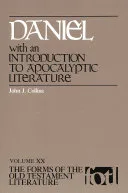
Daniel
 82
82

Daniel
John J. Collins' "Daniel" is a precise, scholarly dissection of a notoriously complex biblical text. His application of form criticism to the book's anomalies, such as its bilingualism and narrative structure, is particularly illuminating. Collins avoids sensationalism, focusing instead on the historical setting and literary intention. A notable strength is his clear exposition of how the book's place in the canon presents interpretive challenges, especially concerning its relationship to prophetic traditions. While the book's print-on-demand nature makes it non-returnable, a standard caveat for such editions, the true limitation lies in its demanding academic tone. It requires a solid foundation in biblical studies and is inaccessible to the uninitiated. The detailed analysis of the "setting and intention" of Daniel, particularly in relation to Hellenistic Jewish communities, is a significant contribution. Collins' work offers a foundational, critical resource for understanding this pivotal text.
📝 Description
82
John J. Collins' 1984 study critically examines the biblical book of Daniel.
First published in 1984, John J. Collins' "Daniel" offers a critical examination of the biblical book. This edition is geared toward scholars and serious students, providing a thorough analysis of Daniel's structure, its use of Aramaic and Hebrew, and its place in the canon. Collins employs form criticism to illuminate the literary development and historical context of the book's visions and narratives. The study is intended for academics, theological students, and biblical scholars interested in a rigorous, critical approach to scripture. It will appeal to those studying ancient Near Eastern literature, Jewish thought history, and the development of apocalyptic traditions. Readers looking for a scholarly, non-devotional interpretation that addresses textual challenges and historical settings will find this work valuable. It does not serve as devotional commentary.
Collins' work emerged during a period of significant critical scholarship on biblical texts in the late 20th century. Debates concerning source criticism, form criticism, and the historical dating of prophetic and apocalyptic writings were ongoing. This book engages with the scholarly tradition following figures like Gerhard von Rad, whose work influenced the understanding of Old Testament theology and apocalypticism. Collins places Daniel within its historical setting, likely the Hellenistic period, and discusses the interpretive issues raised by its inclusion in the biblical canon.
While often studied within mainstream biblical scholarship, the book of Daniel and its associated apocalyptic literature hold a unique place in esoteric traditions. These texts, with their visionary experiences, symbolic language, and predictions of future events, have been interpreted through various mystical and Gnostic lenses. The exploration of "dualism" within apocalyptic thought, as examined by Collins, resonates with Gnostic cosmologies that often posit a struggle between spiritual and material realms. The text's integration into the biblical canon, alongside its prophetic and visionary elements, has made it a subject of fascination for those seeking hidden meanings or correspondences beyond literal interpretation.
💡 Why Read This Book?
• Gain a critical understanding of the literary structure and historical context of the Book of Daniel, as explored through Collins' analysis of its "anomalies" and "setting and intention," first published in 1984. • Grasp the characteristics of Jewish apocalyptic literature by examining how Collins applies "form criticism" to Daniel's visions and narratives, providing a scholarly framework. • Appreciate the challenges of canonical inclusion by understanding Collins' discussion on Daniel's "coherence and bilingualism," offering unique insights into its interpretive history.
⭐ Reader Reviews
Honest opinions from readers who have explored this book.
❓ Frequently Asked Questions
What is the primary focus of John J. Collins' "Daniel"?
The book critically examines the biblical text of Daniel, focusing on its characteristics as Jewish apocalyptic literature, its historical setting, and its literary intention. Collins applies form criticism to analyze its unique features.
When was John J. Collins' "Daniel" first published?
The original publication date for John J. Collins' "Daniel" was December 5, 1984, as indicated by the print-on-demand edition's metadata.
Is John J. Collins' "Daniel" suitable for devotional reading?
No, this book is a scholarly, critical analysis intended for academics and serious students of biblical literature. It focuses on textual criticism, historical context, and literary theory rather than devotional interpretation.
What is "form criticism" as discussed in Collins' "Daniel"?
Form criticism is a method of biblical analysis that seeks to identify the original literary forms (genres) of a text and understand their historical setting and function within the community.
Why is the "bilingualism" of the Book of Daniel discussed?
Collins discusses the book's "bilingualism" (parts in Aramaic, parts in Hebrew) as one of its textual anomalies that requires critical examination to understand its composition and transmission history.
What does "print on demand" mean for this edition of "Daniel"?
A "print on demand" book is produced only when an order is placed. This often means it is non-returnable, as stated in the book's description, and may have different production qualities than traditionally published books.
🔮 Key Themes & Symbolism
Apocalyptic Literature Genre
Collins meticulously outlines the defining features of Jewish apocalyptic literature, a genre that flourished in periods of crisis. He examines characteristic elements such as visionary experiences, symbolic language, eschatological timelines, and angelic mediators. The work analyzes how the Book of Daniel exemplifies these traits, providing scholars with a framework for understanding its unique place within ancient Israelite religious thought and its divergence from earlier prophetic traditions.
Textual Anomalies and Form Criticism
A central theme is the examination of the Book of Daniel's "anomalies." Collins employs "form criticism" to dissect issues such as its bilingual composition (Aramaic and Hebrew), its narrative structure which blends prose and poetry, and its historical setting versus its composition date. This analytical approach seeks to understand the literary development and historical forces that shaped the text, moving beyond simplistic readings.
Historical Setting and Intention
The work strongly emphasizes understanding the "setting and intention" of the Book of Daniel. Collins argues that the text was likely composed during the Hellenistic period, possibly in response to the persecution under Antiochus IV Epiphanes. He explores the purposes it served for its original audience, likely offering hope and theological coherence during times of intense socio-political and religious pressure.
Canonical Placement
Collins addresses the complexities surrounding Daniel's inclusion in the biblical canon. He discusses the debates regarding its classification – whether as prophetic literature or wisdom literature – and how its unique characteristics challenged traditional categories. Understanding its "place in the canon" is crucial for grasping its theological significance and its reception throughout Jewish and Christian history.
💬 Memorable Quotes
Direct passages from the work, attributed to the author.
“Collins examines the main characteristics and discusses the setting and intention of apocalyptic literature.”
— This statement highlights the core methodology of the book: a dual focus on the genre's defining traits and the specific historical and literary purposes behind the Book of Daniel's composition.
“He begins his discussion of Daniel with a survey of the book's anomalies.”
— This points to the critical approach taken, acknowledging that Daniel presents unusual features requiring careful scholarly attention, rather than assuming seamless textual integrity from the outset.
“An examination of the bearing of form criticism on those anomalies.”
— This emphasizes the analytical tool used by Collins, form criticism, as essential for understanding the origins and development of the Book of Daniel's peculiar textual features.
“He explores the book's place in the canon and the problems with its coherence and bilingualism.”
— This signifies the book's engagement with the historical and theological challenges posed by Daniel's inclusion in the biblical canon, particularly focusing on its internal consistency and linguistic diversity.
“Collins provides a section-by-section analysis.”
— This indicates the comprehensive nature of the study, assuring the reader that each part of the Book of Daniel receives detailed scholarly attention within the broader critical framework.
🌙 Esoteric Significance
Tradition
While "Daniel" is primarily a work of critical biblical scholarship, its focus on apocalyptic literature positions it adjacent to esoteric traditions that draw heavily on prophetic and eschatological visions. Esoteric lineages, including some branches of Kabbalah and later occult movements influenced by biblical prophecy, often interpret Daniel's visions through allegorical or mystical lenses. Collins' critical approach, by contrast, grounds the text in its historical context, but the symbols and prophecies he analyzes are foundational for many esoteric interpretations.
Symbolism
The Book of Daniel is rich with potent symbols that hold significance in various esoteric traditions. The "four beasts" emerging from the sea in chapter 7 are frequently interpreted esoterically as representing successive empires or cosmic forces, with the "fourth beast" often seen as a precursor to a final, transformative age. The "statue" in chapter 2, composed of different metals, symbolizes the rise and fall of world empires, a motif explored in historical and prophetic esoteric systems. The "seventy weeks" prophecy also serves as a complex temporal and cosmological map for some.
Modern Relevance
Contemporary esoteric thinkers and practitioners, particularly within circles interested in biblical prophecy, eschatology, and comparative religion, continue to engage with the Book of Daniel. While Collins' critical scholarship provides a historical baseline, many modern occultists and spiritual seekers interpret Daniel's visions as coded messages about future events, spiritual evolution, or hidden historical cycles. The archetypal imagery of divine intervention and the struggle against oppressive powers remains a compelling theme in various New Age and esoteric movements.
👥 Who Should Read This Book
• Academic biblical scholars and students of ancient Near Eastern literature seeking a rigorous, critical analysis of the Book of Daniel's genre, history, and literary features. • Researchers in comparative religion and the history of Jewish thought interested in the development of apocalypticism and its textual expressions. • Serious theological students and clergy who require a foundational understanding of critical approaches to scripture before engaging with devotional or theological interpretations of Daniel.
📜 Historical Context
John J. Collins' "Daniel" emerged in 1984, a period of robust critical engagement with biblical texts. The intellectual climate was shaped by decades of source criticism, form criticism, and redaction criticism, which had profoundly influenced Old Testament scholarship. Scholars like Gerhard von Rad had already established influential paradigms for understanding Hebrew Bible theology and apocalyptic thought. Collins' work built upon this foundation, directly engaging with debates surrounding the dating and interpretation of apocalyptic literature. It emerged in dialogue with, and sometimes in contrast to, earlier scholarship that sought to understand texts like Daniel within their immediate historical and literary contexts, often placing its composition in the Hellenistic period under Antiochus IV Epiphanes. The reception of such critical works often involved discussions within academic theological circles, with scholars evaluating their contributions to the ongoing scholarly conversation about biblical origins and meaning.
📔 Journal Prompts
The Book of Daniel's "anomalies" and their relation to its "setting and intention."
The application of "form criticism" to understanding apocalyptic texts.
Daniel's "place in the canon" and its interpretive consequences.
The symbolic meaning of the "four beasts" in chapter 7.
The historical context surrounding the Book of Daniel's composition.
🗂️ Glossary
Apocalyptic Literature
A genre of literature characterized by visions, symbolic language, and eschatological themes, often revealing divine secrets about the end times or cosmic struggles.
Form Criticism
A method of biblical analysis that identifies and analyzes the original literary forms (genres) of biblical texts to understand their historical setting and function.
Bilingualism
The characteristic of a text being written in two languages. In Daniel, this refers to the sections written in Aramaic and those in Hebrew.
Canon
The official collection or list of books considered to be sacred scripture within a religious tradition.
Hellenistic Period
The historical period following the conquests of Alexander the Great (c. 323 BCE) and preceding the Roman conquest, characterized by the spread of Greek culture.
Coherence
The quality of being logical, consistent, and forming a unified whole. In textual analysis, it refers to the internal consistency of the narrative or theological arguments.
Print on Demand (POD)
A publishing method where books are printed individually as orders are received, rather than in large batches.