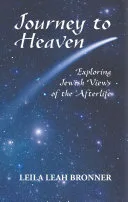
Journey to Heaven
 79
79

Journey to Heaven
Bronner's "Journey to Heaven" provides a welcome, methodical survey of Jewish afterlife beliefs. The author's strength lies in her clear exposition of complex theological developments, tracing the lineage of ideas from biblical Sheol to Talmudic paradise. She effectively organizes material from disparate sources, making the evolution of concepts like resurrection understandable. A particularly strong section details the Mishnah's practical approach to "Olam Ha-Ba," grounding abstract eschatology in ethical and ritualistic observance. However, the work occasionally feels more like a textbook summary than a deeply interpretive study; the "esoteric" label feels somewhat aspirational rather than inherent in the presentation. While informative, the analysis could benefit from more engagement with the mystical dimensions that inevitably surround such profound topics, particularly from the Kabbalistic tradition. Nonetheless, it remains a valuable resource for understanding the historical and textual foundations of Jewish eschatology.
📝 Description
79
Leila Leah Bronner's 1977 book traces Jewish beliefs about the afterlife.
Leila Leah Bronner's "Journey to Heaven" examines Jewish eschatological thought from its earliest expressions to later rabbinic elaborations. The book systematically addresses concepts such as Sheol, bodily resurrection, divine judgment, and the "world to come" (Olam Ha-Ba). Bronner traces the development of these ideas through scriptural references, Second Temple literature, the Mishnah, and the Talmud. This chronological approach reveals the intellectual debates and refinements that shaped Jewish theology concerning ultimate destiny and existence beyond earthly life.
The work is valuable for students of comparative religion, theology, and Jewish studies. It also appeals to those interested in the philosophical underpinnings of Western traditions, particularly those seeking a grounded understanding of afterlife concepts. Bronner's scholarship provides a clear framework for understanding how these ideas evolved within a specific cultural and religious context.
While "Journey to Heaven" focuses on mainstream Jewish eschatology, its examination of afterlife concepts touches upon themes often considered esoteric. The detailed exploration of the "world to come," paradise, and hell delves into the speculative and visionary aspects of Jewish tradition. Bronner's work provides the historical and textual grounding for understanding these profound ideas, which have long fascinated mystics and theologians seeking knowledge of divine realms and ultimate human destiny.
💡 Why Read This Book?
• Gain a foundational understanding of Jewish concepts of the afterlife, tracing the development from biblical Sheol to Talmudic paradise, a journey illuminated by the book's chronological approach. • Explore the specific concept of "Olam Ha-Ba" (the World to Come) as presented in the Mishnah, learning about the criteria for entry and its significance in Jewish ethical thought. • Understand the historical evolution of beliefs surrounding bodily resurrection, a key theme discussed in relation to Second Temple literature and its subsequent interpretations within rabbinic texts.
⭐ Reader Reviews
Honest opinions from readers who have explored this book.
❓ Frequently Asked Questions
What are the main Jewish beliefs about the afterlife discussed in 'Journey to Heaven'?
The book covers Sheol, bodily resurrection, immortality, divine judgment, messianism, and the concept of 'Olam Ha-Ba' (the World to Come), tracing their development through biblical, Second Temple, Mishnah, and Talmudic literature.
When was Leila Leah Bronner's 'Journey to Heaven' first published?
Leila Leah Bronner's 'Journey to Heaven' was first published on June 1, 2011.
Does the book discuss the concept of Gan Eden?
Yes, 'Journey to Heaven' examines the Talmudic depictions of Gan Eden (paradise) and Gehenna, contextualizing them within the broader discussion of the afterlife and divine reward and punishment.
Is 'Journey to Heaven' suitable for beginners interested in Jewish eschatology?
Absolutely. The book is designed to be accessible, presenting complex theological ideas in a clear, systematic manner suitable for students of religion and those new to Jewish afterlife concepts.
What is the significance of 'Olam Ha-Ba' in Jewish belief as explained by Bronner?
Bronner explains 'Olam Ha-Ba' as the 'World to Come,' a central concept in the Mishnah, representing a future state of existence or a perfected world, and discusses the conditions required to merit entry into it.
Which ancient texts are referenced in 'Journey to Heaven' regarding the afterlife?
The book draws from biblical texts, Second Temple literature, the Mishnah, and the Talmud to explore evolving notions of the afterlife and the soul's journey.
🔮 Key Themes & Symbolism
Evolution of Sheol
Bronner meticulously charts the concept of Sheol, beginning with its biblical allusions as a shadowy underworld. The work illustrates how this early conception evolved, moving from a general field of the dead towards more nuanced ideas about post-mortem existence. This evolution is crucial for understanding subsequent Jewish thought on judgment and the afterlife, setting the stage for more developed doctrines of resurrection and reward or punishment.
Bodily Resurrection
A significant focus is placed on the development of the doctrine of bodily resurrection. Bronner examines its emergence and discussion within Second Temple literature, a period rich with diverse theological speculation. The book clarifies how this idea became a central to Jewish eschatology, influencing beliefs about the ultimate restoration of the individual and the world, and distinguishing it from purely spiritual conceptions of immortality.
Olam Ha-Ba and Merit
The Mishnah's perspective on 'Olam Ha-Ba,' or the World to Come, is presented as a vital stage in Jewish eschatological thought. Bronner explores how this concept was integrated into rabbinic discourse, emphasizing not just the future state but the practical means by which individuals could 'merit' entry. This highlights a focus on ethical conduct and observance as pathways to eternal reward within the traditional framework.
Talmudic Paradise
The work concludes its survey by detailing the Talmud's vivid depictions of Gan Eden (paradise) and Gehenna. These descriptions offer a glimpse into the rabbinic imagination concerning divine recompense and the ultimate fate of souls. Bronner presents these narratives as integral to the Jewish understanding of justice, reward, and the spiritual consequences of earthly actions, completing the journey from early notions to more elaborate eschatological visions.
💬 Memorable Quotes
Direct passages from the work, attributed to the author.
“The Bible's references to Sheol are sparse.”
— This observation points to the nascent nature of afterlife concepts in early Hebrew scripture, suggesting that the complex doctrines of judgment and resurrection developed later within Jewish tradition.
“Immortality and bodily resurrection in Second Temple literature.”
— This phrase highlights a key period of theological development where ideas about the soul's continued existence and the physical body's future were actively debated and formulated, laying groundwork for later rabbinic thought.
“The Mishnah's discussions of olam ha-ba, or the world to come.”
— This indicates the Mishnah's significant contribution to Jewish eschatology, focusing on the concept of a future perfected state and the human responsibility to prepare for it through righteous living.
“The Talmud's depictions of paradise.”
— This points to the rich, often narrative, descriptions found in the Talmud that illustrate the nature of divine reward and the ultimate spiritual destiny of the righteous, providing vivid imagery for Jewish eschatological belief.
“Basic tenets of Jewish belief regarding the afterlife.”
— This phrase expresses the book's core objective: to lay out the fundamental principles and doctrines concerning what happens after death within the Jewish religious and cultural context.
🌙 Esoteric Significance
Tradition
While "Journey to Heaven" is primarily a work of historical and textual scholarship on Jewish eschatology, it touches upon themes central to esoteric traditions. Its exploration of the afterlife, resurrection, and the "World to Come" engages with concepts that have deep roots in Kabbalistic and Gnostic thought, albeit from a more mainstream academic perspective. The book provides the foundational textual basis upon which more mystical interpretations of these concepts are often built, offering a necessary grounding for understanding the speculative elements within Jewish mysticism.
Symbolism
The concept of Sheol, initially depicted as a dim, undifferentiated realm, symbolizes an early stage of consciousness regarding death and the beyond. The later development of Gan Eden (paradise) and Gehenna introduces potent symbolic landscapes representing divine justice, reward, and purification. The idea of bodily resurrection itself serves as a powerful symbol of ultimate restoration, wholiness, and the enduring connection between the material and spiritual realms in Jewish thought.
Modern Relevance
Contemporary thinkers and practitioners exploring comparative eschatology or the historical roots of Western spiritual thought find Bronner's work invaluable. Its clear exposition of the evolution of Jewish afterlife beliefs informs discussions in fields ranging from comparative religion to the philosophy of death. Students of Jewish mysticism, even those focused on later Kabbalistic texts, benefit from understanding the earlier conceptual frameworks that Bronner meticulously outlines, providing essential context for esoteric interpretations.
👥 Who Should Read This Book
• Beginning students of Jewish studies and comparative religion seeking a clear, chronological overview of concepts concerning death, the soul, and the afterlife within Judaism. • Scholars and theologians interested in the historical development of eschatological doctrines, particularly the evolution of ideas from biblical texts through the Mishnah and Talmud. • Individuals drawn to philosophical and spiritual inquiries about existence beyond death, who wish to understand the specific frameworks developed within the Jewish tradition.
📜 Historical Context
Leila Leah Bronner's "Journey to Heaven" emerges from a scholarly tradition deeply engaged with the historical development of religious thought, particularly within Judaism. Published in 2011, it builds upon decades of critical analysis of biblical, Second Temple, and rabbinic texts. The intellectual currents of the late 20th and early 21st centuries, characterized by rigorous textual criticism and comparative religious studies, inform its approach. This work stands in dialogue with scholars like Gershom Scholem, who pioneered the academic study of Jewish mysticism and esotericism, and scholars focusing on the formative periods of rabbinic literature. Its methodical survey of concepts like Sheol, resurrection, and "Olam Ha-Ba" contrasts with more purely theological or mystical treatments, offering a historically grounded perspective on beliefs that have profoundly shaped Jewish identity and practice. The book's clarity addresses a need for accessible yet scholarly introductions to these complex doctrines.
📔 Journal Prompts
The concept of Sheol as presented in early biblical references.
Conditions for meriting entry into 'Olam Ha-Ba' according to the Mishnah.
Talmudic descriptions of Gan Eden and their symbolic meaning.
The evolution of the idea of bodily resurrection across different texts.
Personal reflections on the concept of divine judgment and its implications.
🗂️ Glossary
Sheol
An ancient Hebrew term, often translated as the 'underworld' or 'grave,' representing the abode of the dead in early biblical thought. Initially depicted as a shadowy, undifferentiated realm.
Olam Ha-Ba
A Hebrew phrase meaning 'The World to Come.' In Jewish eschatology, it refers to a future state of existence, often associated with the messianic era or the afterlife, characterized by divine perfection and justice.
Gan Eden
Literally 'Garden of Eden.' In Jewish tradition, it refers to paradise, the place of ultimate reward for the righteous in the afterlife, often depicted as a place of spiritual delight and closeness to God.
Gehenna
A term derived from the Valley of Hinnom. In Talmudic literature, it represents a place of purification or punishment for the wicked after death, often seen as a temporary state before eventual redemption or a place of eternal suffering.
Second Temple Period
The era in Jewish history spanning from the rebuilding of the Second Temple in Jerusalem (c. 516 BCE) to its destruction by the Romans in 70 CE. A time of significant theological development and diversity.
Mishnah
A foundational compilation of Jewish oral law and legal interpretations, codified around 200 CE. It represents the earliest major post-biblical Jewish religious text.
Talmud
The central text of Rabbinic Judaism, comprising the Mishnah and its extensive commentary, the Gemara. It is a vast compendium of law, legend, philosophy, and ethics, compiled over centuries.