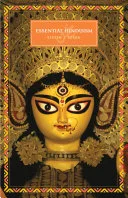
Essential Hinduism
 72
72

Essential Hinduism
Rosen’s "Essential Hinduism" succeeds admirably in its stated goal: to provide a clear, accessible introduction to a vast and often intimidating religious system. By concentrating on Vaishnavism, the author avoids the overwhelming breadth that can plague similar overviews, offering instead a focused lens on devotional practice. The explanation of concepts like dharma and karma, particularly as they relate to bhakti, is commendably straightforward. A notable strength is the author's ability to present the devotional fervor of Vaishnavism without resorting to overly academic or, conversely, overly sentimental language. However, the book's conciseness, while a benefit for beginners, may leave those with some prior knowledge wanting more depth on philosophical schools or historical sectarian divergences. The section on the avatar system, for instance, could benefit from further elaboration. Nevertheless, for the uninitiated seeking an entry point into Hindu thought and practice, Rosen offers a solid, well-structured foundation.
📝 Description
72
Steven J. Rosen's 2006 book clarifies Hindu beliefs and practices for a general audience.
Published in 2006, Steven J. Rosen's "Essential Hinduism" aims to clarify one of the world's oldest religious traditions for newcomers. The book acknowledges the immense diversity within Hinduism, recognizing that this complexity can sometimes hinder understanding. Rosen focuses on making Hindu beliefs, practices, and historical development accessible, particularly for those unfamiliar with its extensive nature.
This work is especially suited for beginners or anyone seeking a straightforward overview. It gives priority to introducing Vaishnavism, the largest and most prevalent sect of Hinduism. This makes it a good starting point for readers interested in this particular devotional path. Those who find other introductory texts overly dense or too general may find this focused approach beneficial. The book traces Hinduism's ancient origins and its evolution over thousands of years, touching on the core texts and philosophical ideas that have shaped the faith.
While not strictly an esoteric text itself, "Essential Hinduism" engages with traditions that have esoteric dimensions within their broader devotional frameworks. It highlights the concept of *moksha*, or liberation, a goal shared by many spiritual paths, including those often categorized as esoteric. The focus on *bhakti* (devotional worship) within Vaishnavism, particularly the relationship with divine forms like Vishnu and his avatars, can be seen as a devotional approach to realizing a higher reality, a common thread in various esoteric traditions.
💡 Why Read This Book?
• Gain a foundational understanding of Vaishnavism, the dominant devotional tradition within Hinduism, as presented in Rosen's focused exploration. • Grasp core concepts such as dharma and karma and their practical application within the bhakti (devotional) framework, as detailed in the book's explanations. • Appreciate the historical roots of Hinduism, tracing its lineage from ancient times to the present day, providing context for its enduring traditions.
⭐ Reader Reviews
Honest opinions from readers who have explored this book.
❓ Frequently Asked Questions
What is Vaishnavism and why does "Essential Hinduism" focus on it?
Vaishnavism is the largest branch of Hinduism, centered on the worship of Vishnu and his avatars like Rama and Krishna. Rosen focuses on it because it represents the most common form of Hindu practice, offering a manageable entry point for new students.
When was "Essential Hinduism" first published?
The book "Essential Hinduism" by Steven J. Rosen was first published on October 30, 2006, aiming to demystify the religion for a wider audience.
Does the book cover all Hindu deities?
While acknowledging the broader Hindu pantheon, "Essential Hinduism" primarily focuses on Vaishnavism, emphasizing Vishnu and his prominent avatars. It provides a specific lens rather than an exhaustive catalog of all deities.
Is "Essential Hinduism" suitable for academic study?
It serves as an excellent introductory text for academic study, providing a clear overview of core beliefs and practices. However, for advanced research, supplementary texts delving into specific philosophical schools or historical periods would be necessary.
What are the key philosophical concepts explained in the book?
The book explains fundamental concepts such as dharma (duty/cosmic order), karma (action and consequence), and moksha (liberation), particularly as they relate to the devotional practices of Vaishnavism.
How does Rosen approach the complexity of Hinduism?
Rosen addresses Hinduism's complexity by focusing on the most prevalent form, Vaishnavism, and presenting its teachings, beliefs, and practices in a straightforward, accessible manner for those new to the subject.
🔮 Key Themes & Symbolism
The Path of Devotion (Bhakti Yoga)
Rosen emphasizes bhakti yoga as the central practice within Vaishnavism. This theme explores how devotion to Vishnu and his avatars serves as the primary means of spiritual realization and connection. The work details the importance of chanting, worship, and surrender as expressions of this path. It illustrates how personal relationships with the divine, particularly through the lens of avatars, form the bedrock of this tradition, distinguishing it within the broader spectrum of Hindu practices.
Understanding Dharma and Karma
This theme explores the foundational concepts of dharma and karma, crucial for comprehending Hindu ethics and cosmic order. Rosen explains dharma not just as duty, but as the inherent nature of things and the righteous path one should follow. Karma is presented as the law of cause and effect, shaping present and future lives. The interplay between performing one's dharma and generating karma is explored, highlighting its significance in the pursuit of liberation (moksha).
The Vaishnava Pantheon
Essential Hinduism focuses on the worship of Vishnu and his manifold avatars. This theme examines the significance of these divine forms, such as Rama and Krishna, within the Vaishnava tradition. It explains their roles, myths, and the devotional relationship followers cultivate with them. The concept of divine descent (avatar) is central, illustrating how the supreme being interacts with the material world to uphold righteousness and guide humanity.
The Goal of Liberation (Moksha)
The ultimate aim in many Hindu traditions, including Vaishnavism, is moksha – liberation from the cycle of birth, death, and rebirth (samsara). This theme explores what moksha entails within the Vaishnava context, often described as attaining the eternal service of the divine. Rosen outlines how the practices and philosophical understanding discussed throughout the book are oriented towards achieving this transcendent state, the final release from material bondage.
💬 Memorable Quotes
Direct passages from the work, attributed to the author.
“Vaishnavism—the most common form of Hinduism—is ideal for those who wish to learn more about this ancient tradition.”
— This statement from the original blurb highlights the book's strategic focus. It signals to potential readers that the author has chosen a specific, widespread path within Hinduism to make the subject accessible, rather than attempting to cover every facet of this vast religion.
“Its teachings, beliefs, practices, and history are reviewed here by an expert hoping to introduce readers to the world of Hinduism.”
— This excerpt underscores the book's pedagogical intent. It positions the author as a knowledgeable guide, aiming to clarify Hinduism by systematically presenting its core components—doctrine, ritual, and historical development—for newcomers.
“While there are many forms of Hinduism, and offshoots as well, the complex nature of this faith makes it elusive to many.”
— This observation acknowledges the inherent challenge in understanding Hinduism. It validates the reader's potential difficulty and sets the stage for the book's role in simplifying complex elements without oversimplifying the tradition itself.
“This straightforward overview, focusing on Vaishnavism—the most common form of Hinduism—is ideal for those who wish to learn more about this ancient tradition.”
— This rephrased concept emphasizes the book's practical approach. It directly addresses the target audience—those seeking knowledge—and reassures them that the content is presented clearly and concentrates on the most prevalent tradition.
“Beginning with...”
— This incomplete phrase suggests the book likely starts with foundational elements, possibly a historical overview or an introduction to core philosophical principles, before moving into more specific devotional practices central to Vaishnavism.
🌙 Esoteric Significance
Tradition
While "Essential Hinduism" primarily serves as an introduction to a major world religion, its focus on Vaishnavism positions it adjacent to certain esoteric currents. Vaishnavism's emphasis on divine grace, personal devotion, and the transcendental nature of the deity can appeal to practitioners within traditions that explore direct communion with the divine, such as some forms of Gnosticism or mystical Christianity. It departs from purely intellectual or ritualistic paths by prioritizing the heart's engagement with the sacred, aligning with movements that value emotional and relational spirituality.
Symbolism
Central to Vaishnavism are symbols like the lotus flower, representing purity, spiritual awakening, and divine beauty. The conch shell (shankha) symbolizes the primordial sound of creation and is used in rituals to invoke divine presence. The divine discus (chakra) represents Vishnu's power to destroy ignorance and protect the righteous. Rosen’s work likely explains these symbols within the context of devotional practice, linking them to the attributes and activities of Vishnu and his avatars.
Modern Relevance
Contemporary spiritual seekers, particularly those drawn to devotional practices or exploring Eastern philosophies outside of academic contexts, find value in Rosen's accessible approach. Thinkers and groups focused on comparative mysticism or those seeking to understand the experiential dimensions of faith may draw upon this work. Its clear exposition of bhakti yoga offers a tangible path for individuals seeking a spiritual practice centered on love and surrender, relevant to modern wellness and mindfulness movements that incorporate diverse spiritual traditions.
👥 Who Should Read This Book
• Beginners curious about world religions, particularly those seeking a clear, focused introduction to Hinduism's most prevalent devotional tradition. • Students of comparative religion looking for a concise overview of Vaishnava beliefs, practices, and historical context to supplement academic study. • Individuals interested in devotional spirituality who wish to understand the principles and practices of bhakti yoga as exemplified in Vaishnavism.
📜 Historical Context
Published in 2006, Steven J. Rosen's "Essential Hinduism" emerged during a period of increasing global interest in Eastern religions, yet also a time when many Westerners still found Hindu traditions opaque. The book arrived amidst a range of comparative religious studies and New Age explorations, where works like those by Mircea Eliade had previously attempted to frame Hinduism's spiritual dimensions. Rosen’s approach, however, deliberately narrowed its scope to Vaishnavism, distinguishing itself from more encyclopedic or philosophically dense treatments. This focus was particularly relevant as devotional Hinduism, with its emphasis on personal relationships with deities like Krishna and Rama, resonated with individuals seeking experiential spirituality. The work implicitly engaged with the ongoing scholarly and popular discourse surrounding Hindu practices, aiming to provide a more grounded and less esoteric entry point than some contemporary spiritual movements might have offered.
📔 Journal Prompts
The concept of dharma as righteous duty within Vaishnavism.
Reflecting on the avatars of Vishnu and their significance.
Personal understanding of karma and its implications for action.
Exploring the practice of bhakti yoga and its devotional focus.
The meaning of moksha as liberation from the cycle of rebirth.
🗂️ Glossary
Vaishnavism
A major branch of Hinduism centered on the worship of the deity Vishnu and his various avatars (incarnations) as the supreme God.
Bhakti Yoga
The spiritual path of devotion, involving intense love and surrender to a personal deity, considered a primary means of liberation in Vaishnavism.
Dharma
One's duty, righteousness, cosmic order, or inherent nature; following dharma is considered essential for spiritual progress.
Karma
The universal law of cause and effect, where actions (karma) in this life and past lives determine future consequences and rebirths.
Moksha
Liberation or release from the cycle of birth, death, and rebirth (samsara); the ultimate spiritual goal in many Hindu traditions.
Avatar
An incarnation or manifestation of a deity, typically Vishnu, descending to Earth in physical form to restore cosmic order or guide humanity.
Samsara
The continuous cycle of birth, death, and rebirth, driven by karma, from which liberation (moksha) is sought.