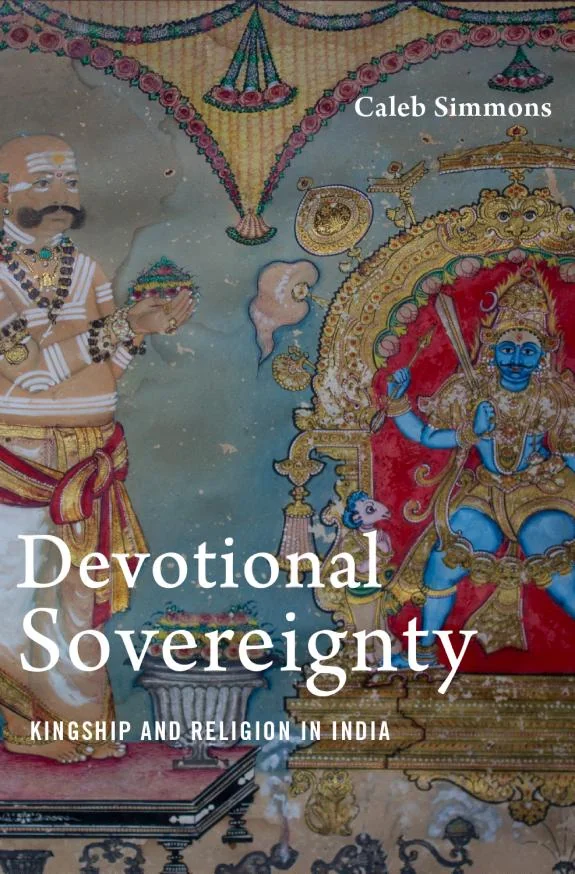
Devotional Sovereignty
 78
78

Devotional Sovereignty
Caleb Simmons' Devotional Sovereignty offers a compelling contrast between two Mysore rulers, Tipu Sultan and Krishnaraja Wodeyar III, revealing how kingship was both asserted and redefined under duress. The book's strength lies in its detailed exploration of the religious justifications employed by each ruler, particularly the ways in which Hindu and Islamic traditions informed their claims to authority. Simmons presents a granular view of courtly life and religious patronage, demonstrating how these elements were integral to political strategy. A limitation, however, is the dense academic prose which, while precise, can sometimes obscure the narrative flow for a less specialized reader. The examination of Krishnaraja III’s attempts to maintain legitimacy through religious festivals and temple endowments, even as British power solidified, is particularly insightful. Ultimately, the work provides a vital historical account of sovereignty's mutable nature.
📝 Description
78
Caleb Simmons' Devotional Sovereignty examines kingship and religion in 18th and 19th century Mysore.
This book analyzes the intertwined nature of political power and religious practice within the South Indian kingdom of Mysore, focusing on the reigns of Tipu Sultan (1782-1799) and Krishnaraja Wodeyar III (1799-1868). It traces how these rulers adapted concepts of kingship amidst significant geopolitical shifts, particularly the growing influence of the British East India Company.
Tipu Sultan, a Muslim ruler, is presented as a figure of resistance against British expansion, his reign concluding with his death in 1799. His successor, Krishnaraja Wodeyar III, a Hindu king, inherited a kingdom increasingly subject to British control. This transition provides a critical perspective on the evolution of sovereignty during a period of immense change on the Indian subcontinent. The work is suited for scholars of South Asian history, religious studies, and political science, as well as those interested in the historical interaction of Islam and Hinduism in India and the dynamics of monarchical power.
While not explicitly an esoteric text in the Western sense, the book engages with traditions of kingship that held religious or divine significance in South India. It examines how rulers sought legitimacy through religious patronage and the performance of sacred duties, concepts that resonate with broader themes of sacred kingship found in various pre-modern traditions. The analysis of how rulers manipulated religious symbolism to assert authority and maintain order touches upon the performative and ideological dimensions often studied within the history of religions and political thought.
💡 Why Read This Book?
• Understand the specific religious strategies employed by Tipu Sultan (r. 1782-1799) to legitimize his rule against external threats, offering a concrete example of pre-colonial statecraft. • Analyze how Krishnaraja Wodeyar III navigated the erosion of his kingdom's autonomy by leveraging Hindu religious institutions, providing insight into cultural resilience under pressure. • Grasp the complex interplay between Islamic and Hindu devotional practices and their manifestation in the political theatre of the Mysore kingdom, offering a unique perspective on religious syncretism.
⭐ Reader Reviews
Honest opinions from readers who have explored this book.
❓ Frequently Asked Questions
What is the central argument of Devotional Sovereignty regarding kingship in Mysore?
The book argues that during the reigns of Tipu Sultan and Krishnaraja Wodeyar III, concepts of sovereignty in Mysore were deeply intertwined with religious devotion and practice, shifting in response to internal and external pressures.
How does the book differentiate between Tipu Sultan and Krishnaraja Wodeyar III's approaches to sovereignty?
It highlights Tipu Sultan's assertive, religiously framed resistance against the British, and Krishnaraja Wodeyar III's later efforts to maintain authority through religious patronage amidst increasing British political control.
What historical period does Devotional Sovereignty primarily cover?
The book focuses on the late 18th and first half of the 19th centuries in the South Indian kingdom of Mysore, specifically the reigns of Tipu Sultan (1782-1799) and Krishnaraja Wodeyar III (1799-1868).
Which religious traditions are central to the book's analysis?
The work centrally analyzes the role of Islamic and Hindu traditions in shaping the understanding and practice of sovereignty by the rulers and their courts in Mysore.
What makes this study relevant to understanding power dynamics in historical India?
It demonstrates how religious discourse and practice were not separate from political power but were actively employed as tools to construct, maintain, and negotiate authority, particularly during periods of significant geopolitical change.
Does the book discuss the impact of British colonialism on Mysore's sovereignty?
Yes, a significant aspect of the book is examining how the growing political and administrative control of the British East India Company influenced and altered the nature of sovereignty for both Tipu Sultan and Krishnaraja Wodeyar III.
🔮 Key Themes & Symbolism
Divine Mandate and Royal Legitimacy
The work dissects how rulers like Tipu Sultan and Krishnaraja Wodeyar III invoked religious principles to bolster their claims to legitimate authority. This involved framing their rule as divinely sanctioned and their actions as fulfilling religious duties, whether defending Islam or upholding Hindu dharma. The book explores the symbolic language and ritual performances used to construct this image of divinely appointed kingship, demonstrating its critical role in maintaining order and allegiance within the kingdom of Mysore.
Religious Patronage as Statecraft
Devotional Sovereignty details the strategic use of religious patronage by Mysore's rulers. Both Tipu Sultan and Krishnaraja Wodeyar III engaged in extensive support of religious institutions, including temples and mosques, and sponsored religious scholars. This wasn't merely piety; it was a calculated political act designed to secure the loyalty of religious communities, project an image of a just ruler, and counter the influence of external powers like the British East India Company by solidifying internal religious cohesion.
The Shifting Nature of Sovereignty
A core theme is the conceptual evolution of sovereignty in Mysore under the pressure of colonial expansion. The book contrasts Tipu Sultan's resistance-based sovereignty with Krishnaraja Wodeyar III's struggles to adapt to a diminished political reality. It reveals how 'sovereignty' became a contested concept, negotiated through religious appeals, administrative reforms, and symbolic gestures, highlighting the complex agency of Indian rulers in the face of imperial dominance during the late 18th and early 19th centuries.
Interfaith Dynamics in Governance
The study illuminates the intricate relationship between Muslim and Hindu traditions within the political framework of Mysore. While Tipu Sultan was a Muslim ruler and Krishnaraja Wodeyar III a Hindu, both courts operated in a multi-religious environment. The book examines how religious policies and courtly practices reflected and influenced interfaith relations, demonstrating that religious identity was a key factor in the construction and contestation of power.
💬 Memorable Quotes
Direct passages from the work, attributed to the author.
“The court served as a theatre for the performance of sovereignty, where religious rituals and pronouncements reinforced the ruler's legitimacy.”
— This highlights how political authority was not just exercised through decrees but also through symbolic acts and religious displays within the royal court, emphasizing the performative aspect of kingship.
“Tipu Sultan's resistance was framed not merely as political defiance but as a religious imperative to protect his domain.”
— This emphasizes the deep integration of religious conviction into Tipu Sultan's political identity and actions, suggesting his anti-colonial stance was viewed by him and his supporters through a spiritual lens.
“Krishnaraja Wodeyar III sought to shore up his authority through increased temple endowments as British influence grew.”
— This points to the strategic use of religious patronage by Krishnaraja III to assert his legitimacy and maintain popular support in the face of diminishing political power under British paramountcy.
“The conceptualization of kingship was fluid, adapting to the changing political and religious currents of the era.”
— This suggests that the idea of what it meant to be a king was not static but evolved significantly, influenced by both religious beliefs and the external political environment.
“Religious affiliation played an important role in how rulers negotiated their power and interacted with diverse populations.”
— This underscores the importance of religious identity and its strategic deployment in the exercise of authority and the management of a multi-religious kingdom like Mysore.
🌙 Esoteric Significance
Tradition
While not explicitly aligned with a single Western esoteric lineage, Devotional Sovereignty operates within the broader metaphysical exploration of power, consciousness, and divine order. It aligns with traditions that view sovereignty not merely as political control but as a divinely imbued spiritual authority, echoing concepts found in Hermeticism and certain interpretations of Gnosticism where rulers or initiates are seen as conduits for higher powers.
Symbolism
The book implicitly engages with the symbolism of the crown and the temple/mosque as focal points of spiritual and temporal power. The ruler's body itself can be seen as a symbol, meant to embody the welfare and cosmic order of the kingdom. Religious rituals and courtly ceremonies function as symbolic enactments of the ruler's connection to the divine, reinforcing their sacred status.
Modern Relevance
Contemporary discussions on post-colonial statecraft, the role of religion in politics, and the construction of national identity often draw upon historical analyses like Simmons'. Thinkers exploring the intersection of spirituality and governance, particularly within South Asian contexts or in understanding resistance movements, can find valuable case studies and theoretical frameworks within this work.
👥 Who Should Read This Book
• Scholars of South Asian history and political science: Gain a nuanced understanding of state formation and the dynamics of power in pre-colonial and early colonial India. • Students of comparative religion: Explore the intricate ways Islamic and Hindu traditions informed the practice and theory of kingship during a key historical period. • Researchers interested in the intersection of religion and power: Analyze how religious devotion was strategically employed as a tool for political legitimacy and social cohesion.
📜 Historical Context
The late 18th and early 19th centuries were a crucible for South Asian polities, marked by the ascendant power of the British East India Company. Devotional Sovereignty is situated within this era of profound geopolitical transformation, where traditional monarchies grappled with new forms of imperial control. Tipu Sultan (r. 1782-1799) represents a figure of intense resistance, employing Islamic rhetoric to rally support against the Company's expansion. His successor, Krishnaraja Wodeyar III (r. 1799-1868), inherited a state increasingly subordinate to British paramountcy, leading to a renegotiation of sovereignty. This period saw competing ideologies of rule, with British utilitarianism and administrative reforms clashing against indigenous concepts of kingship often legitimized through religious frameworks. The work engages with scholars like Muzaffar Alam and Richard B. Barnett, who have explored similar themes of state formation and imperial encounters in Mughal and post-Mughal India.
📔 Journal Prompts
The concept of 'Devotional Sovereignty' itself: How does the ruler's personal devotion translate into legitimate political authority?
Tipu Sultan's resistance: Reflect on the intertwining of religious duty and political action in the face of external threats.
Krishnaraja Wodeyar III's patronage: Consider the strategic use of religious institutions to maintain power amidst declining political autonomy.
The Mysore court as a 'theatre of sovereignty': Analyze the performative aspects of kingship and their impact on legitimacy.
Shifting notions of kingship: How did the political and religious field of 18th/19th century India shape the understanding of royal power?
🗂️ Glossary
Sovereignty
The supreme authority within a territory, encompassing political independence, ultimate power, and the right to govern. In this context, it is explored as a concept intertwined with religious legitimacy and royal duty.
Dharma
A fundamental concept in Indian religions, often translated as 'duty,' 'righteousness,' 'law,' or 'cosmic order.' For Hindu rulers, upholding dharma was crucial for legitimate governance.
Sultan
A historical Islamic title of leadership, often denoting a sovereign ruler. Tipu Sultan's use of this title signifies his claim to independent authority within his domain.
Raja
A Sanskrit title for a king or prince in India. Krishnaraja Wodeyar III, as a Hindu ruler, held this traditional title.
East India Company
A British joint-stock company that was formed to pursue trade with the East Indies but ended up seizing political control of large parts of India from the 18th century onwards.
Legitimacy
The perceived rightfulness of a ruler or government's authority, often derived from tradition, law, or popular consent. Religious devotion and patronage were key sources of legitimacy explored in the book.
Patronage
The support, encouragement, privilege, or financial aid that an organization or individual bestows on an artist, institution, or cause. Royal patronage of religious institutions was a significant political tool.
This book appears in 1 collection
🔮 Readers Also Liked
Browse all →





![The Complete Tales and Poems of Edgar Allan Poe [67 stories, 52 poems, 4 essays]](/img/thumb/the-complete-tales-and-poems-of-edgar-allan-poe-67-stories-52-poems-4-essays-edgar-allan-poe-716787.webp)


From the “Hinduism” Collection
View all →





More Free Occult Philosophy Books
View all →