Identity and Religion
 76
76

Identity and Religion
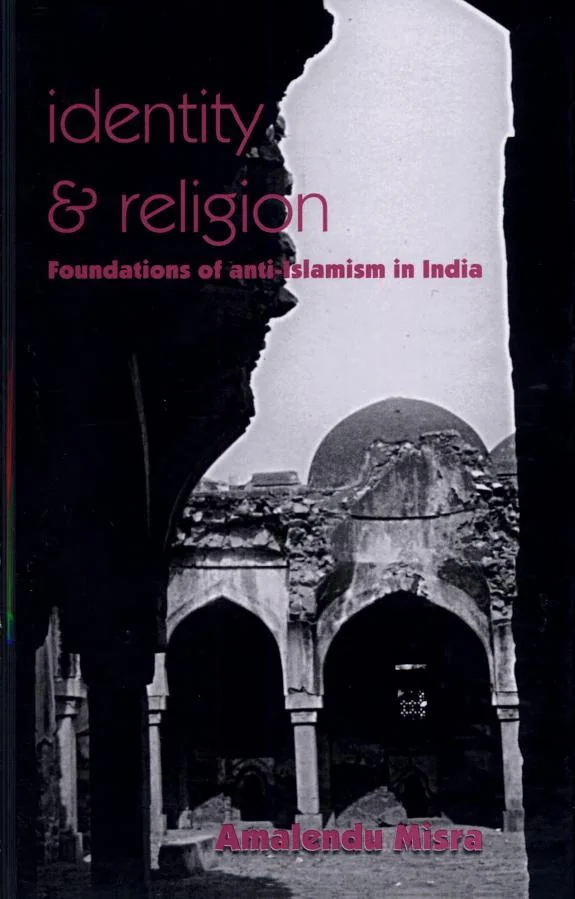
Amalendu Misra’s "Identity and Religion" offers a vital, if sometimes stark, examination of how Indian nationalist discourse handled its Muslim inheritance. The book’s strength lies in its detailed dissection of nationalist thought, revealing how even ostensibly secular leaders struggled with the implications of a large Muslim population. Misra effectively demonstrates the inherent difficulties in forging a singular national identity from a historically pluralistic society. A notable limitation is the dense academic prose, which, while precise, can occasionally obscure the compelling arguments. The passage discussing the ambivalent stances of figures like Jawaharlal Nehru towards Muslim identity within a secular India is particularly illuminating. This is a critical study for understanding the complexities of nation-building, not a comfortable read.
📝 Description
76
Amalendu Misra's 2004 book scrutinizes Indian nationalism's complex engagement with Islam.
Published in 2004, Amalendu Misra's "Identity and Religion" analyzes the fraught interaction between Indian nationalist thought and the presence of Islam in India. The book questions straightforward accounts, showing how nationalist ideas struggled to incorporate India's substantial Islamic past. Misra examines how the creation of nationalist discourse defined 'Indianness' in ways that frequently excluded or misrepresented the Islamic population. This work addresses the conflict between secular principles and the lived reality of religious identity as forces shaping political awareness and national affiliation.
This study is particularly relevant for those studying South Asian history, political science, and religious studies. It also speaks to readers interested in how national identities form, the complexities of secularism in varied societies, and the historical roots of interactions between different faiths. The book situates its arguments within ongoing debates about national identity in post-colonial nations, drawing connections to the Partition of India in 1947 and earlier discussions within the Indian National Congress concerning religious minorities.
While not overtly esoteric in the sense of occult practices, this book engages with a tradition of critical inquiry into the construction of identity and its relationship to dominant religious and national narratives. It examines how prevailing historical and political frameworks shape the perception and inclusion of minority religious groups, a concern shared by various critical and postcolonial studies that question established power structures. The work contributes to a lineage of scholarship that seeks to understand the deeper, often unacknowledged, forces shaping national consciousness and religious belonging in complex societies.
💡 Why Read This Book?
• Gain insight into the specific conceptual challenges faced by Indian nationalist thinkers regarding Islamic identity, as detailed in Misra's analysis of their writings and speeches. • Understand the historical tension between secularism and religious pluralism in the context of nation-building, drawing from Misra's exploration of events leading up to 1947. • Appreciate the nuanced critique of nationalist discourse presented, particularly Misra's examination of how 'Indianness' was constructed and its impact on minority communities.
⭐ Reader Reviews
Honest opinions from readers who have explored this book.
❓ Frequently Asked Questions
What historical period does Amalendu Misra's "Identity and Religion" primarily focus on?
The book primarily focuses on the intellectual and political landscape of Indian nationalism, particularly the debates and challenges concerning the Muslim presence in India during the period leading up to and following independence in 1947.
How does the book address the concept of secularism in India?
It critically examines how secular nationalist leaders conceptualized and implemented secularism, often revealing an underlying tension or difficulty in fully reconciling it with the religious identities of minority communities like Muslims.
Who were some of the key figures or groups discussed in relation to nationalist thought?
The work discusses eminent nationalist leaders and their ideological positions, analyzing their approaches to India's Islamic inheritance and the complexities of integrating Muslim identity into the national narrative.
What is the book's central argument regarding India's Islamic inheritance?
The central argument is that Indian nationalist thought often struggled to do justice to India's Islamic inheritance, encountering significant difficulties in accommodating the presence and identity of Muslims within the envisioned national framework.
Is "Identity and Religion" suitable for beginners in South Asian studies?
While offering crucial insights, the book is written with an academic audience in mind. Beginners might find it more accessible after gaining some foundational knowledge of Indian history and political thought.
What distinguishes Misra's analysis from other works on Indian nationalism?
Misra's work is distinguished by its specific focus on the conceptual difficulties within nationalist thought concerning Islam, offering a nuanced critique rather than a broad historical survey.
🔮 Key Themes & Symbolism
Nationalist Discourse Construction
Misra's work meticulously unpacks how Indian nationalist discourse was constructed, highlighting the intellectual and ideological frameworks employed. It scrutinizes the language and concepts used to define 'Indianness,' revealing how these often inadvertently excluded or misrepresented minority identities, particularly the Islamic community. The analysis examines the inherent contradictions within secular nationalist projects attempting to unify a religiously diverse populace.
Secularism's Ambiguities
A core theme is the complex and often ambiguous application of secularism by Indian nationalist leaders. The book examines instances where secular ideals were either challenged or inconsistently applied when confronting the realities of religious identity, especially that of Indian Muslims. Misra probes the gap between the stated secular aims and the practical implications for minority integration within the nation-state.
The Islamic Inheritance
This theme focuses on the challenges faced by nationalist thought in adequately acknowledging and integrating India's rich Islamic heritage. Misra illustrates how this inheritance was often viewed with suspicion or as something separate from the dominant national narrative, leading to a failure to fully reconcile Islamic identity with emerging Indian nationhood.
Identity Formation
The book explores the intricate process of identity formation at both national and individual levels within the context of post-colonial India. It investigates how religious and national identities intersected, conflicted, and were negotiated, particularly for the Muslim population, within the evolving political landscape shaped by nationalist ideologies.
💬 Memorable Quotes
Direct passages from the work, attributed to the author.
“Even secular nationalist leaders were uneasy about Muslims.”
— This highlights a key finding in Misra's research, suggesting that a secular orientation did not always translate into unreserved acceptance of Muslim identity within the national framework, pointing to underlying tensions.
“The conceptualization of the Muslim presence in India by nationalists was complex.”
— This interpretation points to the nuanced analysis within the book, indicating that the way nationalists thought about and represented Muslims was not monolithic but varied and often problematic.
“Nationalist thought struggled to reconcile Indianness with Islamic identity.”
— This captures the core conflict explored in the book: the tension between the idealized concept of a unified Indian national identity and the persistent reality of distinct religious identities, particularly Islam.
💡 Key Ideas
Editorial paraphrase of the work's core concepts — not direct quotes.
Nationalist leaders faced difficulties doing justice to India's Islamic inheritance.
This paraphrased concept underscores the book's central thesis: that the project of Indian nationalism, despite its aims, struggled to fully incorporate or appreciate the significance of the Islamic presence and history within India.
The book analyzes nationalist conceptualization of Muslims.
This summarizes the methodological approach of Misra's work, emphasizing its focus on dissecting the ideas and arguments that shaped how Indian nationalism perceived and addressed its Muslim population.
🌙 Esoteric Significance
Tradition
While not explicitly tied to a single esoteric lineage, Misra's work engages with the philosophical underpinnings of identity and belonging, themes often explored in esoteric traditions. The critical examination of how dominant narratives construct reality and marginalize certain groups can resonate with Gnostic critiques of established power structures or Hermetic philosophies concerned with hidden truths and societal illusions. It offers a framework for deconstructing societal 'maya' (illusion) as it pertains to national identity.
Symbolism
The 'nation' itself can be viewed as a modern construct, a symbolic entity demanding allegiance and shaping individual consciousness, akin to how esoteric traditions analyze archetypal forces or collective consciousness. The concept of 'inheritance' carries symbolic weight, representing not just historical lineage but also the psychic and cultural legacies that shape present identity, a theme familiar in traditions focusing on ancestral wisdom or karmic patterns.
Modern Relevance
Contemporary discussions on multiculturalism, religious pluralism, and the challenges of secular governance in diverse societies frequently draw upon the historical analyses presented in works like Misra's. Thinkers concerned with post-colonial theory, critical race studies, and interfaith dialogue find value in its examination of how national identities are formed and how minority experiences are integrated or excluded. It informs contemporary debates on identity politics and the enduring legacies of colonial-era nation-building.
👥 Who Should Read This Book
• Scholars of South Asian political history and religious studies seeking a nuanced understanding of nationalist ideology's engagement with Islam. • Researchers in comparative religion and sociology interested in the formation of national identities and the complexities of secularism in pluralistic societies. • Students of political philosophy and critical theory looking to analyze the construction of dominant narratives and their impact on minority groups.
📜 Historical Context
Published in 2004, "Identity and Religion" emerged during a period of continued academic and public discourse surrounding national identity, secularism, and minority rights in India and globally. The book intervenes in debates rooted in the immediate aftermath of the Indian subcontinent's Partition in 1947, a watershed moment that dramatically reshaped religious and national identities. Misra's work engages with intellectual currents that questioned the efficacy and inclusivity of secular nationalism, particularly its ability to accommodate the vast Muslim population. It builds upon and critiques scholarship that has explored the complexities of the Indian National Congress's approach to religious minorities. The era saw ongoing scholarly engagement with thinkers like Ashis Nandy, who explored the psychological dimensions of colonialism and nationalism, providing a backdrop against which Misra's specific focus on the conceptual struggles within nationalist thought regarding Islam gains particular significance.
📔 Journal Prompts
The nationalist conceptualization of the Muslim presence: How did this framework shape subsequent political discourse?
Ambivalent secularism: Reflect on the tension between stated secular ideals and practical policy regarding religious minorities.
The difficulties faced in doing justice to India's Islamic inheritance: What contemporary parallels exist in nation-building efforts?
How does the construction of 'Indianness' in the mid-20th century continue to impact identity politics today?
Analyze the role of intellectual discourse in shaping national identity and its relationship with religious inheritance.
🗂️ Glossary
Indian Nationalist Thought
The body of ideas, ideologies, and political philosophies developed by leaders and intellectuals aiming to achieve and shape an independent Indian nation, particularly concerning its cultural, social, and political identity.
Islamic Inheritance
Refers to the historical, cultural, religious, and intellectual legacy of Islam and Muslims within the Indian subcontinent, encompassing centuries of presence, contribution, and interaction.
Secularism
In the Indian context, a principle advocating for the state's neutrality towards all religions, ensuring equal respect and non-discrimination, though its interpretation and implementation have been subjects of significant debate.
National Identity
A shared sense of belonging to a nation, often constructed through common history, culture, language, or political ideals, which can be inclusive or exclusive in its formation.
Conceptualization
The process of forming or understanding an idea or concept; in this context, how nationalist thinkers framed and understood the presence and role of Muslims in India.
Partition of India
The division of British India into two independent dominion states, India and Pakistan, in 1947, which led to widespread communal violence and mass migrations.
Minority Rights
The protections and entitlements granted to individuals belonging to ethnic, religious, or linguistic minorities within a state to preserve their identity and ensure equal treatment.
This book appears in 1 collection
🔮 Readers Also Liked
Browse all →









From the “Hinduism” Collection
View all →






More Free Occult Philosophy Books
View all →