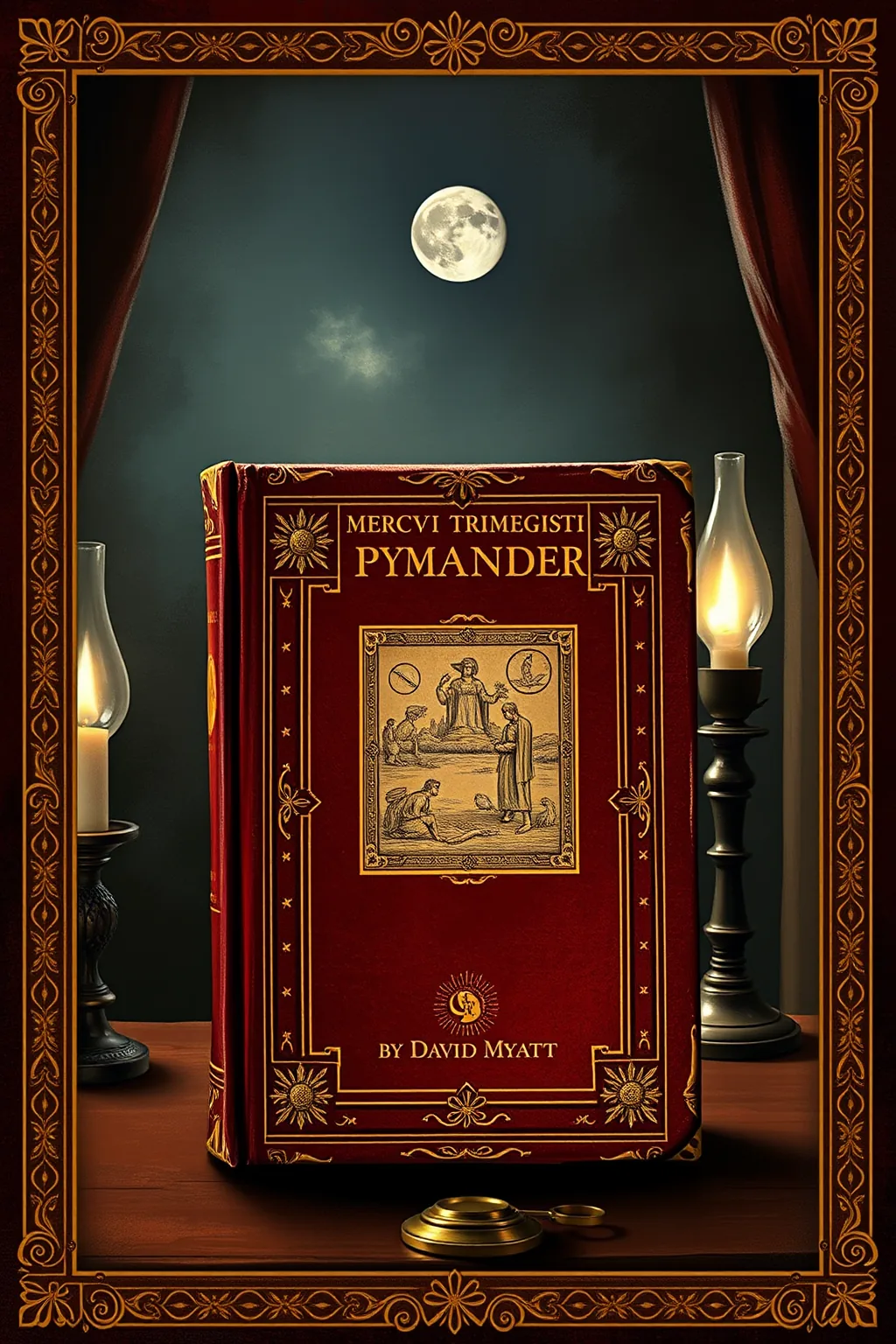
Mercvrii Trismegisti Pymander - A Translation and Commentary
 79
79

Mercvrii Trismegisti Pymander - A Translation and Commentary


David Myatt's 'Mercvrii Trismegisti Pymander - A Translation and Commentary' is a must-read for anyone delving into the esoteric and Gnostic traditions. Myatt's translation is both accurate and approachable, making the ancient text of 'The Divine Pymander' accessible to modern readers. His commentary adds layers of depth, providing historical context and philosophical insights that enrich the reading experience. For contemporary esoteric seekers, this book serves as a bridge between the ancient wisdom of Hermes Trismegistus and the spiritual quests of today. It is a valuable resource for understanding the foundational texts of Hermeticism and Gnosticism, offering a pathway to spiritual enlightenment and intellectual stimulation.
📝 Description
79
David Myatt's 2005 translation and commentary presents the Poemandres, a key text of Hermeticism.
David Myatt's 'Mercvrii Trismegisti Pymander' offers a translation and detailed commentary on the Poemandres, a significant work within the Corpus Hermeticum. This volume aims to make the complex ideas of Hermes Trismegistus accessible to a modern audience. Myatt focuses on the philosophical and spiritual dimensions of the text, examining its symbolism and its place within esoteric traditions.
The commentary unpacks the layers of meaning within the Poemandres, discussing its cosmology, theology, and the path of spiritual ascent it describes. Myatt's approach seeks to illuminate the text's historical context and its enduring relevance for those interested in Gnosticism and Hermetic philosophy. The translation strives for clarity, enabling readers to engage directly with the ancient material.
The Poemandres is a foundational text in Hermeticism, a philosophical and religious tradition attributed to the legendary figure Hermes Trismegistus. Emerging likely in the Roman period, it synthesizes Platonic philosophy with Egyptian and Gnostic ideas. Hermetic texts concern themselves with cosmology, alchemy, astrology, and theurgy, aiming to reveal the secrets of the universe and the divine. This tradition influenced Renaissance occultism and continues to be studied by those interested in Western esotericism.
✍️ Author

David Myatt
David Myatt is a British writer and religious leader, known for his involvement in various political and religious movements.
💡 Why Read This Book?
Reading 'Mercvrii Trismegisti Pymander' today provides a unique opportunity to connect with ancient esoteric wisdom. This book offers a profound understanding of the Hermetic and Gnostic traditions, making it an invaluable resource for spiritual seekers. By engaging with Myatt's translation and commentary, readers can gain insights into the nature of divinity, the creation of the universe, and the journey of the soul. This text is not just a historical artifact but a living document that can guide modern spiritual practices and philosophical inquiries.
⭐ Reader Reviews
Honest opinions from readers who have explored this book.
❓ Frequently Asked Questions
What is the Corpus Hermeticum?
The Corpus Hermeticum is a collection of ancient writings attributed to Hermes Trismegistus, a legendary figure in Hermeticism and Gnosticism. These texts explore various esoteric and philosophical themes, including the nature of divinity and the creation of the universe.
Who is Hermes Trismegistus?
Hermes Trismegistus is a mythical figure often associated with the ancient Egyptian god Thoth. He is revered in Hermeticism and Gnosticism as the author of profound esoteric texts that delve into spiritual and philosophical mysteries.
Why is 'The Divine Pymander' important?
'The Divine Pymander' is a crucial text within the Corpus Hermeticum, offering insights into the creation of the universe and the journey of the soul. It is a foundational work for understanding Hermetic and Gnostic traditions.
🔮 Key Themes & Symbolism
Divine Revelation
The Poemandres text is a profound exploration of divine revelation and the nature of the divine. It explores the mystical experiences and insights attributed to Hermes Trismegistus, offering readers a glimpse into the divine realm and its relationship with the material world.
Esoteric Symbolism
Hermetic texts are rich in esoteric symbolism, and the Poemandres is no exception. Myatt's commentary unravels the complex symbols and metaphors used in the text, revealing their hidden meanings and spiritual significance.
Spiritual Enlightenment
The pursuit of spiritual enlightenment is a central theme in Hermetic and Gnostic literature. 'Mercvrii Trismegisti Pymander' guides readers on a journey of self-discovery and spiritual awakening, providing insights into the path towards divine understanding.
💡 Key Ideas
Editorial paraphrase of the work's core concepts — not direct quotes.
In the beginning was the Word, and the Word was with God.
This quote underscores the divine origin of the Hermetic teachings, emphasizing the mystical power of the spoken word.
The mind of the divine is a mystery to the mortal.
This line highlights the esoteric nature of Hermetic wisdom, suggesting that true understanding requires spiritual insight.
The seeker of truth must journey within to find the divine.
This passage encourages readers to look inward for spiritual enlightenment, a common theme in Gnostic and Hermetic texts.
The universe is a reflection of the divine mind.
This quote suggests that the material world is a manifestation of divine will, reflecting the deeper spiritual reality.
The path to enlightenment is hidden in symbols and mysteries.
This line emphasizes the importance of esoteric symbolism in Hermetic teachings, guiding seekers towards hidden truths.
🌙 Esoteric Significance
Tradition
This book belongs to the Hermetic tradition, which encompasses a rich body of esoteric literature attributed to Hermes Trismegistus. Hermeticism blends elements of Greek philosophy, Egyptian mysticism, and early Christian thought, offering a unique perspective on the nature of reality and the divine.
Symbolism
Key symbols in 'Mercvrii Trismegisti Pymander' include the divine mind, the spoken word, and the journey of the soul. These symbols represent the deeper spiritual truths and mystical experiences described in the text, guiding readers towards enlightenment.
Modern Relevance
Today, 'Mercvrii Trismegisti Pymander' continues to inspire seekers of hidden knowledge and spiritual enlightenment. Modern practitioners of Hermeticism and Gnosticism study this text to gain insights into ancient mystical traditions and apply its teachings to their spiritual practices.
👥 Who Should Read This Book
Beginners interested in Hermetic and Gnostic traditions will find 'Mercvrii Trismegisti Pymander' an accessible introduction to these mystical paths. Scholars of ancient spirituality will appreciate Myatt's scholarly commentary and translation. Spiritual seekers will benefit from the useful insights and esoteric wisdom offered in the text, while practitioners of esoteric arts will find valuable guidance and inspiration for their spiritual journeys.
📜 Historical Context
The Poemandres text is one of the foundational works of Hermeticism, a mystical tradition that emerged in the ancient world. Attributed to Hermes Trismegistus, a legendary figure revered in both Greek and Egyptian cultures, the text reflects the syncretic nature of ancient spiritual thought. Written during a time of cultural exchange and intellectual ferment, the Poemandres offers insights into the spiritual and philosophical field of the late Hellenistic and early Roman periods. Its influence can be seen in various esoteric traditions, including Gnosticism and Neoplatonism, making it a central work in the history of Western mysticism.
📔 Journal Prompts
Reflect on the concept of divine revelation as described in the Poemandres. How does this idea resonate with your own spiritual beliefs?
Explore the symbolism of the divine mind in Hermetic teachings. What insights does this symbol offer into the nature of reality?
Consider the journey of the soul as described in the text. How can this journey be applied to your own spiritual quest?
Examine the relationship between the material world and the divine realm. How does this relationship influence your understanding of spirituality?
Reflect on the importance of esoteric symbolism in Hermetic texts. How can these symbols guide you towards deeper spiritual understanding?
🗂️ Glossary
Hermeticism
A mystical tradition based on the teachings attributed to Hermes Trismegistus, blending elements of Greek philosophy, Egyptian mysticism, and early Christian thought.
Gnosticism
An ancient spiritual movement that emphasized secret knowledge and the pursuit of spiritual enlightenment through mystical experiences.
Poemandres
A foundational text in the Corpus Hermeticum, exploring the relationship between the divine and the material world.
Hermes Trismegistus
A legendary figure revered in both Greek and Egyptian cultures, attributed with a rich body of esoteric literature.
Divine Revelation
The process by which divine truths are revealed to seekers, often through mystical experiences and esoteric symbolism.
This book appears in 11 collections
🔮 Readers Also Liked
Browse all →





More by David Myatt
All books →

From the “Western Esotericism” Collection
View all →






More Free Sacred Texts & Gnosticism Books
View all →