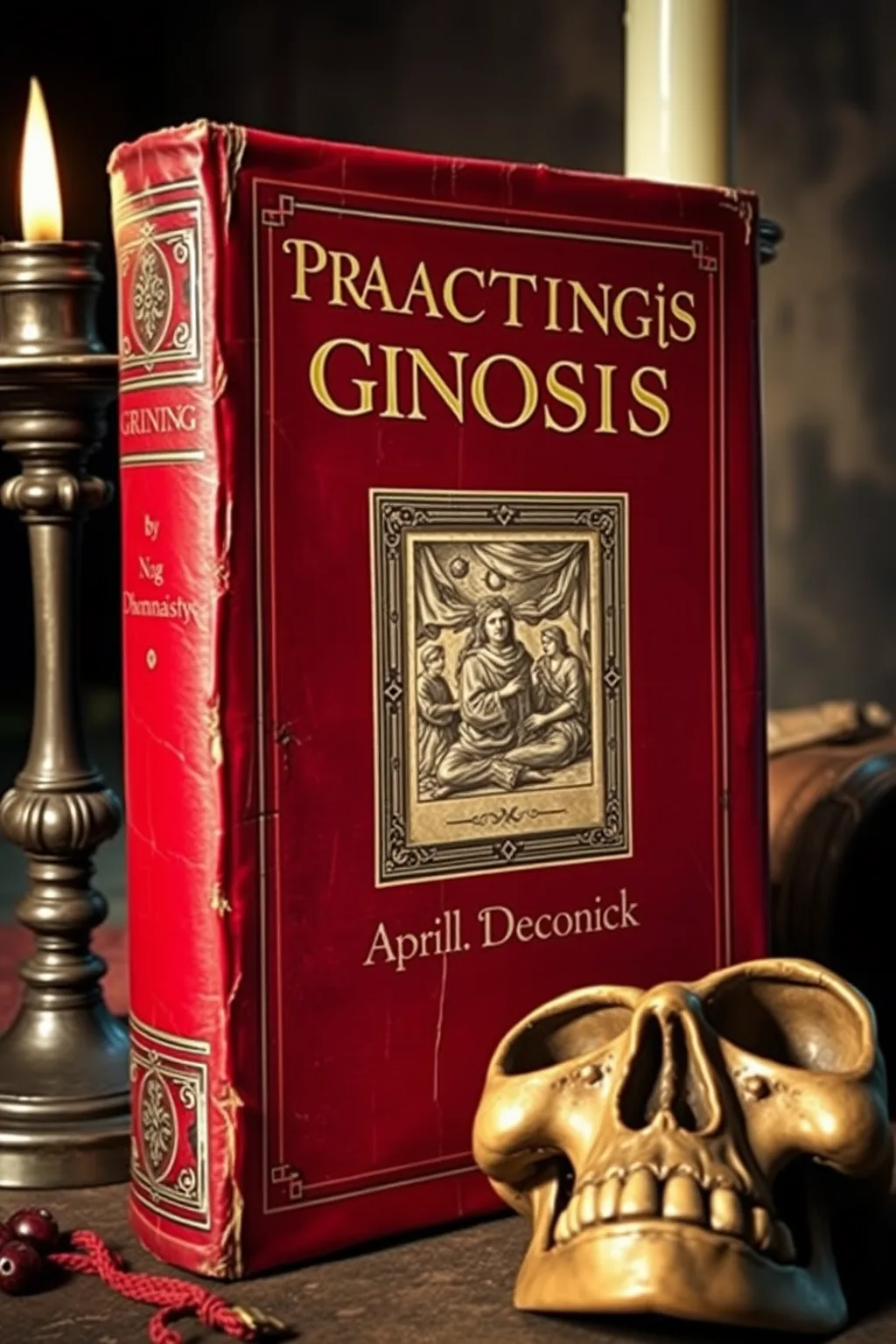
Practicing Gnosis : Ritual, Magic, Theurgy, and Liturgy in Nag Hammadi, Manichaean and Other Ancient Literature
 62
62

Practicing Gnosis : Ritual, Magic, Theurgy, and Liturgy in Nag Hammadi, Manichaean and Other Ancient Literature


Lorelei Sage (Contemplative Literature Editor) — "Practicing Gnosis" is a revelatory text, masterfully excavating the often-overlooked practical dimensions of Gnosticism. April D. DeConick has curated an essential anthology that shifts our understanding from abstract philosophy to visceral religious experience. The essays illuminate the crucial roles of ritual, magic, and liturgy, revealing Gnostics as active participants in their spiritual journeys, not passive contemplatives. For scholars, it's an indispensable resource; for seekers, it offers a compelling look at ancient paths toward divine communion. This book is a beacon for those who believe true gnosis is found not just in knowing, but in doing and experiencing.
📝 Description
62
April D. DeConick's 2011 book examines Gnosticism as a lived religious experience, not just a philosophy.
This book moves past abstract Gnostic philosophy to show how ancient practitioners actually lived their faith. DeConick and her collaborators examine ritual, magic, and theurgy as central to Gnostic life. They look at the Nag Hammadi library, Manichaean texts, and other early Christian writings to understand these practices. The authors reconstruct how Gnostics sought revelation, union with the divine, and communion with celestial beings.
The work reveals a spiritual world filled with symbolic meaning and ancient rites. It offers a look into a tradition driven by a desire for transcendent knowledge and direct divine encounter. The contributors detail the practices that shaped the spiritual lives of these ancient seekers. This anthology reconstructs the forgotten devotional life of early Gnosticism.
The book situates Gnosticism within the broader context of late antique mystery cults and early Christian devotional practices. It highlights how Gnostic groups developed distinct forms of worship, prayer, and magical activity to achieve spiritual transformation and divine connection. By analyzing texts from Nag Hammadi and Manichaeism, it shows a consistent concern with ecstatic experience and theurgy, practices aimed at invoking or uniting with divine powers. This work reveals Gnosticism as a dynamic spiritual path concerned with lived experience and communal religious action.
💡 Why Read This Book?
Uncover the vibrant, practiced heart of Gnosticism, moving beyond theory to experience. Discover ancient rituals, magical rites, and liturgical forms that fostered direct connection with the divine. Ideal for spiritual seekers, academic researchers, and practitioners of esoteric arts yearning to understand the lived reality of ancient mystics.
⭐ Reader Reviews
Honest opinions from readers who have explored this book.
❓ Frequently Asked Questions
What is Gnosis?
Gnosis, in this context, refers to a profound, intuitive knowledge of spiritual truths, often gained through direct experience or divine revelation, rather than solely through intellectual reasoning or faith.
What is Theurgy?
Theurgy is a form of ritual magic aimed at invoking the gods or divine powers to achieve spiritual enlightenment or transformation, acting as a bridge between the human and the divine realms.
What is the significance of the Nag Hammadi library?
The Nag Hammadi library provides a trove of Gnostic texts, offering invaluable firsthand accounts of their beliefs, myths, and practices, which were largely suppressed by early orthodox Christianity.
How does this book differ from previous studies of Gnosticism?
This book emphasizes the active, experiential, and ritualistic aspects of Gnosticism, shifting focus from intellectual pursuit to ecstatic religious experience, prophecy, and mystical questing.
Is this book suitable for beginners?
While academically rigorous, the book's clear explanations and focus on practice make it accessible to motivated beginners eager to explore the rich, experiential dimensions of Gnosticism.
🔮 Key Themes & Symbolism
Theurgy and Divine Communion
This theme studies the ancient Gnostic practice of theurgy, exploring how rituals and sacred actions were employed to bridge the gap between the earthly and divine realms. It examines the symbolic language and practical applications of these rites, aiming to facilitate direct encounters with celestial beings and achieve spiritual ascent. The essays reveal a sophisticated understanding of cosmic forces and the human capacity to interact with them, offering insights into the Gnostic pursuit of divine knowledge and union.
Ritual as Experiential Gnosis
Focusing on the performative and experiential aspects, this theme highlights how ritual was not merely symbolic but a potent vehicle for achieving gnosis. It explores the ecstatic states, visionary experiences, and transformative power inherent in Gnostic ceremonies. The book posits that these practices were essential for authentic spiritual realization, moving beyond intellectual assent to a profound, lived understanding of cosmic truths and the self's place within the divine order.
Liturgy and Sacred Narrative
This section investigates the role of liturgy and sacred storytelling in shaping the Gnostic spiritual landscape. It examines how hymns, prayers, and mythic narratives served to structure religious experience, transmit esoteric teachings, and foster a collective sense of identity and purpose. The interplay between spoken word, devotional practice, and the evocation of sacred time and space is explored as a fundamental element of Gnostic worship and spiritual cultivation.
💬 Memorable Quotes
Direct passages from the work, attributed to the author.
“The ancient Gnostics were not just thinkers, but doers of the sacred.”
— This highlights the active, practical nature of Gnosticism, underscoring that their spiritual path involved tangible rituals and practices, not solely abstract contemplation.
“Ritual is the bridge between the seeker and the sought.”
— This suggests that sacred ceremonies and practices serve as the essential mechanism through which individuals can connect with and attain spiritual truths or divine entities.
“In liturgy, the cosmos is re-enacted and made present.”
— This implies that liturgical practices in Gnosticism were designed to bring the divine order and cosmic events into immediate experience, making the sacred palpable.
“Theurgy unveils the divine architecture within.”
— This suggests that the practice of theurgy in Gnosticism was a means of accessing and understanding the inherent divine structure of reality and the human soul.
💡 Key Ideas
Editorial paraphrase of the work's core concepts — not direct quotes.
Gnosis is not merely knowledge, but a knowing that transforms.
This quote emphasizes that true Gnosis is an embodied, experiential understanding that fundamentally alters one's perception and being, not just an accumulation of facts.
🌙 Esoteric Significance
Tradition
This work significantly illuminates the esoteric tradition of Gnosticism, a complex spiritual movement emphasizing direct, intuitive knowledge (gnosis) of the divine. It reveals Gnosticism not as a monolithic doctrine, but as a diverse set of practices focused on achieving salvation through this special knowledge, often involving a critique of the material world and its creator.
Symbolism
Key symbolism revolves around the Pleroma (divine fullness), the Archons (rulers of the material cosmos), the divine spark within humanity, and the journey of the soul through cosmic realms. Rituals and myths often employ intricate cosmological charts and archetypal figures to represent these profound spiritual realities and the path to liberation.
Modern Relevance
The book's exploration of ecstatic experience, ritual efficacy, and the quest for direct spiritual insight holds potent relevance for contemporary seekers. It offers ancient frameworks for understanding personal transformation, the relationship between the material and spiritual, and the power of symbolic action in a world often perceived as disconnected from the sacred.
👥 Who Should Read This Book
This book is a vital resource for scholars of ancient religion, early Christianity, and esoteric traditions seeking a deeper understanding of Gnostic practices. It is equally essential for spiritual seekers and practitioners interested in the experiential dimensions of mysticism, ritual magic, and theurgy, offering a bridge to ancient paths of enlightenment. Beginners curious about the lived reality of Gnosticism will find clear insights into how these ancient mystics sought and found the divine through active engagement with the sacred.
📜 Historical Context
Practicing Gnosis emerges from the fertile ground of the late antique world, a period of immense spiritual ferment and religious innovation. The 2nd to 4th centuries CE witnessed a dynamic interplay of diverse philosophical schools, mystery cults, and nascent religious movements, including early Christianity and Gnosticism. The discovery of the Nag Hammadi library in 1945 revolutionized scholarship, providing direct access to Gnostic texts previously known only through the critiques of their opponents. This era was characterized by a profound questioning of established norms and a widespread search for personal salvation and esoteric wisdom. The texts analyzed in this anthology reflect a milieu where ritual, magic, and the pursuit of immediate divine experience were central to many spiritual paths, offering a stark contrast to the developing orthodoxies that would eventually marginalize these practices. The book situates these Gnostic expressions within a broader context of ancient religious life, revealing their unique contributions to the spiritual field of the time and their enduring resonance.
📔 Journal Prompts
Reflect on a personal experience where ritual or practice led to a clear insights or shift in consciousness.
How do the concepts of the material world and the divine realm, as presented in Gnosticism, resonate with your own worldview?
Consider the role of 'hidden knowledge' in your own spiritual or intellectual journey. How do you seek and integrate such knowledge?
Imagine you are an ancient Gnostic practitioner. What rituals or prayers would you devise to connect with the divine based on your understanding of the cosmos?
How can the ancient Gnostic emphasis on ecstatic religious experience inform or challenge contemporary spiritual practices?
🗂️ Glossary
Gnosis
A Greek term meaning 'knowledge,' referring in Gnosticism to a special, intuitive, and salvific knowledge of spiritual truths, often attained through direct revelation or mystical experience.
Theurgy
A form of ritualistic magic or divine work aimed at invoking or harmonizing with divine powers to achieve spiritual enlightenment, purification, or union with the divine.
Liturgical
Pertaining to liturgy, which involves the established form for public worship, including prayers, readings, hymns, and rituals performed in a religious service.
Nag Hammadi Library
A collection of early Christian and Gnostic texts discovered near Nag Hammadi, Egypt, in 1945, providing invaluable primary sources for understanding Gnosticism.
Manichaeism
A major Gnostic religion founded by the prophet Mani in the 3rd century CE, characterized by a dualistic cosmology and a complex system of salvation.
This book appears in 3 collections
🔮 Readers Also Liked
Browse all →





More by April D. DeConick
All books →

From the “Ritual Magic” Collection
View all →








More Free Magic & Ritual Books
View all →