The Gnostic Gospels Complete Collection

 78
78

The Gnostic Gospels Complete Collection
Divine Press's "The Gnostic Gospels Complete Collection" offers a valuable service by consolidating these often-fragmented texts. The strength lies in its direct presentation of the primary sources, allowing the reader to encounter the Gnostic worldview without extensive editorial mediation. The inclusion of the Gospel of Judas, a text notorious for its controversial portrayal of the disciple, is particularly noteworthy. However, the collection’s utility is somewhat hampered by the lack of extensive scholarly commentary that contextualizes these writings for a modern audience unfamiliar with the intricacies of 2nd-century CE religious debates. A more robust introduction or footnotes explaining the provenance and initial reception of each text would have elevated its academic standing. The Gospel of Thomas’s parables, for instance, demand careful interpretation, and this edition assumes a degree of prior knowledge. Nevertheless, for direct access to these pivotal esoteric documents, the collection succeeds.
📝 Description
78
Divine Press published 'The Gnostic Gospels Complete Collection' in 2025, gathering key Gnostic scriptures.
This 2025 Divine Press compilation brings together significant Gnostic scriptures, offering a counterpoint to orthodox early Christian narratives. It includes texts like the Gospel of Thomas, Philip, Truth, Mary, and Judas, which present alternative views on Christ, salvation, and the divine. These writings often reflect a mystical, dualistic cosmology distinct from the developing mainstream canon. The collection presents these influential documents in an accessible format for direct study. The rediscovery of many Gnostic texts, notably the Nag Hammadi library in 1945, spurred significant academic interest in this heterodox branch of early Christianity. This anthology allows readers to engage directly with primary sources that illuminate the diverse beliefs and practices of the first few centuries CE, challenging simpler understandings of Christian origins. It introduces concepts such as Sophia, the Pleroma, the Demiurge, and the pursuit of gnosis, forming a theological framework that contrasts with dominant early Christian thought and reveals the intellectual vibrancy of the era.
Gnosticism represents a complex set of religious and philosophical movements prominent in the early centuries of the Common Era, often existing alongside or within early Christianity. Characterized by a belief in salvation through esoteric knowledge (gnosis), these traditions typically posit a flawed creator god (Demiurge) and a transcendent, true divinity. Gnostic texts often reinterpreted biblical narratives, emphasizing a hidden spiritual reality and the divine spark within individuals, seeking liberation from the material world.
💡 Why Read This Book?
• Gain direct access to the Gospel of Thomas, understanding its unique emphasis on Jesus's sayings and the path to inner enlightenment, a perspective distinct from narrative Gospels. • Explore the theological framework of the Gospel of Philip, which presents a symbolic interpretation of sacraments and the divine union, offering insights into early Christian ritual understanding. • Confront the controversial narrative of the Gospel of Judas, examining its portrayal of Judas Iscariot as a key figure in Jesus's salvific mission, challenging traditional interpretations of betrayal.
⭐ Reader Reviews
Honest opinions from readers who have explored this book.
❓ Frequently Asked Questions
When were the Gnostic Gospels likely written?
Most Gnostic texts, including those in this collection, are believed to have been written between the 2nd and 4th centuries CE, with some scholars dating the Gospel of Thomas to as early as the mid-1st century CE.
What is 'gnosis' as discussed in these texts?
Gnosis refers to a special, intuitive, and salvific knowledge of the divine. It is not intellectual learning but a direct, experiential knowing that liberates the soul from the material world.
Why are the Gnostic Gospels considered controversial?
They present theological views, such as dualism and a different understanding of Jesus's divinity and humanity, that diverged significantly from the doctrines of the emerging orthodox Christian Church, leading to their marginalization and condemnation.
What is the significance of the Gospel of Judas?
The Gospel of Judas portrays Judas Iscariot not as a betrayer, but as a disciple chosen by Jesus to help him shed his earthly body and reveal the true spiritual realm.
Where were many Gnostic texts discovered?
A significant number of Gnostic texts, including many found in this collection, were discovered in 1945 near Nag Hammadi in Upper Egypt, providing crucial primary source material for scholars.
How do the Gnostic Gospels differ from the canonical Gospels?
Canonical Gospels focus on Jesus's life, death, and resurrection as historical events central to salvation. Gnostic Gospels often emphasize Jesus's teachings and the pursuit of spiritual knowledge (gnosis) for liberation from a flawed material world.
🔮 Key Themes & Symbolism
The Nature of the Divine
The collection explores a complex cosmology often featuring a supreme, unknowable God distinct from a lesser, material world creator (the Demiurge). Texts like the Gospel of Truth articulate a vision of divine emanation (the Pleroma) and the fall of Sophia, leading to the creation of the material realm. This contrasts with monotheistic creator-God narratives, positing a more transcendent, complex divine reality that humanity seeks to reunite with through gnosis.
Salvation Through Knowledge (Gnosis)
Central to these texts is the concept of gnosis – a direct, intuitive apprehension of divine truth. Salvation is not achieved through faith or ritual alone, but through awakening this inner knowledge. The Gospel of Thomas, with its focus on Jesus's sayings, guides the reader toward recognizing the divine spark within. This path emphasizes self-discovery and the realization of one's true spiritual origin, transcending the limitations of the physical body and the material cosmos.
The Material World as Illusion
Many Gnostic writings portray the material universe as fundamentally flawed or even malevolent, a prison for the divine spirit. The Demiurge, often identified with the God of the Old Testament, is depicted as an ignorant or tyrannical ruler of this realm. Texts within the collection explore the idea that the physical body and worldly existence are transient illusions, and true liberation involves escaping this entanglement through spiritual awakening and returning to the divine source.
Alternative Christology
The figure of Jesus Christ is presented in varied ways, often emphasizing his role as a revealer of gnosis rather than solely a savior through sacrifice. The Gospel of Judas, for example, depicts Jesus entrusting Judas with a special task to facilitate his spiritual release. These interpretations challenge orthodox views by focusing on Jesus's teachings as keys to unlocking spiritual understanding and highlighting his divine nature over his human suffering.
💬 Memorable Quotes
Direct passages from the work, attributed to the author.
“Jesus said, 'If you bring forth what is within you, what you bring forth will save you. If you do not bring forth what is within you, what you do not bring forth will destroy you.'”
— This saying from the Gospel of Thomas expresses the Gnostic emphasis on inner revelation. Salvation is not an external gift but the result of accessing and manifesting one's own inherent divine potential or true self.
“The Kingdom of God is inside you and all around you; not in buildings of wood and stone.”
— Another profound statement from the Gospel of Thomas, this interpretation highlights the immanent nature of the divine. It redirects the seeker's focus from external religious structures or rituals to an internal, spiritual reality accessible to all.
“The aeons are the first to come into existence, and from them are the powers.”
— This concept, found in texts like the Gospel of Truth, refers to the divine emanations (Aeons) that constitute the Pleroma or divine fullness. It illustrates the Gnostic cosmological model of successive divine realities preceding the flawed material creation.
“Mary said to him, 'How do you disciple the disciples? I saw a vision in a dream.'”
— From the Gospel of Mary, this exchange suggests Mary Magdalene held a significant, perhaps even authoritative, spiritual position among Jesus's followers, capable of receiving divine visions and instructing others, challenging patriarchal structures.
💡 Key Ideas
Editorial paraphrase of the work's core concepts — not direct quotes.
The Savior said, 'The archons of chaos want to make me fear. But my grace is with me, and I am with my Father, and I am with the seven [powers].'
This passage, representative of themes in various Gnostic texts, illustrates the struggle against malevolent spiritual forces (Archons) that govern the material world. The Savior's reliance on divine grace and connection to the Father signifies the Gnostic belief in ultimate divine protection.
🌙 Esoteric Significance
Tradition
This collection is deeply rooted in the Gnostic tradition, a diverse set of religious movements flourishing in the early centuries CE, often considered a precursor or parallel development to later esoteric systems. While distinct from Hermeticism or Kabbalah, Gnosticism shares with them an emphasis on hidden knowledge, a hierarchical cosmology, and the potential for human spiritual liberation. This work departs from orthodox Christianity by positing a dualistic worldview and emphasizing direct, experiential gnosis over faith-based salvation.
Symbolism
Key symbols include the Pleroma, representing the divine fullness or totality of God's being, often depicted as a field of pure spirit from which emanations (Aeons) originate. The figure of Sophia (Wisdom) is central, her fall or yearning often initiating the creation of the material world. The Serpent, often depicted positively, symbolizes gnosis or divine revelation, contrasting with its traditional role as a tempter.
Modern Relevance
Contemporary esoteric thinkers and spiritual seekers frequently engage with Gnostic ideas. Movements exploring inner transformation, consciousness studies, and alternative interpretations of early Christianity draw heavily on Gnostic cosmology and soteriology. The emphasis on personal gnosis and the critique of restrictive materialist worldviews continues to resonate with those seeking spiritual autonomy and deeper understanding beyond conventional religious frameworks.
👥 Who Should Read This Book
• Students of comparative religion and early Christianity: To gain direct exposure to heterodox beliefs that competed with nascent orthodox doctrines in the first few centuries CE. • Esoteric philosophy enthusiasts: To understand the foundational texts of Gnosticism, a significant stream within Western esoteric traditions, and its unique cosmological and salvific ideas. • Seekers of alternative spiritual paths: To explore theological concepts that emphasize inner knowledge, the divine spark within humanity, and liberation from material constraints, offering a different perspective on spiritual awakening.
📜 Historical Context
The Gnostic texts collected in "The Gnostic Gospels Complete Collection" emerged from a dynamic and often contentious period in early Christianity, primarily during the 2nd and 3rd centuries CE. This era was characterized by intense theological debate and the formation of distinct Christian schools of thought. Gnosticism, with its emphasis on esoteric knowledge (gnosis) and a complex cosmology involving divine emanations and a flawed material creator, stood in stark contrast to the developing orthodox doctrines that emphasized faith, canonical scriptures, and the historical Jesus. Key figures like Irenaeus of Lyons actively wrote against Gnostic teachings in the late 2nd century, highlighting the theological challenge they posed. The Nag Hammadi library discovery in 1945 dramatically reshaped scholarly understanding, providing direct access to texts previously known primarily through the condemnations of their opponents, revealing the diversity of early Christian spirituality.
📔 Journal Prompts
The concept of the Demiurge and its implications for understanding creation.
Jesus's enigmatic sayings in the Gospel of Thomas and their personal meaning.
The role of Sophia in the Gnostic creation myths.
Mary Magdalene's spiritual authority as depicted in the Gospel of Mary.
The pursuit of gnosis as a path to liberation.
🗂️ Glossary
Gnosis
Greek for 'knowledge'. In Gnosticism, it refers to a special, intuitive, and salvific knowledge of the divine, essential for spiritual liberation from the material world.
Pleroma
A Gnostic term signifying the divine fullness or totality of God's being, composed of various divine emanations known as Aeons.
Demiurge
In Gnostic cosmology, the lesser creator of the material universe, often depicted as ignorant or malevolent, distinct from the supreme, transcendent God.
Aeon
Divine beings or emanations that originate from the Pleroma in Gnostic cosmology, forming a spiritual hierarchy.
Sophia
Greek for 'Wisdom'. A key figure in Gnostic mythology, often depicted as an Aeon whose desire or fall leads to the creation of the material world.
Archons
Spiritual rulers or powers believed to govern the material cosmos and hinder the souls' ascent to the Pleroma in Gnostic belief.
Barbelo
Often considered the first emanation from the supreme God in some Gnostic systems, representing a divine feminine principle or consort.
This book appears in 1 collection
🔮 Readers Also Liked
Browse all →![The Byrhtferth's Manuscript (MS 17) † Saint John’s College † Oxford † [1111]](/img/thumb/the-byrhtferth-s-manuscript-ms-17-saint-john-s-college-oxford-1111-the-monk-byrhtferth.webp)








From the “Gnostic Gospels” Collection
View all →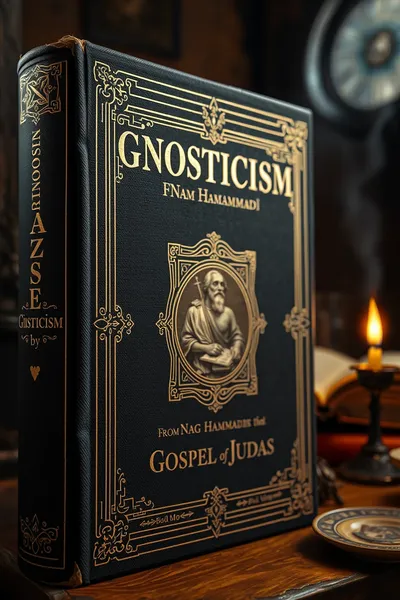








More Free Sacred Texts & Gnosticism Books
View all →